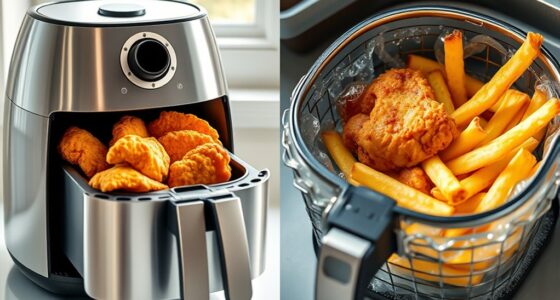

Air fryers can be cheaper than ovens because they heat up faster, use less power, and cook food quickly thanks to their compact size and efficient heat circulation. Smaller appliances require less energy to reach and maintain the desired temperature, saving you money on electricity. However, the cost benefits depend on factors like food size and cooking habits. To discover how to maximize savings with your air fryer, explore further details below.
Key Takeaways
- Air fryers typically use less power (800-1500W) than ovens (2000-5000W), leading to lower energy costs.
- Faster cooking times and quick heat-up reduce overall energy consumption compared to traditional ovens.
- Smaller size and targeted heating minimize wasted energy, making air fryers more efficient for small meals.
- Proper maintenance and avoiding unnecessary preheating further decrease energy use.
- Not all models are equally efficient; understanding appliance features helps determine when air fryers are more cost-effective.

NEWBULIG Air Fryer, Compact Digital 3 Qt Airfryer with Nonstick Plate & Dishwasher Safe Basket, Quick Easy Meals, Features Auto Shutoff and Simple Touchscreen, Ideal for Small Spaces
Small Yet Mighty: This small air fryer delivers powerful performance to tackle all your cooking needs. The easy-to-use…
As an affiliate, we earn on qualifying purchases.
As an affiliate, we earn on qualifying purchases.
How Much Energy Do Air Fryers and Ovens Use?
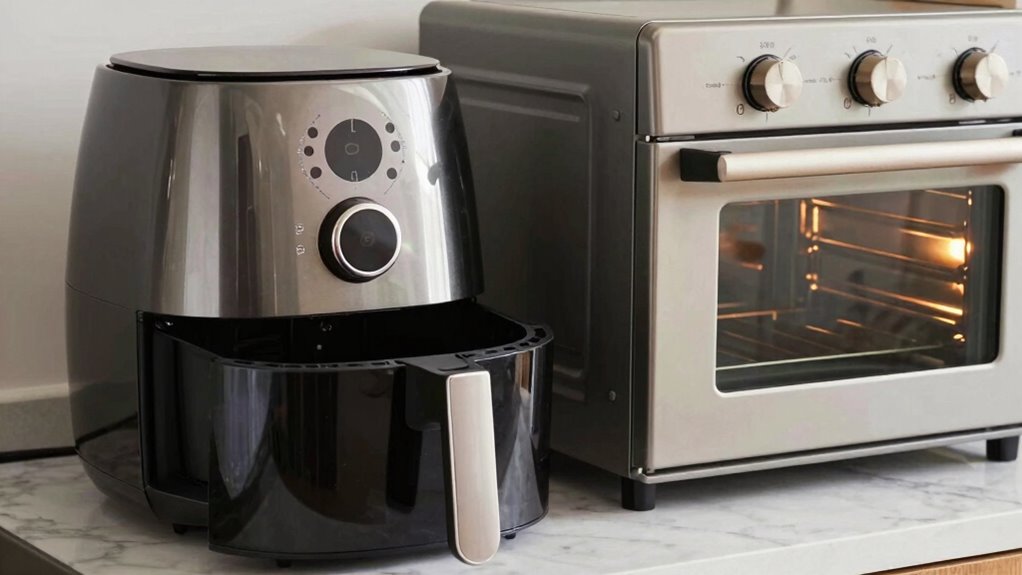
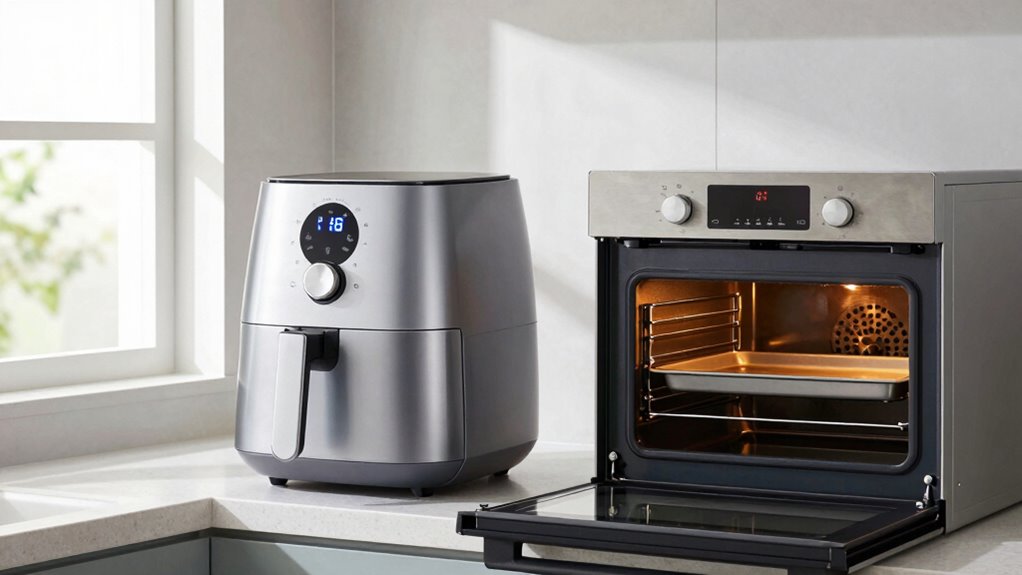
When comparing energy consumption, air fryers generally use less power than conventional ovens. This energy comparison highlights the efficiency of air fryers, especially for small or quick cooking tasks. Air fryers typically operate at wattages between 800 and 1500 watts, depending on the model and size, and usually cook faster due to their compact size and rapid heat circulation. In contrast, traditional ovens often use 2000 to 5000 watts, with longer preheating and cooking times. Because of their appliance efficiency, air fryers can save energy during frequent use, making them a cost-effective choice for small meals. Additionally, energy efficiency plays a role in how well the food appears, especially when using a high-quality air fryer with a transparent window. The power consumption of an appliance also influences its overall cost-effectiveness, particularly for those who cook frequently. Choosing appliances with energy-saving features can further reduce electricity use and costs over time. However, for larger quantities or long cooking durations, conventional ovens might be more suitable, balancing energy use with cooking needs.
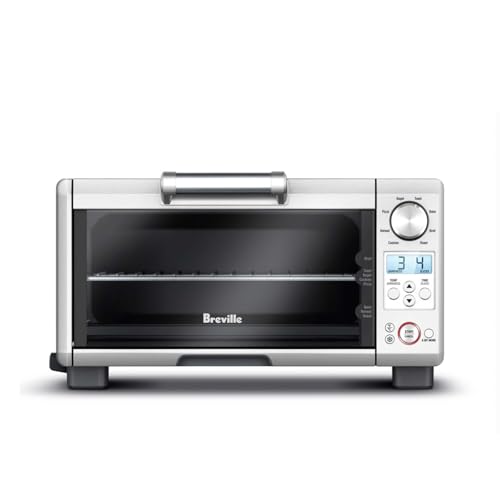
Breville BOV450XL Mini Smart Countertop Oven and Toaster Oven, Small, Brushed Stainless Steel
The Breville Mini Smart Countertop Oven and Toaster Oven with Element iQ System is for cooks interested in…
As an affiliate, we earn on qualifying purchases.
As an affiliate, we earn on qualifying purchases.
Why Are Air Fryers More Efficient Than Traditional Ovens?

Air fryers are more efficient than traditional ovens because they heat up quickly and use less energy to cook food. Their compact size allows for faster energy transfer from the heating element to your food, reducing cooking time. The appliance design of air fryers promotes even heat distribution, minimizing wasted energy and preventing overcooking. Unlike large ovens, they focus heat directly where needed, which means less energy is required to reach and maintain the desired temperature. The efficient energy transfer in air fryers results in quicker cooking with less power consumption overall. This smart design not only saves energy but also shortens cooking times, making air fryers a more economical choice for everyday use.
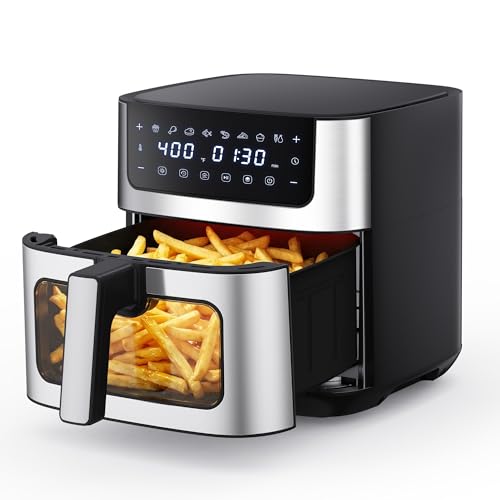
NEWBULIG Air Fryer 6.34QT, Airfryer with Visible Window, 400℉ Fast Heating Air Fryers Oven with Nonstick and Dishwasher-Safe Basket, 8-in-1 Cooking Preset, Timer,Auto-Off, Stainless Steel, Black
High-Performance Cooking:Achieve perfect results every time. Easily set the exact temperature (180°F–400°F) and timer (up to 90 minutes)…
As an affiliate, we earn on qualifying purchases.
As an affiliate, we earn on qualifying purchases.
How Do Air Fryers Save You Money on Electricity?
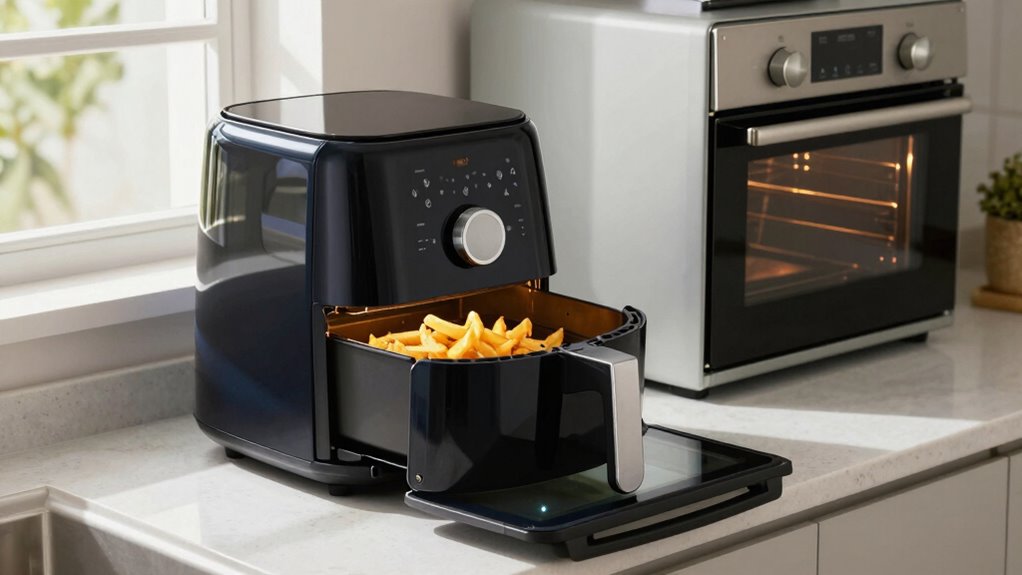
Air fryers save you money on electricity by cooking faster than traditional appliances. They use less power because of targeted heating, which keeps energy use low. This efficiency means you spend less on your energy bills over time. Additionally, their compact size contributes to reduced energy consumption compared to larger ovens, making them a cost-effective choice for many households. Energy efficiency in small appliances
Faster Cooking Times
Because they heat up quickly and cook food faster, air fryers use less electricity than traditional ovens. Their faster cooking times mean you spend less time running the appliance, which reduces overall energy consumption. The improved cooking speed allows you to prepare meals in a fraction of the time, saving you both time and electricity. Since air fryers heat up rapidly and transfer heat efficiently, they don’t need to stay on as long, unlike larger ovens that take time to preheat and maintain temperature. This efficiency in cooking times translates directly to energy savings, especially when cooking smaller portions or quick snacks. Additionally, their air circulation technology ensures even heating, further optimizing energy use. The preheating process of conventional ovens can significantly increase energy consumption, making air fryers a more efficient choice. Overall, faster cooking times make air fryers a smart choice if you want to cut down on electricity use without sacrificing meal quality. Furthermore, the small size of air fryers means they require less energy to operate compared to full-sized ovens, enhancing their cost-saving potential. For those seeking to improve their energy efficiency, choosing appliances like air fryers can contribute to lower electricity bills while maintaining cooking performance.
Lower Power Consumption
Have you ever wondered how air fryers manage to cut down your electricity bills? Their lower power consumption plays a big role in energy conservation and overall appliance efficiency. Because they heat up quickly and cook faster, they use less electricity than traditional ovens. This means you spend less on energy each time you prepare a meal. Additionally, air fryers have a smaller cooking space, which helps focus heat more effectively, reducing wasted energy. Their design also minimizes heat loss, making them more efficient. Efficient heating technology helps maximize energy savings while maintaining cooking quality. Incorporating local automation can further optimize energy use by adjusting appliance operation based on your daily routines. Furthermore, understanding proper air purifier maintenance dos and don’ts can extend the lifespan of your appliances and ensure they operate at peak efficiency, indirectly contributing to energy savings. Proper energy-efficient appliance use habits can also make a significant difference in reducing your overall electricity costs.
Targeted Heating Efficiency
Ever wonder how air fryers save you money through targeted heating? It all comes down to efficient heat transfer and precise thermostat control. Unlike traditional ovens, air fryers use rapid heat transfer via circulating hot air to focus directly on your food. This means less energy wasted heating empty space and more consistent cooking. The thermostat control ensures the temperature stays steady, preventing overheating and reducing energy use. Because heat is concentrated precisely where it’s needed, you cook faster with less electricity. This targeted approach minimizes energy loss and enhances efficiency, saving you money on your power bill. Additionally, the vintage-inspired design of many air fryers can complement retro-themed kitchens, blending style with function. Moreover, energy efficiency is a key factor that makes air fryers sometimes cheaper to operate than larger ovens. By focusing heat directly on your food and maintaining ideal temperatures, air fryers deliver quick, energy-efficient results that can sometimes be cheaper than running your larger oven.

Kratos Commercial Electric Convection Oven, Full Size Free Standing Convection Oven for Restaurants, 1 Phase, 240V (29Y-057)
{ENERGY EFFICIENT} The Kratos 29Y-057 electric convection oven features a high efficiency heating tube with direct, forced hot-air…
As an affiliate, we earn on qualifying purchases.
As an affiliate, we earn on qualifying purchases.
What Factors Affect the Energy Consumption of Your Air Fryer and Oven?
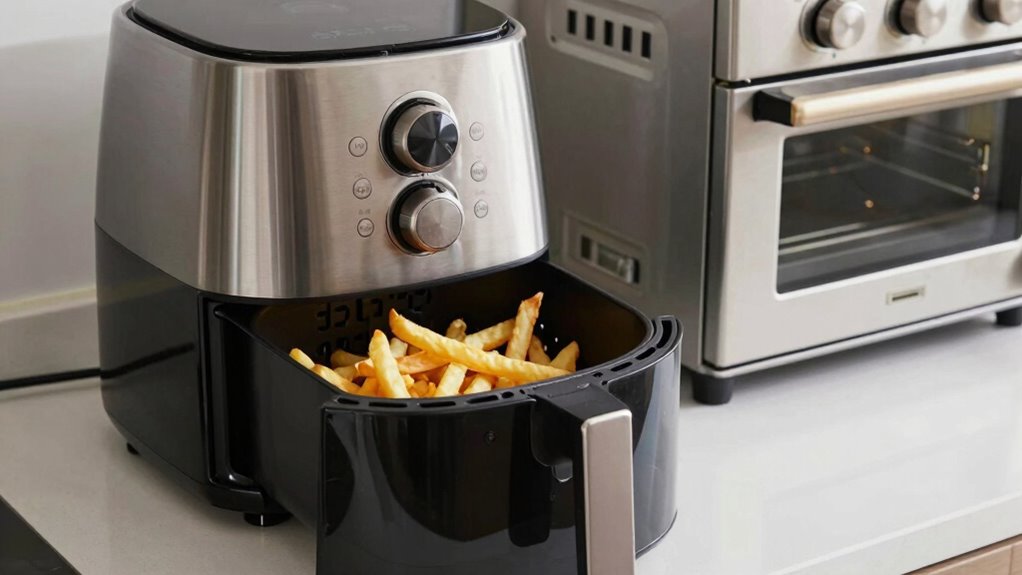
Several factors influence how much energy your air fryer and oven consume during use. These include the appliance’s size, cooking duration, temperature settings, and food quantity. Smaller appliances like air fryers typically use less energy due to shorter cooking times and efficient heat transfer. Proper appliance maintenance, such as cleaning heating elements and ensuring seals are intact, also promotes energy conservation. Additionally, preheating your oven or air fryer can impact energy use; unnecessary preheating squanders power. To optimize energy efficiency, always operate appliances at appropriate temperatures and avoid overloading. Regular maintenance ensures they run smoothly, reducing unnecessary energy consumption. Understanding these factors helps you make smarter choices, saving money and reducing your environmental impact. Recognizing energy consumption patterns can further improve your appliance’s efficiency over time. Monitoring cooking habits can help identify opportunities to save energy during meal preparation. Moreover, being aware of appliance efficiency ratings can guide you toward more economical choices.
How Do Cooking Time and Food Size Impact Energy Use?

Cooking time and food size directly influence how much energy your air fryer or oven consumes. Longer cooking times mean your appliance runs longer, increasing energy use. Smaller food sizes typically cook faster, reducing overall energy consumption. If you’re cooking large or thick items, expect extended cooking times, which can boost energy costs. Conversely, smaller or thinner foods heat quickly, meaning less energy is needed overall. Preheating can also add to energy use if it takes a while to reach the desired temperature. To save energy, cut down on cooking time by preparing smaller portions or cutting food into smaller pieces. Monitoring cooking duration and adjusting food size accordingly helps you use energy more efficiently, keeping costs lower while still achieving great results. Additionally, choosing appliances like air fryers that heat quickly and efficiently can help reduce overall energy consumption compared to traditional ovens. Being aware of the energy consumption of your appliances allows you to make smarter choices to lower your utility bills. Optimizing cooking methods and using appliances with fast heat-up times further enhances energy savings. Using energy-efficient appliances can make a noticeable difference in your overall energy use and costs. Moreover, understanding the energy efficiency of your appliances can guide you in selecting models that consume less power while delivering excellent cooking performance.
How to Measure Your Air Fryer’s Energy Consumption

To measure your air fryer’s energy use, start by understanding its power rating, usually listed in watts. Keep track of how long you run the appliance each time, then multiply the two to see the total energy consumed. Additionally, considering prosumer espresso machines, which are designed for home use, can help you choose energy-efficient models for your kitchen. For a more accurate assessment, you might also want to account for energy-efficient features that some models include, further reducing your overall electricity consumption. Finally, you can calculate the cost by multiplying your energy usage by your local electricity rate.
Understanding Power Ratings
Understanding your air fryer’s power rating is key to measuring its energy consumption accurately. Power ratings indicate how much energy your appliance uses, directly affecting its energy efficiency. To grasp this, check the label or user manual for wattage details—common ratings range from 800 to 1800 watts. Higher wattage usually means faster cooking but can use more energy. Keep in mind that energy efficiency isn’t just about power ratings; it also depends on how you use it. For example, a smaller, well-rated air fryer can consume less energy than a larger one with a higher wattage if used efficiently. To get a clear picture, compare power ratings across models and consider your cooking habits. This understanding helps you choose an appliance that balances performance with cost savings.
Tracking Usage Duration
Tracking your air fryer’s energy consumption begins with measuring how long you use it each time. By noting your usage patterns, you gain insight into how frequently and for how long you operate the device. Use a timer or keep a simple log to record start and end times for each session. This data helps you identify whether you’re using it efficiently or wasting energy on short or unnecessary runs. Consistently monitoring usage duration not only reveals your habits but also supports device longevity by preventing overuse. Over time, understanding these patterns allows you to adjust your cooking routines, potentially reducing energy costs and extending the lifespan of your air fryer. Accurate tracking makes it easier to manage your energy consumption effectively.
Calculating Energy Costs
Measuring your air fryer’s energy consumption involves checking its power rating and tracking how long you operate it. To do an accurate energy monitoring, note the wattage listed on the appliance and record your usage time. This helps you perform a precise cost comparison between your air fryer and traditional oven.
- Determine the wattage from the label or manual
- Record the duration of each cooking session
- Use online calculators to estimate energy costs
- Compare these costs with your oven’s energy use
Tips for Maximizing Energy Savings With Your Air Fryer
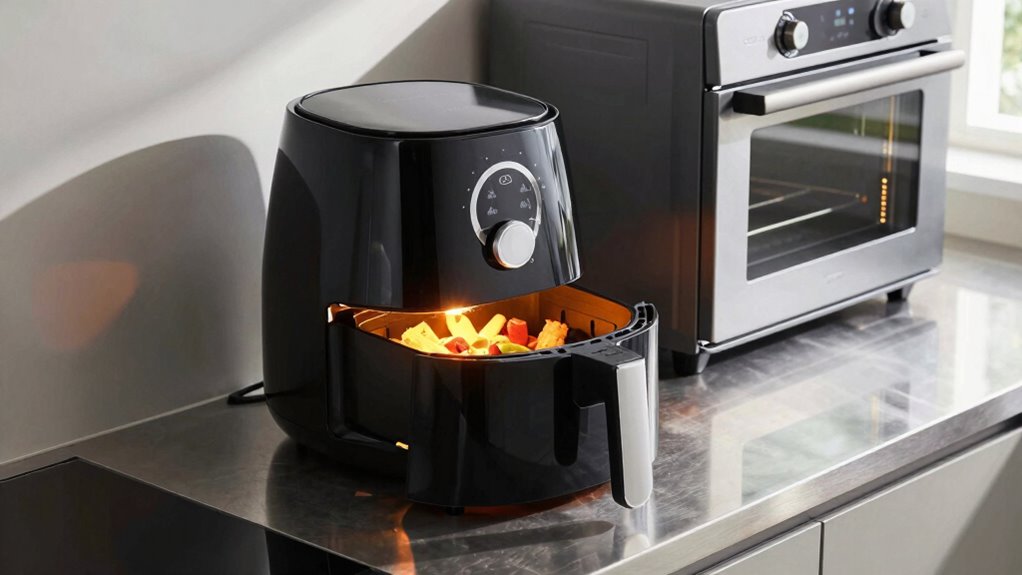
To maximize energy savings with your air fryer, start by preheating it only when necessary, as unnecessary preheating consumes extra electricity. Using efficient cooking techniques, like placing food in a single layer and avoiding overcrowding, helps guarantee even cooking and reduces cooking time. Trim excess fat and opt for smaller portions to speed up the process and conserve energy. Keep the basket or tray clean, since buildup can increase cooking time and energy use. Additionally, setting the right temperature and timing minimizes wasted energy. Remember, energy conservation isn’t just about turning it off early but also about smart cooking habits that optimize performance. Employing these tips helps you cut costs and makes your air fryer a more energy-efficient kitchen tool.
Are There Common Myths About Air Fryer Energy Efficiency?

Many people believe that air fryers automatically save energy compared to traditional cooking methods, but this isn’t always true. There are common myth misconceptions about their efficiency myths that can lead you to overestimate their energy savings. For example:
Many believe air fryers always save energy, but that’s often a misconception.
- Assuming air fryers always use less power than ovens.
- Believing shorter cook times guarantee energy savings.
- Thinking small size means lower energy consumption in all cases.
- Overlooking how different models vary in efficiency.
These myths can mislead you into making unnecessary purchases or misjudging your energy costs. While air fryers often use less energy for small, quick tasks, they’re not inherently more efficient for every cooking scenario. It’s essential to understand the nuances to accurately assess their energy benefits.
Is Using an Air Fryer Always Cheaper Than an Oven?
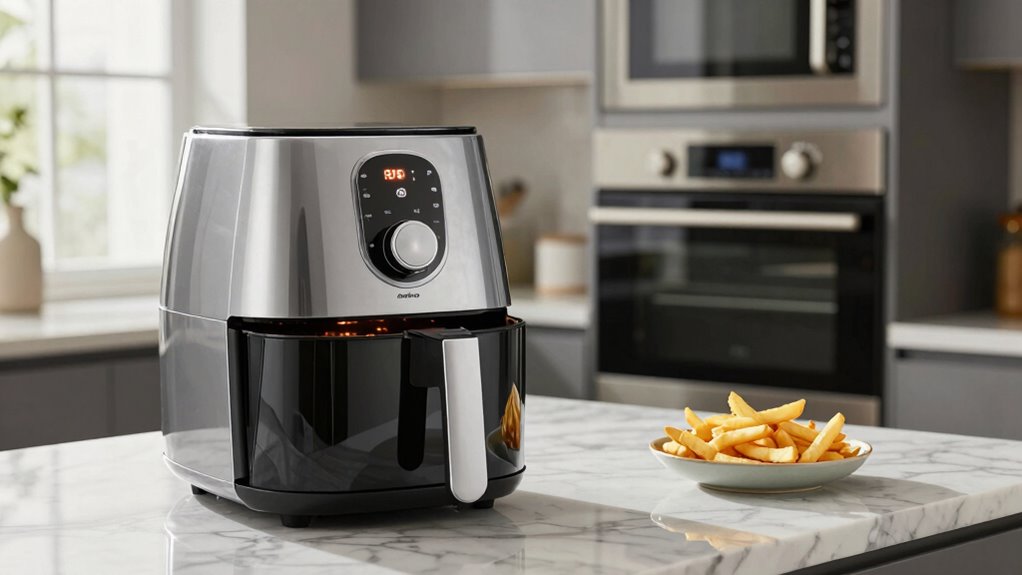
Is using an air fryer always cheaper than an oven? Not necessarily. While air fryers often use less energy for small batches due to faster cooking times and efficient heat transfer, the overall cost depends on your cooking techniques and appliance maintenance. If you frequently cook large meals or multiple servings, an oven might be more economical, especially if it’s well-maintained and energy-efficient. Proper appliance maintenance, like cleaning heating elements and ensuring seals are intact, also affects energy use and costs. Keep in mind that the initial purchase price varies, and some air fryers require less upkeep. So, whether an air fryer is cheaper depends on your cooking habits, how well you care for your appliances, and the size of your typical meals.
When Should You Choose an Air Fryer to Save Energy?

Choosing an air fryer to save energy makes sense when you’re preparing small meals or snacks. Since air fryers heat up quickly and use less power, they can be a smart appliance choice for quick, single-serving dishes. Your energy savings increase when you avoid firing up a large oven for small portions. Consider using an air fryer when:
- You’re cooking for one or two people
- Reheating leftovers efficiently
- Making crispy snacks or appetizers
- Preparing quick, small batches of food
In these cases, an air fryer’s efficiency can cut energy use compared to a full-sized oven. It’s a practical appliance choice that helps you save on energy bills without sacrificing convenience or quality.
Frequently Asked Questions
Do Different Models of Air Fryers Vary Significantly in Energy Efficiency?
Yes, different models of air fryers vary considerably in energy efficiency. You’ll notice that some models have advanced heating elements and better insulation, which use less power and cook faster. Model variations can impact how much energy you save over time. When choosing an air fryer, consider those with higher energy efficiency ratings to reduce electricity bills and cook more efficiently. Always compare specs before buying to find the most efficient option for your needs.
Can Using an Air Fryer Reduce Overall Household Energy Consumption?
Imagine the joy of saving energy while still enjoying your favorite meals. Using an air fryer can indeed reduce your household energy consumption, thanks to its appliance efficiency. An energy comparison shows air fryers typically use less power than full-sized ovens, helping you cut costs and lessen your environmental footprint. So, yes, switching to an air fryer can be a smart, eco-friendly choice for your home.
How Does Preheating Time Affect Energy Use in Air Fryers vs. Ovens?
Preheating time considerably impacts energy consumption in both air fryers and ovens. When you preheat longer, you use more energy, which increases overall power use. Air fryers typically preheat faster, reducing energy consumption compared to traditional ovens. If you skip preheating or keep it brief, you’ll save energy, making your cooking more efficient. So, minimizing preheating time helps cut down on energy use in either appliance.
Are There Specific Foods That Are More Energy-Efficient to Cook in an Air Fryer?
Think of your air fryer as a superhero for small, quick tasks. It’s more energy-efficient for cooking frozen foods and snack items because it heats up faster and uses less power. When you pop in frozen fries or chicken nuggets, you’ll save energy compared to using a full-sized oven. So, for small, crispy treats, your air fryer is the perfect tool to cut down on energy use.
Does the Frequency of Use Impact the Long-Term Cost Savings of an Air Fryer?
Yes, your usage frequency impacts long-term savings with an air fryer. The more often you use it, the quicker you’ll recoup its initial cost through energy savings compared to your oven. Frequent use means better efficiency, lowering your electricity bills over time. However, if you use it rarely, the long-term savings may be minimal. Regularly employing your air fryer maximizes its cost-effectiveness and helps you save money in the long run.
Conclusion
So, next time you reach for your oven, consider your options carefully. Could switching to an air fryer really cut your energy bills? Or are there moments when your oven still makes more sense? The choice isn’t always clear-cut. Stay curious, stay mindful of your cooking habits, and keep exploring. Because in the end, the most efficient choice might surprise you—and it might just change the way you cook forever.