To air fry seafood safely, choose low-mercury options like salmon or shrimp to reduce health risks. Make certain seafood is cooked to the proper internal temperature—145°F for fish and shrimp that turns pink and firm. Preheat your air fryer, avoid overcrowding, and check for doneness by texture or internal temp. Proper technique guarantees safe, flavorful results—continue exploring tips to perfect your seafood air frying skills.
Key Takeaways
- Choose low-mercury seafood like salmon, shrimp, and tilapia to minimize health risks during air frying.
- Preheat the air fryer and avoid overcrowding for even cooking and safety.
- Cook seafood to an internal temperature of 145°F or until opaque and flaky for proper doneness.
- Use a meat thermometer to accurately check seafood doneness and ensure safety.
- Adjust cooking times based on seafood thickness, typically 8-12 minutes at 375°F, to prevent over or undercooking.
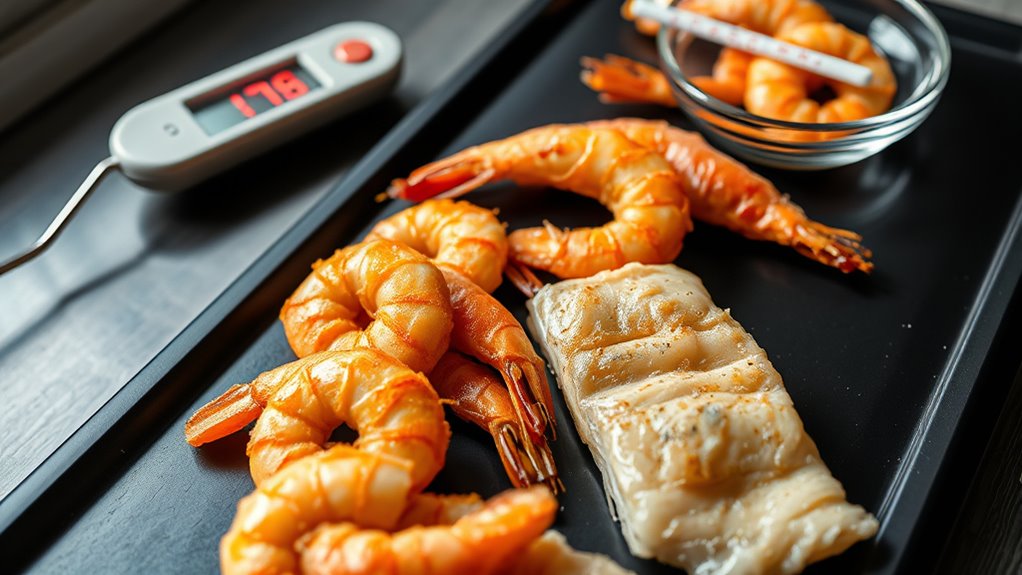
Ever wondered how to enjoy crispy, delicious seafood without the excess oil? Air frying is a fantastic way to achieve that crispy texture while keeping your meals healthier. However, when it comes to seafood, safety is just as important as taste. You need to be mindful of factors like mercury levels and proper cooking times to guarantee your seafood is both safe and flavorful. Mercury is a naturally occurring element found in some fish and shellfish, and consuming high levels can pose health risks, especially if you eat seafood frequently. To minimize exposure, it’s best to choose seafood known for lower mercury levels, such as salmon, shrimp, or tilapia, rather than high-mercury options like swordfish or king mackerel.
When air frying seafood, paying attention to cooking times is vital for both safety and quality. Overcooking can lead to dry, tough fish, while undercooking risks foodborne illnesses. Typically, seafood cooks quickly in an air fryer—shrimp might only need 8-10 minutes at 375°F, while thicker fish fillets could take about 10-12 minutes. To guarantee your seafood is perfectly cooked, it’s helpful to check for doneness by examining the texture and internal temperature. Fish should reach an internal temperature of 145°F, and the flesh should be opaque and flake easily with a fork. Shrimp, on the other hand, turn pink and firm when done. Using a meat thermometer can help you avoid guesswork and guarantee your seafood reaches the right temperature without overcooking. Additionally, considering proper equipment maintenance ensures your air fryer functions optimally for safe cooking.
It’s also important to consider the thickness of your seafood pieces. Thicker cuts require a bit more time, but always keep an eye on the clock—overcooking can lead to a rubbery texture. For best results, preheat your air fryer and avoid overcrowding the basket, which can cause uneven cooking. If you’re preparing multiple pieces, it’s wise to turn or shake the basket halfway through the cooking process to promote even doneness. Remember, safety isn’t just about avoiding undercooked seafood; it’s also about choosing the right seafood with lower mercury levels and cooking it properly. This way, you get to enjoy crispy, flavorful seafood without any health concerns, all while maintaining a quick and easy cooking process that’s perfect for busy days.
Frequently Asked Questions
How Can I Tell if Seafood Is Cooked Thoroughly in an Air Fryer?
To tell if seafood is cooked thoroughly in an air fryer, check its texture—it should be opaque and flake easily with a fork. Use a food thermometer to guarantee it reaches a safe internal temperature, usually 145°F (63°C). Keep an eye on your air fryer accessories, like a thermometer or a skewers, to help monitor doneness. Proper timing and visual cues help you cook seafood perfectly and safely.
What Are the Best Types of Seafood to Air Fry Safely?
Opt for firm, fresh seafood like salmon, shrimp, and scallops to air fry safely. Their quality guarantees even cooking and better texture. Use appropriate air fryer accessories like a parchment liner or a wire rack to prevent sticking and improve airflow. Avoid delicate or heavily breaded options that may fall apart. Choosing high-quality seafood and the right accessories ensures delicious, safe results every time you air fry.
How Does Mercury Level Vary Among Different Seafood Options?
Mercury levels vary among seafood options, affecting your seafood safety. Larger, longer-lived fish like tuna and swordfish tend to have higher mercury concentrations, so you should consume them in moderation. Smaller fish such as salmon, sardines, and shellfish usually have lower mercury levels, making them safer choices for air frying. Always check local advisories and opt for seafood with lower mercury to reduce health risks while enjoying your meals.
Are There Specific Air Fryer Settings for Different Seafood Types?
You should adjust your air fryer settings based on the seafood type for the best results. For delicate fish like tilapia or cod, use lower temperatures around 350°F to avoid overcooking, while shrimp benefit from higher temp settings around 375°F. Seasonings enhance flavor, and proper presentation makes your seafood appealing. Keep an eye on doneness indicators like opaque flesh and crispy edges for perfect, safe, and visually appealing seafood dishes.
How Often Should I Rotate or Flip Seafood During Air Frying?
Think of your seafood as a delicate dance partner—flipping it halfway guarantees even cooking. You should rotate or flip your seafood about halfway through the cooking process, especially if it’s thicker or larger. For seasoning tips and to maintain freshness, store seafood properly before cooking. This gentle turn helps prevent sticking and ensures each side gets perfect heat, making your dish tender and flavorful without overcooking.
Conclusion
Air frying seafood is a quick and safe way to enjoy fresh flavors, but remember to check mercury levels and guarantee proper doneness. Some might worry about missing out on traditional flavors or textures, but with the right techniques, you can achieve tender, perfectly cooked seafood that’s just as satisfying. So go ahead—air fry your favorites confidently, knowing you’re making a healthy, delicious choice without sacrificing taste or safety.