Dehydrating food at too low a temperature can let bacteria, mold, and yeast grow, causing spoilage and health risks. Many believe that drying at low heat preserves nutrients, but it also increases the chance of food safety issues if moisture isn’t fully removed. To prevent this, set your dehydrator between 125°F to 135°F, depending on the food. Keep this in mind, and you’ll make sure your dried foods are safe and high quality; learn more to master safe dehydration techniques.

Get kitchen gear delivered free with Prime
- Fast, free delivery on millions of items
- Prime Video, Amazon Music and more included
- Member-only deals all year
Key Takeaways
- Dehydrating at temperatures below 125°F can promote bacterial growth and spoilage due to insufficient moisture removal.
- Proper temperature control (125°F-135°F) ensures safe, effective dehydration, preventing mold and bacteria.
- Believing low temperatures are always safe may lead to under-drying and increased risk of foodborne illness.
- Consistent airflow and correct drying times are crucial; temperature alone doesn’t guarantee safety.
- Monitoring and verifying dehydrator temperature accuracy prevents spoilage caused by the myth of “low-temp is always safer.”
Products Worth Considering

De'Longhi Stilosa Compact Manual Espresso Machine with Milk Frother

Vitamix Propel Series 510 Professional-Grade Blender, 3 Programs, Black

Le Creuset Enamemed Cast Iron Oval Dutch Oven, 5 qt., White/Crucible
As an affiliate, we earn on qualifying purchases.
How to Dehydrate Food Safely at the Right Temperatures
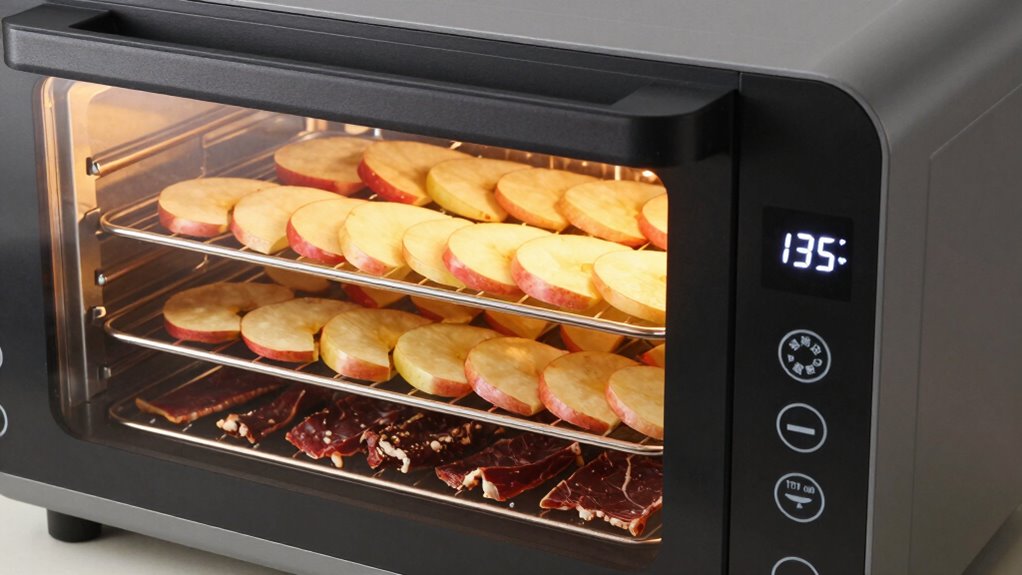
To dehydrate food safely, it’s essential to maintain the correct temperature throughout the process. Temperature directly impacts food texture, helping you achieve the desired crispness or chewiness. If the temperature is too low, dehydration takes longer, risking spoilage or mold growth. Conversely, too high a temperature can cause uneven dehydration, resulting in tough or burnt spots. Monitoring and controlling the temperature ensures you reach the ideal dehydration duration without compromising quality. Consistent heat allows moisture to escape steadily, preventing spoilage and preserving nutrients. Remember, different foods require different dehydration times, but maintaining a stable temperature is key to safe, efficient drying. Understanding dehydration principles ensures you choose the optimal temperature setting for each food type. Additionally, precise temperature control is vital for preventing bacterial growth and ensuring food safety during dehydration. A stable temperature also minimizes the risk of food spoilage, which can occur if conditions are not carefully managed. Proper temperature regulation is integral to food preservation, ensuring your dehydrated foods remain safe and nutritious. Moreover, adhering to recommended temperatures helps maintain the nutritional value of your dried foods, keeping them healthy and flavorful.
What Are the Safe Temperature Ranges for Food Dehydration?
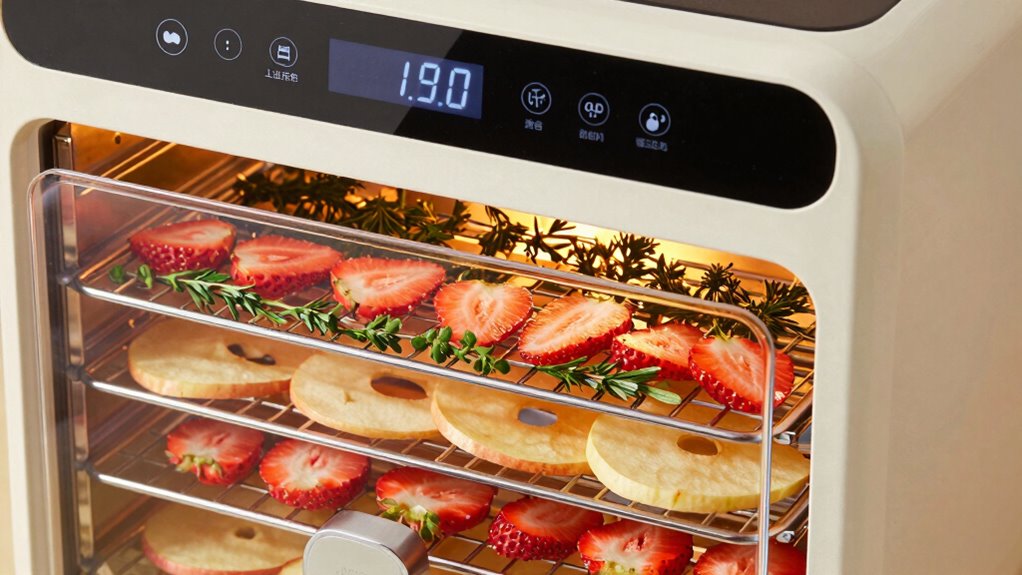
Maintaining the right temperature range is vital for safe and effective food dehydration. To guarantee food safety during the dehydration process, keep temperatures between 125°F and 135°F (52°C to 57°C). This range effectively removes moisture without encouraging bacterial growth or spoilage. Dehydrating at temperatures below 125°F can risk bacteria, mold, and yeast development, compromising food safety. Conversely, temperatures above 135°F may damage delicate foods or cause uneven drying. Always follow specific guidelines for different foods, as some items may require slightly adjusted temperatures for ideal preservation. Staying within this safe temperature range helps you produce high-quality, shelf-stable dehydrated foods while preventing spoilage and ensuring your dehydration process remains both safe and efficient. Additionally, understanding the temperature myth surrounding dehydration can help prevent common mistakes that lead to spoilage. Recognizing the proper temperature range is essential for achieving consistent, safe results in dehydration, and being aware of food safety guidelines ensures that your preserved foods remain nutritious and safe to eat. Maintaining proper temperature control is also crucial for optimal results and food longevity.
Why Dehydrating at Too Low a Temperature Can Cause Bacterial Growth
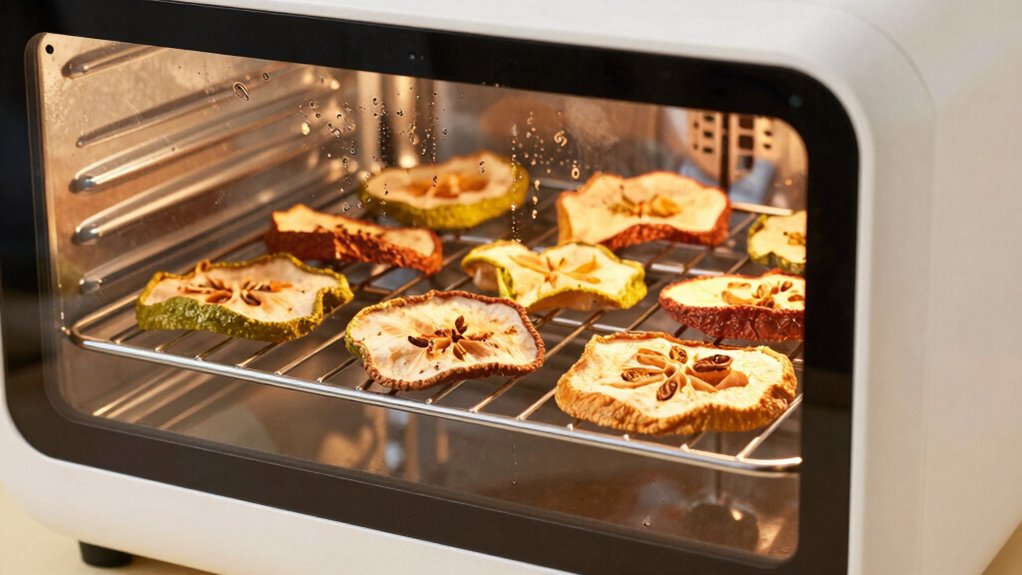
Have you ever wondered why dehydrating at too low a temperature can pose health risks? When you lower the temperature excessively, moisture retention increases, creating an ideal environment for bacterial contamination. This can lead to food spoilage and potential illness. Here are four reasons why this happens:
- Bacteria thrive in moist environments, making low temperatures dangerous.
- Insufficient heat prevents bacteria from dying off effectively.
- Moisture retention keeps food damp, promoting bacterial growth. Moisture control is crucial in preventing this issue.
- Extended dehydration times at low temps give bacteria more opportunity to multiply. Additionally, temperature regulation is essential to inhibit bacterial activity effectively. Proper food safety practices are necessary to prevent contamination.
- Proper temperature control is essential to balance moisture removal and microbial safety, based on home food preservation principles. Maintaining the correct drying temperature also helps prevent food spoilage caused by bacterial growth.
Dehydrating at too low a temperature doesn’t eliminate bacteria; it often allows their growth. Always aim for the proper temperature range to ensure your dried foods are safe and free of bacterial contamination.
Debunking Myths About Low-Temperature Dehydrating
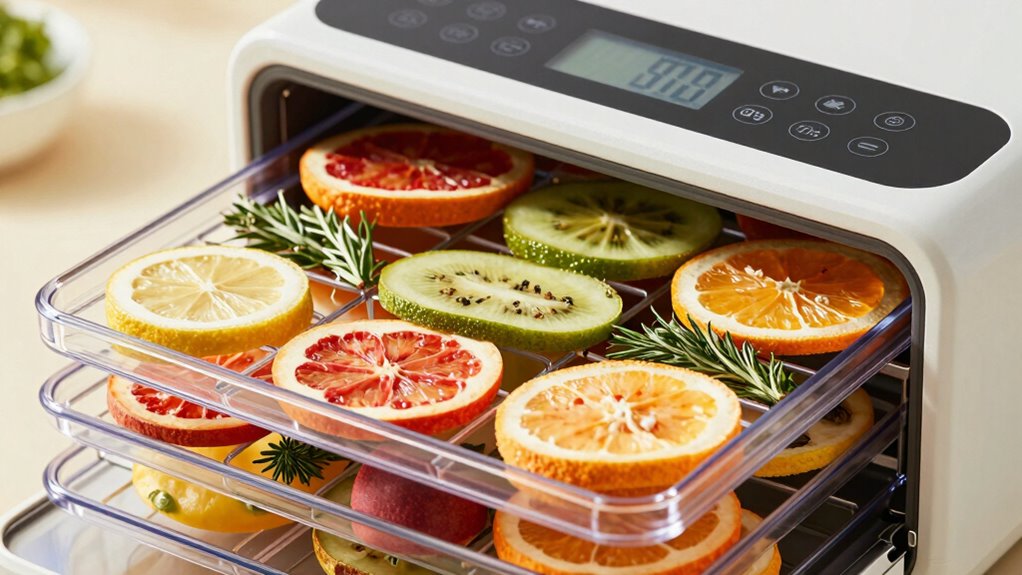
Many people believe that low-temperature dehydrating always results in unsafe food, but that’s a myth. Using proper drying techniques guarantees your food dehydrates safely at lower temperatures. Understanding the facts helps you avoid common misconceptions and achieve the best results. Additionally, selecting the right wave and wind conditions can significantly enhance the dehydration process, ensuring optimal preservation and safety. Proper use of performance cookies can also help you monitor and improve your dehydration methods over time. Recognizing food safety standards is essential to ensure your preserved foods remain safe for consumption. Furthermore, being aware of the importance of proper drying techniques can help prevent spoilage and maintain food quality. Incorporating knowledge of hydrotherapy benefits can also support overall health and complement your dehydrating practices.
Myths About Temperature
One common myth about low-temperature dehydrating is that it takes forever to produce safe, shelf-stable foods. In reality, maintaining proper low temperatures can efficiently preserve flavor and improve texture without risking spoilage. Here are some facts to consider:
- Safe dehydration at lower temperatures often takes less time than you think.
- Proper airflow, not just temperature, ensures even drying and prevents spoilage.
- Low heat helps retain natural flavor, making dried foods tastier.
- Controlling temperature avoids over-drying, which can cause texture issues.
- Dehydration time depends on multiple factors like humidity and food thickness, not just temperature. Ensuring consistent airflow is crucial for effective dehydration and food safety.
- Understanding dehydration parameters can help optimize your drying process for both safety and quality.
- Using precise temperature control technology can significantly improve dehydration efficiency and safety.
- Recognizing the role of exponential drying curves can aid in better predicting dehydration durations and outcomes.
Proper Drying Techniques
Proper drying techniques are essential for ensuring your dehydrated foods are safe, flavorful, and have the right texture. To achieve effective food preservation, focus on consistent airflow and proper spacing between items. Avoid overcrowding your drying equipment, which can trap moisture and lead to spoilage. Use a reliable temperature setting suited for the food type, rather than relying solely on low temperatures to preserve nutrients. Rotate trays if your equipment allows, ensuring even drying. Keep an eye on moisture levels and aim for a final product that’s firm and pliable. Proper drying techniques prevent mold and bacteria growth, extending shelf life. Additionally, understanding your drying equipment and applying correct methods, such as monitoring temperature settings, is key to successful food preservation and high-quality results. Recognizing the importance of proper airflow can further enhance the drying process and prevent spoilage, especially when considering consistent airflow as a critical factor in uniform dehydration.
How to Set Your Dehydrator for Different Foods and Ensure Safety
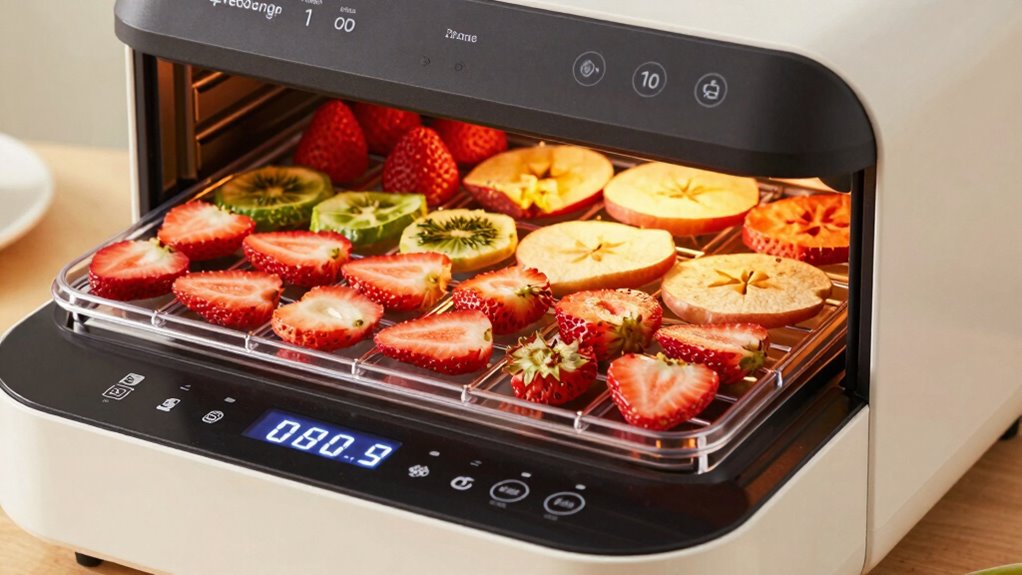
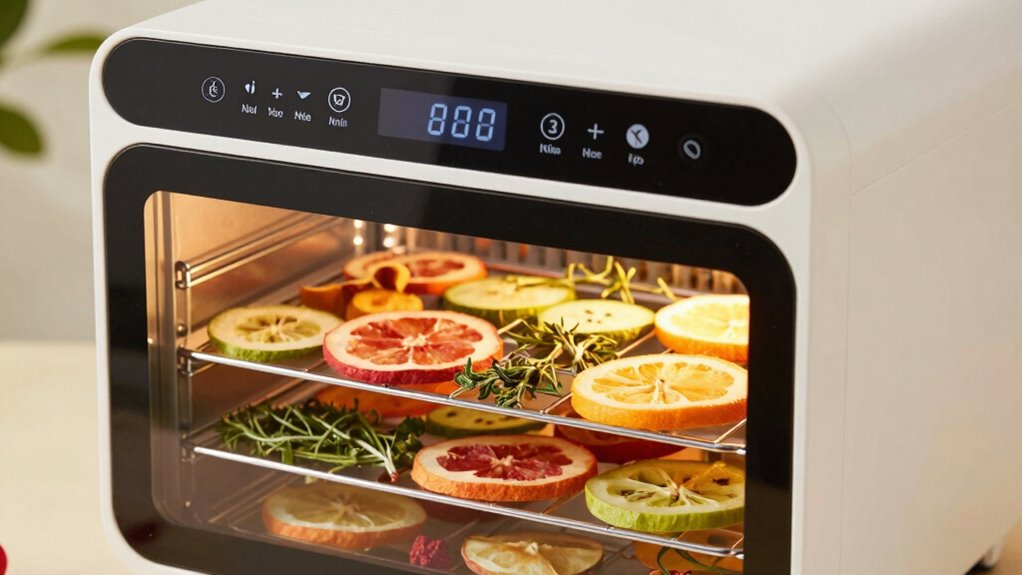
To get the best results, you need to set your dehydrator to the right temperature for each food type. Proper temperature controls help preserve nutrients and prevent spoilage or bacterial growth. By understanding ideal settings and following safety practices, you’ll guarantee your dried foods stay delicious and safe to eat.
Optimal Temperature Settings
Setting the right temperature is crucial for dehydrating foods safely and effectively. Proper temperature control influences humidity levels, dehydration speed, and food quality. To optimize results, consider these key points:
- Adjust temperatures based on food type—fruits need lower temps, meats higher.
- Keep humidity levels in check to prevent spoilage and ensure even drying.
- Use higher temperatures for quick dehydration, but avoid over-drying.
- Be mindful of dehydration speed; too fast can trap moisture, too slow wastes energy.
Food Safety Practices
Ensuring food safety when dehydrating requires careful attention to how you set your dehydrator for different types of foods. Proper dehydration methods help prevent spoilage and inhibit bacterial growth. Always set your dehydrator to the correct temperature based on the food you’re drying—higher for meats, lower for fruits and herbs. Before dehydration, clean and prepare foods thoroughly, removing any surface bacteria. Once dried, store foods in airtight containers or vacuum-sealed bags to prevent moisture re-entry. Label storage with dates to monitor freshness. Avoid cross-contamination by using separate trays or utensils for different foods. Consistent temperature control and proper food storage are essential to safe dehydration. Following these practices ensures your dried foods stay safe, flavorful, and shelf-stable.
Signs Your Food Is Properly Dehydrated and Safe to Store
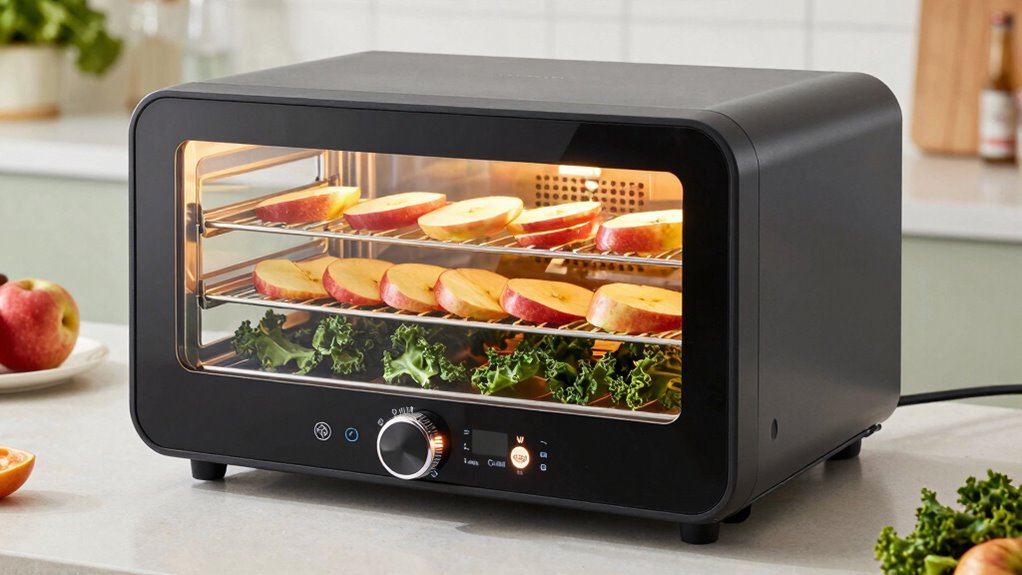
Knowing when your food is properly dehydrated is essential to guarantee safety and quality. Proper dehydration ensures flavor enhancement and texture preservation, making your snacks enjoyable and safe. To tell if your food is ready, check these signs:
Proper dehydration guarantees safety, flavor, and texture preservation—key to enjoyable, long-lasting snacks.
- Food feels leathery or crisp without any moisture pockets.
- It snaps easily when bent or broken.
- There’s no visible moisture or stickiness on the surface.
- It has a uniform color and texture throughout.
If these signs are present, your food is likely safe to store. Properly dehydrated food will have a concentrated flavor and maintain its texture, preventing spoilage. Remember, removing sufficient moisture is key to extending shelf life and ensuring safe storage.
Troubleshooting Spoilage Caused by Incorrect Temperature Settings
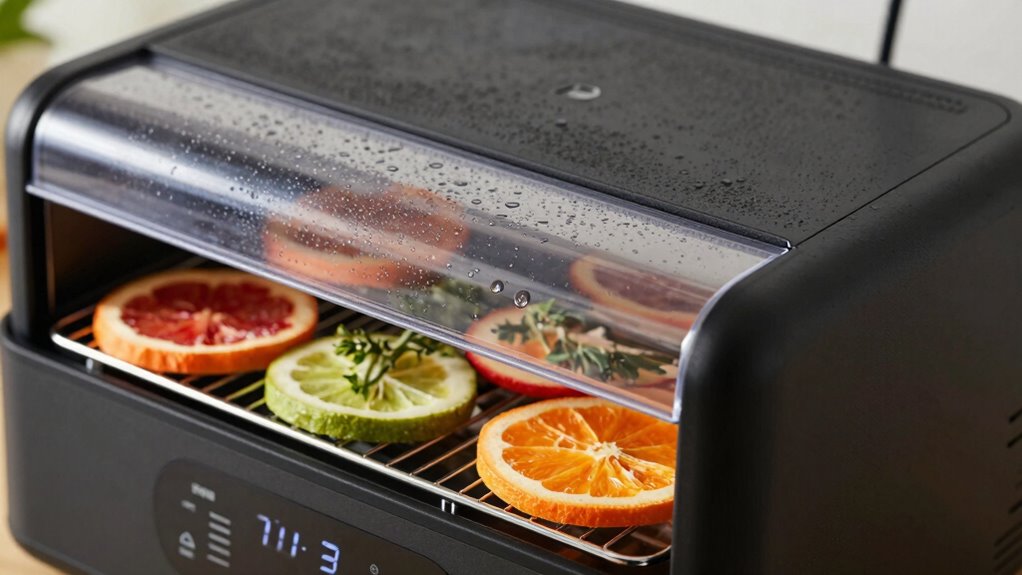
Incorrect temperature settings can lead to spoilage even if you’ve followed proper dehydration techniques. To troubleshoot this, start by inspecting your dehydrator’s maintenance; dust or debris can affect temperature accuracy. Regular cleaning ensures consistent airflow and performance. Next, check the temperature calibration using an external thermometer to confirm your dehydrator’s actual temperature matches the setting. If it’s off, consult the manufacturer’s instructions on recalibrating or consider replacing the thermostat. Always ensure you’re setting the right temperature for the food type—too low can cause spoilage, while too high risks over-drying or burning. Proper calibration and maintenance help prevent spoilage caused by incorrect temperature settings, ensuring your dried foods stay safe and delicious.
Top Tips for Safe and Effective Food Dehydration
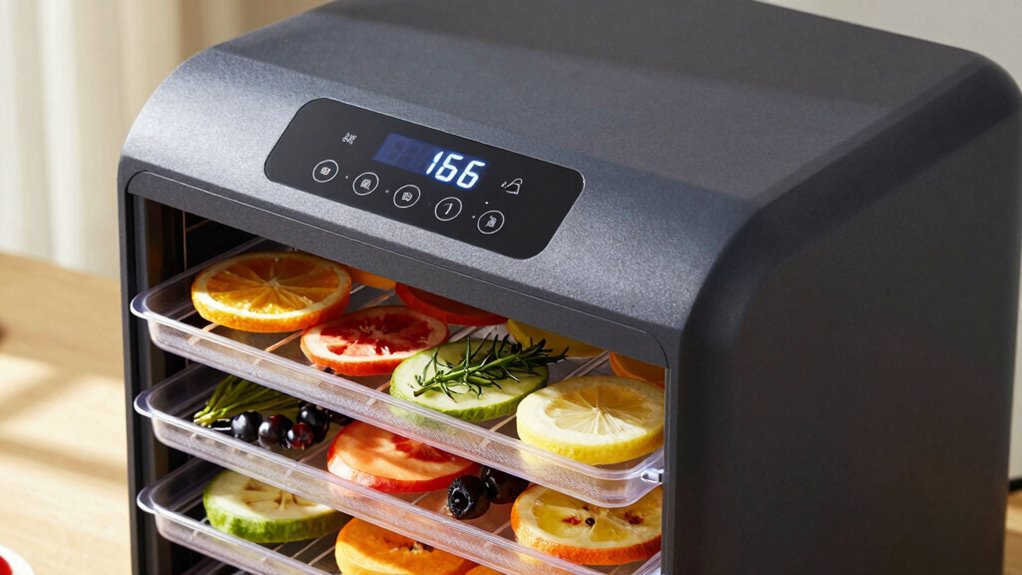
To achieve the best results in food dehydration, always prioritize safety and proper techniques from start to finish. Effective dehydration depends on following key steps to ensure food preservation and prevent spoilage. Here are top tips:
- Use the correct dehydration techniques for different foods, adjusting temperature and airflow.
- Slice food evenly to ensure uniform drying and prevent bacteria growth.
- Pre-treat items like fruits with acid solutions to preserve color and flavor.
- Store dried foods in airtight containers away from heat and moisture to prolong shelf life.
Frequently Asked Questions
Can Dehydration Times Vary Based on Food Type and Thickness?
Yes, dehydration times can vary based on food type and thickness. Thicker or denser foods take longer to dry, affecting food texture and dehydration consistency. You should monitor your food closely and adjust drying times as needed to prevent uneven drying or spoilage. Keep in mind that different foods require different times to achieve ideal dryness, so always consider their specific characteristics for best results.
How Does Humidity Affect Dehydration and Spoilage Risks?
Humidity substantially impacts dehydration and spoilage risks. When humidity control isn’t maintained, excess moisture remains in your food, increasing spoilage chances. You should monitor and reduce humidity to lower moisture content effectively, ensuring your dried foods stay safe and preserved. Proper humidity control helps achieve ideal dryness, prevents mold growth, and extends shelf life. Keep humidity levels low during dehydration to avoid spoilage and produce high-quality dried foods.
Are There Specific Preservatives to Use During Dehydration?
You might think preservatives are unnecessary during dehydration, but surprisingly, some preservative options like ascorbic acid or lemon juice work as dehydration additives to extend shelf life. These help prevent oxidation and microbial growth, ensuring your dried foods stay fresh longer. Just remember, a little goes a long way. Using the right preservative options can make your dehydration process more reliable, sparing you spoilage surprises and wasted effort.
What Are the Best Storage Methods After Dehydration?
After dehydration, you should use proper storage techniques to keep your food fresh. Store your dried items in airtight packaging options like vacuum-sealed bags or jars with tight lids to prevent moisture and pests. Keep your stored food in a cool, dark, and dry place, such as a pantry or cupboard. These storage techniques help preserve flavor, nutrients, and prevent spoilage, ensuring your dehydrated foods stay safe and tasty for longer periods.
How Do I Calibrate My Dehydrator for Accurate Temperature Control?
A stitch in time saves nine, so calibrate your dehydrator for accurate temperature control. To do this, use an oven thermometer to check the dehydrator’s temperature at your desired setting. If it’s off, adjust the thermostat accordingly or use calibration techniques like testing at different settings. Regular calibration guarantees temperature accuracy, preventing spoilage and ensuring your dried foods stay safe and delicious.
Conclusion
Remember, dehydration isn’t just about low temperatures and long waits; it’s about mastering the right heat to keep bacteria at bay. Think of your dehydrator as a trusted guardian, guarding your food’s freshness like a fortress. When you set it correctly, your dried fruits and herbs become treasures, not hazards. So, don’t let misconceptions turn your kitchen into a battleground—embrace safe temperatures and enjoy flavorful, safe dehydrated goodness every time.