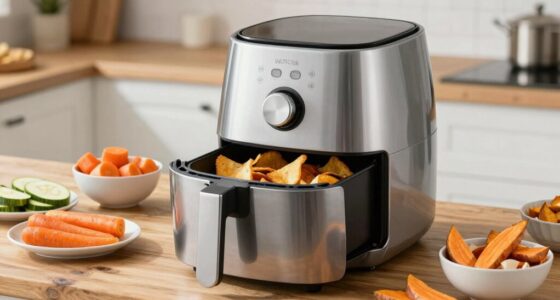
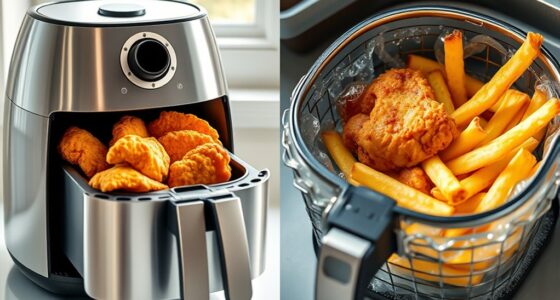
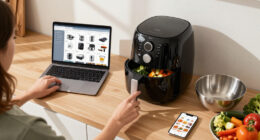
To prevent cross-contamination in gluten-free air-fryer cooking, always thoroughly clean the basket and accessories before use, and use separate utensils or liners to avoid gluten residue transfer. Store gluten-free foods separately and label containers clearly. Keep gluten-free and gluten-containing items apart, and communicate your needs when sharing the kitchen. Proper cleaning, separate tools, and mindful storage help keep your meals safe; discover more tips to ensure gluten-free safety in your air fryer.

Get kitchen gear delivered free — and shop member deals
- Fast, free delivery on millions of items
- Access to Prime Big Deal Days deals on October 6–7
- Prime Video, Amazon Music and more included
Key Takeaways
- Thoroughly clean the air fryer and accessories with warm, soapy water before cooking gluten-free foods.
- Use separate utensils, racks, or liners to prevent gluten protein transfer during food preparation.
- Store gluten-free ingredients separately in labeled, sealed containers away from gluten-containing products.
- Keep gluten-free foods on dedicated shelves and clearly mark packaging to avoid cross-contact.
- Communicate with others about gluten-free needs and ensure shared equipment is properly sanitized before use.
gluten-free air fryer accessories
As an affiliate, we earn on qualifying purchases.
As an affiliate, we earn on qualifying purchases.
Understanding Cross-Contamination Risks in Air Fryer Cooking
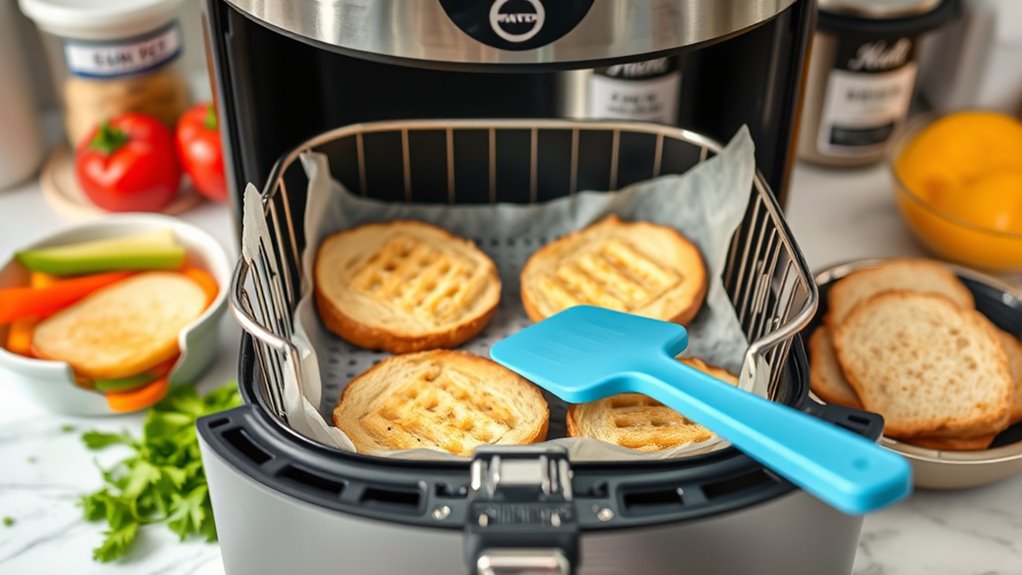
Although air fryers are convenient for preparing gluten-free meals, they can pose cross-contamination risks if not used carefully. Many appliances lack gluten free certification, so residues from previous foods might linger on the basket or tray. To prevent cross contact, always clean your air fryer thoroughly before cooking gluten-free items. Use separate utensils or liners to avoid transferring gluten proteins. Even small crumbs or residue can cause reactions for sensitive individuals. It’s essential to understand that cross contact prevention isn’t just about cleaning; it’s also about maintaining strict separation between gluten-containing and gluten-free foods. Proper cleaning techniques and careful handling are vital to minimizing the risk of gluten exposure. By following these steps, you minimize the risk of gluten exposure and ensure your gluten-free cooking remains safe and uncontaminated.
Choosing the Right Air Fryer for Gluten-Free Meals
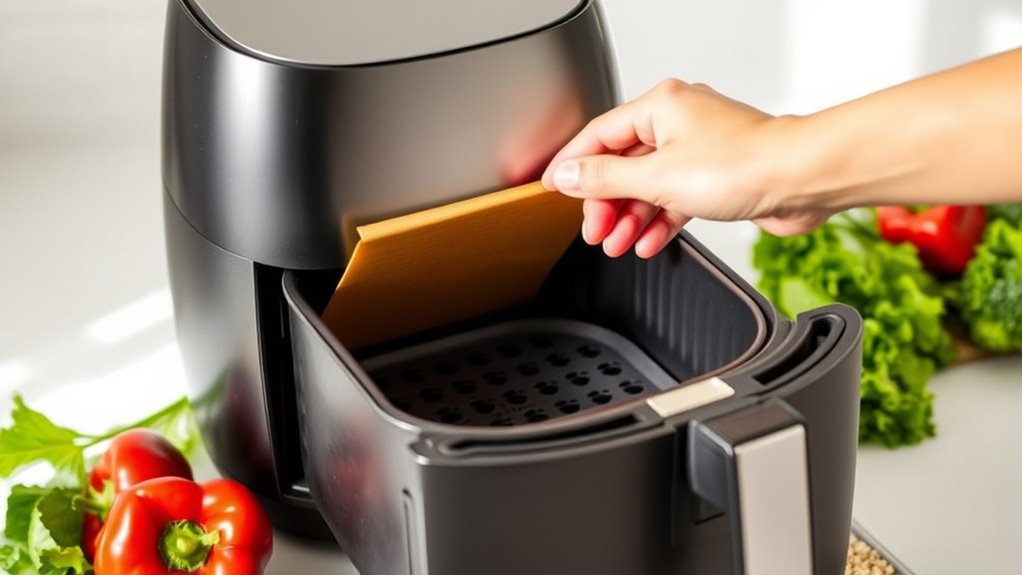
Choosing the right air fryer makes gluten-free cooking easier and safer. Look for models with non-stick surfaces to prevent cross-contact, and consider size options that fit your meal needs. Removable components also simplify cleaning and help keep your kitchen free of gluten residues. Additionally, selecting a model with high temperature control can ensure thorough cooking and reduce the risk of contamination.
Non-Stick Surface Benefits
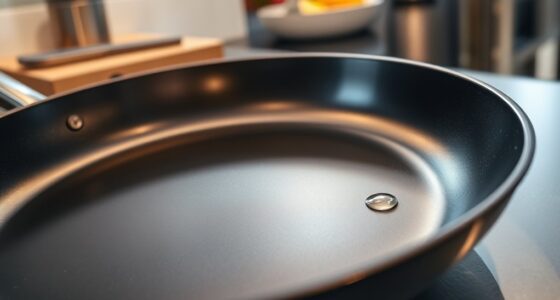
A non-stick surface is vital when selecting an air fryer for gluten-free meals because it makes cooking and cleaning much easier. Look for options with high non-stick durability, ensuring the coating won’t peel or flake over time, which can cause cross-contamination. Coating safety is also essential; choose fryers with food-safe, non-toxic coatings that won’t transfer harmful chemicals to your gluten-free food. A reliable non-stick surface reduces the need for excess oil and makes it simple to remove delicate items without damage. This not only helps maintain the integrity of your gluten-free dishes but also simplifies cleanup, saving you time and effort. Prioritizing non-stick durability and coating safety ensures your air fryer supports a safe, convenient gluten-free cooking experience. Additionally, understanding industry standards for coating safety can help you select a product that minimizes health risks.
Size and Capacity Options
Selecting the right size and capacity for your air fryer directly impacts how efficiently you can prepare gluten-free meals. Consider your typical meal portions and household size when exploring size options. Smaller air fryers, usually 2-3 quarts, are perfect for singles or small households, offering quick heat-up times and easy storage. Larger models, 5-6 quarts or more, accommodate bigger batches, ideal for families or meal prepping. Capacity considerations also include the types of dishes you plan to make; for example, baking or roasting larger items requires more space. Keep in mind that bigger capacity air fryers might take up more counter space and use more power. Choose a size that balances your cooking needs with your available space for a seamless gluten-free cooking experience.
Removable Components Ease
When it comes to preparing gluten-free meals with your air fryer, ease of cleaning and maintenance are crucial considerations. Removable components make this process simple, allowing you to easily access and clean all parts that come into contact with food. Look for an air fryer with dishwasher-safe, removable trays and baskets to save time and ensure thorough cleaning. Easy cleaning reduces the risk of cross-contamination from residual gluten, keeping your meals safe. Opt for models with non-stick coatings that slide out smoothly and are easy to wipe down. This not only streamlines cleanup but also helps maintain your air fryer’s performance over time. Prioritizing removable components ensures you can keep your equipment hygienic, especially when switching between gluten-free and regular cooking. Additionally, choosing a model with certified gluten-free components can provide extra assurance of safety and reduce contamination risks.
Preparing Your Air Fryer Before Cooking Gluten-Free Foods
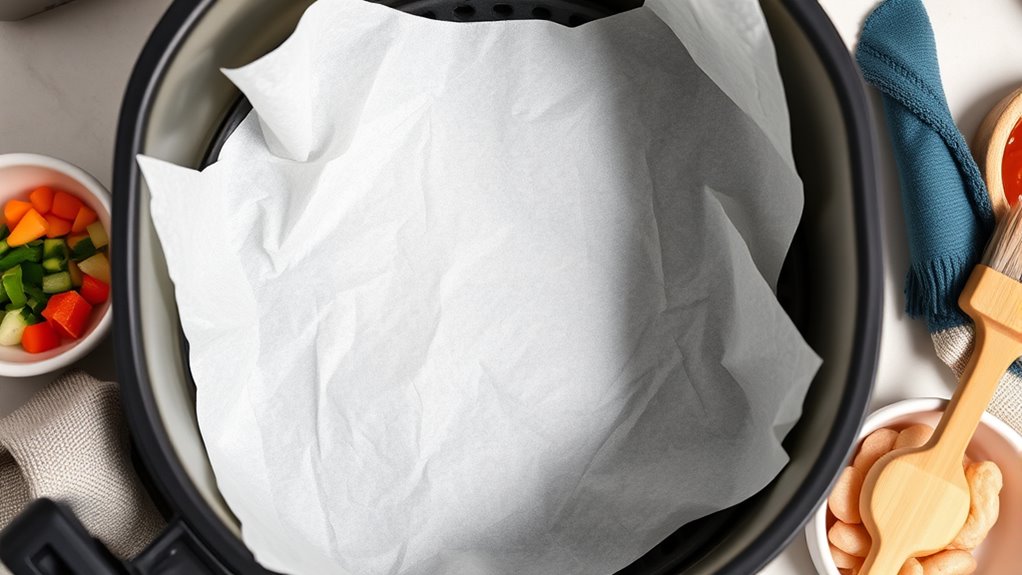
Before cooking gluten-free foods, make sure to clean your air fryer thoroughly to remove any residue. Use separate accessories or baskets to prevent cross-contact with gluten-containing items. Store your gluten-free accessories separately to keep them free from gluten contamination. Additionally, consider privacy policies to understand how your data and preferences are managed during your cooking preparations.
Clean Thoroughly Before Use
Since your air fryer may have accumulated dust, grease, or food residue from previous use, removing it thoroughly before cooking gluten-free foods is essential. This helps prevent cross-contact and guarantees gluten detection remains accurate. Wipe down all surfaces with a damp cloth and mild detergent, paying attention to nooks and crannies. If you’ve used all purpose flour or other gluten-containing ingredients, clean thoroughly to remove any lingering particles. Consider running the air fryer empty at a high temperature for a few minutes to burn off residual residue. This step reduces the risk of gluten contamination and assures your gluten-free meal stays safe. Proper cleaning creates a clean cooking environment, giving you peace of mind with each gluten-free dish you prepare. Additionally, understanding the importance of efficient maintenance can help prolong your air fryer’s lifespan and ensure consistent performance.
Use Separate Accessories
Using separate accessories for your gluten-free foods is essential to prevent cross-contact. Even if your air fryer is thoroughly cleaned, using dedicated tools like tongs, racks, or parchment paper ensures allergen awareness. Look for accessories labeled as gluten-free or verified safe for allergy-sensitive cooking. This minimizes the risk of traces from previous meals contaminating your gluten-free dish. Always check the gluten free labeling on accessories, and avoid reusing tools that previously touched gluten-containing foods. By maintaining separate utensils, you protect yourself from accidental ingestion and ensure your meal remains truly gluten-free. Additionally, understanding waterpark safety can help you create a safe cooking environment, especially when handling multiple appliances or shared equipment. This simple step supports allergen awareness and helps you cook with confidence, knowing cross-contact is effectively minimized right from the start.
Store Separately From Gluten Items
To prevent cross-contact, it’s important to store gluten-free items separately from gluten-containing foods in your air fryer. Keep gluten-free foods in designated allergen-free packaging or containers labeled with gluten free labeling. This simple step helps avoid accidental contamination during storage and preparation. Use separate shelves or storage bins to maintain clear boundaries. Here’s a quick reference:
| Gluten-Free Storage | Gluten-Containing Items | Notes |
|---|---|---|
| Labeled allergen free packaging | Regular packaging | Avoid mixing or stacking. |
| Clear containers | Non-gluten foods | Keep away from potential crumbs. |
| Separate shelves | Shared storage areas | Always double-check labels. |
Additionally, always sanitize your air fryer thoroughly before switching between gluten-free and gluten-containing foods to eliminate any residual crumbs or particles.
Using Separate Accessories for Gluten-Free and Gluten-Containing Items

To prevent cross-contact, it’s important to keep gluten-free and gluten-contaminated accessories separate when using your air fryer. Use designated tools, such as spatulas and tongs, labeled with gluten free labels to avoid confusion. Investing in allergy friendly cookware ensures you don’t transfer gluten particles between items. Keep separate racks or trays for gluten-free foods, and clearly mark each to prevent mix-ups. When handling gluten-free accessories, wash your hands thoroughly before touching other items. Using distinct sets of utensils and baskets minimizes the risk of cross-contamination and keeps your gluten-free meals safe. Regularly clean and sanitize your air fryer and accessories to remove any lingering gluten residues, further reducing the risk of cross-contact. By maintaining dedicated accessories, you help ensure your cooking remains truly gluten-free and allergy-friendly. This simple step can make a significant difference in managing gluten sensitivities.
Cleaning and Maintaining Your Air Fryer to Prevent Gluten Residue
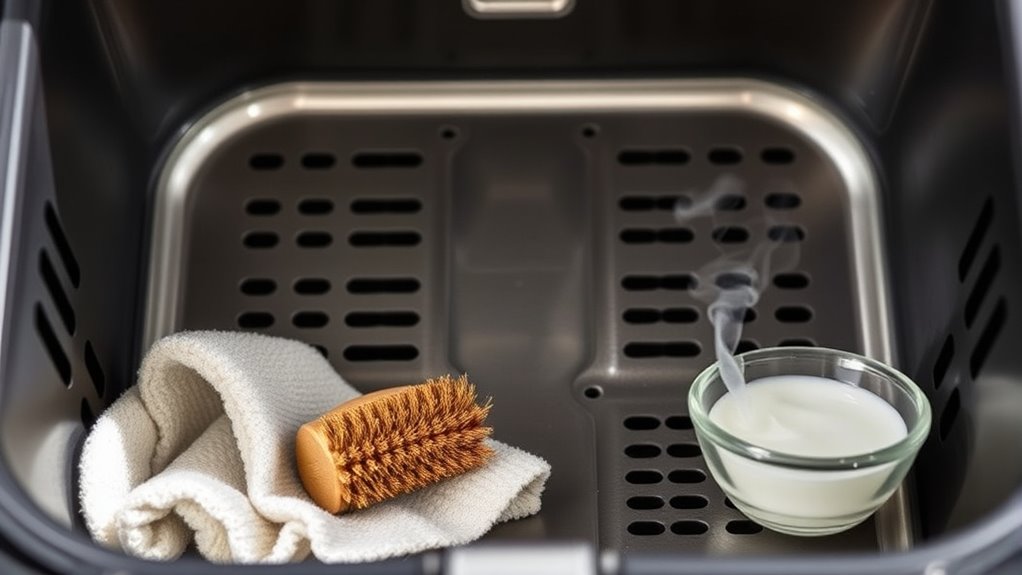
After setting up separate accessories for your gluten-free items, maintaining a clean air fryer is essential to prevent gluten residue from lingering and causing cross-contamination. Regular air fryer maintenance ensures thorough gluten residue removal and keeps your appliance safe. To do this effectively:
- Clean all components, including the basket and tray, with warm, soapy water after each use.
- Use a soft brush or cloth to scrub away any stuck-on particles, paying attention to corners and crevices.
- Avoid harsh abrasives that could damage non-stick surfaces, which can trap gluten residues.
- Implementing security measures in your cleaning routine can help protect against cross-contact and ensure a safer cooking environment.
Best Practices for Handling Gluten-Free Ingredients
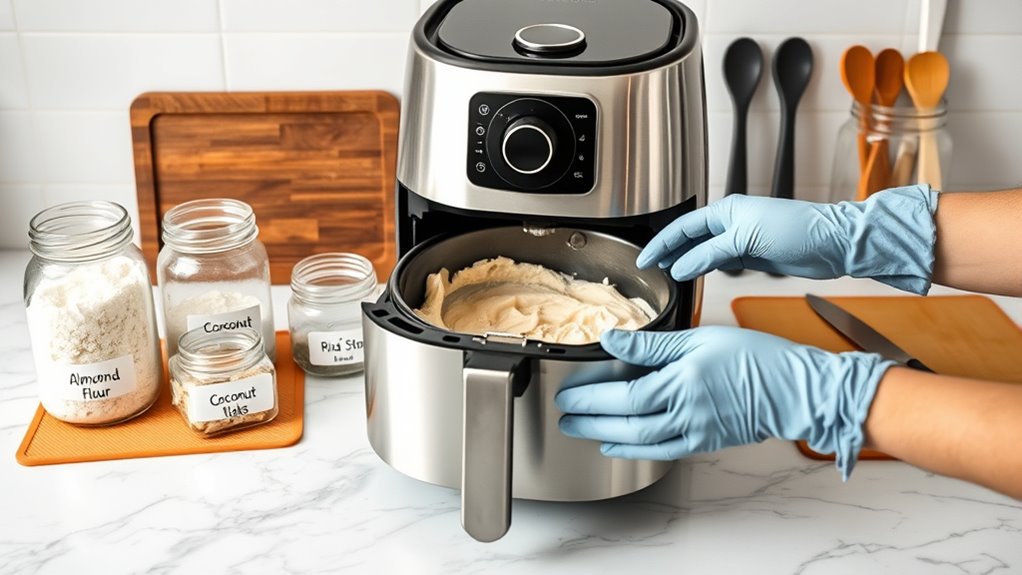
Handling gluten-free ingredients carefully is essential to prevent cross-contamination and maintain their purity. Always wash your hands and utensils thoroughly before working with gluten-free items. When preparing gluten-free baking, use separate cutting boards, bowls, and tools to avoid accidental contact with gluten-containing ingredients. Be mindful during ingredient substitution; choose certified gluten-free products and double-check labels to ensure they haven’t been processed in shared facilities. Keep gluten-free ingredients separate from other items, and avoid mixing them until you’re ready to cook. Label containers clearly to prevent confusion. By following these best practices, you minimize the risk of cross-contact and ensure your gluten-free air-fryer meals stay safe and uncontaminated.
Packaging and Storing Gluten-Free Foods to Avoid Cross-Contact
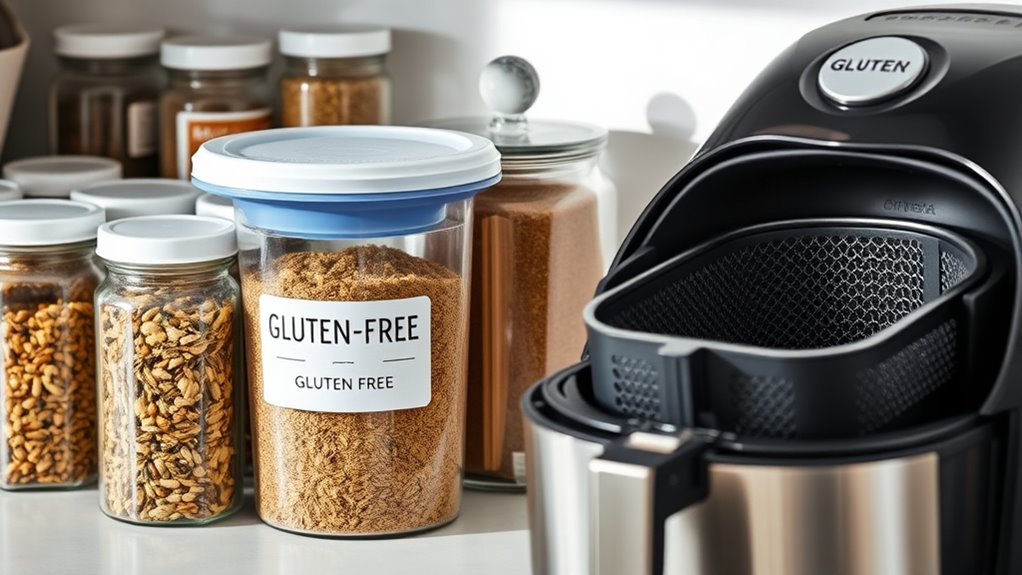
Make sure to label and seal your gluten-free packages clearly to prevent mix-ups. Use separate storage containers for gluten-free foods, and keep them away from gluten-containing products. Proper packaging and organization are key to avoiding cross-contact and keeping your foods safe.
Label and Seal Properly
Have you ever considered how proper labeling and sealing can prevent cross-contact with gluten-free foods? Clear labeling practices help you identify gluten-free items easily, reducing the risk of accidental exposure. Use sealing techniques that ensure packaging is airtight—this keeps gluten particles out and prevents contamination. When sealing, double-check that containers are fully closed and secure. To improve safety, consider these tips:
- Use permanent markers or labels for clear identification
- Seal packaging tightly to prevent air and gluten transfer
- Keep gluten-free items separate from gluten-containing foods with distinct labels
Separate Storage Containers
To prevent cross-contact, you should store gluten-free foods in separate, clearly labeled containers. Proper storage organization guarantees that gluten-free items don’t accidentally come into contact with other products. Use distinct containers for gluten-free foods, and make sure each is labeled with clear container labeling. This helps you quickly identify safe options and reduces the risk of cross-contamination. Consider color-coded lids or labels to further distinguish gluten-free storage from regular foods. Keep gluten-free items on separate shelves or sections in your pantry or fridge. Here’s a simple guide:
| Container Type | Storage Location | Labeling Method |
|---|---|---|
| Glass jars | Pantry shelf | Color-coded tags |
| Plastic bins | Fridge | Waterproof labels |
| Airtight containers | Freezer | Clear labeling |
| Stackable bins | Pantry | Large printed tags |
| Small containers | Drawers | Sticky notes |
Cooking Techniques to Minimize Gluten Transfer

Since cross-contamination is a common concern when cooking gluten-free foods in an air fryer, employing specific techniques can considerably reduce the risk of gluten transfer. Start by using seasoning techniques that avoid shared spice blends, which may contain gluten. Opt for ingredient substitutions—such as gluten-free breadcrumbs or flours—to replace traditional ingredients. To further prevent contamination, always pre-clean your air fryer before cooking gluten-free items. When seasoning, apply separate utensils or use parchment paper liners to avoid direct contact with gluten-containing foods. Consider these strategies:
- Use dedicated utensils and tools for gluten-free dishes
- Layer foods with parchment paper to prevent direct contact
- Select seasoning techniques that avoid cross-contact with gluten-containing ingredients
These steps help ensure your air-fryer remains a safe environment for gluten-free cooking.
Communicating With Others About Gluten-Free Cooking Needs
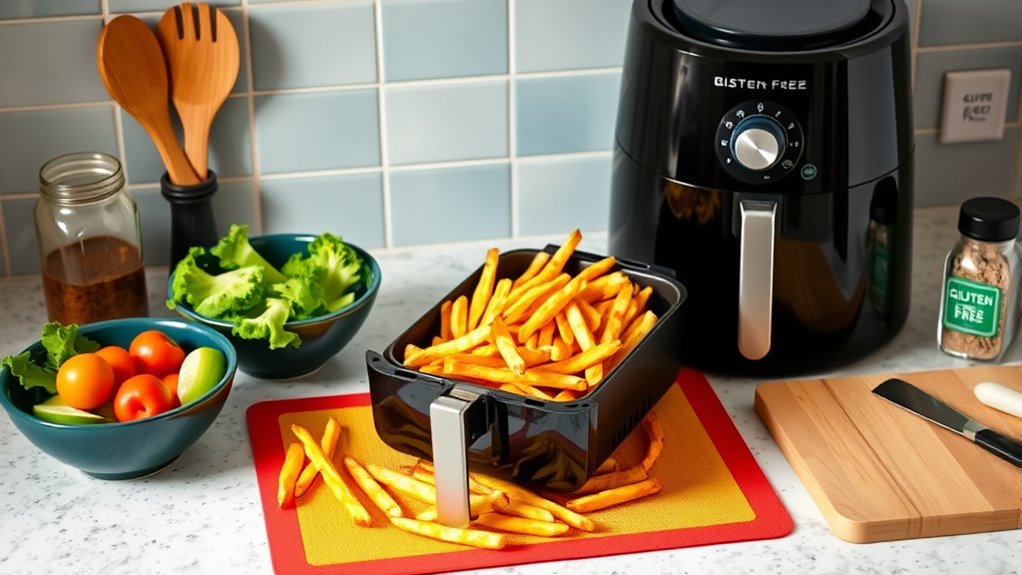
Wondering how to guarantee others understand your gluten-free needs? Clear communication is key. Start by explaining your allergy awareness and the importance of avoiding cross-contamination. Use straightforward language and be specific about what’s safe. Practice good dining etiquette by politely reminding hosts or friends about your restrictions and offering tips for gluten-free prep. To help others remember, share this quick guide:
| Situation | What to Say | Why It Matters |
|---|---|---|
| Sharing a meal | “Please use separate utensils.” | Prevents gluten transfer |
| In the kitchen | “Can I assist with gluten-free prep?” | Ensures safe handling |
| During cleanup | “Let’s clean thoroughly to avoid cross-contact.” | Maintains allergy awareness |
Open, respectful dialogue fosters understanding and makes gluten-free cooking safer for everyone.
Tips for Eating Out and Using Shared Kitchen Equipment
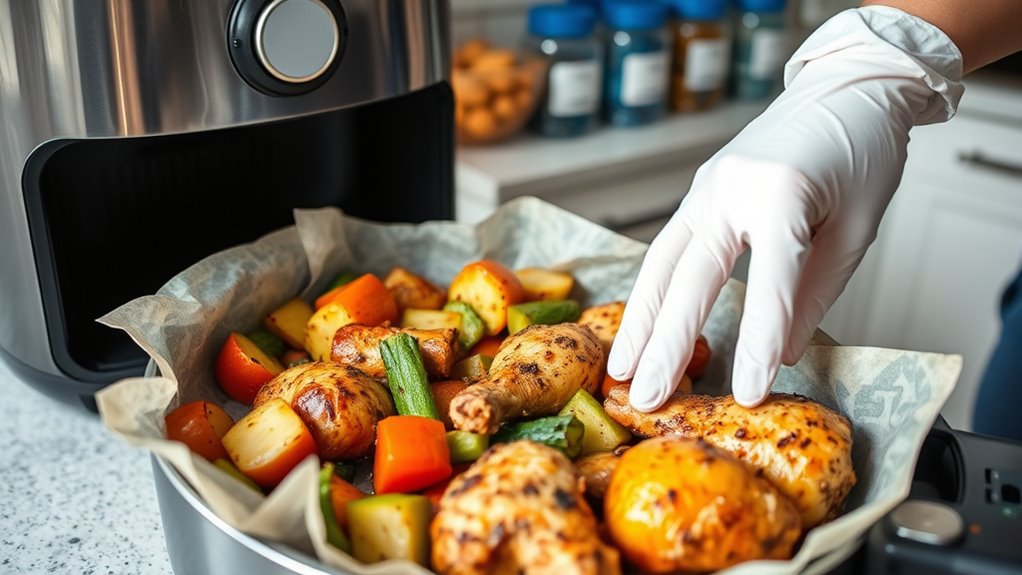
Eating out or sharing kitchen equipment can be challenging, but with careful planning, you can minimize gluten exposure. Always prioritize kitchen safety by asking detailed questions about ingredient labeling and food preparation. When dining out, inform staff about your gluten-free needs and confirm that cross-contact is avoided. When using shared kitchen tools, take extra steps such as thoroughly cleaning surfaces and utensils before use.
Prioritize kitchen safety by asking about ingredients and thoroughly cleaning shared tools before use.
To stay safe, consider these tips:
- Bring your own utensils or cutting boards to prevent cross-contact
- Ask about ingredient labels to ensure no gluten-containing ingredients are used
- Request that shared equipment, like air fryers and countertops, be properly cleaned before preparing your food
Being proactive helps you manage gluten exposure and maintain safety in shared environments.
Frequently Asked Questions
How Can I Tell if My Air Fryer Is Truly Gluten-Free Safe?
To know if your air fryer is truly gluten-free safe, start by checking allergen labeling on the device and accessories. Consider gluten testing the fryer or its components to verify no traces remain. Regularly clean the fryer thoroughly after each use, especially if it’s shared with gluten-containing foods. These steps help minimize cross-contamination, giving you confidence in its safety for gluten-free cooking.
Are There Specific Brands of Air Fryers Better for Gluten-Free Cooking?
When choosing an air fryer for gluten-free cooking, look for brands with non-stick coatings that resist cross-contamination, making cleanup easier. Also, opt for models that are dishwasher-compatible, so you can thoroughly clean all parts and prevent gluten residue. Some popular brands like Philips and Ninja offer these features, ensuring safer gluten-free cooking. Always check product details to confirm these qualities before purchasing.
Can Gluten Residues Be Detected Visually or Through Smell After Cleaning?
You can’t reliably detect gluten residues with visual cues or odor detection alone. Gluten is usually invisible and doesn’t have a strong smell, so even after cleaning, traces might still be present. To guarantee safety, thoroughly clean your air fryer with hot water and soap, and consider using separate tools or a dedicated gluten-free basket. When in doubt, a new liner or coating can help prevent cross-contamination.
How Often Should I Replace Accessories to Prevent Gluten Cross-Contact?
Think of your air fryer accessories like delicate dance partners—they need replacing to keep the rhythm pure. To prevent cross contact, replace accessories every 3-6 months, especially if you cook gluten-containing foods frequently. Regular accessory replacement is essential for cross contact prevention, ensuring no gluten residues linger. This simple step keeps your gluten-free meals safe and your kitchen free from unwanted surprises, allowing you to enjoy your food worry-free.
What Are the Best Storage Practices to Prevent Gluten Cross-Contamination?
You should prioritize proper storage organization to prevent gluten cross-contamination. Keep gluten-free items separate from gluten-containing products, ideally in airtight containers and designated shelves. Label everything clearly to avoid mix-ups. Regularly clean storage areas and avoid sharing containers or utensils. By maintaining organized storage and practicing contamination prevention, you reduce the risk of gluten transfer and ensure your gluten-free foods stay safe and uncontaminated.
Conclusion
By following these tips, you can confidently enjoy gluten-free air fryer meals without worry. Did you know that cross-contact can occur even with as little as 1/10th of a teaspoon of gluten? Staying vigilant with proper cleaning, separate accessories, and clear communication helps prevent contamination. With careful practices, you’ll reduce risks and savor delicious, safe gluten-free dishes every time you cook in your air fryer.
Halloween Picks
halloween
As an affiliate, we earn on qualifying purchases.