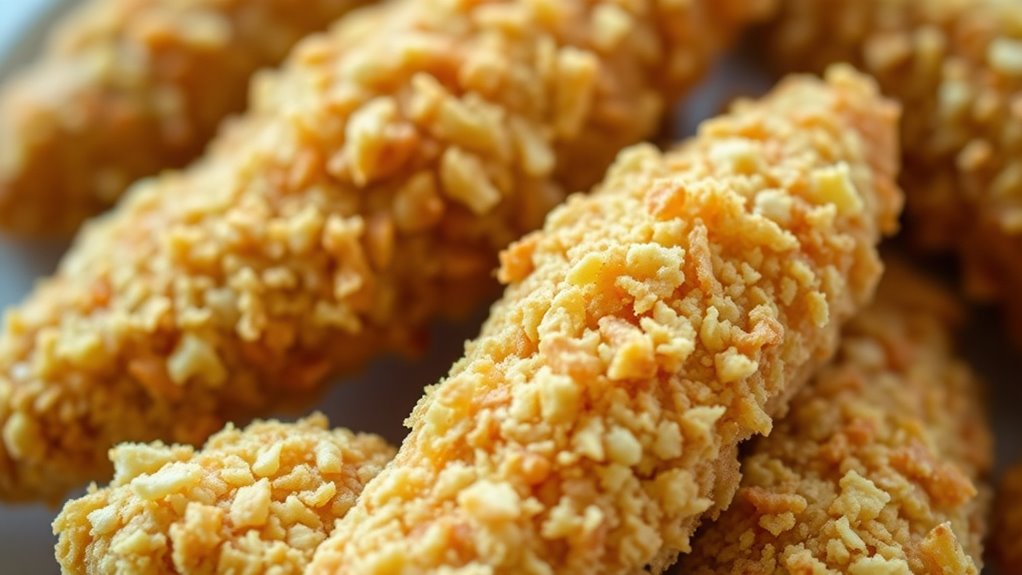

To get crispy gluten-free breading, choose ingredients like rice flour, almond flour, or cornstarch, which promote crunch. Use techniques such as double dipping and ensuring your coating ingredients stay dry, and preheat your pan or oven for quick crisping. Incorporate herbs or spices into your mix for flavor and texture. If you keep these tips in mind, you’ll be on your way to perfect, crispy gluten-free breading—more details await to guide your success.
Key Takeaways
- Use rice flour, cornstarch, or almond meal for a light, crispy coating.
- Apply a double-dip process with a hot, well-preheated pan or oven for maximum crunch.
- Incorporate herbs and spices into the breading to add flavor without sacrificing crispness.
- Pat food dry and avoid excess moisture to prevent sogginess and ensure crisp coating.
- Do not overcrowd the pan; maintain proper heat to promote even browning and crunch.
Choosing the Right Gluten-Free Breading Ingredients
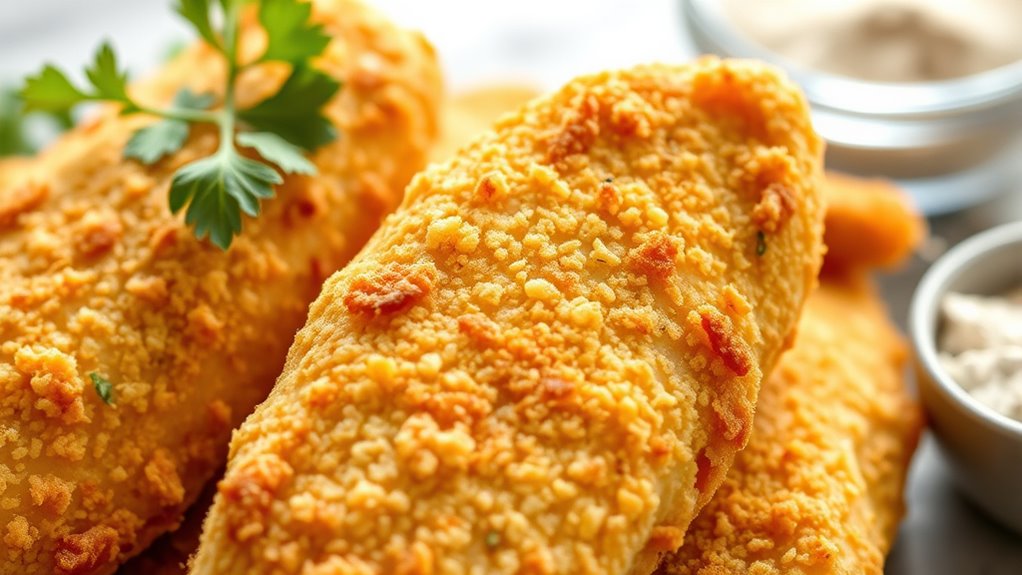
When selecting gluten-free breading ingredients, it’s essential to prioritize options that provide both texture and flavor without relying on wheat or gluten-containing grains. Look for gluten-free breading alternatives like almond flour, rice flour, or chickpea flour, which add a satisfying crunch and absorb flavors well. Incorporate flavor infusion techniques by seasoning your ingredients with herbs, spices, or even nutritional yeast to enhance taste without extra bulk. Combining different gluten-free flours can also improve texture and prevent a bland result. Experimenting with these options allows you to create a breading that’s both crispy and flavorful, satisfying your cravings while keeping your meal entirely gluten-free. Remember, the right ingredients set the foundation for a delicious, crispy coating. Understanding texture and flavor balances is crucial when developing a successful gluten-free breading recipe.
Techniques for Achieving Maximum Crispiness
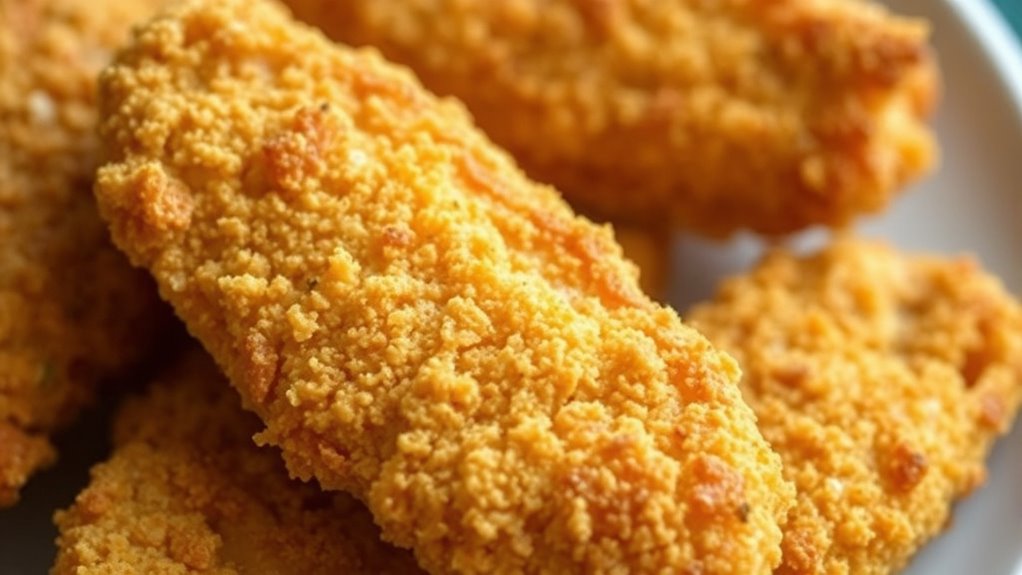
Achieving maximum crispiness in your gluten-free breading hinges on employing specific techniques that enhance texture. One effective method is choosing the right breading alternatives, such as rice flour or cornstarch, which create a light, crispy coating. Dipping your food twice or applying a thin initial layer helps build a crunchier exterior. For flavor enhancement, season your breading mixture well; spices and herbs can add depth without sacrificing crispness. Using a hot oven or a preheated skillet ensures the coating sets quickly and crisps up properly. Additionally, avoid overcrowding the pan, which traps moisture and softens the crust. Incorporating best anime movies into your culinary routine might seem unrelated, but it can inspire creative cooking ideas and presentation. By combining these techniques, you’ll achieve a satisfying, crispy gluten-free breading that stands out in both texture and taste.
Popular Gluten-Free Breading Recipes to Try
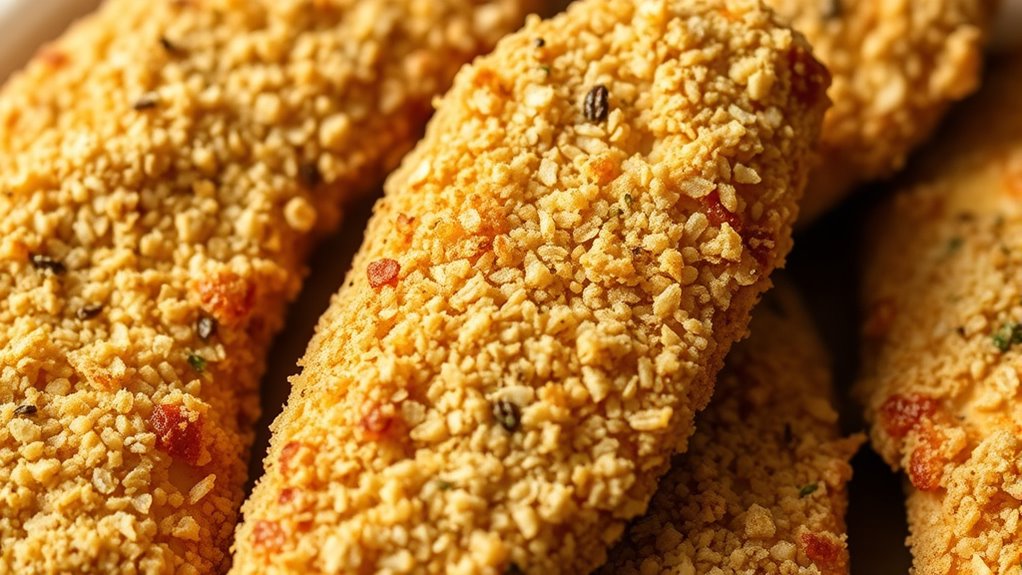
If you’re looking to elevate your gluten-free dishes, exploring popular breading recipes can make a real difference. These recipes often combine rice flour, cornstarch, or almond meal with herbs and spices for flavor and texture. For crispy results, consider using versatile kitchen equipment like a food processor to blend ingredients smoothly or a shallow dish for even coating. Gluten free baking techniques play an essential role in achieving the perfect crunch, so choose recipes that incorporate binding agents like xanthan gum or egg for better adhesion. Popular options include seasoned chickpea flour breading, coconut flour coatings, or a mix of gluten-free breadcrumbs. These recipes are easy to adapt and can be used for chicken, fish, vegetables, or even tofu, ensuring a deliciously crispy bite every time.
Tips for Properly Preparing and Dredging Your Food

Properly preparing and dredging your food is essential for a crispy, even coating. Start by patting your item dry to help the breading adhere better. Use a three-step process: dip in seasoned flour or a breading alternative, then into beaten eggs or a binding substitute, and finally coat with your chosen breading or crumb mixture. For flavor enhancements, add herbs or spices to your breading for extra taste. To guarantee even coverage, gently shake off excess before frying or baking. Here’s a simple guide:
| Step | Ingredient Options | Purpose |
|---|---|---|
| Dredge in | Gluten-free flour, almond meal | Binds and adds flavor |
| Egg wash | Eggs or dairy-free binder | Helps breading stick |
| Coating | Panko, crushed nuts, seeds | Crispy texture, flavor boost |
Adding a layer of flavor to your breading can elevate the overall dish and complement your chosen seasoning.
Troubleshooting Common Crispy Breading Issues
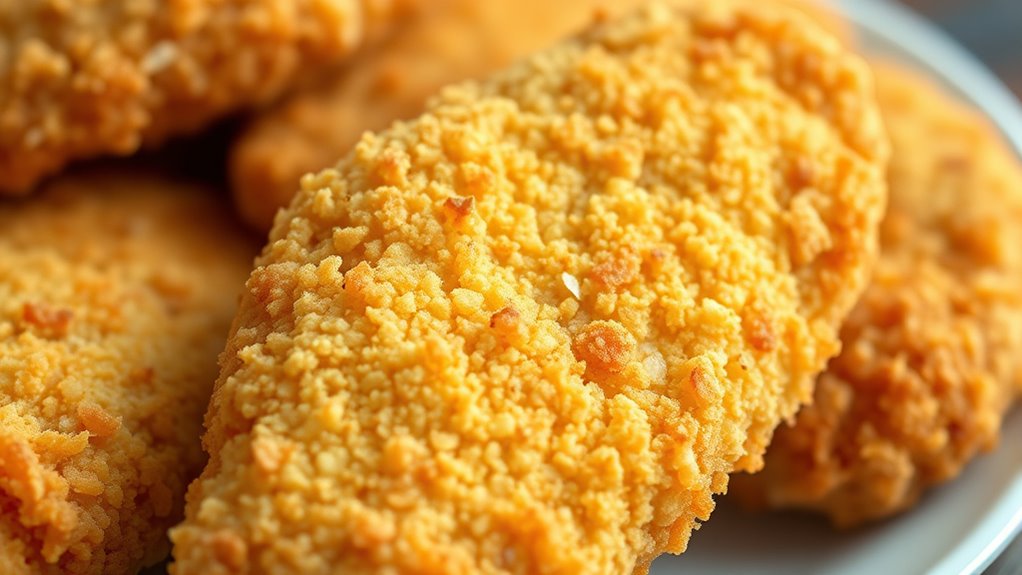
Crispy breading can sometimes turn out uneven or soggy despite your best efforts, but most issues often stem from common pitfalls. If your breading isn’t as crispy as you’d like, consider experimenting with different breading alternatives like rice flour or cornstarch, which can improve crunch. Make certain your coating is evenly applied and not too thick, as excess moisture can cause sogginess. Sometimes, adding flavor enhancements like herbs or spices to your breading mixture also helps reinforce crispiness and adds extra taste. Confirm your oil is hot enough before frying—this prevents sogginess and promotes even browning. Finally, avoid overcrowding the pan, which drops the temperature and results in less crispy breading. Addressing these points helps you troubleshoot and achieve the perfect crispy, gluten-free coating every time.
Frequently Asked Questions
Can Gluten-Free Breading Be Used for Frying at High Temperatures?
You can definitely use gluten-free breading for frying at high temperatures, but be aware of cross compatibility issues that might affect the coating’s crispiness. To guarantee it holds up, consider alternative cooking methods like double-dipping or using a sturdy binder. Keep the oil hot enough, and don’t overcrowd the pan, so the breading crisps evenly without falling apart or becoming soggy.
How Do I Store Leftover Gluten-Free Breading for Future Use?
Think of storing leftover gluten-free breading like preserving a precious recipe. You should place it in an airtight container and keep it in the refrigerator for up to a week. For longer storage, freezing techniques work best—wrap it tightly or use a freezer bag to prevent moisture loss. When you’re ready to use it again, just thaw and re-crisp for that perfect crunch.
Is Gluten-Free Breading Suitable for Baking or Only Frying?
You might wonder if gluten-free breading works for baking or just frying. It’s versatile enough for baking applications, but keep in mind the texture differences. Breading designed for frying tends to be crispier when baked, especially if you use a good coating. For best results, adjust your baking time and temperature. So, yes, gluten-free breading can be suitable for baking, but expect some variation in texture compared to frying.
Are There Health Benefits to Using Gluten-Free Breading Options?
Think of gluten-free breading as a shield for your health journey. By choosing options rich in gluten-free antioxidants, you fight off free radicals, boosting your immune system. Plus, the digestive benefits help your gut stay happy and balanced. So, yes, switching to gluten-free breading can offer health perks, making your meals not only tasty but also nourishing, supporting your overall well-being every step of the way.
Can Gluten-Free Breading Be Customized for Different Dietary Restrictions?
You can definitely customize gluten-free breading to suit various dietary restrictions. By using gluten-free alternatives like almond flour, coconut flour, or gluten-free oats, you can create options for those with nut allergies or sensitivities. Adjust seasonings and ingredients to meet specific needs, like low-sodium or paleo diets. This flexibility allows you to develop breadings that cater to different dietary customization, ensuring everyone can enjoy crispy, delicious dishes tailored to their health requirements.
Conclusion
With the right ingredients and techniques, you can enjoy irresistibly crispy gluten-free breading that rivals traditional options. Remember, using a mix of gluten-free flours and proper dredging methods makes all the difference. Did you know that gluten-free foods now make up over 10% of the U.S. market? So, go ahead—try these tips, experiment with recipes, and savor that perfect crunch every time!