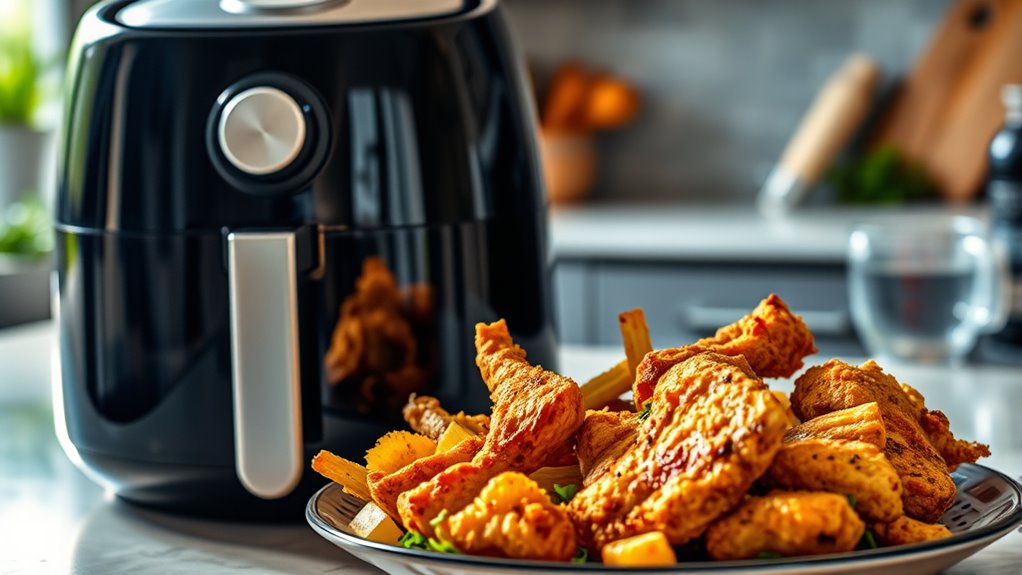

Air frying is generally healthier because it uses hot air to cook food, reducing the amount of oil absorbed. This leads to lower calorie and fat content compared to traditional deep frying. Less oil means fewer unhealthy trans fats and saturated fats, which supports better heart health. Additionally, air frying helps preserve more nutrients due to shorter cooking times. If you want to understand how this can benefit your meals and health, there’s more to discover below.
Key Takeaways
- Air frying significantly reduces oil absorption, leading to lower calorie and fat content compared to deep frying.
- It preserves more nutrients due to shorter cooking times and lower temperatures, supporting better nutrient retention.
- Using less oil decreases unhealthy trans fats and saturated fats, promoting heart health.
- Foods cooked in an air fryer can look crispy and golden without high fat, maintaining appealing texture without added calories.
- Overall, air frying offers a healthier alternative by minimizing fat intake while maintaining flavor and quality.

Many people wonder if air frying is a healthier cooking method compared to traditional frying. The answer often hinges on how much oil the food absorbs during cooking and how well nutrients are preserved. When you deep fry, you typically submerge food in hot oil, which leads to vital oil absorption. This extra oil can dramatically increase the calorie content of your meals and contribute to health issues like heart disease. In contrast, air frying uses hot air circulation to cook your food, requiring little to no added oil. As a result, your food tends to absorb less oil, making it a lower-calorie option without sacrificing texture or flavor.
Because air frying requires less oil, it naturally reduces the amount of fat in your meals. This reduction can be especially beneficial if you’re watching your calorie intake or trying to limit saturated fat consumption. However, some people worry that because air-fried foods often look crispy and golden, they might be overly processed or less healthy. The truth is, with proper technique and healthy ingredients, air frying can help you prepare meals that are just as flavorful but with considerably less fat and fewer calories. Plus, since you’re using less oil, you’re also decreasing the intake of unhealthy trans fats often found in fried foods.
Another vital aspect to consider is nutrient retention. When you fry foods in oil, the high temperatures and prolonged cooking times can degrade sensitive nutrients, especially vitamins like vitamin C and certain B vitamins. Air frying, on the other hand, typically involves shorter cooking times and lower oil temperatures, which helps preserve more of the food’s original nutrients. This means that your vegetables, proteins, or whole grains are more likely to retain their natural vitamins and minerals, making your meal more nutritious overall. Additionally, understanding oil absorption can help you make more informed, health-conscious cooking choices.

bella 6 Qt Slim Air Fryer, Fits-anywhere™ Kitchenware, EverGood™ Ceramic Nonstick Coating, Adjustable Temperature, 6 Preset Cooking Options, 60 Min Auto Shutoff w Audible Tone, 5lb Capacity, Oatmilk
Slim Design for Any Space: The bella 6qt Air Fryer features a sleek, space-saving design, perfect for fitting…
As an affiliate, we earn on qualifying purchases.
As an affiliate, we earn on qualifying purchases.
Frequently Asked Questions
Does Air Frying Reduce Carcinogen Formation Compared to Deep Frying?
Air frying does reduce carcinogen formation compared to deep frying because it uses less oil and operates at a higher smoke point, which minimizes oil breakdown and smoke production. When oil remains stable at high temperatures, fewer harmful compounds form. By avoiding the prolonged oil heating of deep frying, air frying helps keep carcinogen levels lower, making it a safer, healthier choice for preparing crispy foods.
Can Air Frying Preserve Nutrients Better Than Traditional Frying Methods?
Air frying can better preserve nutrients compared to traditional frying methods because it uses less oil and cooks at lower temperatures, which helps maintain the food’s natural vitamins and minerals. You’ll notice improved cooking quality with less nutrient loss, making your meals healthier. By choosing air frying, you enhance nutrient retention and enjoy food that retains its flavor and texture without sacrificing nutritional value.
Are There Specific Foods That Benefit More From Air Frying Health-Wise?
You’ll find that vegetables benefit greatly from air frying because it helps retain nutrients without added oils. Lean meats like chicken or fish also become healthier options since air frying reduces fat content while maintaining flavor. By choosing nutrient-dense vegetables and lean meats, you maximize health benefits. This method allows you to enjoy crispy textures without sacrificing your dietary goals, making your meals both tasty and nutritious.
How Does the Type of Oil Used Impact Health During Air Frying?
Choosing the right oil can make your air frying healthier. You’ll want to opt for oils with high oil quality and smoke points, like avocado or olive oil, to handle the cooking temperature without breaking down. This not only preserves nutrients but also minimizes harmful compounds. Using better oils guarantees your food stays flavorful and healthful, letting you enjoy crispy treats without worry.
Is Air Frying Suitable for People on Low-Fat or Low-Calorie Diets?
Yes, air frying suits people on low-fat or low-calorie diets because it promotes calorie control and fat reduction. You can enjoy crispy textures without added oils, cutting down on unnecessary fats. By choosing healthier oils and portioning your servings, you maintain your diet goals while still savoring tasty, satisfying meals. Air frying makes it easier to stick with your health plan without sacrificing flavor.

Air Fryer Magnetic Cheat Sheet Set – Air Fryer Accessories Cookbook – As Seen on the Today Show an Easy to Use AirFryer Time Chart Set – Strong Magnet Quick Reference Cooking Guide for Frying (Black)
AIR FRYER MAGNET: This Air fryer times and temp guide magnet is carefully crafted with waterproof, oil-resistant, and…
As an affiliate, we earn on qualifying purchases.
As an affiliate, we earn on qualifying purchases.
Conclusion
Think of air frying as a gentle breeze guiding you toward healthier choices. While it reduces fat and calories, remember it’s still a tool—your mindful decisions are the true compass. Embrace this lighter way of cooking as a symbol of caring for your well-being, letting each meal be a step toward balance. Ultimately, it’s not just about the method, but the intention behind your choices that shapes your health journey.
Air Fryer Paper Liners, 125Pcs Parchment Paper, Air Fryer Liners Disposable for Microwave, Non-Stick Air Fryer Liner Square Free of Bleach (8IN)
Healthy Materials: The parchment liners for ninja air fryer made of raw wood and silicone coating, unbleached, no…
As an affiliate, we earn on qualifying purchases.
As an affiliate, we earn on qualifying purchases.
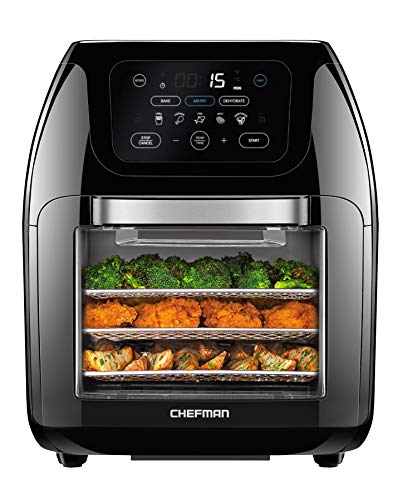
CHEFMAN Multifunctional Digital Air Fryer+ Rotisserie, Dehydrator, Convection Oven, 17 Touch Screen Presets Fry, Roast, Dehydrate, Bake, XL 10L Family Size, Auto Shutoff, Large Easy-View Window, Black
Versatile countertop cooking: Air fry, bake, dehydrate, rotisserie, or roast to crispy perfection in one convenient appliance
As an affiliate, we earn on qualifying purchases.
As an affiliate, we earn on qualifying purchases.