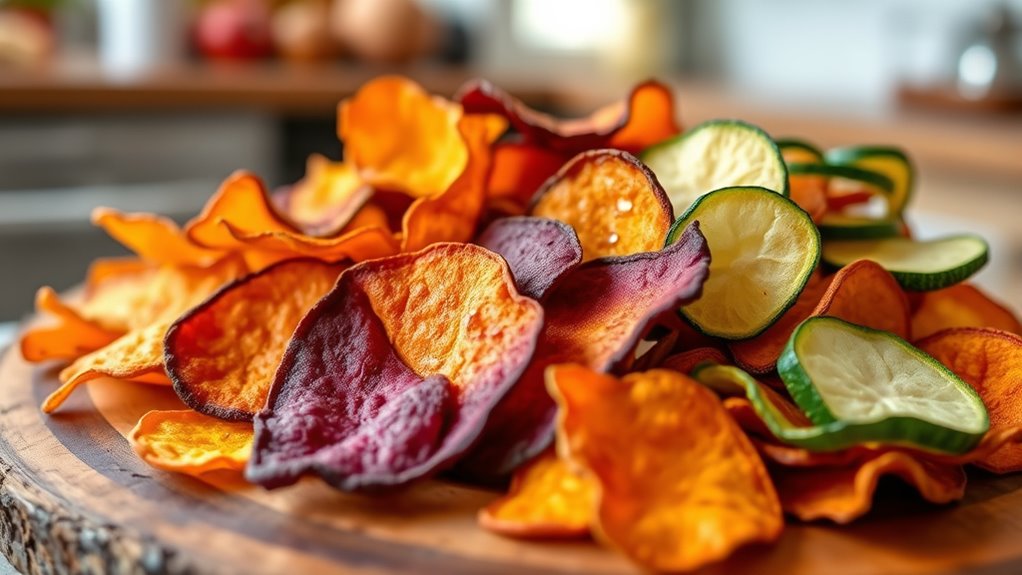

Making homemade kid-friendly veggie chips is easier and healthier than store-bought options. Choose firm, colorful vegetables like sweet potatoes, carrots, or zucchini, then slice them thinly and bake with minimal oil until crispy. Involving kids in choosing veggies or seasoning adds fun and encourages healthy eating. You’ll enjoy vibrant, crunchy snacks free of artificial ingredients. Keep exploring for expert tips on perfecting your homemade veggie chips and making snack time exciting!
Key Takeaways
- Homemade veggie chips use fresh, natural ingredients without preservatives, making them healthier than store-bought options.
- Precise slicing and baking techniques ensure crispy, evenly cooked chips that kids love more than processed snacks.
- Customizable flavors and fun presentation make homemade chips more appealing and engaging for children.
- Involving kids in preparation encourages healthier eating habits and greater enjoyment of homemade snacks.
- Proper storage preserves freshness and crunch, keeping homemade chips superior in taste and texture over store-bought versions.
Choosing the Right Vegetables for Crispy Chips

When choosing vegetables for crispy chips, you want options that naturally dehydrate well and turn crispy without too much fuss. Sweet options like sweet potatoes, carrots, and beets are excellent because they develop a satisfying crunch and appeal to kids’ taste buds. Don’t overlook exotic vegetables like parsnips, zucchini, or kohlrabi—they add unique flavors and textures, making your chips more interesting. These vegetables tend to crisp up nicely when sliced thinly and baked or dehydrated properly. Focus on vegetables with firm flesh and low water content to guarantee they become crispy rather than soggy. By selecting a mix of sweet options and exotic vegetables, you’ll create a colorful, tasty variety of homemade veggie chips that kids will love to snack on.
Essential Tools and Ingredients for Homemade Veggie Chips

To make delicious homemade veggie chips, you’ll need a few essential tools like a sharp knife or mandoline and a baking sheet. Choosing fresh vegetables such as sweet potatoes, zucchinis, or carrots guarantees your chips turn out crispy and flavorful. Don’t forget to gather basic seasonings like salt, pepper, or paprika to add that perfect touch.
Kitchen Tools Needed
Creating homemade veggie chips requires just a few essential tools and ingredients. First, you’ll need a sharp knife or mandoline slicer to thinly and evenly slice your vegetables, ensuring crispness. A large mixing bowl helps toss the slices with oil and seasonings. For frying, a deep, heavy-duty pot or fryer is ideal to maintain consistent frying techniques and prevent splatters. Use a slotted spoon or spider strainer to safely remove chips from hot oil. Once cooked, place chips on paper towels to drain excess oil. To store your veggie chips, invest in airtight storage containers that keep them fresh and crispy. Having these tools on hand makes the process straightforward, safe, and efficient, resulting in delicious, homemade chips every time.
Fresh Vegetable Choices
What vegetables work best for homemade chips? To guarantee your chips turn out crispy and delicious, choose vegetables with high vegetable freshness and seasonal produce. Fresh, firm vegetables maintain their texture and flavor during baking. When selecting produce, look for vibrant colors and avoid limp or bruised options. Additionally, handling your vegetables properly during preparation can help preserve their quality and ensure optimal results, much like proper bike gear shifting and tire maintenance extend the lifespan of a bicycle drivetrain components. Here are some great choices:
- Sweet potatoes
- Carrots
- Zucchini
- Kale (for kale chips)
- Beets
Opting for seasonal produce ensures better taste and nutrients. Using fresh vegetables also reduces the need for added preservatives and enhances the overall quality of your homemade veggie chips. Remember, the key is to start with the freshest ingredients you can find to make kid-friendly snacks that beat store-bought options.
Essential Seasonings
Adding the right seasonings can elevate your homemade veggie chips from simple snacks to flavorful treats your kids will love. Seasoning blends are essential for creating appealing flavor enhancements that make the chips irresistible. Consider using kid-friendly options like cinnamon sugar, mild paprika, or garlic powder to add depth without overpowering. Keep seasonings light and balanced to ensure they complement the vegetables’ natural flavors. You might also experiment with herbs such as oregano or parsley for a fresh twist. Pre-mixed blends save time and ensure consistent flavor. Remember, the goal is to enhance the chips without masking the veggies’ natural taste. With a few well-chosen seasonings, you’ll turn ordinary veggie chips into a delicious, wholesome snack your kids will ask for again and again. Incorporating flavor profiles can help you create a variety of tasty options to keep snack time interesting.
Step-by-Step Guide to Baking Perfect Veggie Chips

To make perfect veggie chips, start by selecting fresh vegetables for the best flavor and texture. Then, slice them as thin and even as possible to guarantee they bake evenly. Finally, bake at the right temperature to achieve crispy, golden chips every time.
Choose Fresh Vegetables
Choosing the right vegetables is key to making delicious, crispy veggie chips. Freshness impacts texture and flavor, so always select vegetables at their peak. Look for vibrant colors, firm textures, and no blemishes or soft spots. Using seasonal produce ensures better vegetable freshness, which enhances taste and nutritional value. When shopping, choose vegetables that feel firm and appear bright and lively. Avoid vegetables that look wilted or have dark spots. Locally sourced produce often offers superior freshness compared to stored options. Fresh vegetables cook evenly and develop crispiness more reliably. Remember, the quality of your ingredients makes a big difference in the final crunch and flavor of your chips. Prioritize seasonal, fresh vegetables for the best kid-friendly snack.
Slice Uniformly Thin
Achieving perfectly crispy veggie chips starts with slicing your vegetables as uniformly thin as possible. When you slice uniformly, the chips cook evenly, preventing some from burning while others remain soggy. Use a sharp knife or mandoline for consistent thickness. Aim for even thickness, about 1/16 to 1/8 inch, to ensure uniform crispiness. Keep your slices organized to avoid uneven baking. Additionally, paying attention to proper slicing techniques can further improve your results.
Bake at Proper Temperature
Once your veggie slices are uniform, the next step is to set your oven to the right temperature. Maintaining the correct oven temperature guarantees your chips bake evenly and become crispy without burning. Typically, a temperature of 350°F (175°C) works well, but check your recipe for specifics. Keep an eye on the baking duration, usually around 15-20 minutes, adjusting as needed. Here are some tips to get it just right:
- Use an oven thermometer for accuracy
- Rotate the baking sheet halfway through
- Keep slices spaced evenly for uniform baking
- Avoid opening the oven door too often
- Check for crispness near the end of the baking duration
- Frictional unemployment can sometimes be an opportunity to explore new culinary techniques or diversify your snack options.
Proper oven temperature and timing are key to perfect veggie chips.
Flavor Variations to Make the Chips Irresistible

Adding bold and fun flavors can transform simple veggie chips into irresistible snacks your kids will love. Try seasoning them with kid-friendly spices like cinnamon sugar, mild paprika, or cheesy herbs for variety. You can also serve the chips with dipping sauces such as hummus, yogurt-based dips, or mild salsa to enhance flavor and make snacking more interactive. To keep your chips fresh and crispy, store them in airtight storage containers away from moisture. Experimenting with different flavor combinations not only keeps snack time exciting but also encourages kids to enjoy healthy vegetables in a new way. Remember, the key is balancing flavors so they’re appealing without overwhelming young palates. Incorporating flavor-enhancing techniques can make your homemade veggie chips even more appealing. With these simple variations, your homemade veggie chips become a hit every time.
Tips for Achieving the Right Texture and Crispiness
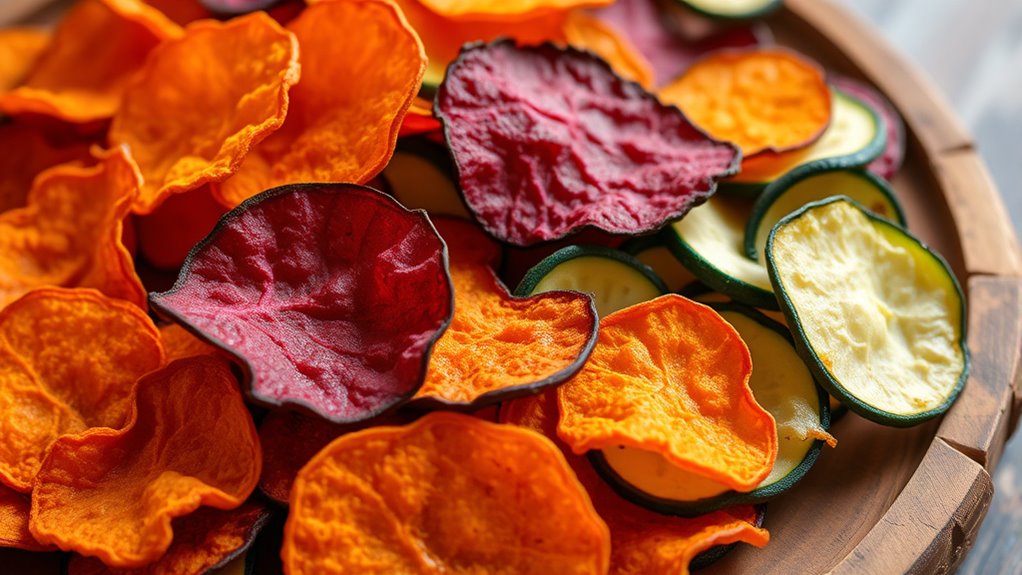
Getting the perfect crispy texture in veggie chips starts with choosing the right vegetables and slicing them evenly. Thin, uniform slices ensure even baking and better texture enhancement. To boost crispiness, experiment with different baking techniques like using a low oven temperature or flipping the chips halfway through. Properly drying the veggies before baking removes excess moisture, resulting in crunchier chips. Avoid overcrowding the baking sheet, allowing hot air to circulate and crisp the slices evenly. Additionally, a light coating of oil can improve browning and texture. For an extra crisp finish, consider baking the chips until they’re golden brown but not burnt. Keep an eye on them, as oven temperatures can vary. Using an airless paint sprayer can help achieve an even coating of oil, leading to a more consistent crispiness. These tips help you master baking techniques for the ideal texture and crunch.
Creative Ways to Serve and Store Veggie Chips

You can make snack time more fun by creatively serving veggie chips in various ways, whether as a standalone treat, a crunchy topping, or part of a colorful platter. Creative presentation can turn simple chips into eye-catching snacks—try arranging them on a vibrant plate with fresh veggies and dips. For storage solutions, keep veggie chips crisp by storing them in airtight containers or resealable bags away from moisture and direct sunlight. You might also consider dividing larger batches into smaller portions to maintain freshness. If you want to get even more inventive, serve veggie chips in mini cones or colorful bowls to add visual appeal. These simple ideas make snack time more engaging while keeping your veggie chips fresh and delicious longer. Additionally, incorporating proper storage techniques can help preserve the quality and safety of your veggie chips over time.
Making Veggie Chips a Fun Activity for Kids

Transforming snack time into a fun activity can motivate kids to enjoy healthy veggie chips. When you involve them in the process, it becomes a memorable family activity they’ll look forward to. Here are some fun snack ideas to make veggie chip-making exciting:
- Let kids choose their favorite vegetables to turn into chips
- Use fun-shaped cookie cutters for unique chip shapes
- Have a tasting session to compare homemade and store-bought chips
- Set up a dipping station with healthy dips like hummus or yogurt
- Create a mini cooking challenge, encouraging kids to season their own chips
Engaging kids in the process not only makes snack time enjoyable but also helps them develop healthy eating habits. Making veggie chips together turns a simple activity into a delightful family experience. Incorporating goal setting techniques can also motivate children to try new healthy foods and develop positive habits.
Nutritional Benefits of Homemade vs. Store-Bought Chips

When comparing homemade veggie chips to store-bought options, it’s clear that making them at home offers notable nutritional advantages. Homemade chips often have better ingredient quality because you control what goes in, avoiding preservatives, artificial flavors, and excess salt. This means your kids get a snack with more natural nutrients and fewer unhealthy additives, boosting their health benefits. Store-bought chips can contain hidden fats and preservatives that diminish their nutritional value. By making veggie chips yourself, you can choose fresh, wholesome ingredients and prepare them with minimal oil, preserving more vitamins and minerals. Additionally, toilet hygiene practices can influence overall household health, emphasizing the importance of choosing healthier snack options. Overall, homemade veggie chips provide a healthier alternative that supports better nutrition for your kids while giving you peace of mind about what they’re eating.
Frequently Asked Questions
How Can I Make Veggie Chips Suitable for Picky Eaters?
To make veggie chips suitable for picky eaters, start by choosing familiar vegetables like sweet potatoes or carrots. Use flavor masking techniques, such as adding a little honey or cheese, to make them more appealing. Keep the chips thin and crispy for a satisfying crunch. You can also serve them with dips or sauces, which helps hide the veggie taste and encourages kids to try them without fussing.
Are There Any Allergen-Free Options for Veggie Chips?
Imagine a world where allergies don’t limit your snack choices. You can find allergen-free veggie chips that are both gluten-free and nut-free, perfect for sensitive eaters. Look for brands that clearly label their snacks as allergy-friendly, or try making your own at home with simple ingredients. These options let you enjoy wholesome, crunchy snacks without worry, turning snack time into a safe and tasty adventure.
How Long Do Homemade Veggie Chips Stay Fresh?
You can expect homemade veggie chips to stay fresh for about 3 to 5 days if stored properly. To maximize storage duration and freshness preservation, keep them in an airtight container at room temperature. Avoid exposing them to moisture or sunlight, which can cause sogginess or spoilage. For longer freshness, you can refrigerate them for up to a week, but they might lose some crispiness.
Can I Dehydrate Veggie Chips Instead of Baking?
You can definitely dehydrate veggie chips instead of baking, and many find it preserves flavor better. Dehydrating removes moisture gently, keeping more nutrients and natural taste intact, while baking can sometimes diminish flavor through heat. To maximize flavor preservation, use thin slices, season before dehydrating, and keep temperatures low. Dehydrating vs baking offers a crunchy texture without overcooking, making it an ideal method for tasty, kid-friendly veggie chips.
What Are Some Natural Sweetening Options for Flavored Veggie Chips?
Thinking about natural sweeteners for flavor enhancement is like adding a gentle drizzle of honey to brighten a dish. You can try options like honey, maple syrup, or agave nectar—they all bring a subtle sweetness without overpowering. Dates or mashed bananas work well too, offering natural sugars that naturally enhance flavor. These options keep your veggie chips healthy and delicious, making them more appealing to kids without artificial additives.
Conclusion
Now that you know how to choose, prepare, and customize your veggie chips, you can make snacking healthier, tastier, and more fun. You can experiment with flavors, you can enjoy the process, and you can share your creations. You can turn snack time into a family activity, a healthy habit, and a delicious adventure. So, grab your veggies, get baking, and start creating chip masterpieces that everyone will love!