To roast low-oxalate vegetables safely, choose options like cauliflower, zucchini, cabbage, and kohlrabi, which naturally contain fewer oxalates. Prepare them by washing, soaking, or boiling to reduce oxalate levels further. Roast at around 400°F until tender and caramelized, using minimal oil and turning halfway. This method maximizes flavor and nutrition while limiting oxalate intake. Keep exploring to discover more tips for enjoying healthy, risk-free roasted vegetables.
Key Takeaways
- Choose naturally low-oxalate vegetables like cauliflower, zucchini, cabbage, and kohlrabi for roasting safely.
- Pair vegetables with calcium-rich foods during cooking to bind oxalates and reduce absorption.
- Properly prepare by soaking, boiling, or steaming vegetables, then discarding cooking water to minimize oxalate content.
- Roast at 400°F (200°C) in a single layer, turning halfway to ensure even cooking and flavor development.
- Store vegetables properly and diversify your choices to maintain nutrient intake while minimizing oxalate-related risks.

Emeril Lagasse Extra Large French Door Air Fryer Toaster Oven Combo, 24 Cooking Functions and Digital Controls, 7 Accessories Included, Stainless Steel Finish, 26QT Capacity
A VERSATILE AIR FRYER AND MULTI-COOKER COMBO: Elevates practically any meal, from air frying quick after-school snacks to...
As an affiliate, we earn on qualifying purchases.
Understanding Oxalates in Vegetables

Oxalates are naturally occurring compounds found in many vegetables, and understanding their role is key if you’re managing oxalate intake. When you consume high-oxalate foods, oxalate absorption can vary based on factors like dietary calcium interaction. Calcium plays a vital role because it binds with oxalates in your digestive tract, forming insoluble compounds that your body can’t absorb. This means that consuming calcium-rich foods alongside high-oxalate vegetables can help reduce oxalate absorption, lowering the risk of oxalate buildup. Without enough calcium, more free oxalates are available for absorption, potentially contributing to kidney stones or other health issues. So, knowing how oxalates interact with calcium helps you make smarter choices when including vegetables in your diet.

Nuwave Bravo XL Pro Air Fryer Toaster Oven with Grill Combo, 2025 New Ultra-Fast Convection System, 35% Crispier, 2X More Even, 142 Presets, 50-500F, Smarter Probe, PFAS Free, 30QT, Stainless Steel
142 EASY-COOK PRESETS: The Bravo toaster oven countertop is equipped with 12 versatile cooking functions including air fry,...
As an affiliate, we earn on qualifying purchases.
Top Low-Oxalate Vegetables for Roasting
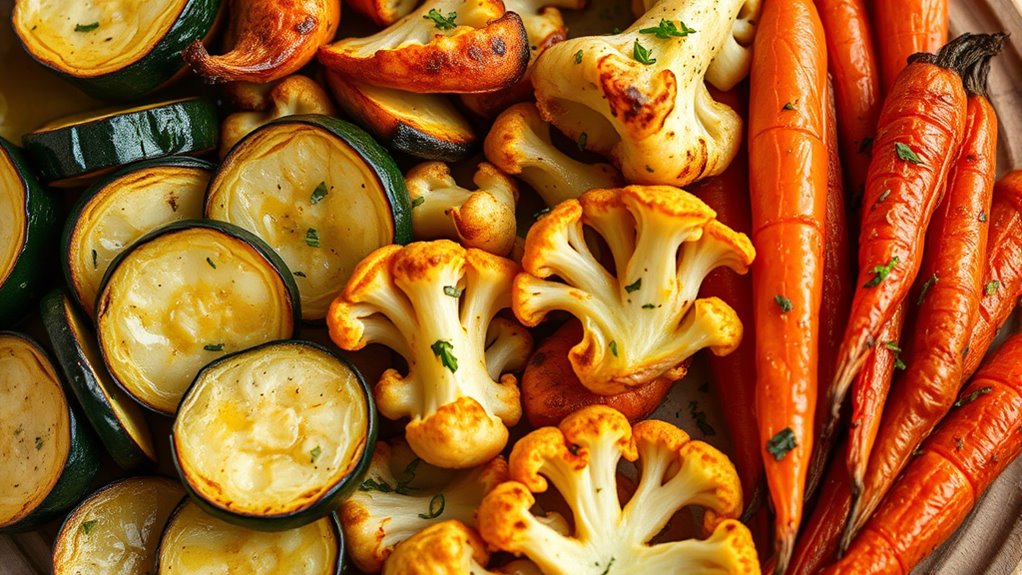
If you’re looking to enjoy roasted vegetables without worrying about high oxalate levels, several low-oxalate options are ideal choices. These vegetables support oxalate reduction and enhance flavor when roasted. Imagine biting into:
Enjoy roasted low-oxalate vegetables like cauliflower, zucchini, cabbage, and kohlrabi for flavorful, safe, and nutrient-rich dishes.
- Cauliflower florets, caramelized and crispy, offering a nutty flavor.
- Zucchini slices, tender inside with a slightly smoky hue.
- Cabbage wedges, roasted until caramelized, bringing sweetness out.
- Kohlrabi cubes, turning golden and juicy, adding a mild, peppery note.
These vegetables are naturally low in oxalates, making them safe and delicious for roasting. Their flavors intensify through roasting, creating a delightful, nutrient-rich dish. Incorporating these into your meals can also be part of a mindful decluttering approach, helping you organize and prioritize healthy eating options.

CHEFMAN Multifunctional Digital Air Fryer+ Rotisserie, Dehydrator, Convection Oven, 17 Touch Screen Presets Fry, Roast, Dehydrate, Bake, XL 10L Family Size, Auto Shutoff, Large Easy-View Window, Black
Versatile countertop cooking: Air fry, bake, dehydrate, rotisserie, or roast to crispy perfection in one convenient appliance
As an affiliate, we earn on qualifying purchases.
Preparing Vegetables to Minimize Oxalate Content
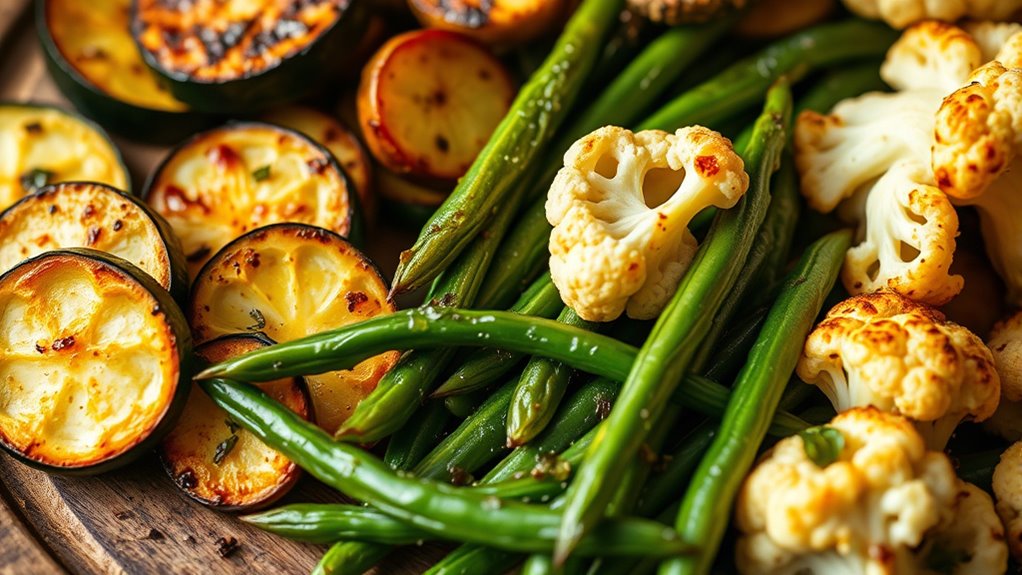
To effectively reduce oxalate levels in your vegetables, proper preparation techniques are key. Oxalate reduction begins with soaking, boiling, or steaming vegetables to leach out excess oxalates before cooking. These methods help lower the oxalate content, making your vegetables safer to eat. Here’s a quick guide:
| Preparation Technique | Oxalate Reduction Benefit |
|---|---|
| Soaking in water | Leaches out soluble oxalates |
| Boiling or steaming | Removes oxalates into cooking water |
| Discarding cooking water | Eliminates dissolved oxalates |
| Using fresh, washed vegetables | Reduces surface oxalates |
Choosing the right vegetable preparation method ensures you enjoy nutritious, low-oxalate veggies without risking oxalate buildup. Proper preparation techniques are essential for maximizing oxalate removal and ensuring food safety.

Instant Pot 10QT Air Fryer, 7-in-1 Functions with EvenCrisp Technology that Crisps, Broils, Bakes, Roasts, Dehydrates, Reheats & Rotisseries, Includes over 100 In-App Recipes, Stainless Steel
7 Cooking Functions: Air fry, roast, broil, bake, reheat, dehydrate, and rotisserie all in one easy appliance with...
As an affiliate, we earn on qualifying purchases.
Roasting Techniques for Safe and Delicious Veggies
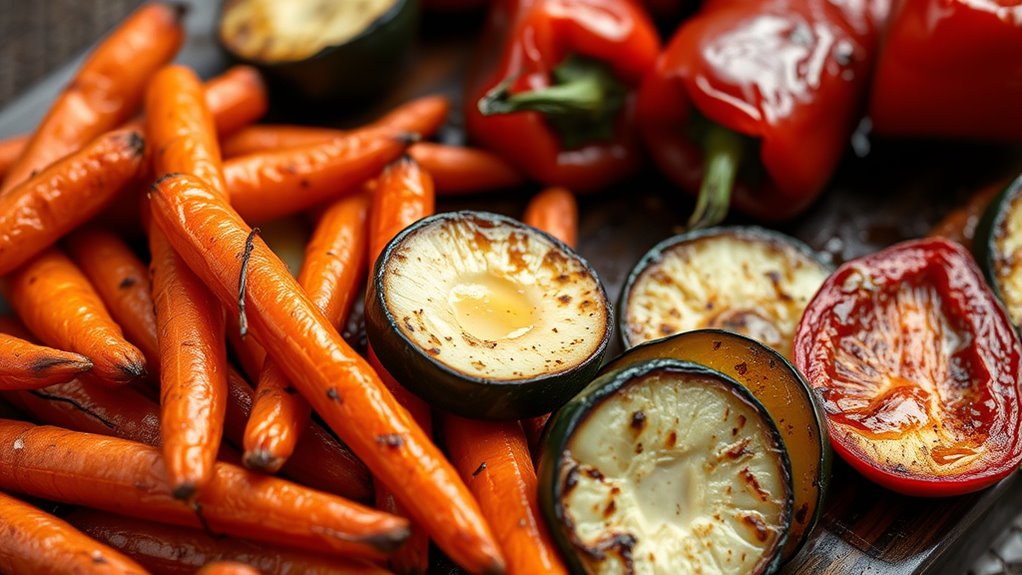
Roasting vegetables is an excellent way to enhance their flavor while maintaining their nutritional value, but it’s important to use proper techniques to guarantee safety and reduce oxalate content. To do this effectively, follow these steps:
Roasting vegetables enhances flavor and preserves nutrients when done safely with proper techniques.
- Preheat your oven to the right temperature—around 400°F (200°C)—to ensure even cooking and flavor development.
- Toss vegetables with a small amount of oil and seasonings for improved flavor enhancement.
- Spread them in a single layer on a baking sheet to promote uniform roasting and prevent burning.
- Roast until they’re tender and slightly caramelized, usually 20-30 minutes, turning halfway for even cookery.
Using these roasting techniques, you ensure cooking safety and maximize flavor without increasing oxalate levels.
Nutritional Benefits of Low-Oxalate Roasted Vegetables
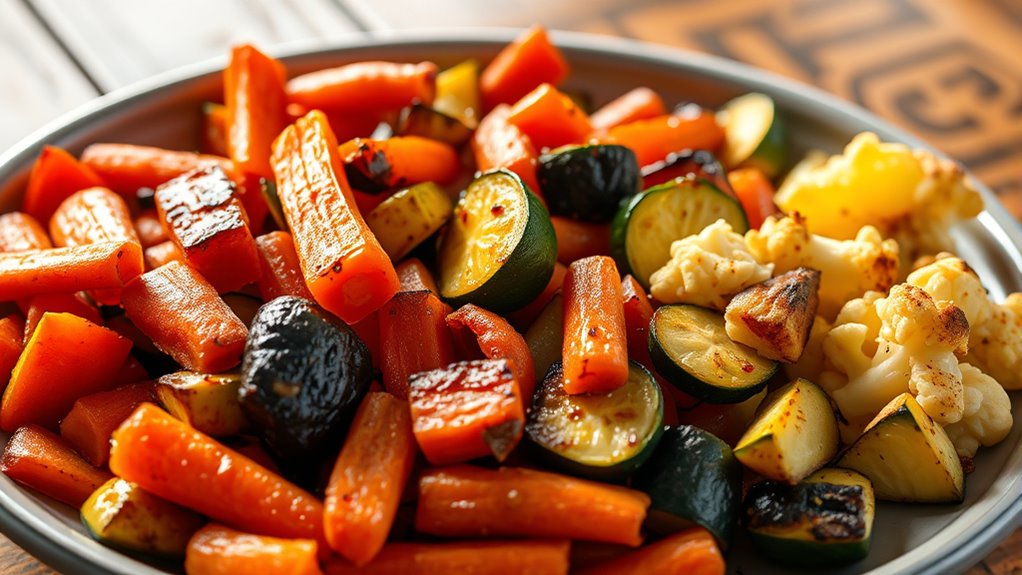
Roasting low-oxalate vegetables helps preserve their essential nutrients, making your meals more nourishing. It also reduces oxalate levels, which can benefit your health. By choosing this method, you get the most out of your vegetables with fewer concerns. Additionally, selecting the right cooking techniques can further enhance flavor and nutrient retention.
Nutrient Retention Benefits
Roasting low-oxalate vegetables can enhance their nutrient retention by preserving key vitamins and minerals that might degrade with other cooking methods. This gentle heat helps lock in nutrients like vitamin C, folate, potassium, and antioxidants. As you roast, you’ll notice:
- Vibrant colors stay longer, signaling preserved nutrients.
- Flavors deepen, making veggies more appealing without added salt.
- Nutrients are less likely to leach out compared to boiling.
- Storage considerations are easier, as roasted veggies maintain their nutritional quality longer.
Reduced Oxalate Content
Because low-oxalate vegetables naturally contain fewer compounds that can interfere with mineral absorption, roasting them further reduces their oxalate content, enhancing their nutritional profile. This process, known as oxalate reduction, makes minerals like calcium and magnesium more bioavailable, supporting your overall health. When selecting vegetables, focus on those naturally low in oxalates, such as zucchini, cauliflower, and kale, to maximize benefits. Proper vegetable selection combined with roasting can appreciably cut oxalate levels, reducing the risk of kidney stones and other oxalate-related concerns. By choosing the right veggies and cooking methods, you ensure that your meals are both tasty and nutritious, providing essential minerals without the worry of excessive oxalate intake.
Delicious Recipes Featuring Low-Oxalate Vegetables

If you’re looking to enjoy flavorful, healthy meals, incorporating low-oxalate vegetables into your recipes is a great choice. You can create delicious dishes that highlight seasonal flavor and diverse cooking methods. Imagine:
- Roasting vibrant green beans with olive oil and herbs until they’re tender and slightly caramelized.
- Steaming bright zucchini slices, preserving their delicate texture and subtle sweetness.
- Stir-frying colorful bell peppers with garlic for a quick, crisp side.
- Baking a hearty casserole with spinach and low-oxalate root vegetables for warmth and comfort.
Additionally, choosing vegetables that are low in oxalates can support overall oral and respiratory health, especially when prepared with healthy cooking methods.
These recipes bring out the natural flavors of low-oxalate veggies, making healthy eating both simple and satisfying. Use seasonal ingredients to guarantee freshness and maximize flavor in every bite.
Tips for Incorporating Low-Oxalate Veggies Into Your Diet

Integrating low-oxalate vegetables into your diet can be simple and enjoyable with some practical strategies. One effective method is focusing on oxalate reduction by choosing vegetables naturally low in oxalates, such as zucchini or cauliflower. Experiment with vegetable variety to keep meals interesting and prevent boredom. Incorporate these veggies into salads, stir-fries, or roasting sessions to boost flavor and nutrition. Planning your meals ahead allows you to include a range of low-oxalate options regularly. When shopping, read labels and verify that produce is fresh and appropriate for your oxalate restrictions. Additionally, understanding how to store juice properly can help preserve nutrients and prevent spoilage, making your healthy choices last longer. By diversifying your vegetable choices and preparing them creatively, you’ll find it easier to maintain a balanced, low-oxalate diet without sacrificing taste or variety.
Frequently Asked Questions
Are Low-Oxalate Vegetables Suitable for Everyone?
You might wonder if low-oxalate vegetables are suitable for everyone. While they can fit into a personalized diet, it’s essential to take into account your medical considerations. Some individuals, especially those with kidney issues, may benefit from low-oxalate options, but others might need different nutrients. Always consult with a healthcare professional to tailor your diet properly, ensuring you’re meeting your nutritional needs while managing any health conditions.
Can Roasting Reduce Oxalate Levels in Vegetables?
Roasting can help with oxalate reduction in vegetables, but its effects vary. When you roast vegetables, the heat can break down some oxalates, potentially lowering their levels. However, the extent of roasting effects depends on the vegetable type and roasting duration. If you’re aiming to reduce oxalates, consider roasting as part of your strategy, but don’t rely solely on it—combine with other preparation methods for best results.
How Do I Identify High-Oxalate Versus Low-Oxalate Veggies?
Imagine sorting a mixed bag of fruit—some sweet, some sour. To identify high-oxalate versus low-oxalate veggies, you need to check their oxalate content through reliable sources like nutritional databases or research. Vegetables like spinach and rhubarb are high in oxalates, while carrots and cucumbers are low. Proper vegetable classification helps you make safe choices, especially if you’re managing oxalate intake.
Are There Any Storage Tips for Low-Oxalate Vegetables?
When storing low-oxalate vegetables, keep them fresh with proper refrigeration tips. Use airtight storage containers to prevent moisture loss and contamination, which helps maintain their quality longer. Make sure to store them in the crisper drawer of your fridge, where humidity levels are ideal. Avoid leaving them out at room temperature for extended periods. Proper storage guarantees your vegetables stay crisp, flavorful, and safe to eat for several days.
Do Low-Oxalate Vegetables Taste Different When Roasted?
Imagine tasting your roasted veggies and feeling like you’ve unbarred a secret treasure! When you roast low-oxalate vegetables, their flavor preservation shines, but you might notice subtle texture differences—perhaps a tender crispness or a caramelized edge—that make each bite exciting. Overall, they retain their natural taste beautifully, ensuring every mouthful feels fresh, flavorful, and satisfying, just like discovering a new favorite in your kitchen.
Conclusion
By choosing low-oxalate vegetables and roasting them wisely, you can enjoy flavorful, healthy dishes without the risk. Think of it like steering a well-lit path—clear and safe, yet full of delicious surprises. Incorporate these veggies into your meals confidently, knowing you’re nourishing your body while satisfying your taste buds. With a little care and creativity, you’ll find roasting low-oxalate veggies becomes a simple, tasty habit worth keeping.