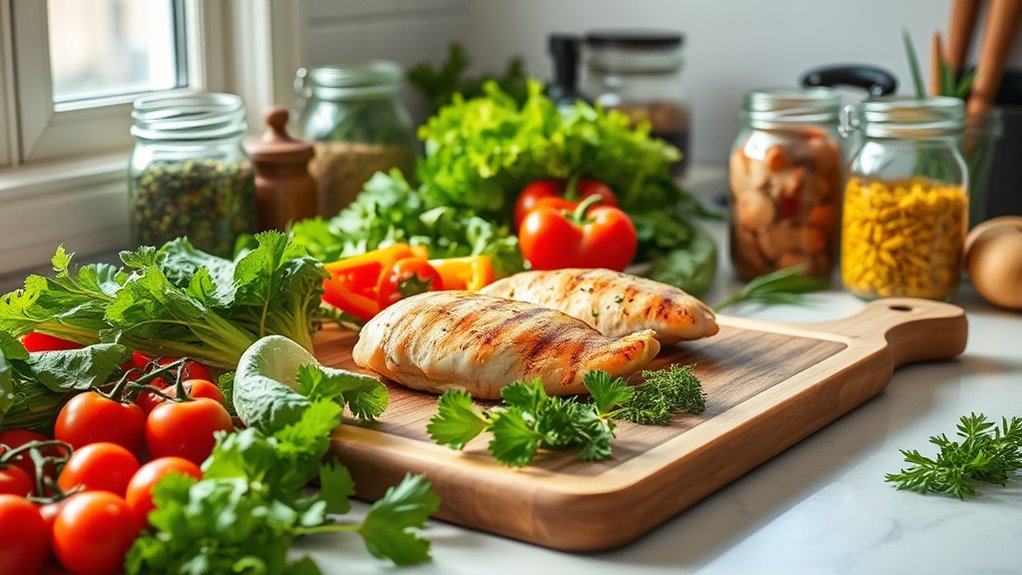

To minimize AGEs, focus on choosing fresh, whole foods like fruits, vegetables, and lean proteins, while reducing processed and charred foods. Use gentle cooking methods such as steaming, boiling, or stewing instead of frying or grilling at high temperatures. Marinate foods with lemon juice or vinegar to lower AGE formation, and keep cooking times short. Consistently applying these tips can help lower your exposure and support better health—you’ll find more helpful strategies if you explore further.
Key Takeaways
- Choose cooking methods like steaming, boiling, or stewing over frying, grilling, or broiling to reduce AGE formation.
- Marinate foods with acidic ingredients such as lemon juice or vinegar to inhibit AGEs during cooking.
- Increase intake of plant-based foods like fruits, vegetables, and whole grains, which have lower AGE levels.
- Avoid charring or burning foods, especially meats, to prevent excessive AGE production.
- Incorporate antioxidants through herbs, spices, and citrus to counteract oxidative stress caused by AGEs.
Have you ever wondered how to reduce the buildup of harmful compounds called Advanced Glycation End-products (AGEs) in your body? These compounds form when sugars react with proteins or fats in your food or inside your body, contributing to aging and chronic diseases. To lower your exposure, you need to pay attention to your dietary sources and cooking methods. The foods you choose and how you prepare them play an essential role in minimizing AGEs.
Start by focusing on dietary sources that tend to be high in AGEs. Processed foods, fried items, and charred meats are common culprits. Instead, opt for fresh fruits, vegetables, whole grains, and lean proteins. These foods naturally contain fewer AGEs and provide vital nutrients that support your health. Incorporating more plant-based foods can markedly cut down your intake because they generally have lower levels of AGEs compared to processed or grilled meats.
Choose fresh fruits, vegetables, and lean proteins over processed, fried, or charred foods to reduce AGEs and support your health.
Cooking methods are equally important when it comes to reducing AGE formation. High-temperature cooking techniques like frying, grilling, roasting, and broiling tend to generate more AGEs due to the intense heat involved. To keep your AGE levels in check, choose gentler cooking methods such as steaming, boiling, poaching, or stewing. These methods use lower temperatures and moisture, which help prevent the formation of harmful compounds. For example, steaming vegetables preserves their nutrients without creating the browning or charring that leads to more AGEs.
Marinating foods before cooking can also make a difference. Acidic marinades with lemon juice or vinegar can inhibit the formation of AGEs during cooking. Additionally, cooking for shorter periods at lower temperatures reduces the likelihood of AGE buildup. When you do grill or sear meats, try to avoid charring or burning the surfaces, as this increases AGE production markedly.
It’s also helpful to be mindful of how you store and prepare your food. Cooking in moist environments, such as using a slow cooker or braising, minimizes AGE formation. Incorporating antioxidants-rich ingredients like herbs, spices, or citrus can further combat oxidative stress caused by AGEs.

OVENTE 2-Tier Electric Food Steamer, 5 Quart Stainless Steel Stackable Steam Cooker with 400W Power, 60-Minute Timer & Auto Shut-Off, Dishwasher Safe, Healthy Vegetable & Seafood Steamer, Silver FS62S
HEALTHY & OIL-FREE COOKING – Enjoy nutrient-rich meals with steam cooking that preserves vitamins, color, texture, and natural…
As an affiliate, we earn on qualifying purchases.
As an affiliate, we earn on qualifying purchases.
Frequently Asked Questions
Can AGES Be Completely Eliminated From the Body?
You can’t completely eliminate AGEs from your body, as genetic factors and environmental exposures continually contribute to their formation. However, you can reduce their buildup by maintaining a healthy diet, avoiding processed foods, and limiting exposure to environmental toxins. Regular exercise and staying hydrated also help your body clear out AGEs more effectively. While you can’t eradicate them entirely, these actions markedly lower their impact on your health.
Are There Specific Foods That Promote AGE Formation?
Certain foods, especially those from dietary sources that undergo intense food processing, tend to encourage age formation. You should watch out for foods that are grilled, fried, or baked at high temperatures, as these methods increase AGEs. Processed meats, sugary snacks, and refined carbs also contribute more to AGE buildup. To keep aging gracefully, opt for fresh, minimally processed foods and cook gently whenever possible.
How Does Exercise Influence AGE Levels?
Exercise benefits your body by helping regulate metabolism, which can reduce AGE formation. When you stay active, your cells process sugars more efficiently, lowering the chances of harmful compounds like AGEs developing. Regular exercise also boosts circulation and reduces inflammation, both of which support healthier aging. So, by staying active, you actively influence AGE levels, promoting overall health and aging gracefully.
Do Certain Medications Help Reduce AGES?
You might find that certain medications gently support your body’s efforts to reduce aging signs, but their effectiveness varies. While some drugs can influence processes linked to aging, they may also come with side effects that could complicate your health journey. Always consult your healthcare provider to weigh the benefits against potential risks, ensuring you choose options that align with your overall well-being and long-term goals.
What Are the Long-Term Health Risks of High AGE Accumulation?
High AGE accumulation increases your risk of developing AGE-related diseases like diabetes, cardiovascular issues, and neurodegenerative conditions. Elevated glycation markers can damage your tissues, impair your immune response, and accelerate aging. Over time, these effects may lead to chronic health problems, reduced mobility, and decreased quality of life. Managing your diet and lifestyle can help lower glycation levels, potentially reducing your long-term risks associated with AGE buildup.

Lawry's Lemon Pepper with Lemon Juice Marinade, 12 fl oz
Made with lemon, garlic, cracked black pepper, dill seed & rosemary
As an affiliate, we earn on qualifying purchases.
As an affiliate, we earn on qualifying purchases.
Conclusion
By taking steps to minimize AGEs, you can substantially reduce your risk of chronic diseases like diabetes and heart issues. Remember, cooking methods like steaming and choosing fresh, whole foods make a big difference. Did you know that high AGE levels are linked to a 20% increase in cardiovascular risk? Staying mindful of your diet and lifestyle can help you stay healthier longer. Start today—your body will thank you for it.

T-Fal Ultimate Hard Anodized Nonstick Pots and Pans Set 17 Piece, Nonstick Cookware Set with Fry Pan, Saucepans, Saute-Pan, Griddle, Dishwasher Safe, Onyx
Durable Construction: The hard anodized exterior and forged design of this hard anodized cookware set is built to…
As an affiliate, we earn on qualifying purchases.
As an affiliate, we earn on qualifying purchases.

Crock-Pot 7 Quart Oval Manual Slow Cooker, Stainless Steel (SCV700-S-BR), Versatile Cookware for Large Families or Entertaining
Generous Capacity: 7-quart slow cooker that comfortably serves 9+ people or fits a 7-pound roast
As an affiliate, we earn on qualifying purchases.
As an affiliate, we earn on qualifying purchases.