Peeling nonstick coating can be unsafe because flakes might mix into your food and potentially release harmful chemicals. It also reduces the pan’s nonstick effectiveness, making cooking less safe and messier. If your pan shows signs of peeling, cracking, or excessive scratching, it’s time to replace it. Continuing to use a damaged pan poses health risks; learn how to prevent peeling and keep your cookware safe to use.
Key Takeaways
- Peeling nonstick coating can release harmful flakes into food, posing health risks.
- Visible peeling indicates the coating is compromised and should be replaced promptly.
- Continued use of a peeling pan increases the chance of ingesting toxic chemicals.
- Using metal utensils or high heat accelerates peeling and damages the surface further.
- To stay safe, switch to a new pan and follow proper maintenance to prevent future peeling.
What Causes Nonstick Coatings to Peel?
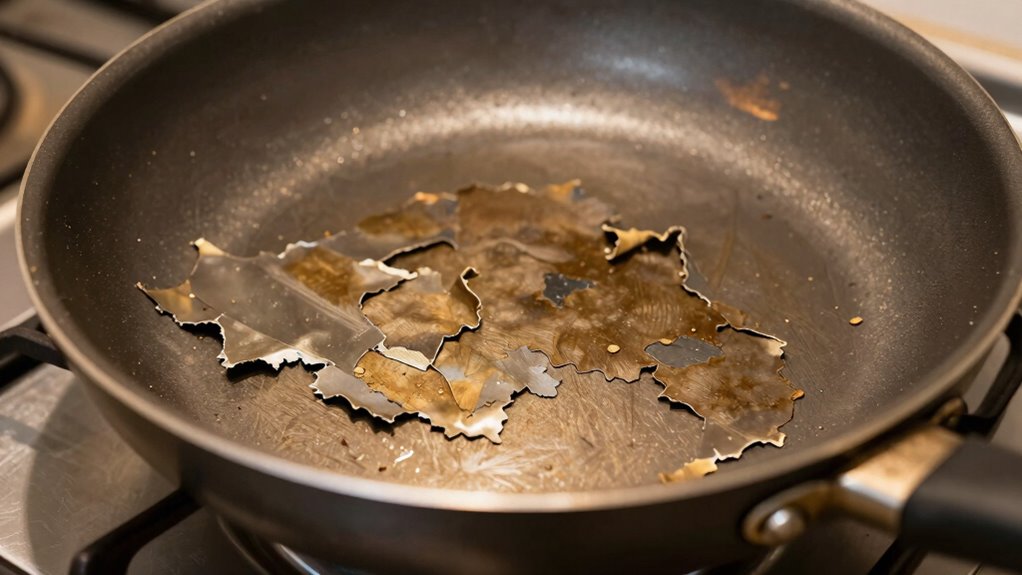
Nonstick coatings often peel because of improper use or damage over time. One common cause is exposing the pan to excessive cooking temperatures, which can weaken the nonstick coating. High heat causes the coating to break down faster, leading to peeling or flaking. Additionally, using metal utensils can scratch the surface, creating weak spots that peel more easily. Over time, repeated thermal stress and abrasive cleaning can also degrade the coating’s integrity. It is crucial to follow the manufacturer’s recommended temperature limits to preserve the nonstick surface. Proper care and gentle handling help prevent premature peeling, ensuring your pan stays effective and safe for longer. Remember, avoiding sudden temperature changes and using appropriate utensils are key to maintaining your nonstick coating.
Is It Safe to Use a Peeling Nonstick Pan? What Are the Risks?
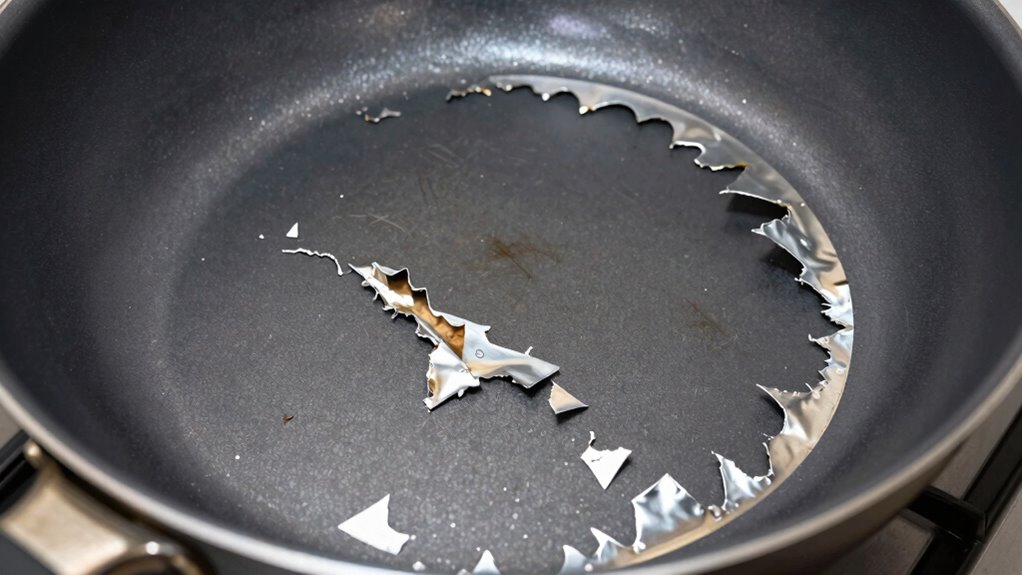
While a peeling nonstick pan might still seem usable, it’s important to recognize that it can pose health risks. When the coating starts to peel, small flakes can mix into your food, raising concerns about nonstick safety. Ingesting these tiny particles isn’t ideal, as the coating’s health effects are still debated. Over time, a damaged coating may release harmful chemicals, especially if it contains older or compromised materials. Using a peeling pan can also lead to uneven cooking and food sticking, which may encourage you to use more oil or heat, potentially increasing exposure to toxins. Additionally, color accuracy in your cookware surfaces can influence visual inspection of wear and tear, helping you identify when replacements are necessary. Regularly monitoring cookware safety can help prevent potential health issues associated with degraded coatings. Furthermore, choosing safe cookware alternatives can provide peace of mind and better health outcomes. To protect your health, it’s best to replace peeling nonstick cookware promptly, ensuring you minimize exposure to deteriorating coating health and maintain safe cooking conditions. Being aware of coating degradation signs can help you make timely replacements and avoid health risks. Moreover, paying attention to industry safety standards can guide you toward more reliable and safer cookware options.
When Should You Replace Your Nonstick Pan? Signs to Watch For
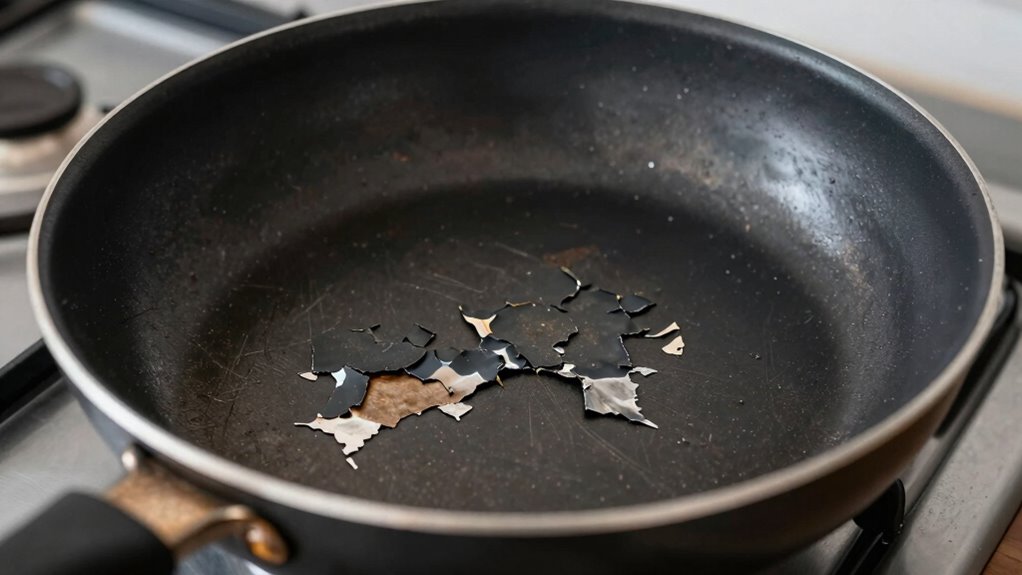
Knowing when to replace your nonstick pan is essential for safe and efficient cooking. Over time, the coating’s durability decreases, making pan cleaning less effective and increasing the risk of peeling. Look for these signs:
| Sign | What It Means | Action Needed |
|---|---|---|
| Visible peeling | Coating is breaking down | Replace the pan |
| Discoloration or staining | Coating or surface is compromised | Consider replacement |
| Sticky or uneven cook | Nonstick properties lost | Time to replace |
| Excessive scratching | Damage to coating reduces durability | Replace the pan |
| Teflon flakes in food | Coating debris present | Discard immediately |
Additionally, natural degradation of nonstick coatings over time can lead to these issues, especially if the coating has been exposed to high heat or harsh cleaning methods. Proper maintenance and avoiding metal utensils can extend the lifespan of your nonstick cookware, as well as regular inspection to catch early signs of wear. It’s also helpful to understand that coating wear can occur even with careful use, which makes routine checks advisable to ensure your cookware remains safe. If you notice any of these signs, it’s time to replace your pan to maintain safe, effective cooking.
Should You Keep Using a Peeling Nonstick Pan? My Advice
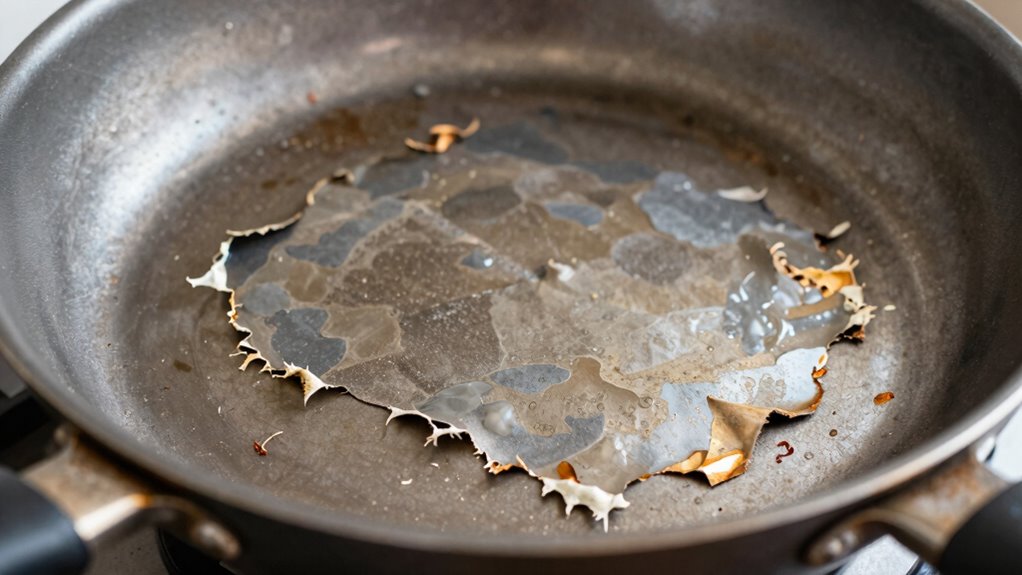
If your nonstick pan is peeling, you might wonder whether it’s safe or worth continuing to use. While some believe minor peeling is harmless, it can compromise pan safety and coating durability. Continuing to use a peeling pan risks ingesting tiny flakes, which may cause health concerns, especially if the coating contains chemicals. Additionally, the peeling may indicate that the coating’s integrity is compromised, further reducing its effectiveness and safety. Consider these points: – The coating’s integrity is compromised, reducing its nonstick effectiveness – Flaking can lead to ingestion of potentially harmful particles – Your pan’s safety becomes questionable with ongoing peeling – Investing in a new pan might save you health issues and frustration If the peeling is severe, it’s best to replace the pan. While minor damage may seem manageable, prioritizing safety and coating durability is vital for your health and peace of mind.
How to Prevent Peeling and Make Your Nonstick Pan Last Longer

To extend the lifespan of your nonstick pan and prevent peeling, it is essential to handle it with care from the start. Proper nonstick maintenance includes using gentle utensils like silicone or wooden tools to avoid scratching the surface. Always cook on low to medium heat, as high temperatures can damage the coating and reduce cookware longevity. Avoid metal scrubbers when cleaning; instead, wash with warm, soapy water and a soft sponge. Storing your pan properly, such as stacking with a protective layer, prevents scratches that cause peeling. Regularly inspecting the surface helps catch early signs of wear. Additionally, understanding the properties of essential oils can be helpful in maintaining your cookware and avoiding chemical damage from harsh cleaning agents. Using appropriate cleaning techniques that align with your cookware’s material can further prolong its life. Choosing the right cooking temperature and avoiding sudden temperature changes also play a crucial role in preventing peeling and damage. Being mindful of nonstick surface care can help preserve your pan’s nonstick qualities longer. To further protect your cookware, consider seasoning nonstick coatings when applicable, which can help reinforce the surface and improve its durability. Following these simple steps keeps your nonstick cookware in good condition longer, ensuring better performance and safety over time.
Frequently Asked Questions
Can Peeling Nonstick Coatings Cause Long-Term Health Issues?
Peeling nonstick coatings can pose health risks if ingested particles, but current evidence suggests long-term effects are minimal. However, inhaling fumes from overheated nonstick pans might cause respiratory issues over time. To protect yourself, substitute peeling cookware and avoid cooking at high temperatures. While long-term health risks are uncertain, it’s best to minimize exposure to any degraded coating to ensure your safety and reduce potential health concerns.
Are There Safer Alternatives to Traditional Nonstick Pans?
Yes, there are safer alternatives to traditional nonstick pans. You might consider ceramic coatings, which are free from harmful chemicals and offer good nonstick performance. Stainless steel alternatives are also a great option; they’re durable, oven-safe, and don’t peel or chip over time. Both options can help you cook healthier, safer meals without worrying about harmful chemicals leaching into your food.
How Does Cleaning Affect the Longevity of Nonstick Coatings?
Cleaning methods considerably impact the longevity of nonstick coatings. You should avoid abrasive scrubbers and harsh detergents that can scratch surfaces, leading to faster peeling. Instead, opt for gentle sponges and mild cleaning solutions. Proper care extends the life of your pan, so always hand wash carefully and avoid metal utensils. By doing so, you prevent damage from scratched surfaces and keep your nonstick cookware functioning safely longer.
Do Professional Kitchens Face More Risks With Peeling Nonstick Cookware?
In busy industrial kitchens, peeling nonstick cookware can pose risks like tiny flakes mixing into your dishes. You, as a chef, face more dangers with commercial cookware because of frequent use and high heat, which accelerates coating wear. It’s like fighting a losing battle against time. To stay safe, inspect your pots regularly, replace damaged ones promptly, and choose durable, high-quality cookware designed for professional settings.
What Are Eco-Friendly Options for Nonstick Cookware?
You can choose eco-friendly cookware made from sustainable materials like cast iron, stainless steel, or ceramic coatings. These options are free from harmful chemicals and offer safe, durable alternatives to traditional nonstick pans. By investing in sustainable cookware, you reduce environmental impact and avoid health risks associated with peeling nonstick coatings. Switch today to eco-friendly materials for a safer, more responsible kitchen experience that benefits both you and the planet.
Conclusion
So, your nonstick pan is peeling—what’s next? Ignoring the signs could mean risking your health or losing your favorite cookware for good. But don’t rush to toss it just yet. With the right steps, you can decide whether to repair, replace, or prevent future damage. The choice you make now could shape your kitchen routine—and maybe even your safety. Are you ready to take action before it’s too late?