When evaluating PFAS-free air fryer ovens, focus on clear, specific labels and check for third-party testing or certifications that verify the claim. Be cautious of vague terms like “non-toxic” or “chemical-free,” as they can be misleading. Look beyond marketing, examine product details, and ask about the materials used. If you’re interested in ensuring safety and environmental responsibility, there’s more to take into account to help you make an informed choice.

Get kitchen gear delivered free with Prime
- Fast, free delivery on millions of items
- Prime Video, Amazon Music and more included
- Member-only deals all year
Key Takeaways
- Verify specific chemical disclosures and look for third-party testing results confirming PFAS-free status.
- Be cautious of vague labels like “chemical-free” or “non-toxic”—seek clear, detailed ingredient information.
- Check for recognized safety certifications that validate PFAS-free and overall chemical safety claims.
- Understand that PFAS-free labels do not guarantee eco-friendly materials or easy disposal.
- Research manufacturer transparency and material sources to ensure both safety and environmental responsibility.
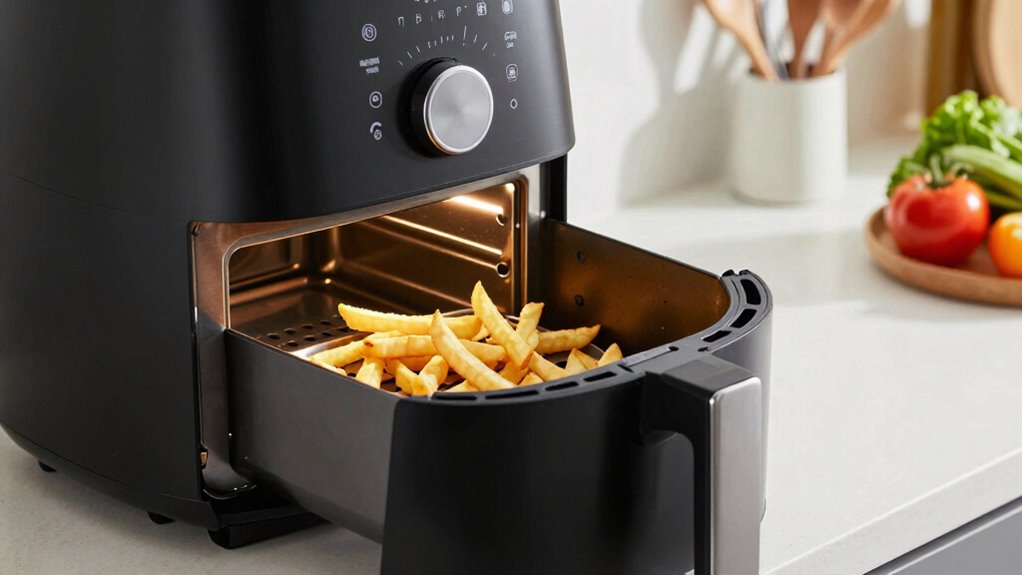
If you’re looking to enjoy healthier fried foods without exposing yourself to harmful chemicals, PFAS-free air fryer ovens are the way to go. But as you shop, it’s essential to read the claims carefully, especially since not all manufacturers are transparent about what “PFAS-free” truly means. Many products advertise as free of per- and polyfluoroalkyl substances (PFAS), but some may still contain other harmful chemicals. To make an informed choice, you need to dig into the details. Look beyond marketing buzzwords and check the product specifications or certifications. Some companies might simply remove PFAS from coatings but use alternative chemicals that could raise safety concerns. Knowing exactly what’s in your appliance helps you prioritize chemical safety, reducing your exposure to potentially toxic substances.
It’s also worth considering the broader environmental impact of the products you choose. Some materials that are labeled as PFAS-free might still be difficult to recycle or dispose of safely, contributing to environmental pollution. When evaluating an air fryer oven, ask about the materials used for the interior and exterior components, especially the non-stick coatings. Ideally, these should be made from environmentally friendly, durable materials that don’t leach chemicals into your food or the environment over time. By choosing appliances designed with sustainability in mind, you’re not only protecting your health but also reducing your ecological footprint. Additionally, understanding the manufacturing processes of these products can give you greater insight into their overall safety and environmental impact. Being aware of the chemical composition of non-stick coatings can further help you make more informed choices. Furthermore, researching industry standards can help you identify products that meet recognized safety benchmarks.
Reading the claims carefully is about more than just avoiding harmful chemicals; it’s about understanding the full scope of chemical safety and environmental impact. Manufacturers may include vague or misleading language like “chemical-free” or “non-toxic,” so you need to scrutinize labels, product descriptions, and certifications. Check for third-party testing or safety certifications that verify the claims. Transparency from brands about the materials and chemicals used reassures you that the product meets safety standards and aligns with your health and environmental values. Ultimately, making an informed decision means balancing chemical safety with environmental responsibility—choosing appliances that genuinely prioritize both. Being diligent in your research helps ensure that your kitchen remains a safe, eco-friendly space where you can enjoy delicious, healthier fried foods without compromise.
As an affiliate, we earn on qualifying purchases.
Frequently Asked Questions
Are Pfas-Free Air Fryers More Expensive Than Traditional Ones?
Yes, PFAS-free air fryers tend to be more expensive than traditional ones. You might pay a premium because manufacturers use safer, non-toxic materials that reduce health implications and environmental impact. While the initial cost is higher, you gain peace of mind knowing you’re avoiding potentially harmful chemicals. Over time, this investment supports your health and the environment, making it a worthwhile choice despite the higher price tag.
How Long Do Pfas-Free Coatings Typically Last?
Think of the coating in your PFAS-free air fryer as a delicate shield; its lifespan depends on how well you care for it. Typically, these coatings last about 3 to 5 years with proper use. Factors like cleaning habits and cooking practices influence the coating durability and lifespan expectations. To extend its life, avoid abrasive cleaners and use gentle utensils, helping your fryer stay in tip-top shape longer.
Can Pfas-Free Ovens Handle All Types of Cooking?
PFAS-free ovens can handle most types of cooking, but their non-stick durability and coating longevity vary. You might find they perform well with everyday tasks like roasting or baking, yet heavy-duty frying or high-temperature searing could challenge the coating over time. To guarantee longevity, follow manufacturer instructions carefully and avoid metal utensils. While they’re versatile, understanding their limits helps you get the most out of your oven.
Do Pfas-Free Air Fryers Require Special Maintenance?
No, PFAS-free air fryers don’t require special maintenance, but you should pay attention to cleaning frequency to keep them in good shape. Regularly wipe down the non-stick coating to prevent buildup and guarantee coating durability. Avoid abrasive cleaners or tools that could damage the surface. By maintaining proper cleaning habits, you preserve the non-stick quality and extend your air fryer’s lifespan, making cooking safer and more efficient.
Are Pfas-Free Claims Regulated or Verified by Authorities?
A word to the wise: don’t assume all claims are created equal. Regulatory oversight and certification standards vary, so PFAS-free claims aren’t always verified by authorities. You should check if manufacturers provide third-party testing or certification to back their claims. While some brands meet strict standards, others might not be as rigorously regulated, so always do your homework before trusting a product’s safety claims.
Conclusion
When choosing a PFAS-free air fryer oven, you’re prioritizing safety without sacrificing convenience. While the absence of harmful chemicals offers peace of mind, don’t overlook other crucial features like capacity, versatility, and ease of cleaning. It’s a delicate balance—trusting the claims while remaining vigilant about what’s truly important. After all, a healthier kitchen isn’t just about avoiding toxins; it’s about making informed choices that elevate your cooking experience.
Halloween Picks
halloween
As an affiliate, we earn on qualifying purchases.