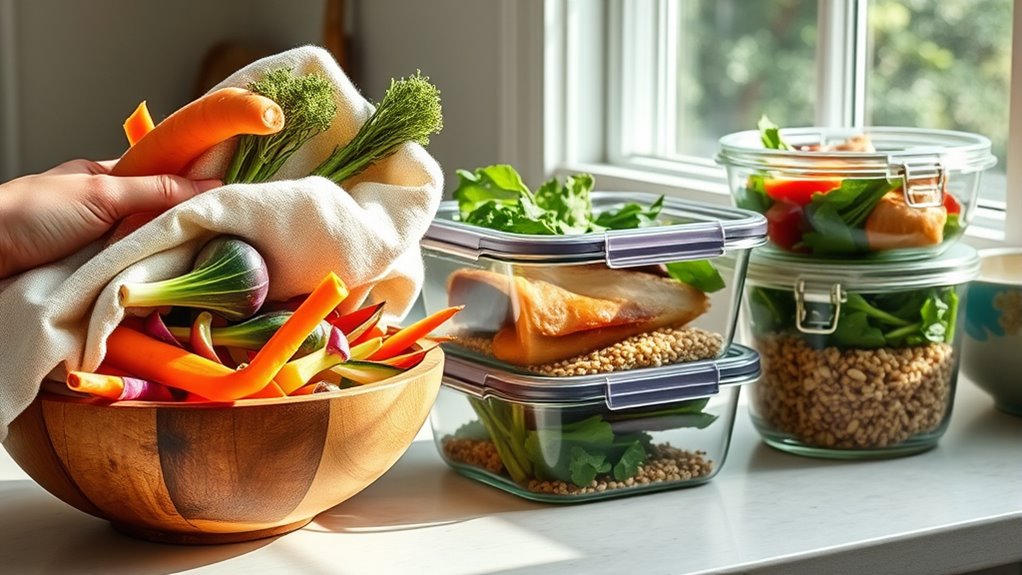

To reduce food waste and revive leftovers healthily, get creative with what you have. Turn cooked vegetables into soups, stews, or spreads, and use leftover grains for fried rice or salads. Transform proteins into snacks or wraps, and repurpose surplus bread into bread pudding or croutons. Proper storage and freezing help extend freshness, while flavor adjustments can make leftovers exciting again. Keep exploring these smart ideas for a sustainable, tasty approach to leftovers.
Key Takeaways
- Repurpose leftovers into new dishes like soups, salads, wraps, and dips to minimize waste and add variety.
- Properly store and freeze leftovers in labeled, airtight containers to extend freshness and prevent spoilage.
- Use cooked vegetables and grains creatively, such as blending into soups or making grain salads, to reduce food waste.
- Transform surplus bread into croutons, bread pudding, or savory snacks, enhancing flavors to prevent discard.
- Incorporate leftovers into breakfast options like omelets, bowls, or burritos, promoting healthy, sustainable eating.
Creative Ways to Reuse Cooked Vegetables

When you have cooked vegetables leftover, instead of tossing them out, get creative with how you reutilize them. One option is to incorporate them into garden composting, enriching your soil naturally and reducing waste. Alternatively, you can try vegetable pickling, which preserves the flavors and adds a zing to your meals. If you’re feeling adventurous, blend the cooked veggies into soups, stews, or sauces to create new dishes. You can also mash them into spreads or dips, reducing waste while adding nutrition. These methods not only prevent food from ending up in the trash but also support sustainable practices. Reusing cooked vegetables this way helps minimize waste, saves money, and ensures you get the most out of your produce.
Transforming Leftover Rice and Grains Into New Meals

Leftover rice and grains are versatile ingredients that can easily be transformed into delicious new meals instead of being discarded. You can repurpose leftover rice by stirring in vegetables, herbs, and a splash of soy sauce to create fried rice, or add it to soups for extra texture. Grain-based salads are another great option—mix leftover rice or grains with chopped vegetables, beans, and a tangy vinaigrette for a quick, healthy meal. These salads are customizable, allowing you to use whatever ingredients you have on hand. Not only do you reduce waste, but you also enjoy a nutritious, satisfying dish. Transforming leftover rice and grains into new meals is an easy way to save time, cut costs, and make the most of your ingredients. Incorporating food preservation techniques ensures leftovers stay fresh longer and can be enjoyed in creative ways later on.
Turning Excess Proteins Into Delicious Snacks

If you have leftover proteins, you can turn them into tasty snacks instead of letting them go to waste. Try creative ideas like protein balls, mini patties, or jerky to keep things interesting. Remember to store these snacks properly to maintain freshness and enjoy them later. Incorporating mindfulness into your preparation can also enhance your connection with your food and promote healthier choices.
Creative Protein Snack Ideas
Transforming excess proteins into tasty snacks is a smart way to reduce food waste while satisfying your cravings. You can get creative with options like:
- Make veggie-packed hummus with plant-based protein, perfect for spreading or dipping.
- Prepare seafood snacks like shrimp skewers or tuna lettuce wraps for a quick, healthy treat.
- Turn cooked chicken into protein-packed lettuce wraps or mini tacos for a satisfying snack.
- Whip up protein smoothies using leftover yogurt, protein powder, or cottage cheese for a quick energy boost.
- Understanding food waste reduction strategies can help you plan better and minimize leftovers in the future.
These ideas help you use up leftovers efficiently, cut down waste, and enjoy delicious, nutritious snacks that keep you energized. Whether plant-based or seafood-based, turning excess proteins into snacks is a simple, tasty solution.
Healthy Storage Tips
Proper storage is key to keeping excess proteins fresh and safe for later use as snacks. Use airtight containers or resealable bags to prevent contamination and maintain food safety. Label your containers with dates to track freshness and avoid eating spoiled leftovers. To guarantee portion control, divide large amounts of cooked proteins into smaller servings, making it easier to grab a quick snack without overeating. Store your leftovers in the refrigerator at or below 40°F (4°C), and consume them within 3-4 days. For longer storage, freeze the portions in freezer-safe containers, and use them within 2-3 months. Proper storage not only preserves flavor and texture but also minimizes waste and keeps your snacks safe and nutritious. Additionally, employing proper container types can further enhance preservation and reduce spoilage.
Soups and Stews: The Perfect Leftover Makeover

Soups and stews make excellent leftovers because their flavors often deepen overnight, creating richer and more satisfying meals. To reinvent them, focus on enhancing flavor and freshness. First, adjust the soup ingredient combinations by adding fresh herbs, a splash of citrus, or a dollop of yogurt for brightness. Second, consider thickening or thinning the consistency to suit your preference. Third, use stew seasoning tips like a pinch of smoked paprika or a dash of soy sauce to boost depth. Fourth, incorporate new vegetables or grains to transform the dish into a fresh meal. These simple tweaks make leftovers taste just as vibrant as freshly made, turning them into convenient, healthy options that minimize waste and maximize flavor.
Making Fresh Salads From Roasted or Steamed Veggies

Roasted or steamed vegetables can serve as the perfect base for vibrant, fresh salads. Toss them with a variety of fresh herb combinations like basil, cilantro, or parsley to add brightness. To elevate the flavors, experiment with tasting spice blends such as cumin, paprika, or curry powder. These combinations bring depth and complexity, transforming simple leftovers into appealing salads. Add a splash of olive oil or a squeeze of lemon for extra freshness. Incorporate nuts or seeds for crunch, and maybe some cheese or beans for added protein. Using your leftover veggies this way reduces waste and creates a healthy, satisfying meal. Plus, the versatility allows you to customize each salad to match your taste, making leftovers exciting rather than boring. Emphasizing the importance of family moments can make preparing these salads a delightful shared experience.
Breakfast Ideas Using Your Remaining Dinners

You can transform your dinner leftovers into quick, filling breakfasts, saving time and reducing waste. Try repurposing roasted vegetables into omelets or turning cooked grains into breakfast bowls. With simple meal prep hacks, mornings become easier and less wasteful. Additionally, incorporating color accuracy principles when preparing visual presentations can make your leftover dishes more appealing.
Meal Prep Hacks for Morning
When mornings are rushed, turning leftover dinners into quick breakfast options can save time and reduce waste. You can easily incorporate your leftovers into a morning meal prep routine. Here are some ideas:
- Transform roasted vegetables into a breakfast hash, adding eggs for protein.
- Use cooked grains like rice or quinoa as a base for a savory breakfast bowl.
- Wrap leftover meats and veggies in a tortilla for a quick breakfast burrito.
- Turn leftover pasta into a breakfast scramble by mixing it with eggs and cheese.
- Incorporate rustic decor elements into your breakfast nook to create a cozy, farmhouse-inspired space that encourages mindful eating and sustainability.
These hacks help you create a quick breakfast without extra shopping, keeping waste minimal. With a little prep, you’ll have nutritious, delicious morning meal options ready to go, saving you time and reducing food waste.
Revamp Dinner Leftovers
Dinner leftovers can be a treasure trove for quick and tasty breakfast options. You can transform yesterday’s meal into a nutritious morning dish by repurposing ingredients thoughtfully. Use portion control to avoid waste—just enough for your breakfast, preventing leftovers from piling up. For example, turn roasted vegetables into an omelet or shred cooked meats into breakfast burritos. If leftovers aren’t suitable for eating, consider composting strategies to reduce waste further. Composting your food scraps not only minimizes landfill impact but also enriches your garden soil. Additionally, incorporating anti-aging effects from ingredients like hyaluronic acid can make your breakfast more nourishing. Revamping dinner leftovers into breakfast saves time, reduces food waste, and supports healthier eating habits. With a bit of creativity, you’ll find that reviving leftovers is a simple, eco-friendly way to start your day.
Incorporating Leftovers Into Healthy Wraps and Sandwiches

Incorporating leftovers into healthy wraps and sandwiches offers a simple way to reduce food waste while creating delicious, nutritious meals. Wrap versatility allows you to turn almost any leftover into a satisfying bite. First, choose your healthy fillings, like roasted vegetables, lean meats, or beans, to guarantee your wrap is nutritious. Second, chop or shred leftovers into manageable pieces to fit your wrap easily. Third, spread a healthy condiment or hummus to add flavor and moisture. Fourth, roll tightly to keep fillings secure and flavorful. This method lets you customize your wraps with whatever leftovers you have, making meals quick, tasty, and waste-free. Using a curling iron on Halloween wigs can also help you style your leftover wraps into fun, creative shapes for themed parties. By focusing on healthy fillings and wrap versatility, you turn leftovers into a convenient, wholesome snack or lunch.
Baking With Surplus Bread and Balsamic Drizzle

You can turn surplus bread into delicious, creative dishes that minimize waste. Adding a balsamic drizzle enhances flavors and brings a sweet tang to your baked goods. These simple techniques make everyday ingredients more exciting and sustainable. Incorporating food waste reduction strategies can further optimize your efforts and contribute to environmental conservation.
Creative Bread Recipes
Have surplus bread lying around? Don’t let it go to waste—get creative with bread baking! Here are four tasty ideas to transform leftovers:
- Make bread pudding, pairing it with vanilla or cinnamon for a cozy dessert.
- Turn it into crispy croutons by tossing with herbs and olive oil, perfect for salads.
- Create a savory strata layered with cheese, vegetables, and herbs for a filling breakfast.
- Use slices for an open-faced sandwich with flavorful toppings like roasted veggies or smoked salmon.
Experiment with flavor pairing to enhance your recipes, and you’ll find that even stale bread can become a delicious highlight. These ideas help you reduce food waste while satisfying your taste buds with minimal effort in bread baking.
Enhancing Flavors With Balsamic
Adding a balsamic glaze to surplus bread elevates simple leftovers into a flavorful snack or appetizer. The rich, sweet-tangy flavor of the balsamic glaze enhances the bread’s natural taste, transforming it into a gourmet treat. Drizzle the glaze over toasted or crusty bread slices, allowing the flavor enhancement to shine through. You can also combine it with herbs or a sprinkle of cheese for added depth. This method not only revives leftover bread but also adds a sophisticated touch to your meal. The balsamic glaze’s versatility makes it perfect for quick, delicious bites. By using this simple technique, you turn surplus bread into a memorable, healthy snack while reducing waste and maximizing flavor.
Freezing Leftovers for Later Use

Freezing leftovers is an effective way to extend their shelf life and reduce food waste. To do it right, use proper freezing techniques and practice portion control to make reheating easier.
- Divide large portions into smaller containers to prevent thawing more than you need.
- Label each container with the date to monitor freshness.
- Use airtight containers or freezer bags to prevent freezer burn.
- Allow leftovers to cool before freezing to avoid moisture buildup.
Tips for Proper Storage and Leftover Management

Effective storage and leftover management start with choosing the right containers and organizing your fridge or freezer properly. Use airtight containers to prevent spoilage and maintain freshness. Portion control helps you store only what you’ll consume soon, reducing waste. Label leftovers with dates to track freshness and avoid keeping items too long. Proper arrangement ensures older leftovers are used first, preventing spoilage.
| Storage Tip | Benefit | Example |
|---|---|---|
| Airtight containers | Spoilage prevention | Keep soups fresh longer |
| Portion control | Reduce waste, easy reheating | Store single servings |
| Clear labels | Track freshness | Date leftovers clearly |
Frequently Asked Questions
How Can I Ensure Leftovers Maintain Nutritional Value Over Time?
To guarantee your leftovers maintain nutritional value, focus on proper nutrient preservation and storage duration. Store leftovers in airtight containers to prevent nutrient loss and bacterial growth. Keep the refrigerator at the right temperature, ideally below 40°F, and consume leftovers within 3-4 days to maximize freshness and nutrients. Reheat leftovers thoroughly, and avoid reheating multiple times, which can degrade nutrients over time. Proper storage and timely consumption keep your leftovers healthy.
What Are Some Eco-Friendly Packaging Options for Storing Leftovers?
You can choose eco-friendly packaging options like biodegradable containers or reusable storage solutions for leftovers. Biodegradable containers break down naturally, reducing environmental impact, while reusable storage, such as glass or silicone containers, can be used multiple times. Both options help you store leftovers safely and sustainably. By switching to these eco-friendly choices, you contribute to reducing waste and supporting a healthier planet.
How Can Leftover Meals Be Adapted for Specific Dietary Restrictions?
Diving into dietary customization, you can easily adapt leftovers for specific restrictions by focusing on flavor, fiber, and function. Swap ingredients in meal substitution—like replacing dairy with plant-based alternatives or gluten with grains—to suit your needs. You’ll find that thoughtful tweaks transform leftovers into healthy, harmonious meals, helping you stay satisfied and supportive of your diet, all while reducing waste. It’s simple, smart, and sustainable!
Are There Safety Tips for Reheating Leftovers to Prevent Foodborne Illness?
To guarantee safe reheating, you should always heat leftovers thoroughly to kill bacteria, reaching at least 165°F. Use a microwave or stove, stirring often for even heating. Avoid cross contamination by using separate utensils and plates for raw and cooked foods. Store leftovers promptly in airtight containers and refrigerate within two hours. These steps help prevent foodborne illness and keep your leftovers both safe and tasty.
How Can Leftovers Be Creatively Presented to Encourage Family Consumption?
You can encourage family consumption by using creative plating to make leftovers look appealing. Try arranging food in fun shapes or colorful layers to catch everyone’s eye. Incorporate family-friendly recipes that are easy to reheat and customize, like turning leftover veggies into quesadillas or pasta into baked casseroles. When leftovers look inviting and taste great, your family will be more excited to enjoy them again and reduce waste.
Conclusion
By embracing these creative ideas, you turn food waste into delicious opportunities and make a positive impact on your health and the planet. Leftovers are more than just leftovers—they’re a treasure chest waiting to be rediscovered. Don’t let good food go to waste; instead, see it as a chance to innovate and nourish. Remember, every leftover is a story waiting to be rewritten—so, what will yours say tonight?