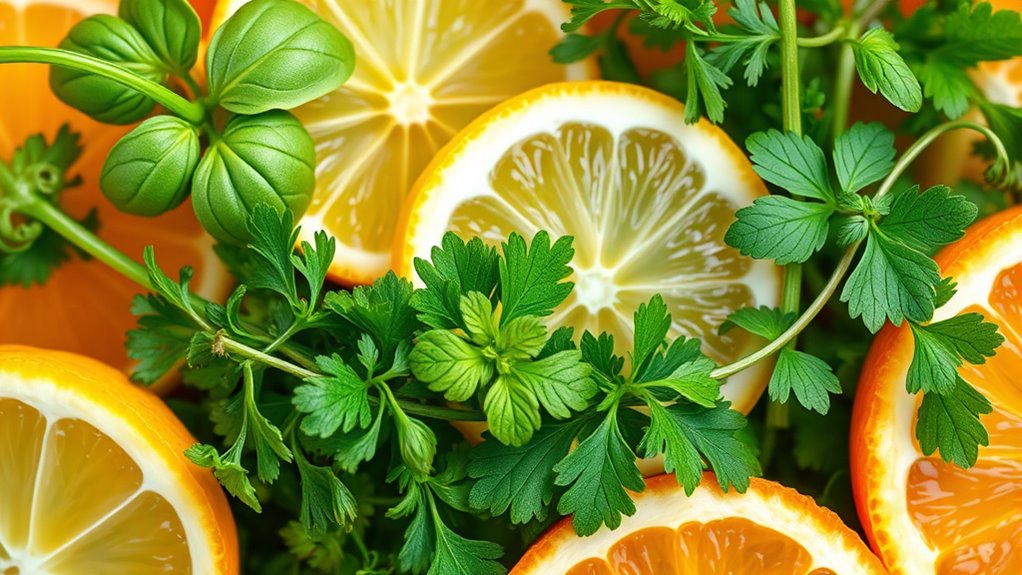

To add vibrant, sodium-free flavor, you can use fresh herbs like basil, cilantro, and rosemary, which bring aroma and taste without salt. Spice blends with garlic, paprika, and oregano enhance dishes naturally, while citrus fruits like lemon and lime brighten flavors and add acidity. Combining these ingredients creates layered, satisfying meals that support your health goals. Keep exploring to discover even more tips for maximizing flavor naturally.
Key Takeaways
- Fresh herbs like basil, cilantro, and rosemary enhance flavor naturally without adding salt.
- Homemade spice blends with ingredients like garlic, paprika, and oregano provide depth without sodium.
- Citrus fruits such as lemons and limes add bright, tangy notes that elevate dishes salt-free.
- Combining herbs, spices, and citrus creates layered, complex flavors beyond salt’s capabilities.
- Harvesting herbs at peak freshness and controlling spice ingredients maximizes natural flavor and aroma.
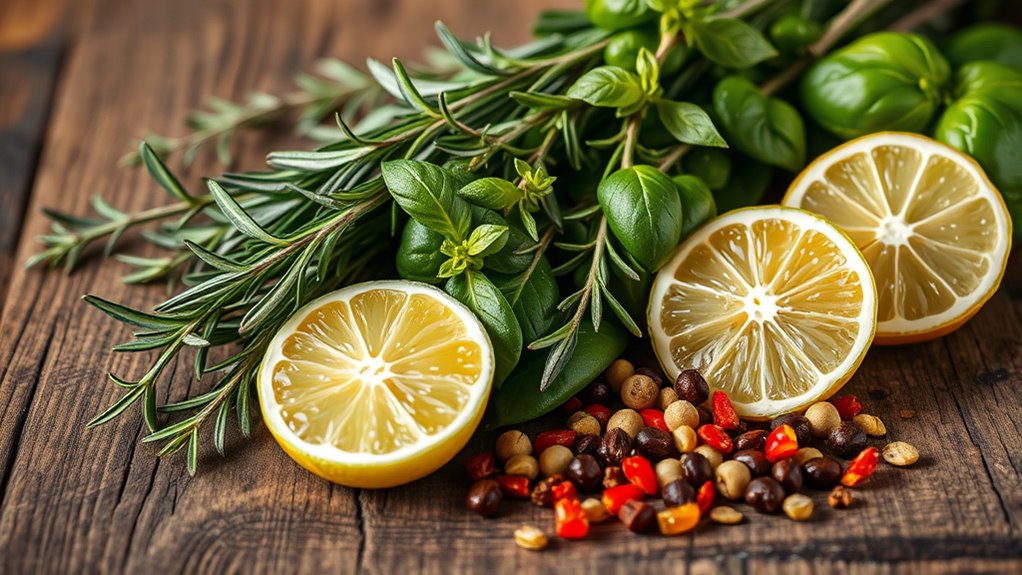
Herbs, spices, and citrus are essential ingredients that can transform ordinary dishes into flavorful masterpieces. When you focus on herb cultivation, you gain control over fresh, vibrant herbs that elevate your cooking without relying on salt. Growing your own herbs like basil, cilantro, or rosemary ensures you have access to high-quality ingredients at any time, and it allows you to experiment with different herb combinations. You can create your own spice blends, mixing herbs and spices tailored to your taste, which adds depth and complexity to dishes without sodium. These blends are versatile and can be used in marinades, dressings, or sprinkled over vegetables and proteins, enhancing flavor naturally and healthily.
Growing your own herbs like basil and cilantro allows you to flavor dishes naturally without salt.
Using herbs, spices, and citrus not only boosts flavor but also helps you cut back on salt. Many store-bought spice blends contain added sodium, so making your own at home guarantees a sodium-free option. For example, combining garlic powder, paprika, oregano, and lemon zest creates a savory, zesty seasoning that’s perfect for chicken or roasted vegetables. Citrus fruits like lemons, limes, and oranges add bright, tangy notes that can brighten up any dish without extra salt. Squeezing fresh citrus over salads, grilled meats, or fish introduces acidity and freshness that can compensate for the absence of salt, making your meals more satisfying and lively.
Incorporating herbs, spices, and citrus into your cooking allows you to develop a nuanced palate, appreciating layers of flavor that salt simply can’t provide. You’ll find that with proper herb cultivation, you can harvest herbs at their peak, ensuring maximum flavor and aroma. When you prepare your own spice blends, you control the ingredients, avoiding preservatives and unnecessary additives. This mindful approach not only supports a sodium-free diet but also encourages creativity in the kitchen. You might discover that a dash of cumin and coriander along with lemon juice elevates roasted chickpeas, or that fresh mint and lime make an unbeatable topping for grilled fish.
Ultimately, these natural flavor enhancers help you enjoy delicious, nutrient-rich meals without the health risks associated with excessive sodium intake. The key is to experiment and find your favorite combinations—trust your taste buds, and don’t be afraid to mix herbs, spices, and citrus to craft personalized, flavorful dishes that nourish your body and delight your senses. By cultivating herbs and creating spice blends, you take control of your flavor profile, making every meal both satisfying and health-conscious.

Nuwave Bravo XL Pro Air Fryer Toaster Oven with Grill Combo, 2025 New Ultra-Fast Convection System, 35% Crispier, 2X More Even, 142 Presets, 50-500F, Smarter Probe, PFAS Free, 30QT, Stainless Steel
142 EASY-COOK PRESETS: The Bravo toaster oven countertop is equipped with 12 versatile cooking functions including air fry,...
As an affiliate, we earn on qualifying purchases.
Frequently Asked Questions
Are There Any Herbs That Naturally Contain Sodium?
Some herbs naturally contain small amounts of sodium, making them natural sodium herbs. For example, celery seed and dill have higher herb sodium content, but their amounts are still relatively low compared to salt. You might choose these herbs to add flavor without substantially increasing sodium intake. Keep in mind, most fresh herbs like basil, parsley, and cilantro have minimal sodium, so they’re great options for sodium-conscious cooking.
Can Herbs and Spices Help Reduce Salt Cravings?
Yes, herbs and spices can help reduce your salt cravings. By exploring herb flavor profiles and using spice pairing techniques, you can enhance your dishes without added salt. Fresh herbs like basil, cilantro, and thyme add vibrant flavors, while spices like cumin and paprika bring warmth and depth. These flavor boosts make meals more satisfying, helping you cut back on salt while still enjoying delicious, flavorful food.
Do Citrus Fruits Add Significant Sodium to Dishes?
Citrus fruits generally contain very little sodium, with most varieties having less than 1 mg per serving, making them a great choice for flavoring without adding significant sodium. Citrus flavor impact can enhance dishes, making them taste vibrant and fresh without relying on salt. So, when you use citrus fruits, you’re adding a delicious tang without worry about increasing sodium content, helping you maintain a heart-healthy diet.
How Do Herbs Enhance Flavor Without Salt?
Herbs enhance flavor without salt by adding vibrant herb flavor profiles that elevate your dishes naturally. You can use spice blending techniques to combine herbs like basil, thyme, and cilantro, creating complex layers of taste without sodium. Fresh herbs provide aromatic notes, while dried herbs intensify flavors. Experiment with different combinations to suit your dish, making every bite more flavorful and satisfying without relying on salt.
Are There Any Safety Concerns With Consuming Large Amounts of Herbs?
Be cautious when consuming large amounts of herbs, as herb allergy concerns and herbal toxicity risks can arise. While herbs enhance flavor and offer health benefits, overdoing it can cause allergic reactions or toxicity issues. Always heed your body’s signals, start with small quantities, and consult healthcare professionals if you experience any adverse effects. Moderation and mindful intake help you enjoy herbs safely without risking adverse allergic or toxic responses.

NutriChef Indoor Smokeless Grill | Smart Grill & Air Fryer with 7 Cooking Functions | 6L Capacity | Includes Smart Thermometer | Precise Temperature Control | Non-Stick Removable Grill Plates
VERSATILE COOKING MASTERPIECE - Unleash your culinary creativity with this all-in-one Smart Electric Grill and Air Fryer combo....
As an affiliate, we earn on qualifying purchases.
Conclusion
Just like a master painter needs vibrant colors, your dishes thrive with herbs, spices, and citrus. They’re your secret allies in creating bold, flavorful meals without adding salt. Think of them as the Bard’s quill—bringing poetry and depth to every bite. So, embrace these natural enhancers and craft culinary stories that captivate and delight, proving that sometimes, the most powerful flavors come from nature’s own palette. Your taste buds will thank you.

Emeril Lagasse Extra Large French Door Air Fryer Toaster Oven Combo, 24 Cooking Functions and Digital Controls, 7 Accessories Included, Stainless Steel Finish, 26QT Capacity
A VERSATILE AIR FRYER AND MULTI-COOKER COMBO: Elevates practically any meal, from air frying quick after-school snacks to...
As an affiliate, we earn on qualifying purchases.

Cosori 9-in-1 TurboBlaze Air Fryer 6 Qt, Premium Ceramic Coating, 90°–450°F, Precise Heating for Even Results, Air Fry, Roast, Bake, Broil, Dry, Frozen, Proof, Reheat, Keep Warm, 120V, Dark Gray
𝘼𝙞𝙧 𝙁𝙧𝙮𝙚𝙧 𝙐𝙥𝙜𝙧𝙖𝙙𝙚: Innovative TurboBlaze Technology delivers a powerful 3600 rpm fan speed and temperatures up to 450℉,...
As an affiliate, we earn on qualifying purchases.