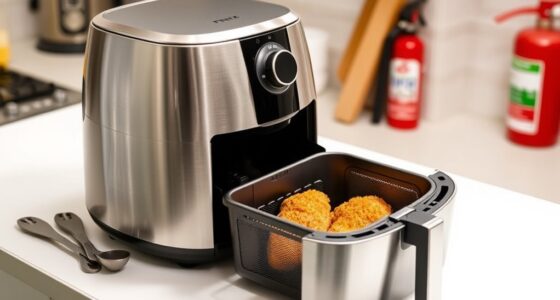
Surface oil can substantially boost the calorie content of your food more than you realize because it absorbs into or clings to the surface during cooking, especially with methods like frying or breading. Even dishes you think are healthy, like roasted veggies, can become calorie-dense if they soak up extra oil. Being aware of how cooking techniques and surface textures affect oil retention helps you make smarter choices—more details about this hidden calorie source can help you better manage your intake.

Get kitchen gear delivered free with Prime
- Fast, free delivery on millions of items
- Prime Video, Amazon Music and more included
- Member-only deals all year
Key Takeaways
- Surface oil can significantly increase a food’s calorie content beyond initial estimates.
- Cooking methods like frying absorb more oil, raising calorie counts more than perceived.
- Food surface texture and oil type influence how much oil is retained and calories added.
- Even small amounts of surface oil can contribute substantial hidden calories.
- Choosing lower-oil cooking techniques reduces surface oil and overall calorie intake.

Have you ever wondered how surface oil on foods or cooking surfaces impacts their calorie content? It’s a question many overlook, but the answer can significantly affect your overall intake. When you cook using certain techniques, surface oil can add more calories than you might expect. For example, frying, sautéing, or even drizzling oil over foods can lead to substantial oil absorption. This process isn’t just about adding flavor; it’s about how much oil the food actually soaks up during cooking. The more oil your food absorbs, the higher its calorie count becomes, often without realizing it.
Cooking techniques play a critical role in how much surface oil ends up on your food. Deep-frying, for instance, involves immersing food in hot oil, which results in intense oil absorption. The surface of the food becomes coated with oil, increasing its calorie content dramatically. On the other hand, pan-frying or sautéing with a small amount of oil can still lead to notable oil absorption, especially if you’re not careful with the amount used or the cooking time. Conversely, methods like baking or steaming involve minimal to no surface oil, keeping calorie counts lower. But even with these techniques, if surfaces are coated with oil beforehand or if you add oil afterward, the calorie impact still adds up.
Cooking methods like deep-frying increase oil absorption and calories, while baking or steaming keep it lower.
It’s essential to understand that oil absorption isn’t just about the cooking method itself; it’s also about how much oil sticks to the surface. Some foods, like breaded or battered items, tend to absorb more oil because their surface texture invites more oil to cling. When you cook with oils, the surface of the food acts like a sponge, soaking up the excess. This means that even foods that seem healthy, like roasted vegetables brushed with oil, can turn into calorie-dense dishes if they absorb a lot of oil during preparation. Additionally, surface oil retention varies depending on the type of oil and the surface texture of the food, influencing how much oil is ultimately absorbed. Understanding the properties of different oils can help you make healthier choices when cooking. Moreover, the temperature of the oil during cooking also plays a role in how much oil is absorbed, with higher temperatures often leading to increased surface oil adherence. It’s also helpful to note that oil viscosity impacts how much oil clings to food surfaces, which can vary with the type of oil used.
Ultimately, surface oil can alter the calorie content of your meals more than you might think, especially when you consider the cooking techniques involved. It’s not just the ingredients but how you cook them that influences their calorie load. Being mindful of oil absorption and choosing cooking methods that limit surface oil can help keep your calorie intake in check. So next time you prepare your favorite dish, remember that surface oil isn’t just about taste—it’s about the hidden calories you might be adding without realizing.
As an affiliate, we earn on qualifying purchases.
Frequently Asked Questions
How Does Surface Oil Impact Calorie Counts in Fried Foods?
Surface oil considerably impacts calorie counts in fried foods through oil absorption and calorie transfer. As you fry, foods absorb surface oil, increasing their overall calorie content. This oil creates a calorie transfer from the oil to the food, meaning even a small amount of surface oil can add up quickly. So, the more surface oil your fried foods retain, the higher their calorie count, often more than you might expect.
Are Certain Oils More Calorie-Dense Than Others?
Yes, certain oils are more calorie-dense due to their oil composition and how they react to cooking temperature. Oils high in saturated fats or with a higher fat content, like butter or palm oil, tend to have more calories per gram. When you cook at higher temperatures, oils may break down or evaporate, but their calorie content remains consistent. So, choosing oils with lower fat content can help reduce calorie intake.
Does Removing Surface Oil Significantly Reduce Calorie Intake?
Removing surface oil can substantially reduce calorie intake because oil residue on foods contributes extra calories that might not be obvious. When you wipe off or drain excess oil, you lower the calorie perception, making your meal healthier. While it may not eliminate all calories from oil, it’s an effective way to cut back on unnecessary fat and calories, helping you better control your overall intake.
How Does Surface Oil Affect the Overall Nutritional Value?
You might think surface oil doesn’t impact nutritional value much, but it actually does. Cooking oil adds nutritional fat, which contributes to calorie count and affects your overall intake. When oil clings to food, it increases fat content, meaning you get more calories than just from the food itself. So, even surface oil influences the nutritional value, making your meal richer in calories and fat than you might realize.
Can Surface Oil Increase Calorie Absorption During Digestion?
Yes, surface oil can increase calorie absorption during digestion. Its absorptive properties help break down fats more efficiently, enhancing digestion efficiency. When you consume foods with surface oils, your body can absorb more calories from the fats present. This process means that surface oils don’t just add calories but also facilitate better absorption, making your overall calorie intake higher than you’d expect from the food alone.
Conclusion
So, next time you’re frying or sautéing, remember that surface oil can pack a punch when it comes to calories. Don’t let it sneak up on you—being mindful can make a big difference in your health journey. It’s often the little things that trip us up, but if you stay aware, you can keep your goals in check. After all, you don’t want to bite off more than you can chew when it comes to your well-being.
Halloween Picks
halloween
As an affiliate, we earn on qualifying purchases.