TL;DR
A Livingetc report outlines five kitchen-storage principles drawn from Japanese design and advice from designer Yoko Kloeden: declutter before buying organizers, choose containers for their function, keep frequently used items accessible, use cookware for serving, and limit counter displays. The advice is practical guidance, not evidence from a comparative study, and its suitability depends on each household’s space, habits and food-storage needs.
Livingetc has published five kitchen-storage lessons drawn from Japanese homes, including clearing out unused items before buying organizers and keeping only frequently used or visually deliberate objects on counters. The report draws on comments from London-based interior designer Yoko Kloeden and Tasuku Ogino, executive vice president of Japanese home-goods company Nakagawa; it presents design advice rather than measured findings about storage outcomes.
The first principle is to declutter before adding storage. Kloeden advises taking one shelf at a time and asking what each item is for, rather than assuming that more organizers will solve a crowded kitchen. The report says this can help households avoid spending money on storage for items they do not need, though it provides no cost or space measurements.
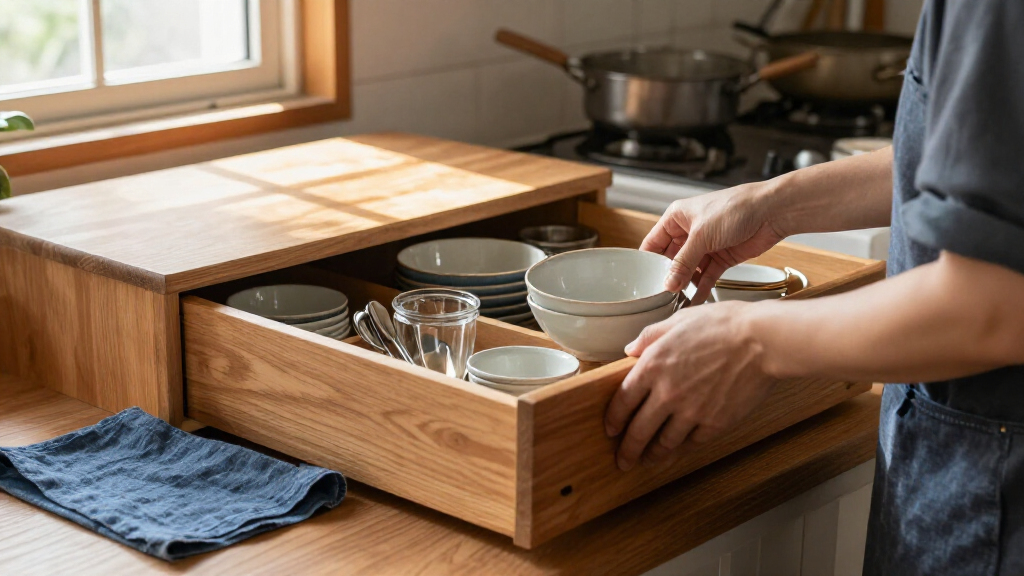
The next lessons focus on choosing containers according to what they hold and how often they are used. Kloeden describes using paulownia wood boxes for dried goods and tea, and clear containers when seeing the contents is useful. She also recommends accessible, easy-to-open vessels for items used repeatedly while cooking, such as salt and sugar. The aim, she says, is function rather than matching containers.
The final two principles are to use cookware that can also serve food and to be selective about counter displays. A pot or bowl that moves from cooking or storage to the table can reduce transfers and dishes, Kloeden says. For counters, she cites the idea of keeping items that are both used daily and attractive enough to leave on display; branded packaging, in her example, is put away.
Practical Ways to Reduce Kitchen Clutter
The advice matters to readers because it frames organization as a question of what a kitchen needs to do, not simply how many bins or shelves it contains. Starting with a clear-out can help people identify what they use before committing to new products. Matching storage to contents and cooking routines may also make frequently used ingredients easier to reach.
Combining cookware and serveware is another space-saving approach, particularly in kitchens with limited cabinets or work surfaces. However, the report does not establish that these practices work equally well for every household. Food-safety needs, cooking habits, household size and available space all affect which containers and counter arrangements are appropriate.
Japanese kitchen storage containers
As an affiliate, we earn on qualifying purchases.
As an affiliate, we earn on qualifying purchases.
The Ideas Behind the Five Rules
The Livingetc report describes Japanese kitchens as shaped by careful use of limited space and connects that approach to seasonal ingredients, home cooking and shared meals. Kloeden, whose London-based architecture and interior design studio draws on Japanese aesthetics, supplies the main examples and recommendations in the article.
For dry goods, she points to paulownia, also called kiri, and says its properties make it useful for buffering humidity; the report also notes its use in storing textiles. For cooked rice, she describes an ohitsu, a lidded vessel intended to let steam escape. These are examples offered by Kloeden, not instructions that every kitchen should adopt. Ogino adds the term merihari, which the report translates as deliberate contrast, to describe a considered balance in what is displayed.
““Before you add storage, take one shelf and ask what each thing on it is for.””
— Yoko Kloeden, interior designer, as quoted by Livingetc
What the Advice Does Not Establish
The supplied report does not cite research comparing Japanese kitchens with kitchens elsewhere, or quantify how much time, money or storage space these practices save. Its recommendations are attributed design guidance, not universal rules. The report also gives no detailed food-safety guidance for transferring ingredients into containers, including labeling, cleaning or storage conditions; readers should follow relevant product instructions and food-safety guidance.
The publication date is not provided in the supplied source material, and the article does not report a new study, policy or product launch. It is therefore unclear whether Livingetc’s report is tied to a specific seasonal event or broader trend beyond the article’s reference to preparing for a busy hosting season.
How Readers Can Apply the Ideas
The report’s suggested starting point is a single shelf: remove its contents, identify what each item is used for, and put away or remove what no longer serves a purpose. After that, households can decide whether they need organizers and choose them based on the contents, visibility and ease of access they require.
Readers can then review cooking routines to identify ingredients and utensils that need to stay within reach, and consider whether serving food in its cooking vessel suits their kitchen and table. The final check is the counter: retain items that are used regularly and intentionally displayed, while storing packaging and less-used objects elsewhere. The article names no follow-up study or announced next milestone.
Key Questions
What is the first Japanese kitchen-storage lesson in the report?
Declutter before buying storage. Yoko Kloeden recommends examining one shelf and deciding what each item is for before adding organizers.
What kinds of containers does the report recommend?
Kloeden suggests choosing containers for their job: clear boxes when visibility matters, and vessels suited to particular contents or cooking routines. The report gives paulownia boxes for dry goods and easy-to-open containers for frequently used ingredients as examples.
Why use cookware that can also go to the table?
Kloeden says a vessel used for cooking or storing food and then serving it can mean fewer transfers and fewer dishes. Whether that works depends on the cookware and the household’s needs.
What should stay on the kitchen counter?
The report’s suggested test is whether an item is used daily and has visual presence. Kloeden gives utensil holders and condiment jars as examples and says branded packaging can be stored away.
Are these storage practices proven to work for every kitchen?
No. Livingetc presents advice from design sources, not comparative research or quantified results. Readers may need to adapt the ideas to their space, cooking habits and safe food-storage requirements.
Source: rss