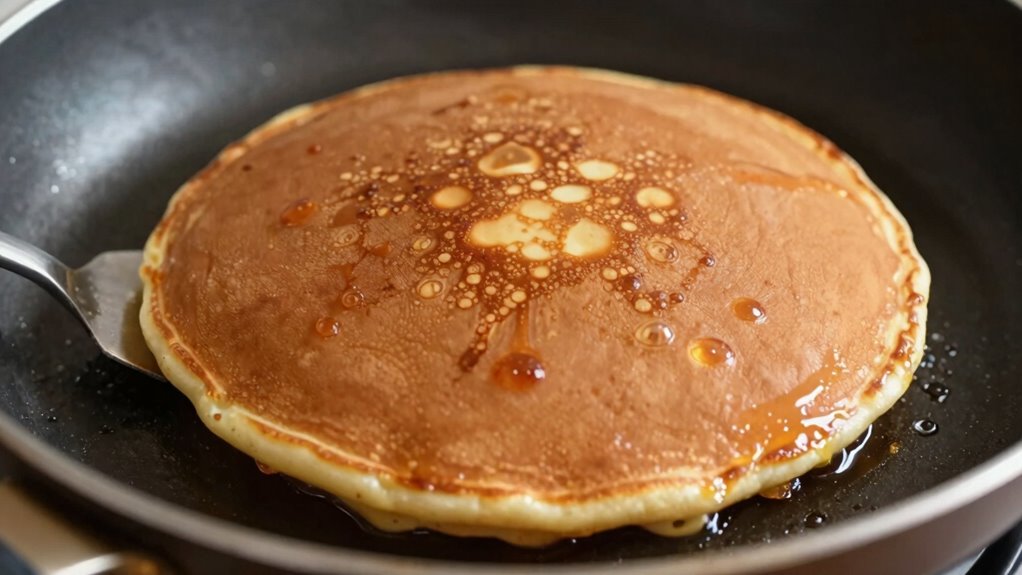
To get even browning, watch for visual cues like bubbles on pancakes or a firm edge to know when to flip or shake. Maintain steady heat and avoid rushing the process. Flipping too early can leave the center undercooked, while waiting too long risks burning. Perfect timing balances appearance and texture, so pay close attention to these signs. Keep exploring to master the timing trick for consistently beautiful, evenly browned dishes.
Key Takeaways
- Wait until bubbles form and edges are set before flipping for even browning.
- Use visual cues like color and crust development to time flipping accurately.
- Maintain steady, moderate heat to prevent uneven browning and burning.
- Avoid flipping too early or too late to ensure consistent caramelization and appearance.
- Practice observing surface changes to develop instinct for optimal flipping timing.
How Do I Know When My Food Is Properly Browning?

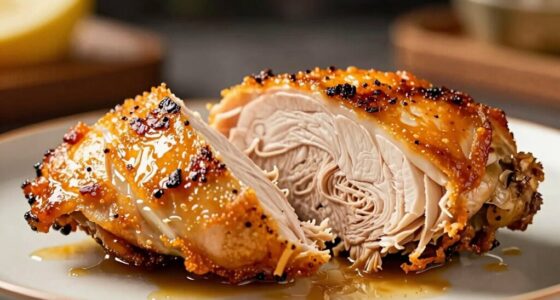
Knowing when your food is properly browned is essential for achieving the perfect result. You’ll notice a rich, golden crust forming, which signals that your seasoning techniques are working and flavor is developing. The surface should look even and slightly crisp, not burnt or pale. To guarantee consistent browning, monitor the color closely, as it guides your timing. Proper browning enhances plating presentation, making your dish look appetizing and professional. Don’t rush the process—patience helps develop flavor and texture. Adjust your heat if needed to avoid burning or under-browning. When your food reaches the desired hue, it’s ready to be plated for a visually appealing and flavorful meal. Mastering these cues guarantees a beautifully browned dish every time. Color accuracy also plays a role in ensuring your food looks as appetizing as it tastes.
What Causes Browning During Pan-Frying and Sautéing?
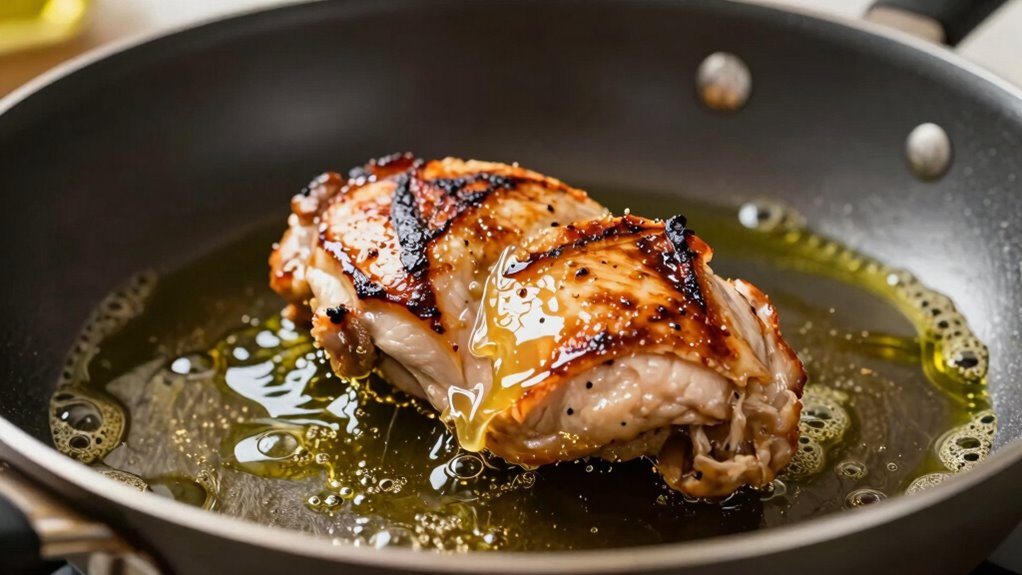
Ever wonder what triggers the browning process during pan-frying and sautéing? It’s primarily driven by the Maillard reaction, which occurs when heat causes amino acids and sugars to react. But factors like oil quality and pan material also play crucial roles. Good-quality oil with a high smoke point ensures even heat transfer, preventing uneven browning or burning. The pan material influences heat distribution; for example, stainless steel heats evenly, promoting consistent browning. Here’s a quick comparison:
| Factor | Effect on Browning | Best Choice |
|---|---|---|
| Oil Quality | Determines heat transfer and smoke point | High-smoke-point oils like avocado or peanut |
| Pan Material | Affects heat distribution and retention | Copper or stainless steel |
| Temperature | Controls browning speed and evenness | Medium-high heat |
| Surface Texture | Impacts contact and browning uniformity | Smooth, flat surfaces |
| Cooking Time | Influences overall browning | Monitor closely for ideal color |
Additionally, controlling temperature is essential for achieving the perfect browning without overcooking. Proper heat management can prevent uneven browning and ensure a desirable crust.
What Factors Affect Even Browning? Temperature, Time & Surface
Your success in achieving even browning depends on controlling temperature, timing your cooking just right, and choosing the right surface. If the heat is too high or too low, your food won’t brown evenly, so adjustments matter. The surface you cook on also influences how heat transfers, impacting the final color and texture. Additionally, understanding the fundamentals of heat transfer can help you make better decisions in your cooking process.
Temperature Control Matters
Maintaining consistent temperature is crucial for achieving even browning, as fluctuations can cause uneven results. When cooking, your stove’s heat should be steady to ensure uniform caramelization. Proper temperature control also relates to seasoning tips, as adding salt too early can affect browning; wait until the right moment. Storage guidelines matter too—keep ingredients at appropriate temperatures to prevent moisture loss or uneven cooking. To optimize results:
- Use a reliable thermometer to monitor heat levels
- Preheat your pan thoroughly before adding ingredients
- Adjust heat gradually rather than abruptly
- Avoid overcrowding, which can lower surface temperature
Controlling temperature ensures heat reaches all surfaces evenly, leading to better browning. This consistency helps you achieve a beautifully caramelized exterior and a perfectly cooked interior, making your dishes more appealing and flavorful.
Timing Is Key
Timing plays a pivotal role in achieving even browning, alongside temperature control. Proper timing guarantees your food develops a appealing browning display and enhances flavor development. If you flip too early, the surface won’t brown evenly; too late, and it may burn or dry out. Monitoring surface contact and adjusting time based on heat levels is vital. Factors like surface type, thickness, and initial temperature also influence timing.
| Factor | Effect on Browning |
|---|---|
| Temperature | Higher temps speed up browning |
| Surface Type | Non-stick vs. cast iron impacts time |
| Thickness | Thicker food needs longer |
| Initial Temperature | Cold items require more time |
| Heat Distribution | Even heat promotes uniform browning |
Surface Impact
The type of surface you use considerably influences how evenly your food browns. Surface texture impacts heat transfer and affects browning chemistry, leading to uneven results if not chosen carefully. A smooth, non-stick pan promotes consistent browning, while rougher surfaces create hotspots. Temperature regulation is essential; high heat accelerates browning but risks burning, whereas lower heat allows for more even color development. Timing also matters—too long, and the surface may become overcooked; too short, and browning is incomplete. Consider these factors to optimize surface impact: Floating on Water – just as water’s surface tension affects how objects interact with it, the surface texture of your pan influences heat distribution and browning outcomes. Additionally, understanding thermal conductivity helps you select cookware that distributes heat more evenly, reducing the chances of uneven browning.
When Should I Shake or Flip to Get Perfect Color?

To achieve evenly browned pancakes, you should start shaking or flipping them once you see bubbles forming on the surface and the edges look set. This is the ideal moment to use your browning techniques, ensuring the pancake develops a rich, even color without burning. Flipping too early can result in pale, undercooked centers, while waiting too long might cause over-browning or uneven texture. Timing is key for flavor development, as proper browning enhances taste and texture. When you see these visual cues, it signals that the batter has cooked enough to create a beautifully golden exterior while maintaining a moist interior. Proper timing is essential for consistent results, especially as cooking techniques can influence browning and doneness. Paying attention to visual cues can help you develop a better sense of when to flip, leading to more evenly browned pancakes. Additionally, using a heat control that maintains a steady temperature can prevent burning and ensure even cooking throughout. Achieving the perfect color also depends on understanding how different browning reactions influence flavor development.
Common Browning Mistakes and How to Fix Them
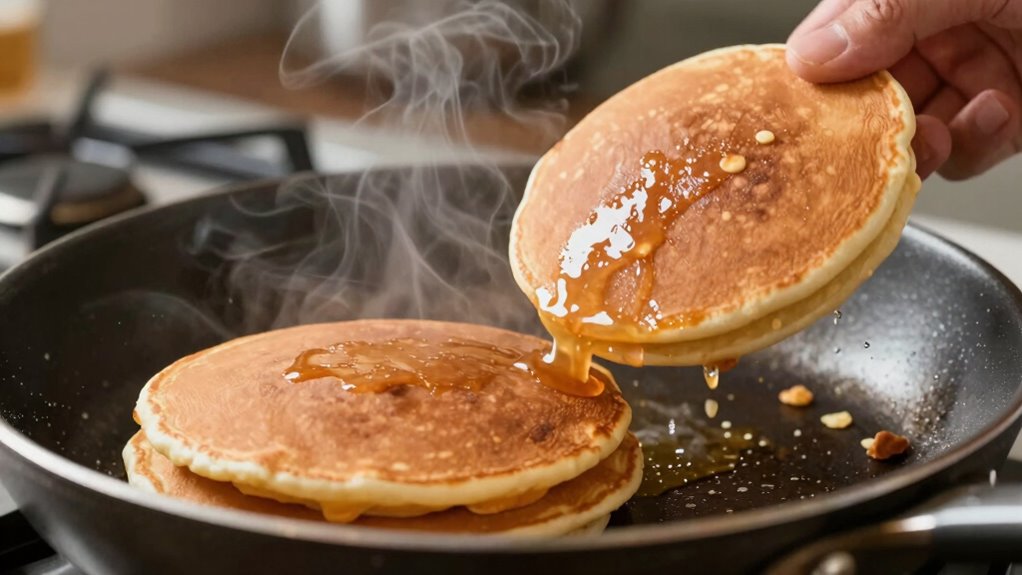
One common mistake is overcrowding the pan, which stops heat from distributing evenly and leads to uneven browning. Another issue is improper flipping techniques, causing inconsistent color and texture. Addressing these issues guarantees your browning turns out perfectly every time.
Overcrowding Causes Uneven Browning
Overcrowding on the baking sheet is a common mistake that leads to uneven browning. When too many ingredients are packed together, heat distribution becomes uneven, preventing proper caramelization. This can also affect seasoning consistency and ingredient freshness, as ingredients steam instead of roast. To fix this, consider:
- Leaving space between items for air circulation
- Using multiple baking sheets if needed
- Rotating trays midway through baking
- Ensuring ingredients are dry before baking
Improper Flipping Techniques
Improper flipping techniques can cause uneven browning because inconsistent contact with heat prevents ingredients from caramelizing evenly. If you flip too early or too late, you disrupt the browning process, leading to patchy results. Mastering flipping timing is key to achieving uniform color. To improve your browning techniques, consider the following:
| Flipping Timing | Effect on Browning |
|---|---|
| Too early | Underdeveloped crust, uneven color |
| Too late | Overcooked surface, potential burning |
| Perfect | Even caramelization and consistent browning |
| Delayed | Loss of crispness, soggy texture |
Pay attention to your pan’s heat and use visual cues to time flips precisely. Proper flipping guarantees even browning and a better overall result. Additionally, understanding the browning process helps you develop better timing skills for consistent results.
Tips to Achieve Even, Golden Browning Every Time
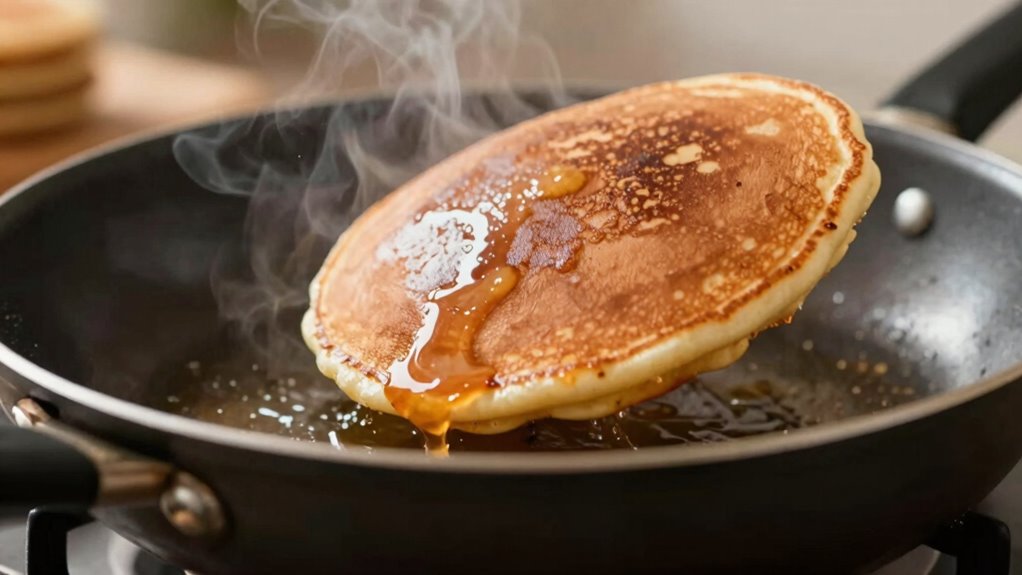
Ever wondered how to get that perfectly even, golden brown finish every time you cook? Achieving consistent browning involves mastering specific browning techniques and focusing on flavor enhancement. To guarantee even coloration, consider the following tips:
Master browning with moderate heat, dry ingredients, and timely flipping for perfect, even color.
- Use moderate heat, allowing the Maillard reaction to develop uniformly without burning.
- Pat ingredients dry before cooking to promote even browning.
- Rotate or flip items at regular intervals to prevent uneven color.
- Incorporate ingredients like butter or oil at the right moments to enhance flavor and promote consistent browning.
- Paying attention to heat control can make a significant difference in achieving an even, beautiful browning result.
- Utilizing crochet tools can help you craft beautiful, consistent patterns in fabric projects, just as controlling heat ensures even browning in cooking.
Frequently Asked Questions
Can I Use a Lid to Help With Even Browning?
Yes, using a lid can help with even browning. When you cover the pan, the lid traps heat and moisture, creating a more uniform cooking environment. This browning enhancement prevents hot spots and allows your food to cook evenly without burning. Just make certain you monitor the heat and lift the lid occasionally to release excess steam, helping you achieve perfectly browned, evenly cooked results every time.
How Does Moisture Affect Browning in Cooking?
Moisture plays a key role in browning because it affects moisture evaporation and surface drying. When there’s too much moisture, it slows down browning since water needs to evaporate first. To get even browning, you want to control moisture levels by patting ingredients dry and avoiding overcrowding the pan, which traps steam. This way, the surface dries out properly, allowing the Maillard reaction to create that perfect golden-brown color.
Is It Better to Cook on High or Low Heat for Browning?
You should cook on medium to high heat for better browning because it allows for proper temperature control and even heat distribution. Using too high heat can burn your food quickly, while too low may result in uneven browning. Adjust the heat as needed to maintain consistent temperature, ensuring the surface gets caramelized without overcooking the interior. This balance helps achieve a perfectly browned, flavorful result.
Do Different Oils Influence Browning Quality?
Different oils can subtly influence your browning quality, acting like silent partners in your culinary dance. Light oils like canola or vegetable promote even, golden hues, while richer oils such as olive or sesame add depth and flavor. Choosing the right oil type depends on your desired outcome. For consistent browning, opt for oils with high smoke points and neutral flavors, ensuring your dish achieves that perfect, appealing color every time.
Can Resting Food After Cooking Improve Browning Appearance?
Resting food after cooking definitely improves browning appearance. When you rest meat and vegetables, the juices redistribute evenly, enhancing their color and texture. This process helps prevent excess moisture, which can dilute browning. By allowing your cooked items to rest briefly, you preserve that appealing, golden-brown exterior while ensuring the interior stays tender and flavorful. So, take a moment to rest your food for a more appetizing presentation.
Conclusion
Mastering when to shake, flip, or leave your food alone can be the subtle art that elevates your cooking. By tuning into your pan’s signals and timing just right, you’ll turn ordinary meals into eye-catching, perfectly browned masterpieces. Remember, a little patience and attention go a long way—sometimes the secret to stunning results is simply knowing when to step back and let the magic happen. Trust your instincts, and enjoy the delicious journey.