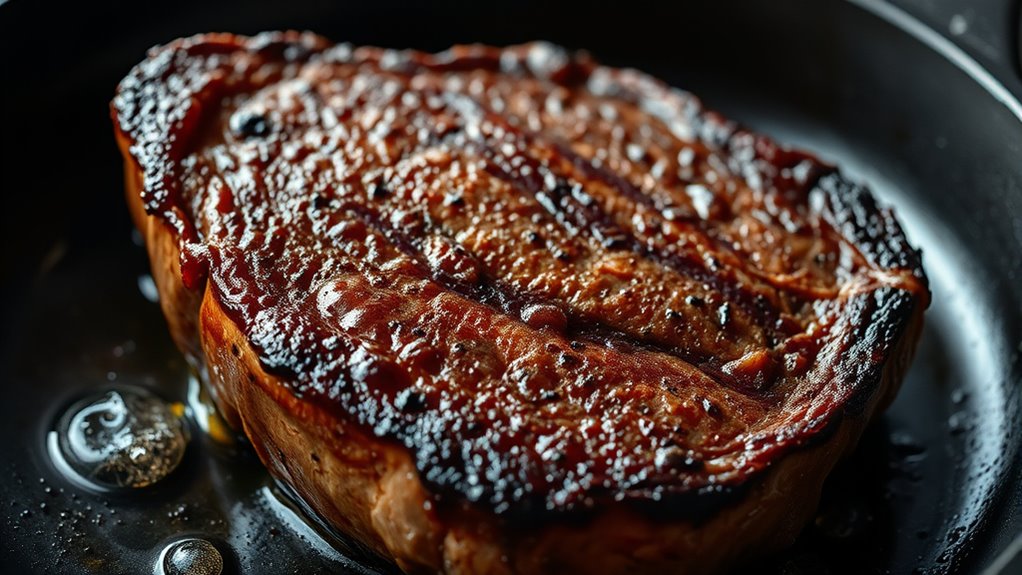

To create a restaurant-quality steakhouse crust indoors, start by choosing a well-marbled cut like a ribeye or New York strip. Pat your steak dry and season generously just before cooking. Use a heavy cast iron or stainless steel pan, preheated to 400-450°F, and sear the steak with high heat to develop a deep, caramelized crust. Rest the steak after searing for juiciness, and finish with simple enhancements—if you continue, you’ll discover all the key techniques in detail.
Key Takeaways
- Use well-marbled cuts like ribeye or New York strip, and bring the steak to room temperature before cooking.
- Pat the steak dry and season generously with salt just before searing for optimal crust development.
- Preheat a heavy-bottomed pan (cast iron or stainless steel) to 400-450°F for even, high-temperature searing.
- Sear the steak in high heat, pressing gently for full contact, until a deep brown crust forms before flipping.
- Rest the steak after searing to let juices redistribute, ensuring maximum flavor, tenderness, and a resilient crust.
Choosing the Right Cut of Steak

Choosing the right cut of steak is essential for achieving that restaurant-quality crust and tenderness. You’ll want to prioritize cuts with good marbling importance, as the fat within the meat melts during cooking, enhancing flavor and juiciness. Well-marbled steaks like ribeye or New York strip are ideal choices because they deliver consistent results and a rich taste. Additionally, consider steak aging—dry-aged or wet-aged steaks develop deeper flavor profiles and improved tenderness, making them worth the investment. These aging processes break down connective tissues, resulting in a more tender bite. Moreover, understanding the relationships between aging techniques and flavor development can help you select the best steak for your desired outcome. By selecting cuts with suitable marbling and proper aging, you’ll set a solid foundation for creating a perfectly crusted, juicy steak indoors. This careful choice ensures you maximize flavor and achieve that coveted restaurant-quality finish.
Preparing Your Steak for the Perfect Crust

Before cooking, properly preparing your steak is essential for achieving a perfect crust. Start by bringing your steak to room temperature; this helps it cook evenly and develop a better sear. Season generously with salt to enhance flavor and promote crust formation. You can add other spices or herbs, but keep it simple to avoid interference with the crust. Consider your sauce options—some sauces can add moisture, so plan to serve them separately to keep the crust crisp. When plating, presentation matters—use a clean plate that highlights the steak’s rich color and crust. A well-prepared steak with a beautiful crust invites anticipation, and your choice of finishing touches can elevate the overall presentation, making each bite as impressive as it is delicious. Incorporating proper severity of heat during cooking is crucial to achieving that ideal crust without overcooking the interior.
The Importance of Drying Your Steak

Drying your steak thoroughly is a crucial step because excess moisture on the surface can prevent it from searing properly. When you remove your steak from marinating techniques or storage, pat it dry with paper towels to guarantee a crisp, restaurant-quality crust. Even if you’ve stored it properly using effective steak storage methods, surface moisture can linger, hindering browning. Skipping this step can lead to steaming rather than searing, resulting in a less flavorful crust. Taking the time to thoroughly dry your steak helps achieve that perfect, caramelized exterior. Proper surface moisture removal is essential for a crispy, flavorful crust. Remember, no matter how well you prepare your steak in terms of marinating or storage, drying it well is essential for a crispy, flavorful crust. This simple step makes all the difference in indoor steak cooking.
Seasoning Techniques for Maximum Flavor

Mastering your spice blend is key to adding depth and complexity to your steak. Timing matters—season just before cooking to maximize flavor without drawing out moisture. With the right approach, your seasoning can elevate your steak to restaurant-quality perfection. Additionally, using a well-balanced tire pressure when preparing your outdoor grill can improve heat distribution and cooking consistency.
Spice Blend Mastery
Achieving a flavorful, restaurant-quality steak crust starts with crafting the perfect spice blend, which enhances the meat’s natural richness. Spice blend mastery is essential for flavor layer development, creating depth with each bite. You want a combination that balances salt, heat, and aromatic spices without overpowering the steak. Experiment with ingredients like smoked paprika, garlic powder, black pepper, and cayenne for a well-rounded profile. Use the table below to guide your seasoning choices:
| Spice | Purpose |
|---|---|
| Salt | Enhances natural flavor |
| Black pepper | Adds heat and depth |
| Paprika | Adds smoky sweetness |
| Garlic powder | Boosts savory notes |
| Cayenne | Provides subtle heat |
Mastering this blend guarantees maximum flavor, sealing in juiciness and creating that irresistible crust. Proper seasoning is crucial, as it influences the overall flavor profile and crust formation.
Proper Seasoning Timing
Timing is crucial when seasoning your steak to guarantee maximum flavor. If you season too early, the salt can draw out moisture, making the meat less juicy. For ideal results, incorporate marination techniques that allow flavors to penetrate the meat, ideally letting the steak sit for at least 30 minutes or up to overnight. This helps break down muscle fibers and enhances tenderness. Additionally, consider steak aging—either wet or dry—to develop deeper flavor profiles naturally. Season your steak just before cooking to preserve the seasoning’s integrity and achieve a crisp crust. Proper timing ensures the seasoning melds with the meat’s natural juices, amplifying flavor without overpowering the steak’s inherent richness. Regular maintenance of your cooking equipment, such as cleaning and inspecting your grill or pan, can also help achieve that perfect sear. Mastering this balance elevates your steak to restaurant-quality perfection indoors.
Selecting the Best Pan for Searing
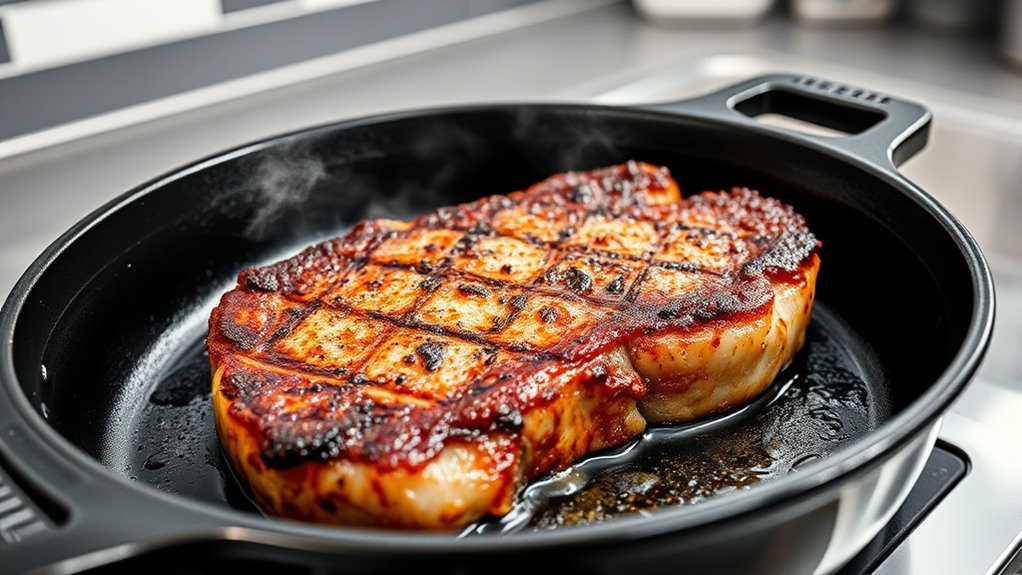
Choosing the right pan is key to achieving that perfect crust, and the material you pick makes a big difference. You’ll want a pan that conducts heat evenly and retains it well, like cast iron or stainless steel. Also, make sure the pan size matches your steak to ensure ideal searing without overcrowding. Incorporating sound techniques such as preheating the pan properly can further enhance your searing results.
Material Matters Most
The material of your pan plays a crucial role in developing that perfect sear, as it directly affects heat transfer and retention. For ideal cooking techniques, choose a pan made from materials like cast iron or stainless steel, which heat evenly and hold high temperatures. These kitchen tools are essential for creating a consistent crust and locking in juices. Avoid non-stick surfaces, which can’t withstand the high heat needed for a proper sear. The right material ensures your pan responds quickly to temperature adjustments, giving you control over the cooking process. Remember, a good searing pan isn’t just about size or shape—it’s about how well it conducts heat. Selecting the best material makes all the difference between a good crust and a restaurant-quality steak. Additionally, understanding the self watering plant pots system can help you maintain consistent moisture, much like how selecting the right pan maintains consistent heat during searing.
Proper Pan Size
Selecting the right pan size is essential for achieving a perfect sear, as an ill-fitting pan can lead to overcrowding or uneven heat distribution. When choosing your pan, consider one that comfortably fits your steak without crowding it, allowing heat to circulate evenly. A properly sized pan ensures you can use high heat for that ideal crust while preserving the steak’s juiciness. Think about how your marinating techniques influence searing; a well-sized pan helps lock in flavors and creates a stunning plating presentation. Visualize a few key features:
- Wide surface area for even heat transfer
- Low sides for easy flipping
- Heavy bottom for consistent temperature
- Slightly larger than your steak for space to sear
Additionally, selecting a cast iron skillet can provide superior heat retention and distribution, which is crucial for developing a restaurant-quality crust indoors.
Mastering the Searing Process

Mastering the searing process is essential for creating that irresistible, restaurant-quality crust on your steak. To achieve this, start by ensuring your pan is hot enough—usually around 400-450°F—so the steak immediately sizzles upon contact. Press the meat gently to make sure it makes full contact with the surface. Don’t flip too soon; let a deep brown crust form before turning. As you sear, think about sauce pairings that complement the crust’s richness. Proper plating techniques also enhance presentation, making your steak look as good as it tastes. Rest the meat after searing to let juices redistribute, ensuring a tender bite. Master these steps, and you’ll consistently produce a beautifully crusted steak that’s bursting with flavor and visually appealing.
Using High Heat for a Crispy Exterior

To achieve that perfect restaurant-quality crust, crank up the heat when searing your steak. High heat creates a rapid Maillard reaction, giving you a beautifully crispy exterior. As you heat your pan, imagine the marbling patterns starting to shimmer, releasing flavorful juices. The sizzling sound intensifies, signaling the crust forming quickly, sealing in juices and enhancing flavor. Keep in mind, steak aging improves tenderness, but high heat ensures the crust develops before the interior overcooks. To visualize the process:
- The surface browns evenly, forming a caramelized crust
- The heat causes surface moisture to evaporate rapidly
- Marbling melts slightly, adding richness to the crust
- The crust’s texture contrasts perfectly with a tender interior
- Utilizing sound vibrations in your cooking process can influence heat distribution and enhance crust formation.
High heat is your key to a crust that’s both crispy and flavorful.
Timing and Monitoring Your Steak

To get that perfect crust and doneness, you need to master timing techniques. Using a meat thermometer helps you monitor the internal temperature accurately, so you avoid over- or undercooking. Pay close attention to the timing, and your steak will come out just right every time.
Perfect Timing Techniques
Timing is essential when cooking the perfect steak, as even a slight misjudgment can result in overcooked or undercooked meat. To master perfect timing, pay close attention to your steak’s appearance and sound. Use your senses to monitor the process:
- Listen for a consistent sizzle as the crust forms
- Watch for a deepening color on the surface
- Feel the firmness with your hand to gauge doneness
- Check for even searing by inspecting the crust
Before cooking, sharpen your knife for clean cuts and better control, and ensure your marinating techniques develop flavor without delaying the process. Proper timing not only prevents overcooking but also guarantees your steak develops that ideal crust and perfect juiciness. Stay attentive, and you’ll achieve restaurant-quality results every time.
Using a Meat Thermometer
Using a meat thermometer takes the guesswork out of knowing when your steak reaches perfect doneness. It ensures accurate measurement of the meat temperature, giving you precise control over cooking. By monitoring the internal temperature, you can achieve the ideal level of doneness, whether you prefer rare, medium, or well-done. This tool enhances cooking precision, preventing overcooking or undercooking your steak. Insert the thermometer into the thickest part of the meat for the most reliable reading. Keep a close eye as your steak approaches the target temperature, and remove it from heat promptly. Using a meat thermometer not only guarantees a perfectly cooked steak but also helps you develop consistency, making every meal as delicious as a restaurant-quality steakhouse experience.
Resting Your Steak for Juiciness and Crust

Resting your steak after cooking is essential for achieving maximum juiciness and a perfect crust. Proper steak resting allows the juices to redistribute throughout the meat, ensuring each bite is moist and flavorful. During resting, the internal temperature stabilizes, preventing the juices from rushing out when you cut into it. Think of it as giving your steak time to settle, locking in that delicious crust and tender interior.
Allow your steak to rest, locking in juices and perfecting crust for maximum flavor.
Imagine:
- The sizzling sound slowing to a gentle hum as it rests
- Juices slowly pooling on the surface before absorption
- The aroma intensifying as the meat relaxes
- The crust firming slightly, becoming more resilient
This step is vital for juiciness preservation and achieving restaurant-quality results indoors. Patience now rewards you with a perfectly balanced steak.
Finishing Touches to Elevate Flavor and Texture

To truly elevate your steak’s flavor and texture, adding the right finishing touches can make all the difference. Start with marinating techniques—using simple ingredients like garlic, herbs, and a splash of acid can enhance tenderness and add layers of flavor. A quick marinade before cooking boosts the steak’s richness without overpowering its natural taste. Once cooked, focus on plating presentation; a clean, appealing display with a drizzle of sauce or a sprig of herbs can enhance the dining experience. Consider finishing with a pat of butter or a sprinkle of finishing salt for added richness. These small touches not only amplify flavor but also create a visually stunning plate, turning your home-cooked steak into a restaurant-quality masterpiece.
Frequently Asked Questions
Can I Achieve a Restaurant-Quality Crust With a Home Stove?
Absolutely, you can get a restaurant-quality crust on your steak with your home stove. Use a high-quality steak seasoning to enhance flavor, and make sure to let your steak rest after cooking to keep it juicy. Preheat your pan well, use a bit of oil with a high smoke point, and sear each side properly. These steps help develop that perfect crust, just like at a steakhouse.
What Are Common Mistakes That Prevent a Perfect Steak Crust?
Think of your steak as a canvas; common mistakes like seasoning mishaps or temperature misjudgments can ruin the masterpiece. You might over-season, which masks the crust, or misjudge heat, preventing a perfect sear. Avoid these pitfalls by seasoning just right and preheating your pan thoroughly. When temperature is right, your steak will develop that irresistible, restaurant-quality crust, turning every bite into a flavor-packed work of art.
How Does Pan Material Affect Crust Formation?
Pan material plays a big role in crust formation. With cast iron, you get excellent heat retention and even cooking, helping you develop a crispy crust. Stainless steel heats quickly and evenly, but it can be trickier to get that perfect sear without sticking. You’ll want to preheat your pan well and use enough oil, regardless of the material, to achieve that restaurant-quality crust indoors.
Is There a Preferred Oil Type for Searing Steaks Indoors?
When choosing a cooking oil for searing steaks indoors, your preference should focus on smoke point considerations. High smoke point oils like avocado, grapeseed, or refined canola are ideal because they tolerate high heat without burning. Your goal is to achieve a crisp, flavorful crust, so select an oil that withstands searing temperatures while enhancing flavor. Avoid oils with low smoke points, which can produce smoke and off-flavors.
How Can I Prevent Sticking and Burning During Searing?
Think of searing like walking a tightrope—you need balance to avoid falls. To prevent sticking and burning, choose an oil with a high smoking point, like canola or avocado oil. Preheat your pan thoroughly before adding the steak, ensuring it’s hot enough to create a crust quickly. This way, you minimize sticking and burning, achieving that perfect sear without tragedy. Keep your pan hot, your oil ready, and your technique steady.
Conclusion
With these tips, you can achieve a restaurant-quality steakhouse crust right in your kitchen. Don’t worry if it’s your first try—practice makes perfect, and every attempt gets you closer to that perfect sear. Just remember, patience and attention to detail are key. So, fire up that pan, follow these steps, and enjoy a delicious, crusted steak that rivals any restaurant—no fancy equipment needed!