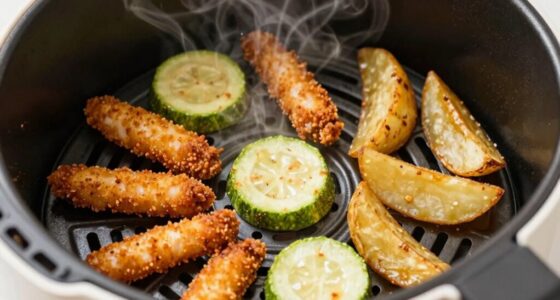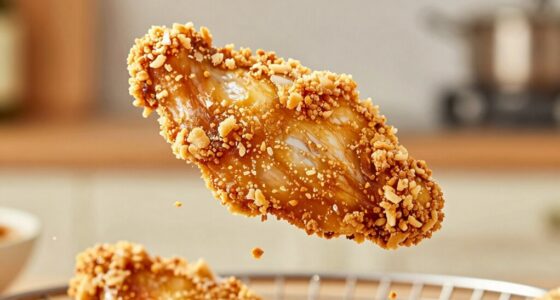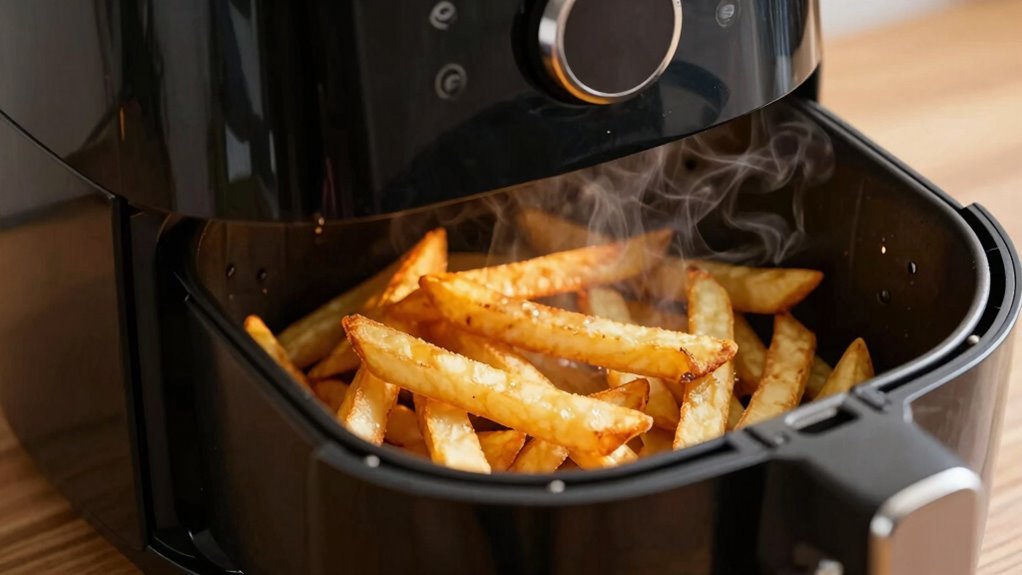
To use carryover heat to your advantage in an air fryer, remove your food promptly once it reaches the desired internal temperature, then let it rest for a few minutes. This allows residual heat to finish cooking sensitive or delicate items evenly without overcooking the exterior. Covering foods or adding moisture can help retain juiciness. By managing the timing and resting, you can achieve perfectly cooked, moist results every time—keep going to learn more tips for mastering this technique.

Get kitchen gear delivered free with Prime
- Fast, free delivery on millions of items
- Prime Video, Amazon Music and more included
- Member-only deals all year
Key Takeaways
- Turn off the air fryer just before the food reaches the desired internal temperature to utilize residual heat for gentle finishing.
- Cover delicate foods with foil or add moisture to prevent drying out during carryover cooking.
- Allow foods to rest after cooking to let residual heat evenly distribute and complete the cooking process.
- Adjust initial cooking temperature based on the food’s moisture content to control carryover heat effects.
- Remove food promptly once the target temperature is reached to avoid overcooking from residual heat.
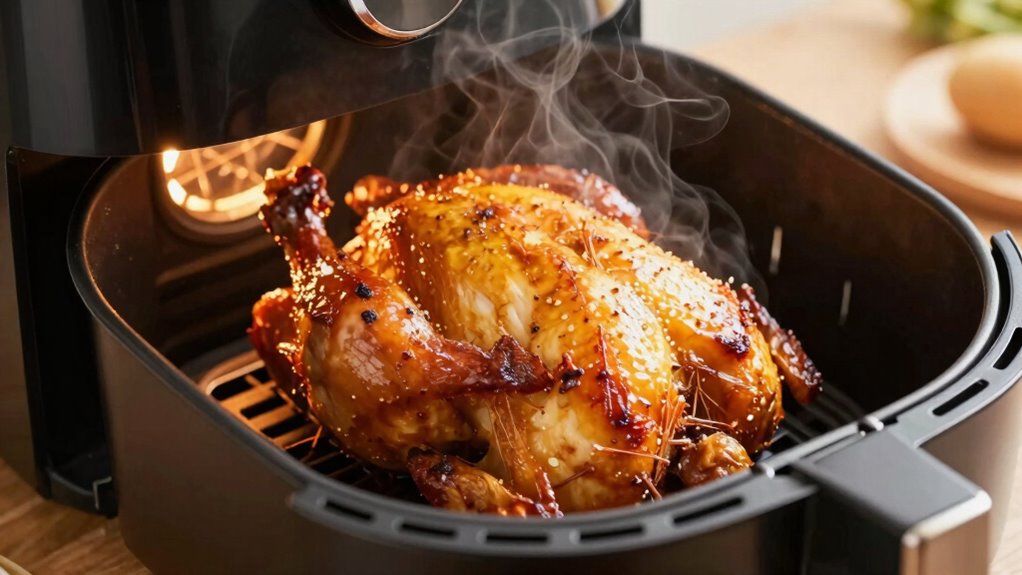
Ever wonder how to achieve perfectly cooked dishes in your air fryer even after you’ve turned it off? It’s all about understanding carryover heat, a phenomenon that can help you finish cooking without overdoing it. When you switch off your air fryer, the internal temperature doesn’t drop immediately. Instead, residual heat stays inside the food, continuing to cook it gently. This is especially useful for delicate items like meats, baked goods, or anything that benefits from a gentle finish. To leverage this, you need to be mindful of the cooking temperature you set initially. If you crank up the heat too high, the food might cook too quickly on the outside while remaining underdone inside. Conversely, a properly calibrated temperature allows carryover heat to do its job, gradually bringing the inside to perfection without drying out the exterior.
Food moisture plays a vital role in this process. When you cook foods with high moisture content—like vegetables, fish, or marinated meats—the residual heat helps distribute that moisture evenly, preventing it from drying out during the final moments of cooking. If your food is too dry, it’s more prone to overcooking once the air fryer is off. Keeping a close eye on food moisture levels and adjusting your cooking temperature accordingly guarantees you’re not just relying on the initial heat but also giving the carryover heat a chance to work in your favor. Covering foods with foil or adding a small amount of liquid can help retain moisture, making the carryover process more effective and preventing foods from becoming tough or dry. Additionally, understanding the thermal properties of different foods can help you better predict how carryover heat will impact your dishes. Recognizing how food moisture content influences heat transfer can further refine your cooking technique.
Being aware of the carryover heat phenomenon can help you fine-tune your cooking process and achieve consistent results. Incorporating proper resting time after cooking allows the residual heat to finish the job gently, which is crucial for maintaining optimal moisture and texture. Another tip is to remove the food promptly once the desired internal temperature is reached, but don’t rush to serve immediately. Letting the food rest for a few minutes allows the residual heat to finish the job gently, resulting in a juicier, more evenly cooked dish. This step is especially important for meats, which benefit from a resting period to redistribute juices. Remember, the key isn’t just the initial cooking temperature but how you manage the changeover from active cooking to resting. A mindful approach—knowing when to switch off, how to handle food moisture, and timing the rest—allows you to maximize carryover heat, achieving perfectly cooked dishes every time.
air fryer with temperature control
As an affiliate, we earn on qualifying purchases.
As an affiliate, we earn on qualifying purchases.
Frequently Asked Questions
How Long Does Carryover Heat Typically Last in an Air Fryer?
Carryover heat in an air fryer typically lasts about 5 to 10 minutes after cooking. During this time, heat retention continues to cook your food gently, especially if you leave the basket inside. To make the most of this, you can use residual heat to finish cooking thicker cuts or keep food warm without extra energy. Keep in mind, higher cooking temperatures may extend this carryover period slightly.
Can Carryover Heat Affect Cooking Times for Different Foods?
Like a gentle wave, carryover heat can influence cooking times for different foods. It helps retain seasoning and preserve texture, especially for meats and baked goods. When you remove food from the air fryer, residual heat continues cooking, so dishes might finish slightly longer than expected. Being aware of this allows you to adjust your timing, ensuring your food stays juicy, flavorful, and perfectly textured without overcooking.
Is It Necessary to Let Food Rest After Air Frying?
Yes, it’s necessary to let food rest after air frying. Resting guarantees proper food safety by allowing internal temperatures to stabilize, reducing the risk of bacteria. It also helps with temperature regulation, letting juices redistribute for better flavor and texture. Ignoring this step can result in unevenly cooked food and compromised safety. So, give your food a few minutes to rest before serving for ideal results.
How Does Food Thickness Impact Carryover Heat?
Food thickness impacts carryover heat because thicker pieces have more food density, causing heat to penetrate more slowly and last longer after cooking stops. Thickness variation means you need to take into account how evenly heat distributes; thicker areas retain heat and continue cooking internally. By understanding this, you can avoid under- or overcooking, ensuring foods reach the perfect doneness through proper resting or adjusting your air frying times accordingly.
Can Carryover Heat Cause Overcooking or Burning?
Carryover heat can indeed cause overcooking or burning if you’re not careful, but it also helps with flavor retention and texture preservation. Think of it as a gentle encore that enhances your dish, rather than ruining it. To avoid mishaps, remove food promptly when it reaches the perfect doneness. This way, you enjoy tender, flavorful results without risking overdone or burnt spots, making every bite just right.
Conclusion
By understanding how carryover heat works, you can perfect your air frying results and enjoy perfectly cooked meals every time. Remember, even a small amount of residual heat can make a big difference, especially when resting meats or finishing baked goods. Did you know that carryover cooking can raise meat temperatures by up to 10°F? Embracing this technique guarantees your dishes stay juicy and tender, making your air fryer experience more efficient and delicious.
Fall Picks
fall essentials
As an affiliate, we earn on qualifying purchases.