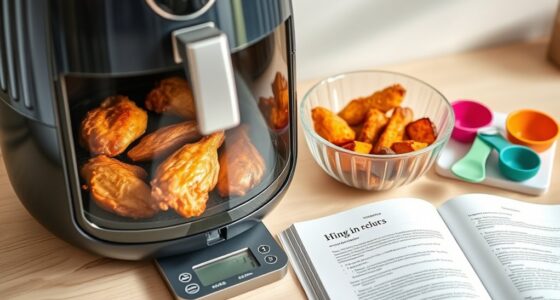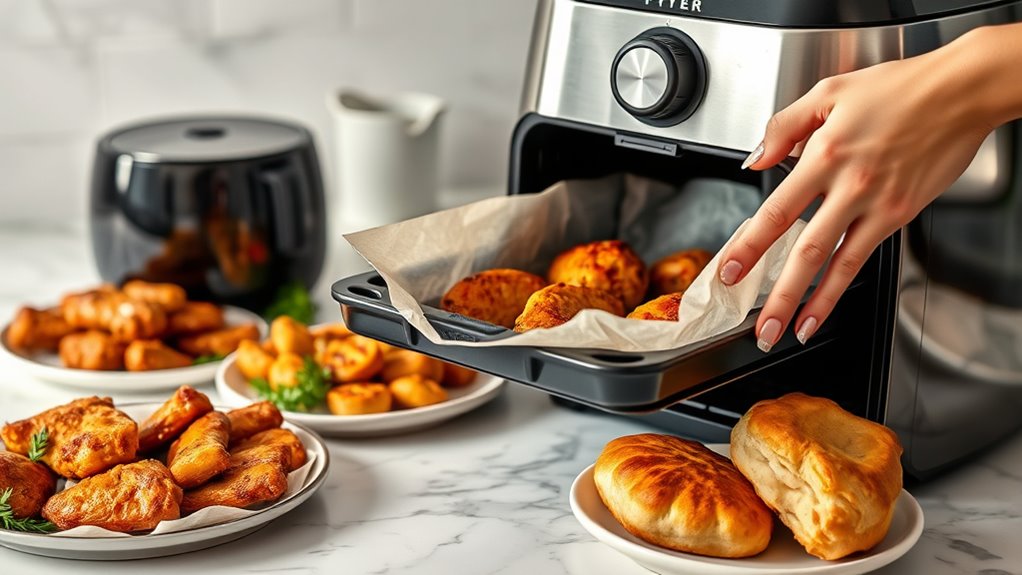

Converting oven recipes for the air fryer involves adjusting the temperature downward by about 25°F and reducing cook time by 20-25%. Use appropriate cookware that allows proper air circulation, like perforated trays or racks, and avoid overcrowding for even cooking. Proper prep, like patting foods dry and adding light oil, helps attain that crispy finish. To master these swaps and ensure perfect results, keep exploring the tips and tricks that follow.
Key Takeaways
- Reduce oven cooking temperature by about 25°F and decrease cooking time by 20-25%.
- Arrange food in a single layer without overcrowding for even air circulation.
- Use a food thermometer to monitor internal temperature for safety and doneness.
- Adjust seasoning and coating techniques to maintain flavor and crispiness in the air fryer.
- Watch for visual cues like color and texture to determine when the food is properly cooked.

Emeril Lagasse Extra Large French Door Air Fryer Toaster Oven Combo, 24 Cooking Functions and Digital Controls, 7 Accessories Included, Stainless Steel Finish, 26QT Capacity
A VERSATILE AIR FRYER AND MULTI-COOKER COMBO: Elevates practically any meal, from air frying quick after-school snacks to...
As an affiliate, we earn on qualifying purchases.
Understanding the Differences Between Oven and Air Fryer Cooking
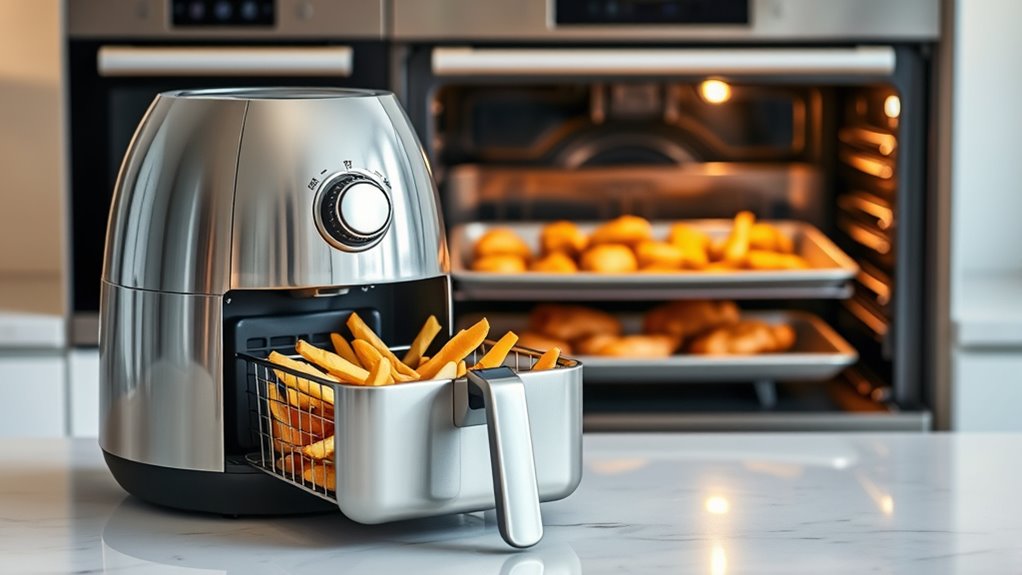
Ovens and air fryers may seem similar, but they cook food quite differently. Ovens tend to retain oven moisture, which helps keep food tender but can result in less crispiness. Air fryers, on the other hand, rely on rapid air circulation dynamics that mimic frying by circulating hot air around your food. This creates a dry environment that promotes browning and crisping without added oil. Because of these differences, foods that turn out moist and tender in an oven may become crisp and dry in an air fryer. Understanding how oven moisture and air circulation work helps you predict how your recipes will change. Rapid air circulation enhances the crisping effect, making it crucial to adjust cooking times and temperatures accordingly to avoid over-drying your food. Additionally, the moisture retention method used by ovens can influence the final texture and flavor of your dishes, so adapting recipes is essential for optimal results. Recognizing the cooking environment differences allows for better control over results and helps prevent common pitfalls like under- or over-cooking. Being aware of these factors, including heat distribution, can further improve your results and help you master the transition from oven to air fryer with confidence.

Ninja Air Fryer with Air Crisp | 5 QT Capacity fits up to 4lbs of Fries | 4-in-1 Pro Air Fry, Roast, Reheat, Dehydrate | 400°F Max Temp | 1750 Watts | W/Nonstick Basket & Crisper Plate | Grey | AF141
AIR CRISP TECHNOLOGY: 400℉ superheated air surrounds food for hot, crispy results with little to no oil.
As an affiliate, we earn on qualifying purchases.
Adjusting Temperature Settings for the Air Fryer
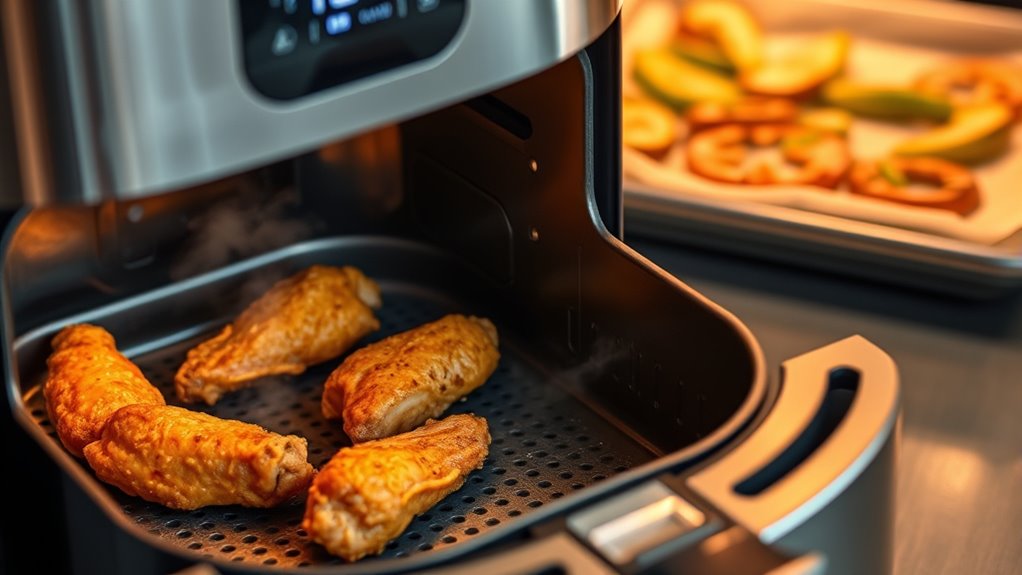
Adjusting the temperature when using an air fryer is key to achieving perfect results. Proper temperature calibration guarantees your food cooks evenly, considering the air fryer’s rapid heat distribution. Start by lowering oven temperatures by about 25°F since air fryers cook more efficiently. Keep in mind, uneven heat distribution can cause hot spots, so monitor your food closely. Use the table below to understand how different foods may need temperature adjustments:
| Food Type | Oven Temp | Air Fryer Temp | Notes |
|---|---|---|---|
| Chicken breasts | 375°F | 350°F | Adjust for even cooking |
| Vegetables | 400°F | 375°F | Prevent burning |
| Frozen fries | 425°F | 400°F | Minimize over-browning |
| Fish | 350°F | 325°F | Avoid dryness |
| Baked goods | 350°F | 325°F | Ensure thorough baking |
Proper calibration and understanding heat distribution lead to better results. Additionally, considering the drivetrain components of your bike can help maintain smooth shifting and prolong the lifespan of your equipment. Being aware of curiosity about your appliance’s functions can further enhance your cooking experience, leading to more consistent and satisfying results. Regularly cleaning and maintaining your air fryer can also improve heat distribution, ensuring consistent cooking and extending the appliance’s lifespan. Gaining knowledge about the heat sources within your air fryer can help you optimize cooking times and temperatures for various recipes. Furthermore, understanding the thermostat controls can assist in fine-tuning your settings for different dishes.

Cosori 9-in-1 TurboBlaze Air Fryer 6 Qt, PFAS-Free Ceramic Coating, 90°–450°F, Precise Heating for Even Results, Air Fry, Roast, Bake, Broil, Dry, Frozen, Proof, Reheat, Keep Warm, 120V, Dark Gray
𝘼𝙞𝙧 𝙁𝙧𝙮𝙚𝙧 𝙐𝙥𝙜𝙧𝙖𝙙𝙚: Innovative TurboBlaze Technology delivers a powerful 3600 rpm fan speed and temperatures up to 450℉,...
As an affiliate, we earn on qualifying purchases.
Modifying Cooking Times for Faster Results

To save time when using your air fryer, you can modify cooking times without sacrificing quality. Start by reducing the original recipe’s oven time by about 20-25%, but keep an eye on your food’s progress. Here are some tips to help you:
- Use ingredient substitutions that cook faster, like thin-cut vegetables or smaller meat pieces.
- Adjust cooking times based on the thickness of ingredients—thinner items need less time.
- Keep track of your modifications so you can fine-tune future recipes for quicker results.
- Remember that air purifier features can assist in creating a healthier kitchen environment, helping you prepare meals more efficiently and safely. Additionally, understanding how nutritional value of juices varies can help you select ingredients that maximize health benefits during quick cooking methods.
- Familiarize yourself with the best vacuums for dust removal in 2024, as a clean kitchen environment can contribute to better food preparation and overall health.
Recipe modifications are key to efficiency, and experimenting with ingredient substitutions can help you save even more time. With a little practice, you’ll master faster, delicious air fryer meals without compromising flavor or texture.
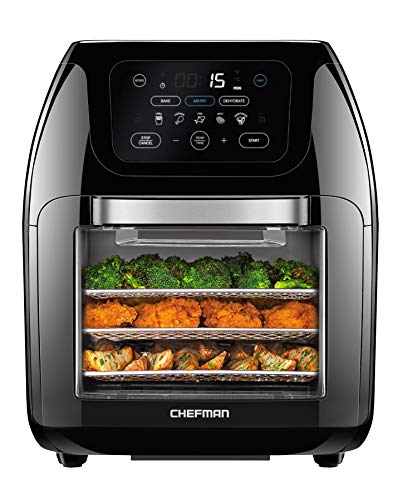
CHEFMAN Multifunctional Digital Air Fryer+ Rotisserie, Dehydrator, Convection Oven, 17 Touch Screen Presets Fry, Roast, Dehydrate, Bake, XL 10L Family Size, Auto Shutoff, Large Easy-View Window, Black
Versatile countertop cooking: Air fry, bake, dehydrate, rotisserie, or roast to crispy perfection in one convenient appliance
As an affiliate, we earn on qualifying purchases.
Choosing the Right Cookware and Accessories
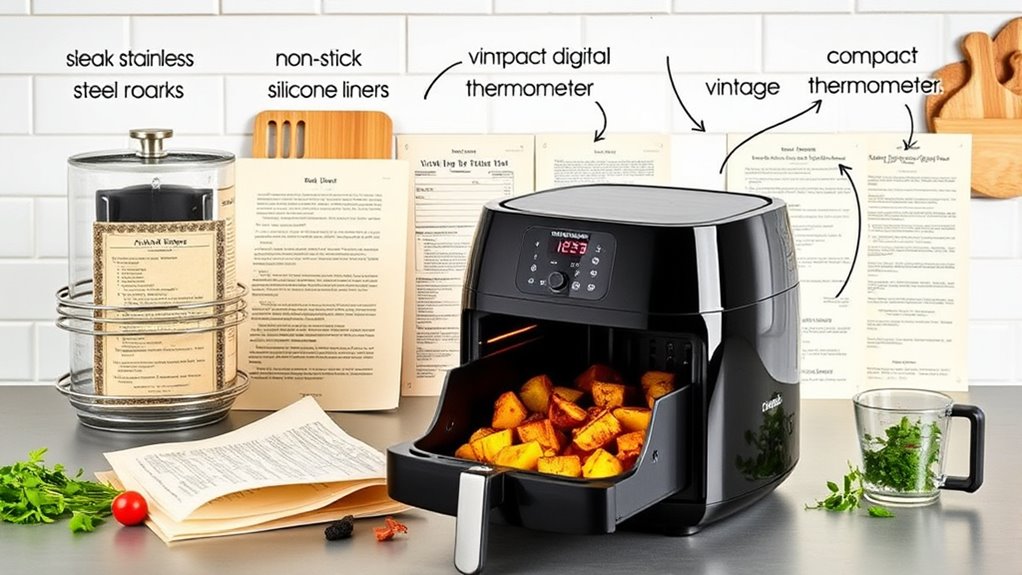
Choosing the right cookware and accessories is essential for maximizing your air fryer’s performance and ensuring even cooking. Not all air fryer accessories are compatible, so it’s important to select cookware that fits your model’s basket size and airflow design. Use cookware that is oven-safe and has a heat-resistant handle, and avoid materials like glass or plastic that can’t withstand high temperatures. Look for options specifically designed for air fryers, such as perforated trays, silicone mats, or metal racks, to promote proper airflow. Proper cookware compatibility prevents overcrowding and promotes crispness. Additionally, incorporating spiritual practices like mindfulness during cooking can enhance your overall experience. Developing a mindful cooking routine can help you stay present and reduce stress while preparing meals. Practicing mindfulness while selecting and using accessories can improve focus and satisfaction in your culinary endeavors. Being aware of airflow dynamics in your air fryer setup ensures that heat circulates efficiently, leading to better results. Investing in versatile air fryer accessories enhances your cooking experience, making it easier to prepare a variety of recipes while maintaining safety and efficiency.
Preparing Your Food for Optimal Air Fryer Results

Preparing your food properly is key to achieving the best results in your air fryer. To maximize flavor and presentation, start with these steps:
- Season your food with a variety of seasoning variations to enhance taste, such as herbs, spices, or marinades.
- Ensure even coating to promote uniform cooking and appealing presentation techniques like neat arrangement or garnishing.
- Pat foods dry before cooking to prevent excess moisture, which can affect crispiness and overall texture.
- Incorporate proper preparation techniques to ensure your food cooks evenly and looks as appetizing as it tastes. Using the right essential oils during preparation can also add flavor and beneficial properties to your dishes. Additionally, understanding thermal properties can help you adjust cooking times for different ingredients. Being aware of the Maillard reaction can also help you achieve a desirable browning and flavor development during cooking.
These preparations help your food cook evenly, look appetizing, and taste great. Using the right seasoning variations adds flavor depth, while presentation techniques make your dishes more inviting. Proper prep is essential for achieving restaurant-quality results right in your kitchen.
Monitoring and Testing for Perfect Doneness
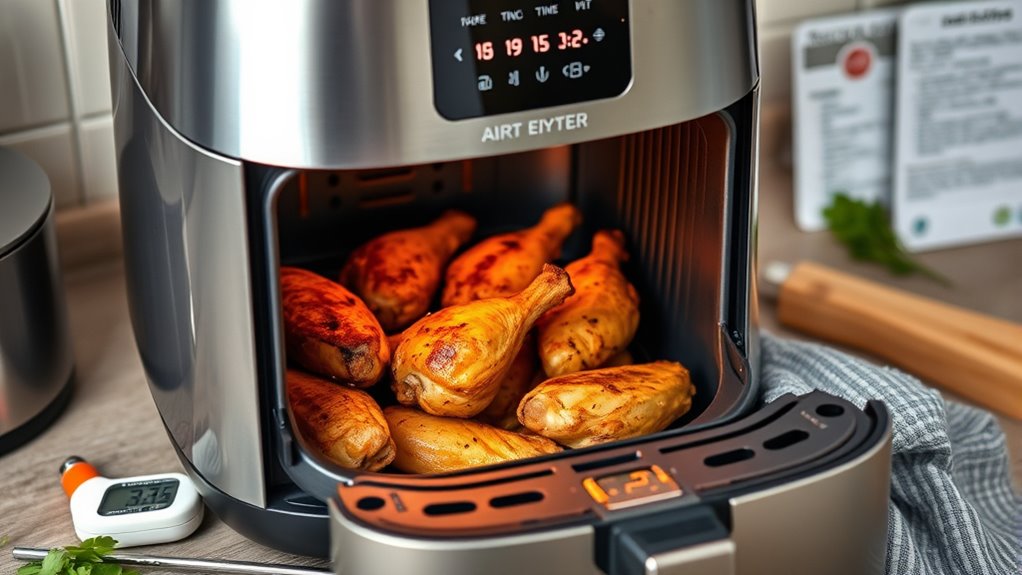
Keep a close eye on your food as it cooks, using visual cues like color and texture. Check the internal temperature with a meat thermometer to guarantee safety and doneness. Adjust your cooking time if needed, so everything comes out perfectly cooked and delicious.
Monitoring Internal Temperature
To guarantee your dish is perfectly cooked, monitoring the internal temperature is essential. Proper thermometer placement ensures accurate readings, so insert the probe into the thickest part of the food, avoiding bones or fat. Here’s what you should do:
- Insert the thermometer into the center of the food, making sure it’s fully embedded.
- Check the internal temperature regularly during cooking to prevent over or undercooking.
- Remove the food once the internal temperature reaches the recommended level for safety and doneness.
Timing and Visual Cues
Timing and visual cues are essential for ensuring your air-fried dish is perfectly cooked without relying solely on a thermometer. Pay close attention to visual cues like golden-brown edges, bubbling, or steam escaping, which indicate doneness. Use timing signals as a guideline, but remember that every air fryer varies slightly. Check your food a few minutes before the recommended cook time to avoid overcooking. Look for signs such as crispiness or firmness, which tell you it’s ready. If your dish isn’t quite there yet, give it a few more minutes, checking frequently. Relying on these visual cues and timing signals helps you achieve consistently delicious results, ensuring your dish is cooked thoroughly and looks appetizing without guesswork.
Tips for Achieving Crispy and Evenly Cooked Food
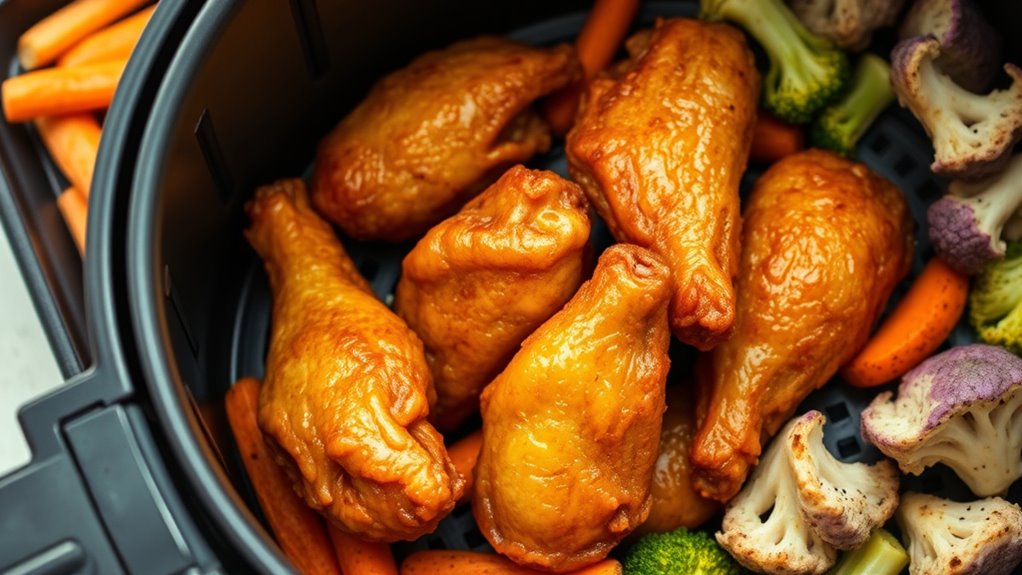
Achieving crispy and evenly cooked food in the air fryer requires paying attention to how you arrange and prepare your ingredients. First, spread items in a single layer to ensure hot air circulates evenly. Second, use seasoning techniques that enhance crispiness, like a light coating of oil or cornstarch. Third, focus on presentation tips by shaking or flipping food halfway through cooking, which helps achieve consistent results. For seasoning, experiment with herbs, spices, and marinades that stick well. To maximize crispiness, avoid overcrowding the basket, which traps moisture and hampers browning. Proper arrangement and seasoning not only improve texture but also make your dishes more visually appealing. These tips help you get perfectly crispy, evenly cooked results every time.
Troubleshooting Common Challenges When Converting Recipes
When converting recipes for your air fryer, you might encounter issues with cooking times and ingredient adjustments. You’ll need to tweak the times to prevent over- or undercooking, and modify ingredients to suit the smaller cooking space. Recognizing these challenges helps you achieve the best results every time.
Adjusting Cooking Times
Adjusting cooking times is a common challenge when converting oven recipes for the air fryer, since the two appliances cook differently. Air fryers cook faster and more evenly, so you’ll want to make quick adjustments. Here are some tips:
- Cut the original cooking time by about 20-25%, then check for doneness.
- Use a food thermometer to prevent overcooking, especially for proteins.
- Keep an eye on seasoning adaptations to avoid burning spices during shorter cook times.
Managing Ingredient Changes
Converting oven recipes for the air fryer often requires more than just adjusting cooking times; ingredient modifications can also pose challenges. When making ingredient substitutions, choose alternatives that match the original’s texture and moisture content to prevent unwanted results. For example, swapping out oil or butter might impact flavor and crispiness, so consider adding a little extra seasoning or adjusting the amount used. Flavor adjustments are vital too—if a recipe calls for ingredients with strong flavors, like certain herbs or spices, you might need to reduce or enhance these to suit the air fryer’s concentrated cooking style. Always taste and tweak as you go, ensuring your dish maintains the intended flavor profile while accommodating ingredient changes.
Frequently Asked Questions
Can I Use My Oven Recipes Without Any Adjustments in an Air Fryer?
You can’t just use your oven recipes without modifications in an air fryer. Air fryer recipe conversions require changing cooking times and temperatures because air fryers cook faster and more intensely. You’ll need to make oven adjustments, like lowering the temperature and reducing the cooking time. Skipping these adjustments might result in uneven cooking or burning. Always review specific air fryer recipes or guides to ensure perfect results.
What Are the Best Types of Recipes to Convert for an Air Fryer?
Think of your air fryer as a talented chef’s apprentice, enthusiastic to learn. You’ll find the best recipes to convert are those that mimic its strengths—think baking desserts that need crisp tops or roasting vegetables with a golden finish. These recipes adapt well because they benefit from the air fryer’s rapid heat and airflow, giving you delicious results without the need for extensive adjustments. Keep experimenting, and enjoy the crispy perfection!
How Do I Prevent Food From Sticking or Burning in the Air Fryer?
To prevent food from sticking or burning in your air fryer, first, spray the basket with non-stick sprays or use parchment paper liners. These create a barrier that stops food from sticking and makes cleanup easier. Also, avoid overcrowding the basket, ensuring proper air circulation. Keep an eye on cooking times and temperatures, adjusting as needed to prevent burning and achieve even cooking every time.
Are There Specific Ingredients That Don’T Work Well in an Air Fryer?
Oh, the joys of ingredient incompatibilities and recipe limitations! Some ingredients just don’t play nice in the air fryer—think delicate herbs that turn to mush or cheese that turns into a smoky mess. Frozen items with excessive moisture can cause splatters, and breaded foods may not crisp properly. So, if you’re pushing the boundaries of your air fryer’s capabilities, expect some ingredients to resist becoming the crispy wonders you crave.
How Do I Scale Down Recipes for Smaller Air Fryer Baskets?
When you’re adjusting recipes for a smaller air fryer basket capacity, start by halving or reducing ingredients proportionally. Keep an eye on cooking times, as smaller portions often cook faster. Use recipe scaling to maintain texture and flavor, but remember to leave space around food for proper air circulation. This way, you guarantee even cooking and great results, no matter your basket size.
Conclusion
Converting oven recipes to your air fryer might seem straightforward, but don’t be fooled—what’s crispy in the oven may not turn out the same here. Sometimes, your air fryer’s speed and efficiency can surprise you with perfectly cooked results, or leave you guessing. So, enjoy the culinary experiment. After all, who knew that achieving crispy perfection would require so much patience—only to realize your air fryer’s secret weapon is just a little bit of trial and error.