Food sticks when your cookware isn’t properly prepared or heated evenly, or if you don’t use enough oil or fat. Choose the right material, preheat your pan thoroughly, and add a small amount of oil to create a barrier. Proper seasoning and maintenance of your cookware help prevent sticking over time. Controlling the temperature during cooking is also key. Keep exploring how to make your cooking smoother and stick-free.
Key Takeaways
- Inadequate preheating or uneven heat distribution causes food to stick; properly preheat and control temperature.
- Insufficient or improper seasoning and surface maintenance reduce natural non-stick properties of cookware.
- Using too little oil or incorrect oil type increases sticking; apply a proper, even layer of oil before cooking.
- Food sticking can result from damaged or incompatible cookware surfaces; choose appropriate materials and maintain them.
- High heat or sudden temperature changes can cause sticking; gradually heat cookware and avoid rapid temperature shifts.
The Role of Cookware Material in Food Sticking

The material of your cookware plays a crucial role in whether food sticks during cooking. Non-stick coatings are designed to create a smooth surface that prevents food from adhering, making cleanup easier and cooking more efficient. These coatings are ideal for delicate foods like eggs or pancakes. On the other hand, cast iron offers excellent heat retention and develops a natural non-stick surface over time through seasoning. Properly seasoned cast iron can prevent sticking without synthetic coatings, but it requires regular maintenance. Understanding cookware maintenance is essential for prolonging the lifespan and performance of your pots and pans. The choice between non-stick coatings and cast iron depends on your cooking style and preferences. Understanding how each material interacts with food helps you select the right cookware and reduces the chances of sticking. For example, thermal properties influence how evenly heat is distributed across the surface, affecting food release. Using cookware with appropriate surface composition can significantly improve your cooking outcomes and minimize sticking issues. Additionally, material science reveals that different metals and coatings respond uniquely to heat, which can impact food release and longevity. Your selection directly impacts your cooking experience and results.
Proper Heating Techniques to Prevent Sticking

To prevent food from sticking, you need to start with proper heating techniques. Make sure you preheat your cookware thoroughly, use enough oil, and keep the heat steady throughout cooking. These steps help create a non-stick surface and guarantee your food cooks evenly. Additionally, choosing the right cooking modifications can further improve your results. Using a heat pump with advanced technology can also provide consistent and efficient heat, ensuring your cooking temperature remains steady and reducing the chances of food sticking.
Preheat Equipment Properly
Preheating your equipment properly is essential to prevent food from sticking and guarantee even cooking. Make sure your cooking surface reaches the right temperature before adding ingredients. A properly heated surface creates a natural barrier that reduces sticking and promotes better browning. When selecting utensils, choose those suited for the specific cooking surface—metal for stainless steel, silicone or wood for non-stick pans—to avoid damage and ensure smooth movement. Avoid rushing the preheating process; give your equipment enough time to heat evenly. This step helps prevent hot spots that can cause sticking or burning. Proper self watering plant pots can also contribute to better heat distribution, ensuring your cooking surface heats uniformly. Additionally, using Kia Tuning techniques like suspension upgrades can optimize your vehicle’s performance, which is unrelated but shows the importance of proper setup for best results. Consistently preheated equipment improves food release and creates a more controlled cooking environment, making your meals turn out better and cleanup easier. Paying attention to cooking surface maintenance can also prolong the lifespan of your cookware and maintain optimal heat transfer. In addition, incorporating data-driven strategies in your cooking routine can help you refine your techniques for consistent results.
Use Adequate Oil
Using adequate oil is essential for preventing food from sticking, especially if the cooking surface isn’t perfectly non-stick. Proper oil application creates a barrier between the food and the pan, reducing the chances of sticking. Choose the right fat selection based on your dish—consider oils with high smoke points like canola or vegetable oil for frying, or butter for sautéing. To ensure even coating, pour a small amount of oil into the pan and swirl it around before adding food. Keep in mind: support hours can vary by region and season, so planning ahead can help ensure a smooth cooking experience. Additionally, selecting oils with appropriate smoke points can prevent burning and sticking during high-heat cooking. Using a proper heating technique ensures the oil heats evenly, which helps prevent sticking and promotes better browning. Proper heating techniques and understanding oil temperature control are crucial for achieving the best results and preventing food from sticking. Applying oil at the right temperature helps create a non-stick barrier, making cooking more efficient and enjoyable.
Maintain Consistent Heat
Maintaining a consistent temperature throughout your cooking process is essential for preventing food from sticking. Fluctuating heat causes uneven cooking and can make food cling to the pan. To achieve this, start by preheating your cookware properly and avoid turning the heat up or down suddenly. Proper heating techniques help develop a natural non-stick surface, especially when combined with good seasoning techniques. Regular cookware maintenance also plays a role; well-maintained pans distribute heat evenly and prevent hotspots that cause sticking. Keep your cookware clean and seasoned, and monitor the heat closely. Consistent heat control is vital for creating an optimal cooking environment that minimizes sticking and ensures better results. By controlling the temperature and maintaining your cookware, you create an ideal cooking environment that minimizes sticking and ensures better results. Utilizing best heat control practices can further enhance your cooking consistency and prevent food from adhering to surfaces. Additionally, understanding how heat distribution impacts cooking can help you make adjustments for more even results. Recognizing the importance of thermal conductivity in cookware can help you select the right pots and pans for even heat transfer. Applying ceiling fan technology concepts, such as airflow management, can also inform how you maintain consistent heat in your cookware and kitchen environment.
The Importance of Adequate Oil or Fat Usage

Adequate oil or fat is essential in preventing food from sticking because it creates a barrier between the pan and the ingredients. Using the right oil quantity guarantees even coating and reduces the chance of food adhering. Different fat types, like olive oil, butter, or coconut oil, have unique properties that influence sticking and flavor. Employing the proper fabric decorating markers in your cooking tools can further improve safety and cleanliness. Additionally, understanding the role of fats in cooking can help you select the best type of oil or fat for your specific dish, ensuring optimal results.
Preparing and Seasoning Your Cookware
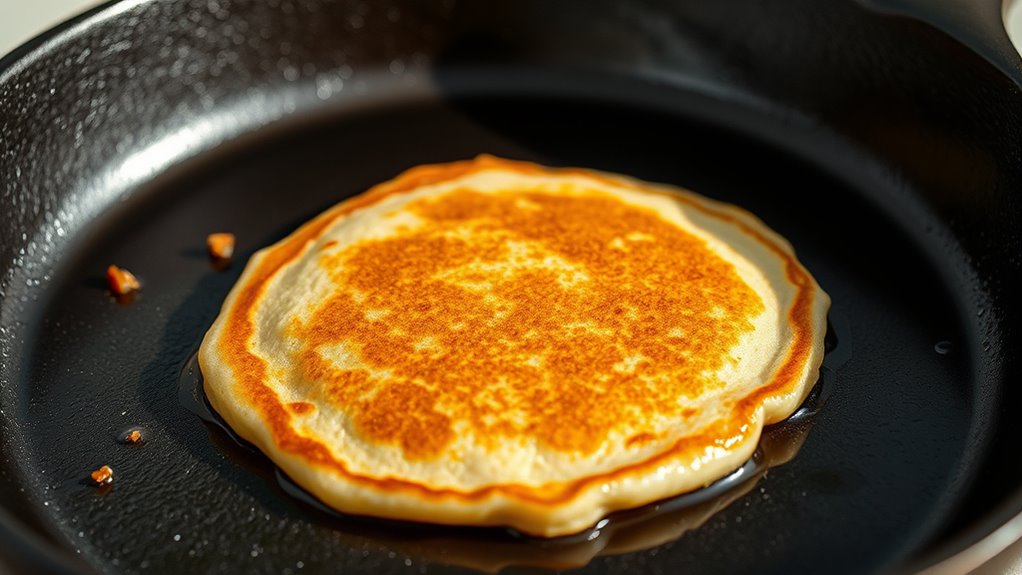
To prevent sticking, you need to start with proper cleaning techniques that remove residue and prevent buildup. Effective seasoning methods create a natural non-stick surface that improves with use. Maintaining your cookware properly guarantees it’s ready to cook without food sticking.
Proper Cleaning Techniques
Proper cleaning and seasoning are essential steps to guarantee your cookware performs well and food doesn’t stick. To keep your cookware in top shape, focus on thorough cleaning after each use. Use gentle cleaning agents and avoid harsh abrasives that can damage the surface. When cleaning, consider dishwasher safety—some cookware is dishwasher-safe, but hand washing often prolongs its lifespan. Pay close attention to residue buildup, especially in corners and crevices, which can cause sticking. Regularly remove stuck-on food with a non-abrasive scrubber. For seasoning, wipe with a light coat of oil after cleaning to maintain the non-stick surface. Properly cleaned and seasoned cookware ensures even heating and reduces food sticking, making your cooking experience smoother and more enjoyable.
Effective Seasoning Methods
Since well-seasoned cookware develops a natural non-stick surface, preparing and seasoning your pots and pans correctly is essential for preventing food from sticking. Start by applying a thin layer of oil and heating the cookware to create a durable coating. Using marinade techniques can also enhance flavor layering, which improves the seasoning process and adds depth to your dishes. Regularly cooking with fats like oil or butter helps build up the seasoning layer, making the surface more non-stick over time. Avoid harsh soaps that strip the seasoning, and reapply oil after washing. Proper seasoning not only prevents sticking but also enhances taste, making your cookware more efficient and your meals more flavorful. Consistent care guarantees your pots and pans remain reliable and easy to cook with.
Optimal Food Preparation and Handling

Ensuring ideal food preparation and handling starts with paying close attention to cleanliness and organization in your kitchen. Proper food storage prevents cross-contamination and spoilage, keeping ingredients fresh and safe. When selecting utensils, choose non-stick or heat-resistant tools that won’t damage cookware surfaces, reducing sticking issues. Keep your workspace tidy to streamline your process and avoid accidental spills. Be mindful of how you store different ingredients—store raw meats separately from vegetables. Use appropriate containers for leftovers to maintain freshness. Also, clean utensils and surfaces regularly to eliminate bacteria and residue that could cause sticking. A well-organized kitchen with proper food storage and thoughtful utensil selection creates optimal conditions for cooking without sticking, making your culinary experience smoother and more enjoyable.
Temperature Control During Cooking

Maintaining the right temperature during cooking is key to preventing food from sticking and ensuring it turns out perfectly. Your cooking temperature must be steady and appropriate for the specific dish, as fluctuating heat can cause uneven cooking and sticking. Proper heat distribution, whether from a well-heated pan or an evenly heated oven, helps prevent hot spots that can burn or cause food to stick. Always preheat your cookware to the correct temperature before adding ingredients, and adjust the heat as needed during cooking. Too high a temperature can cause food to stick and burn, while too low may prevent proper searing. By controlling your cooking temperature precisely, you promote even cooking, reduce sticking, and achieve better results.
The Impact of Food Moisture and Freshness
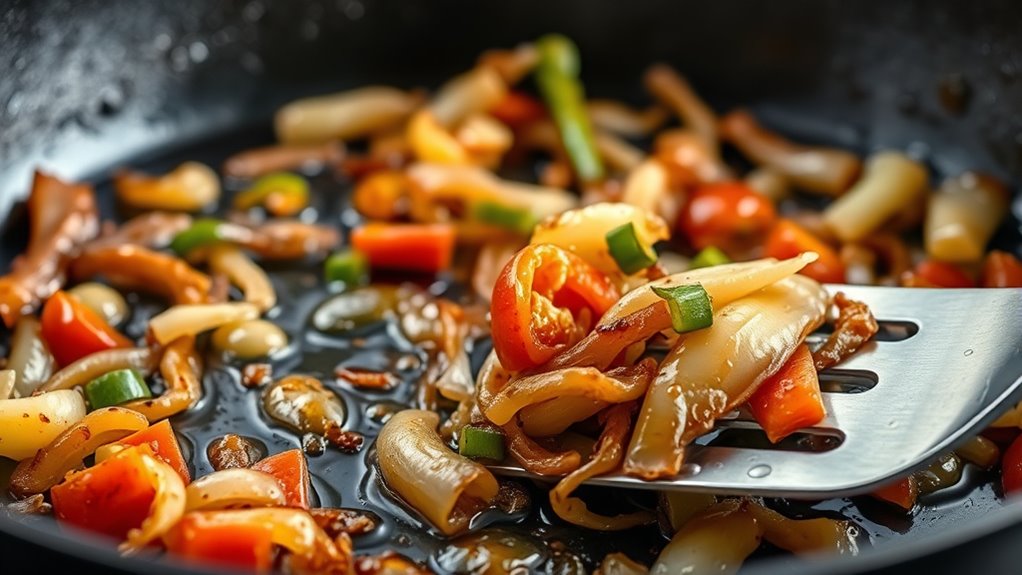
The moisture content and freshness of your ingredients directly affect how easily food sticks during cooking. When food has ideal food moisture, it creates a natural barrier that prevents sticking and promotes even cooking. Freshness preservation ensures ingredients retain their perfect texture and flavor, reducing the risk of sticking caused by dried or stale surfaces. To maximize these factors, consider:
- Storing ingredients properly to maintain ideal moisture levels
- Using fresh produce and avoiding ingredients that have dried out
- Cooking foods promptly after purchase to preserve natural moisture
Tips for Safe and Effective Cleaning of Cookware

Properly cleaning your cookware is essential for safe cooking and prolonging its lifespan. To guarantee kitchen safety, always wash your pots and pans thoroughly after each use, using warm water and mild detergent. Avoid abrasive scrubbers that can damage the surface and trap food particles, which could harbor bacteria. Rinse well to remove soap residue, which can affect taste and safety. When cleaning, pay attention to allergen management by removing traces of food allergens, especially if shared among family members. For stubborn residue, soak cookware before scrubbing gently. Dry completely to prevent rust or corrosion. Regular cleaning not only keeps your cookware safe but also helps prevent cross-contamination and maintains a hygienic cooking environment.
Frequently Asked Questions
Can Using Non-Stick Cookware Completely Prevent Food From Sticking?
Using non-stick coatings in cookware materials helps reduce sticking, but it can’t completely prevent food from sticking. Non-stick coatings are designed to make cooking and cleaning easier, yet factors like temperature, quality, and proper prep also play roles. If you want the best results, follow manufacturer instructions and avoid high heat, which can damage coatings. Even with non-stick cookware, some foods may still stick if you’re not careful.
How Does Altitude Affect Food Sticking During Cooking?
Altitude effects can influence how food sticks during cooking because higher elevations have lower air pressure. This change causes water to boil at lower temperatures, which can affect the cooking process and potentially make food stick more or less depending on the dish. You might notice that at higher altitudes, adjustments like longer cooking times or increased liquid are necessary to prevent sticking and ensure proper doneness.
Are There Specific Foods More Prone to Sticking Than Others?
Some foods are more prone to sticking because of their textures and how you cook them. For example, starchy foods like rice and potatoes tend to stick if not prepared properly, while delicate items like fish or eggs can stick if cooked at too high a temperature or with inadequate oil. To prevent this, choose the right cooking methods, such as using non-stick cookware or adding enough oil, and adjust your techniques accordingly.
Does Cooking Surface Temperature Impact Food Sticking Differently for Various Dishes?
The cooking surface and temperature control definitely influence how different dishes stick. When you maintain proper heat levels, you prevent food from adhering and burning. For delicate items like eggs or fish, a lower temperature helps prevent sticking, while sturdier foods like stir-fry benefit from higher heat. Adjusting your cooking surface’s temperature ensures your dishes cook evenly and release easily, making your cooking experience smoother and more successful.
How Do Cookware Scratches Influence Food Adhesion and Safety?
You should know that cookware scratches can considerably influence food adhesion, as scratches compromise cookware durability and create uneven surfaces that trap food. These scratches may harbor bacteria, raising food safety concerns. Using scratched pots and pans can lead to uneven heating and stickiness, so it’s best to replace damaged cookware to guarantee safe cooking and better food release. Always prioritize well-maintained cookware for ideal results and safety.
Conclusion
So, next time your food sticks, remember it’s probably your cookware’s fault—or maybe your own. Ironically, by simply choosing the right pan, heating it properly, and using enough oil, you can avoid the mess. Who knew that a little prep and attention could make cooking smoother? Instead of blaming your ingredients, try these tips—you might just find that sticking is a thing of the past, and your kitchen skills improve overnight.