

To get gingerbread cookies with crisp edges, start with a properly chilled dough—let it rest in the fridge for at least an hour or overnight. Roll the dough evenly and cut with floured cutters, then bake at 350°F for 8-10 minutes, watching for golden edges. Cool cookies completely on a wire rack before storing or decorating. For more tips on perfecting their crunch and shape, keep exploring these essential techniques.
Key Takeaways
- Chill the dough for at least 1 hour before rolling to prevent spreading and ensure sharp edges.
- Roll the dough evenly to a consistent thickness using guide sticks for uniform crispness.
- Bake at 350°F for 8-10 minutes, watching for golden edges to achieve a crisp finish.
- Cool cookies completely on a wire rack before decorating or storing to maintain edge sharpness.
- Store in airtight containers with moisture absorbers to preserve crisp edges over time.
Choosing the Right Gingerbread Cookie Dough

Choosing the right gingerbread cookie dough is essential for achieving the perfect texture and flavor. Start with a dough that balances the rich gingerbread flavor without being too overpowering. Look for recipes that include the right amount of molasses, spices, and butter to ensure a moist, flavorful cookie. When selecting your dough, consider how you’ll store it; proper cookie storage helps preserve freshness and prevents dryness. Keep your dough tightly wrapped in plastic wrap or stored in an airtight container if you plan to chill it before baking. This not only maintains the gingerbread flavor but also makes rolling out easier. Good cookie storage practices ensure your dough stays fresh, so your cookies turn out crisp on the edges and tender inside. Additionally, using appropriate storage methods can help maintain the optimal texture during refrigeration or freezing.
The Importance of Chilling Your Dough

Chilling your gingerbread cookie dough is a crucial step that helps develop deeper flavors and improves its workability. When you refrigerate the dough, the spices and molasses meld, enhancing the gingerbread flavor. It also firms up the fat, making the dough easier to handle and roll out evenly. Proper cookie storage in the fridge prevents the dough from becoming sticky or too soft, which can lead to uneven edges or spreading during baking. Chilling also slows down gluten development, resulting in a tender cookie with crisp edges. For best results, wrap your dough tightly and chill it for at least an hour, or overnight. This extra step ensures your cookies bake perfectly with the desired texture and rich flavor.
Optimal Rolling Techniques for Thin, Even Cookies
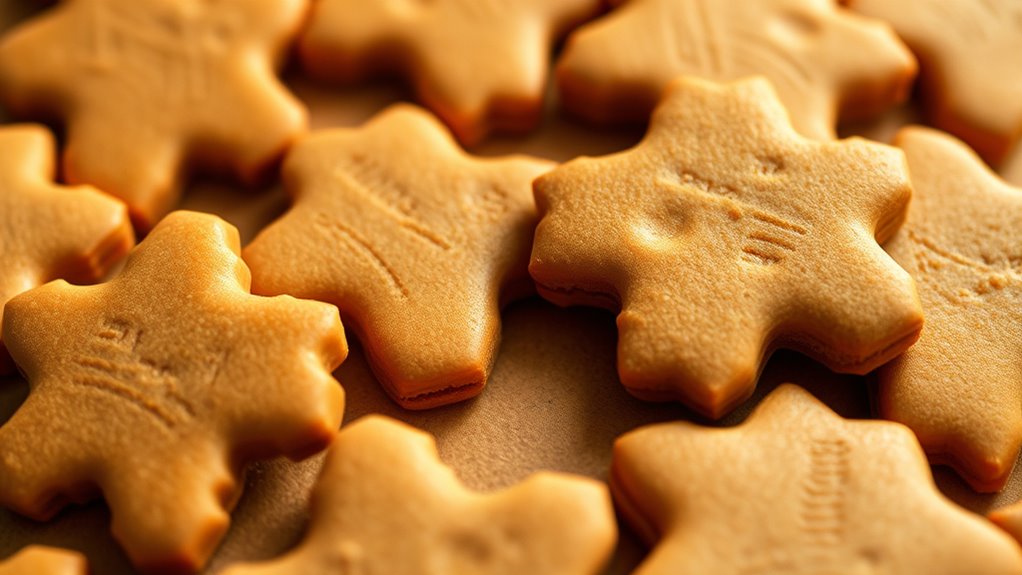
To achieve thin, even gingerbread cookies, you need to use proper rolling techniques that guarantee uniform thickness throughout. Start by ensuring your dough has the right consistency—firm but pliable, not sticky. Lightly flour your work surface and rolling pin to prevent sticking. When rolling, apply even pressure and turn the dough frequently to maintain a consistent thickness. Use rolling pin techniques such as rolling from the center outward, rotating the dough 90 degrees regularly. Consider using guide sticks or a rolling pin with adjustable rings to set your thickness. Keep the dough cool and avoid pressing too hard in one spot. With these tips, your cookies will have crisp edges and a uniform, professional appearance.
Cutting and Shaping Your Gingerbread Cookies

Once your dough is properly rolled out to an even thickness, it’s time to cut and shape your gingerbread cookies. Use cookie cutters that suit your festive presentation, whether classic shapes or personalized designs. Keep in mind that the gingerbread flavor shines through best when shapes are clean and precise. To achieve sharp edges, dip your cutter in flour before cutting. For intricate designs, use a small knife or piping tip to add details. Remember, uniform shapes help ensure even baking and crispy edges. Consider chilling the dough briefly to prevent spreading. Proper shaping not only enhances your cookies’ appearance but also emphasizes the gingerbread flavor that makes them so special. Additionally, choosing the right cookie cutter shapes can add a creative touch to your holiday treats. With care, your cookies will look charming and taste deliciously festive.
Baking Temperature and Time for Crisp Edges
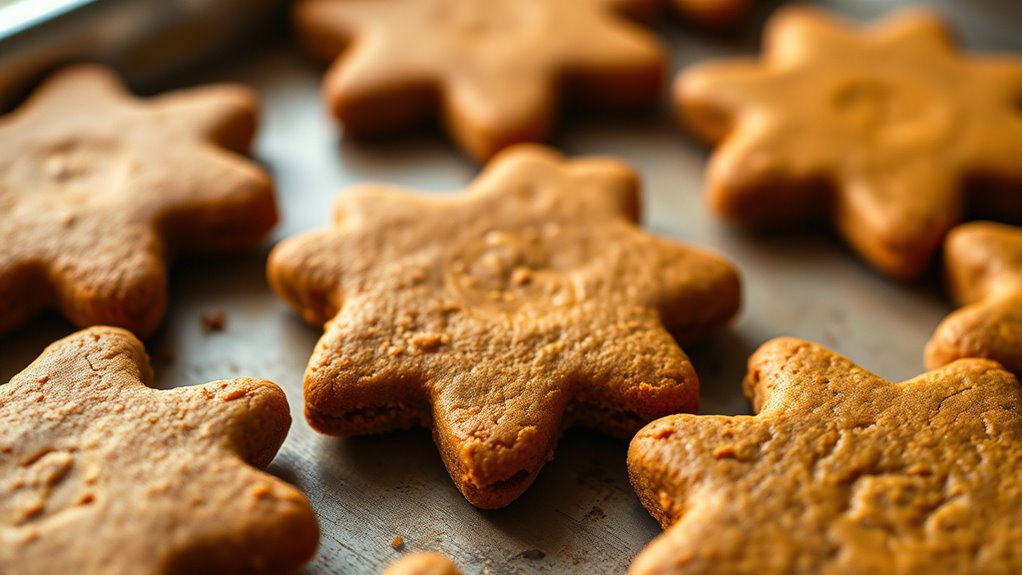
Setting the right baking temperature and time is key to achieving those perfect, crisp edges on your gingerbread cookies. To enhance the ginger flavor and control the spice level, bake at 350°F (175°C) for about 8-10 minutes. This temperature allows the edges to crisp without overbaking the centers. Keep an eye on the cookies as they bake; they should be golden around the edges while remaining softer in the middle. If you prefer spicier cookies with sharper edges, extend the baking time slightly, but be careful not to burn the edges. Conversely, for a milder ginger flavor, reduce the spice level in your dough or slightly shorten the baking time. Proper temperature and timing are essential for achieving the ideal balance of crisp edges and flavorful gingerbread. Additionally, using the right projector setup can help you better visualize your baking process in a home cinema environment, ensuring optimal lighting and viewing conditions.
Monitoring Your Cookies During Baking

As your cookies bake, keep a close eye on the clock to prevent overbaking. Regularly check the edges to spot the perfect level of doneness, and trust your visual cues to guide you. Staying attentive guarantees your gingerbread cookies turn out just right. Incorporating consistent monitoring during baking can help achieve optimal results.
Watch Baking Time Closely
Because baking times can vary depending on your oven and cookie size, it’s essential to keep a close eye on your gingerbread cookies as they bake. Overbaking can dull the gingerbread flavor and soften the edges, while underbaking risks uneven texture. To achieve crisp edges and perfect holiday traditions, watch for subtle signs like a slight browning around the edges or a firm surface. Research on oven variability shows that individual ovens can differ significantly, so relying solely on a timer may not yield the best results. Remember: – Each oven heats differently, so timing is an estimate – Smaller cookies bake faster than larger ones – Visual cues matter more than clock time – Removing cookies promptly preserves crisp edges – Consistent monitoring guarantees your gingerbread achieves that ideal texture
Observe Edges Regularly
To guarantee your gingerbread cookies bake perfectly, regularly observe their edges as they cook. Keep an eye on how the edges start to turn a light golden hue, signaling they’re nearing crisp perfection. The warm gingerbread aroma will intensify, giving you a comforting sense that the cookies are almost ready. Watching the edges helps prevent overbaking, which can cause them to become too dark or burnt. During this process, you can also plan your holiday decorating, knowing that crisp edges will hold icing and embellishments better. By monitoring closely, you ensure each cookie develops that desirable crisp edge while the center remains tender. Consistent observation helps you achieve professional-looking results, making your baking both satisfying and visually appealing. Additionally, understanding the baking process can help you refine your technique for consistently perfect cookies.
Use Visual Cues
Keep a close eye on your cookies by relying on visual cues rather than just timing. Watch for changes in color contrast; a slight golden hue indicates perfect doneness. Use shape recognition to identify when edges are crisp and cookies have maintained their form. Pay attention to the edges, which should look firm and slightly darker. Avoid overbaking by observing the overall appearance rather than relying solely on a timer. Focus on these visual signals to prevent burning or underbaking. Here are key cues to monitor:
- Edges turn a deep golden or light brown
- Shape remains distinct and well-defined
- Surface develops a slight sheen or matte finish
- Color contrast between center and edges increases
- Cookies feel firm around the edges when gently tapped
Being aware of passive voice detection can improve your writing clarity and effectiveness. Using these cues keeps your cookies consistently perfect.
Cooling Strategies to Preserve Crispness
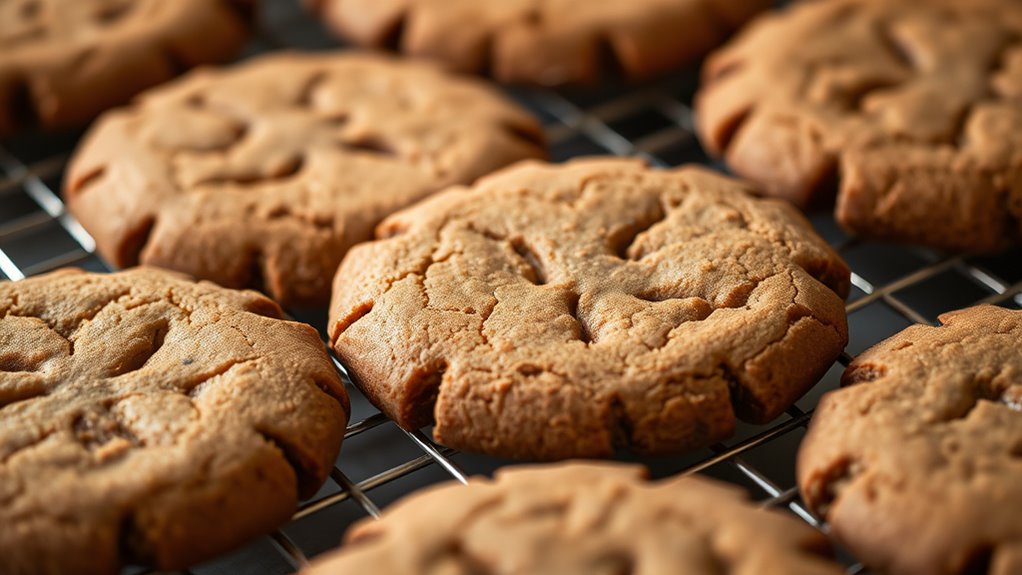
Cooling your gingerbread cookies properly is essential to maintaining their crisp texture. As soon as you remove them from the oven, transfer the cookies to a wire rack. This allows air to circulate around them, preventing moisture from settling and softening the edges. Let them cool completely before handling or storing. Proper cooling preserves the gingerbread flavor and keeps the cookie’s structure intact. When storing, choose an airtight container and avoid stacking cookies directly on top of each other, as trapped moisture can soften the edges. For extra crispness, insert a paper towel or a silica gel packet to absorb excess humidity. Following these cooling strategies ensures your gingerbread cookies stay crisp, fresh, and flavorful longer.
Decorating Tips That Won’t Softening the Edges

Decorating gingerbread cookies without softening their edges requires careful techniques to preserve their crisp texture. Proper icing application and decorating techniques are essential for maintaining the cookie’s sharp edges. Use stiff icing for detailed designs to prevent spreading, and apply it with a steady hand. Keep your icing at the right consistency—too runny, and it softens the edges; too thick, and it’s hard to spread smoothly. Work in small sections to avoid overhandling. Also, let each layer dry completely before adding another to prevent smudging or softening. Using the right icing consistency helps maintain the structure and sharpness of the edges. Handle cookies minimally to avoid softening.
Troubleshooting Common Crispness Problems

Even when you follow the best decorating techniques, some cookies may still lose their crispness or develop soft edges. This often happens if the dough wasn’t baked long enough or if it was stored improperly. To maintain the gingerbread flavor and crisp edges, make sure you bake the cookies until they are just set and lightly browned around the edges. Overbaking can lead to overly crispy cookies, while underbaking causes softness. Storing cookies in airtight containers helps preserve their texture, but avoid stacking them if they’re still warm, as moisture can soften the edges. For festive decorations that stay crisp, add icing only after the cookies have cooled completely. Troubleshooting these issues guarantees your gingerbread cookies stay crunchy and perfect for your holiday display. Additionally, understanding the importance of proper storage techniques can make a significant difference in maintaining their texture over time.
Creative Variations for Perfectly Crispy Gingerbread Cookies

To add a creative twist to your crispy gingerbread cookies, consider experimenting with different flavors and textures that enhance their crispness and visual appeal. You can amplify the ginger flavor by adding ground ginger or fresh ginger pieces, or incorporate spices like cinnamon and cloves for complexity. Incorporate texture variations such as chopped nuts or crystallized ginger for added crunch. For a decorative touch, try layering icing or edible glitter. When it comes to cookie storage, keep your cookies in an airtight container to maintain their crisp edges and prevent softness. Remember, creative variations not only elevate flavor but also improve presentation, making your cookies stand out. Additionally, organization and storage can help keep your kitchen clutter-free and ensure your baking supplies are easily accessible, enhancing your overall baking experience. Keep experimenting with these ideas to craft the perfect crispy gingerbread cookies every time.
Frequently Asked Questions
How Can I Prevent My Gingerbread Cookies From Spreading Too Much?
To prevent your cookies from spreading too much, you should focus on achieving the right cookie texture and baking temperature. Chill your dough before baking to firm it up, which helps maintain shape. Use a lower baking temperature to slow spread and ensure a crisp edge. Also, avoid overmixing the dough, as it can make cookies spread more. These steps will help you get the perfect shape and texture every time.
What Ingredients Help Achieve Extra Crisp Edges in Gingerbread Cookies?
Did you know that using higher amounts of sugar can increase gingerbread crispness? For extra crisp edges, you should focus on ingredients like butter and granulated sugar, which influence the cookie’s texture. Chilling the dough before baking helps prevent spreading, and using a bit of baking soda enhances browning and crispness. These ingredient choices directly impact gingerbread crispness, giving you those perfectly crisp edges you desire.
Can Using Different Types of Flour Affect the Cookie’s Crispness?
Using different types of flour definitely impacts your cookie’s crispness. Grain variations like bread flour, with higher gluten content, create a sturdier, crunchier texture, whereas all-purpose flour offers a softer bite. If you want crisper edges, opt for flours with higher gluten, but if you prefer tender cookies, choose lower-gluten options. Your choice of flour influences the structure and final crispness of your cookies, so experiment to find your perfect texture.
How Does Humidity Impact the Crispness of Gingerbread Cookies?
Ever wonder how humidity effects your baked goods? High humidity introduces extra moisture, making your gingerbread cookies less crisp and more chewy. To keep that perfect crunch, you need moisture control—store your cookies in airtight containers and avoid humid environments. Wouldn’t you love that satisfying snap with every bite? By managing humidity, you preserve your cookies’ crisp edges and delightful texture, ensuring they stay fresh and perfectly crispy longer.
Are There Specific Storage Methods to Maintain Cookie Crispness Longer?
To keep your cookies crisp longer, use airtight storage containers to prevent moisture from softening them. Cookie container tips include layering cookies with parchment paper to avoid sticking and sealing the container tightly after each use. Avoid storing cookies in humid environments, as this causes them to lose their crispness quickly. By following these tips, you’ll maintain that perfect crunch and enjoy fresh, crisp cookies whenever you want.
Conclusion
To keep your gingerbread cookies irresistibly crisp, choose the right dough and chill it thoroughly. Proper rolling and precise baking at the right temperature make all the difference. Did you know that cookies baked at 350°F tend to develop the perfect edges more consistently? By following these tips, you’ll enjoy beautifully crisp gingerbread cookies that stay crunchy longer, impressing everyone with their delightful texture. Happy baking!