To achieve herb-infused chicken breasts without dry spots, select fresh, high-quality chicken and vibrant herbs like basil or thyme. Pound the meat evenly and marinate for 30 minutes to 2 hours with herbs and some acidity, like lemon juice or vinegar. Use proper cooking techniques, such as searing then finishing in the oven, and monitor the temperature to avoid overcooking. Rest the chicken briefly before serving to lock in moisture—discover more tips to perfect your dish.
Key Takeaways
- Choose fresh, high-quality chicken and gently pound to an even thickness for uniform cooking.
- Marinate chicken with herbs and acids (lemon, vinegar) for 30 minutes to 2 hours to enhance flavor and tenderness.
- Use high heat to sear then finish in the oven, monitoring internal temperature to avoid overcooking and dry spots.
- Rest chicken for 5-10 minutes post-cooking to allow juices to redistribute, ensuring moist, flavorful meat.
- Serve sliced against the grain, garnished with fresh herbs, and drizzle with herb-infused sauces for maximum moisture and flavor.
Choosing the Right Chicken and Fresh Herbs
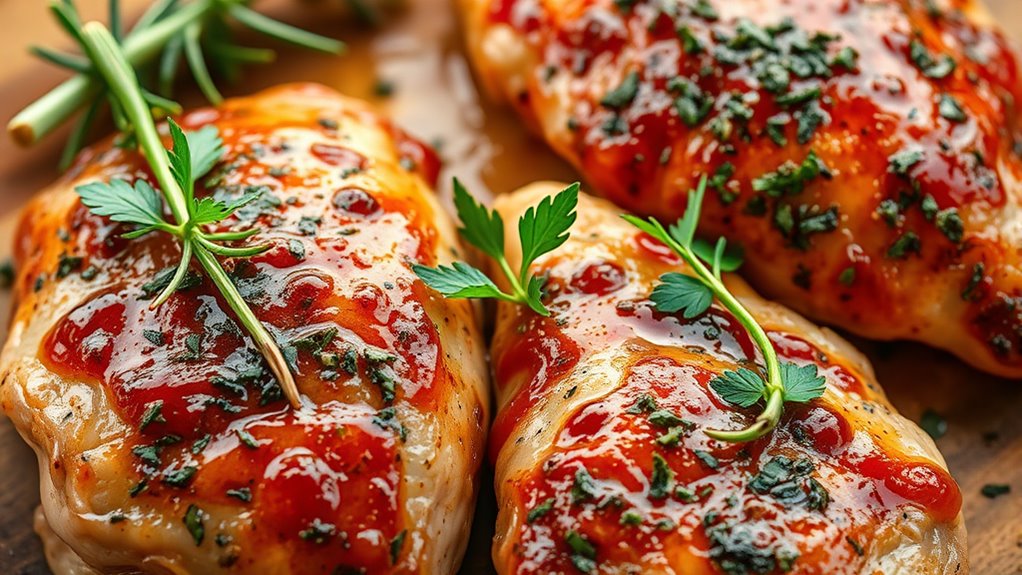
When selecting chicken and herbs for your herb-infused chicken breasts, focus on quality and freshness. Start with high-quality chicken, such as organic or free-range, to ensure better flavor and texture. Look for firm, moist meat with no discoloration or sliminess. For herbs, choose vibrant, fragrant varieties like basil, thyme, rosemary, or parsley. Fresh herbs deliver more intense herb flavor combinations, elevating your dish. When sourcing chicken, check local farms or trusted suppliers to guarantee freshness and ethical practices. Avoid frozen or processed options that may compromise taste. Fresh herbs should be bright and fragrant, free of wilted leaves. Additionally, selecting properly stored ingredients can help maintain their freshness and enhance the overall flavor of your dish. By prioritizing quality ingredients, you set a strong foundation for flavorful, tender herb-infused chicken breasts.
Properly Preparing and Marinating the Chicken
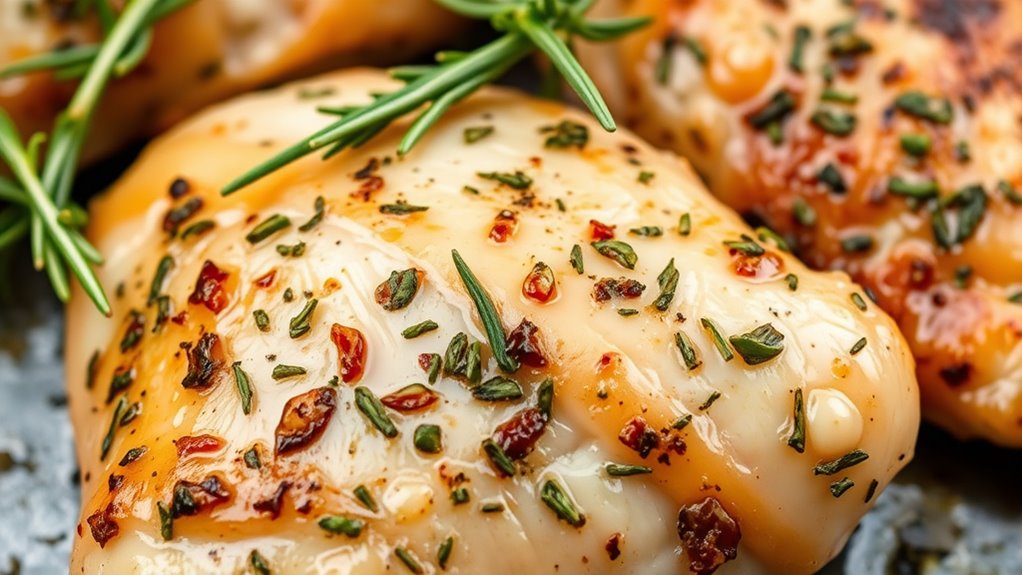
To guarantee your herb-infused chicken breasts are tender and flavorful, proper preparation and marination are essential. Start by gently pounding the chicken to an even thickness for uniform cooking. When creating your marinade, consider the herb pairing—combining herbs like thyme, rosemary, or basil enhances flavor. Incorporate marinade acidity, such as lemon juice or vinegar, to tenderize the meat and boost taste. Marinate the chicken in the refrigerator for at least 30 minutes, but no longer than 2 hours, to avoid overly softening the meat. Use the following table as a quick guide:
| Herb Pairing | Marinade Acidity | Marination Time |
|---|---|---|
| Thyme, Basil | Lemon juice | 30 min – 2 hrs |
| Rosemary, Sage | Vinegar | 30 min – 2 hrs |
| Oregano, Parsley | Yogurt or citrus | 30 min – 2 hrs |
| Mint, Dill | No acidity needed | Up to 1 hr |
Proper marination not only enhances flavor but also contributes to the nutritional balance of your dish, ensuring a delicious and healthy meal.
Mastering the Perfect Seasoning Technique

To get the best flavor, make sure your seasoning covers every part of the chicken evenly. Timing also plays a key role—adding herbs too early or too late can affect infusion. Pay close attention to when you season for maximum deliciousness. Incorporating cozy textiles can also help lock in moisture and flavor during cooking, enhancing the overall tenderness and taste.
Even Coverage Matters
Achieving even coverage when seasoning chicken breasts is essential for ensuring every bite is flavorful. Proper herb pairing and marinade timing help distribute flavors uniformly. To do this, sprinkle seasoning generously and massage it into the meat, ensuring all sides are coated. Use a table to visualize your seasoning process:
| Step | Tip |
|---|---|
| Herb pairing | Match herbs that complement chicken |
| Marinade timing | Let the chicken sit long enough to absorb flavors |
| Applying seasoning | Cover all surfaces evenly |
| Resting after seasoning | Allow flavors to meld before cooking |
This approach guarantees consistent flavor, prevents dry spots, and makes your herb-infused chicken irresistibly tasty. Remember, even coverage isn’t just about flavor—it’s about creating a balanced, juicy bite every time. Additionally, understanding the content of your seasoning process helps ensure the best results and enhances your overall cooking technique.
Timing for Infusion
Timing plays a key role in guaranteeing your herb-infused chicken breasts develop full flavor. The right timing allows the marinade acidity to tenderize the meat and helps the herbs bond effectively. Marinate your chicken for at least 30 minutes but no more than 2 hours; longer marination can lead to overly soft texture. When infusing herbs, choose pairings that complement each other and the marinade’s acidity—for example, thyme with lemon or rosemary with garlic. If you’re short on time, a quick 15-minute soak still infuses some flavor, but longer marination yields more depth. Be mindful of the timing to avoid dry spots and ensure the herbs penetrate evenly, resulting in juicy, flavorful chicken every time. Additionally, controlling the marination time can influence the texture and color accuracy of your chicken, ensuring a desirable and consistent outcome.
Optimal Cooking Methods for Juicy Results

To keep your chicken breasts juicy, searing is a great option because it locks in moisture and adds flavor. Once seared, finishing them in the oven helps guarantee even cooking without drying out the meat. Combining these methods gives you tender, flavorful results every time. Utilizing protective styling benefits can also help maintain moisture and overall tenderness during cooking.
Searing for Juiciness
Have you ever wondered how to lock in the chicken’s natural juices while achieving a perfect sear? The key is high heat and proper timing. To maximize juiciness, start with an even, well-seasoned surface. Use the right herb pairing to complement your marinade and enhance flavor during searing. Keep these tips in mind:
- Sear each side for 2-3 minutes, avoiding overcooking
- Ensure the pan is hot before adding chicken
- Don’t move the chicken prematurely; let it develop a crust
- Use marinade with herbs like thyme or rosemary for flavor infusion
- Adjust marinade duration to prevent over-saturation, which can hinder searing
- Selecting appropriate office chairs for neck pain relief can improve comfort during long cooking sessions, helping maintain focus and reduce fatigue
This approach seals in juices while creating a flavorful, crispy exterior—perfect for herb-infused chicken breasts.
Oven Finish Techniques
After searing your chicken breasts to develop a flavorful crust, finishing them in the oven guarantees they stay juicy and evenly cooked. Use herb combinations like rosemary, thyme, and parsley to infuse additional flavor during oven cooking. To prevent dryness, confirm your marinade has the right acidity—balancing lemon juice or vinegar helps tenderize the meat without making it tough. Place the chicken on a wire rack or in a shallow baking dish for even heat distribution. Cook at a moderate temperature, around 375°F (190°C), until the internal temperature reaches 165°F (74°C). Rest the chicken for a few minutes before slicing. This method ensures your herb-infused chicken remains moist, flavorful, and free of dry spots.
Monitoring Temperature for Moisture Retention

Monitoring the temperature of your chicken breasts is essential for keeping them moist and juicy. Use a reliable meat thermometer to track doneness, aiming for 160°F (71°C). Proper temperature control prevents overcooking, which can dry out the meat. Pay attention to herb pairing, as certain herbs retain flavor better at specific temperatures and influence marinade timing. Incorporating automation’s role in business intelligence can help you monitor cooking parameters more precisely.
- Check early to avoid overshooting the target temperature
- Remove from heat promptly once it hits 160°F
- Adjust cooking time according to thickness
- Use indirect heat for gentle cooking
- Let the chicken sit briefly to retain moisture after reaching temperature
Resting the Chicken for Maximum Tenderness

To guarantee your herb-infused chicken breasts stay tender and juicy, it’s essential to let them rest after cooking. Resting allows the juices, which move toward the center during cooking, to redistribute evenly, preventing dry spots. Proper herb blending in your marinade enhances flavor, but over-marinating can break down the meat and affect texture. Aim for a marinade timing of about 30 minutes to 2 hours; longer can lead to a mushy texture. Once cooked, transfer the chicken to a cutting board or plate, cover loosely with foil, and let it rest for 5 to 10 minutes. This brief pause maximizes tenderness, preserves moisture, and ensures every bite is juicy and flavorful. Resting is the final step to achieve perfect, herb-infused chicken breasts. Additionally, understanding how machine learning algorithms continuously improve can help in optimizing cooking techniques through smart kitchen appliances.
Serving Tips to Enhance Flavor and Moisture

Once your herb-infused chicken breasts have rested and are ready to serve, the way you present and finish them can markedly boost their flavor and moisture. Start by carefully slicing against the grain to keep the meat tender. Consider drizzling a light herb-infused sauce or pan juices to enhance herb pairing and reinforce marinade chemistry. Rest the chicken briefly before plating to allow juices to redistribute, ensuring moist bites. Use fresh herbs as a garnish for vibrant aroma and visual appeal. Serve with complementary sides that echo the herbs used in the marinade for a harmonious flavor profile. Keep in mind, simple finishing touches like a squeeze of lemon or a sprinkle of sea salt can elevate the dish and highlight the herb flavors, making each bite more flavorful and juicy. Also, for a seamless dining experience, check the retail hours of your local grocery or specialty store to ensure you have all the ingredients on hand before preparing your meal.
Frequently Asked Questions
Can I Substitute Dried Herbs for Fresh in the Marinade?
You can definitely substitute dried herbs for fresh in your marinade, but keep in mind herb substitutions affect flavor variations. Dried herbs are more concentrated, so use about one-third to one-half of the amount called for in fresh herbs. This helps prevent overpowering your dish. Adjust according to your taste, and remember that dried herbs often need a little more time to release their flavors properly.
How Do I Prevent Over-Marination and Soggy Chicken?
Picture marination like a delicate dance—too long, and your chicken turns soggy like a forgotten sponge. To prevent over-marination, keep your marination timing within 30 minutes to 2 hours, depending on marinade thickness. Thinner marinades penetrate faster, so monitor closely. When in doubt, shorter is safer. Your goal is flavor without sogginess, so stay attentive, and your chicken will turn out tender, juicy, and perfectly infused.
What’S the Best Way to Reheat Herb-Infused Chicken Without Drying?
To reheat herb-infused chicken without drying, opt for gentle reheating methods like the oven or stovetop, which help with moisture retention. Cover the chicken with foil or add a splash of broth to keep it moist. Avoid high heat and microwave reheating, as they tend to dry out the meat. Slow, low-temperature reheating guarantees your chicken stays juicy and flavorful.
Are There Specific Herbs That Pair Best With Certain Chicken Cuts?
When choosing herbs for chicken, you’ll want to contemplate their flavor profiles and how they complement different cuts. For white meat like breasts, go for delicate herbs like parsley, thyme, or tarragon. Darker cuts like thighs pair well with bold herbs such as rosemary or sage. Cooking with herbs enhances the flavor, so match the herb’s intensity to the cut’s richness for a balanced, flavorful dish.
How Long Can I Store Marinated Chicken Safely Before Cooking?
You’re about to open the secret to perfect, juicy chicken! Marination duration is key—you should store marinated chicken in the fridge for no more than 2 days to guarantee storage safety. Beyond that, it risks bacteria buildup and spoilage. If you want to keep it longer, freeze it. Keep your marinated chicken fresh and safe, and you’ll enjoy every bite without worry—your taste buds will thank you!
Conclusion
By choosing quality chicken and fresh herbs, you set the stage for juicy, flavorful breasts. Proper marinating, seasoning, and cooking techniques guarantee your chicken stays moist, supporting the theory that resting meat boosts tenderness. When you monitor temperature carefully, you prevent dryness and lock in flavor. Resting your chicken truly makes a difference—it’s science in action. Follow these simple steps, and you’ll enjoy perfectly herb-infused chicken every time, proving that a little attention transforms a good meal into a great one.