To prevent frozen foods from turning soggy, start by preheating your oven or skillet thoroughly and avoid crowding the pan, allowing hot air to circulate evenly. Use high heat and a wire rack to help moisture escape and promote a crispy exterior. Lightly spray or brush foods with oil to encourage browning, and steer clear of excess moisture from marinades. Following these tips can transform frozen meals into crispy delights—discover more techniques to achieve perfect texture.
Key Takeaways
- Preheat the oven or skillet thoroughly before cooking to promote crispiness.
- Avoid overcrowding the pan; leave space for hot air circulation and moisture escape.
- Use high temperatures (around 400°F/200°C) for quicker, crisp results.
- Incorporate a wire rack over baking sheets to ensure even heat and prevent sogginess.
- Pat frozen foods dry if they are wet or frozen with excess moisture before cooking.
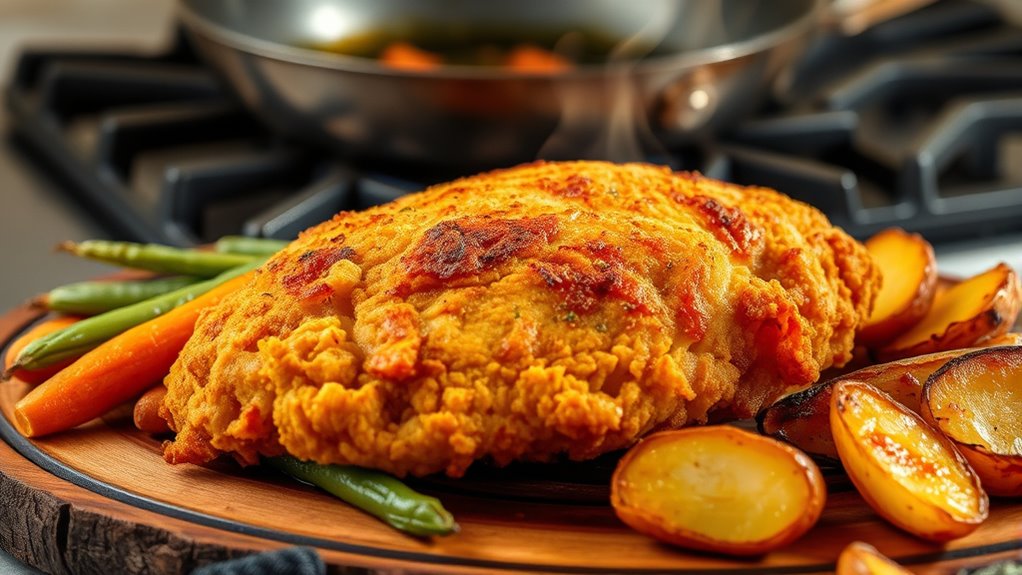
Cooking frozen foods can be tricky because they often turn out soggy or unevenly cooked. To avoid this, you need to pay attention to your baking techniques and seasoning tips. Proper baking methods help remove excess moisture and promote even heat distribution, ensuring your food comes out crispy and flavorful. Start by preheating your oven or skillet thoroughly; a hot surface is essential for achieving that desirable crunch without overcooking the interior. When baking, avoid overcrowding the pan, as this traps steam and leads to sogginess. Instead, give each piece enough space to allow hot air to circulate, which helps evaporate moisture and results in a crisp exterior.
Proper baking techniques and spacing ensure crispy, evenly cooked frozen foods.
Seasoning tips are equally crucial. Since frozen foods can sometimes taste bland, seasoning before and after cooking boosts flavor without compromising texture. Lightly brushing or spraying foods with oil encourages browning and crispiness, while adding herbs, spices, or seasoning blends enhances taste. For instance, a sprinkle of paprika, garlic powder, or dried herbs can elevate frozen vegetables or chicken without making them soggy. Be cautious with marinades or wet seasonings, as excess moisture can hinder crispness; instead, opt for dry rubs or seasoning powders.
When baking, consider the type of frozen food you’re working with. For breaded items like chicken tenders or fish fillets, baking at a high temperature—around 400°F (200°C)—for a shorter period helps develop a golden crust. Using a wire rack placed over a baking sheet allows hot air to reach all sides evenly and prevents the food from sitting in accumulated moisture. If you’re cooking frozen vegetables, roasting at high heat with a drizzle of oil can caramelize their natural sugars and improve texture and flavor. Additionally, choosing an airless high-pressure environment can help achieve more even cooking and better texture.
Furthermore, always follow the manufacturer’s instructions as a starting point, but don’t be afraid to tweak cooking times and temperatures based on your oven or equipment. Remember, patience is key; rushing the process can lead to soggy results. By combining effective baking techniques with smart seasoning tips, you’ll find that frozen foods can be transformed into crispy, delicious meals every time. The goal is to balance heat, moisture, and flavor, ensuring your frozen favorites come out perfect—crispy outside, tender inside, and bursting with taste.
Frequently Asked Questions
Can I Cook Frozen Foods Directly From the Freezer Without Thawing?
Yes, you can cook frozen foods directly from the freezer, but be aware of thawing myths that suggest it’s always unsafe. For ideal results, follow proper freezer safety guidelines, like cooking foods thoroughly to kill bacteria. Many frozen items, like vegetables or seafood, can go straight into the pan or oven. Just adjust cooking times and avoid leaving foods at room temperature for too long to keep everything safe and delicious.
What Are the Best Cooking Methods for Different Types of Frozen Foods?
For perfect preservation of texture and flavor, choose the right method for each frozen food. Sauté vegetables quickly in high heat to retain crunch, bake frozen meats for even cooking, and steam seafood gently to keep delicate textures. Roasting frozen potatoes develops flavor, while frying crispy snacks boosts crunch. Using these tailored techniques, you’ll enjoy foods that taste fresh, flavorful, and maintain their ideal texture every time.
How Can I Prevent Frozen Foods From Sticking Together During Cooking?
To prevent frozen foods from sticking together, use proper separation techniques like individually freezing items or layering with parchment paper. When cooking, avoid overcrowding your pan, which can cause clumping. Make certain you store foods properly with airtight containers and appropriate storage tips to maintain individual pieces. Thaw or rinse items briefly before cooking if needed, and stir frequently to keep everything separate, resulting in evenly cooked, non-sticky frozen foods.
Do I Need to Adjust Cooking Times for Frozen Versus Fresh Foods?
Think of frozen foods as a snowball needing gentle handling. You usually need to adjust cooking times—slightly longer for frozen—to make sure thorough cooking without overdoing it. This helps preserve the texture and flavor, preventing sogginess or dryness. Keep an eye on the food’s appearance and don’t rush; adjusting cooking times is key to maintaining quality when going from frozen to delicious.
Are There Specific Seasonings That Work Better With Frozen Ingredients?
You’ll find that certain seasonings like garlic, onion powder, and dried herbs work well with frozen ingredients, offering good seasoning compatibility and flavor enhancement. Avoid delicate herbs like basil or cilantro, which can lose their freshness during freezing. To maximize flavor, add seasonings toward the end of cooking, allowing the frozen ingredients to retain their texture and taste without becoming soggy. This guarantees your dish stays flavorful and well-seasoned.
Conclusion
Think of cooking frozen foods like tending a delicate garden. With patience and the right techniques, you’ll nurture crisp, golden results instead of soggy, wilted ones. Just as a gardener waters thoughtfully, you’ll master heat and timing to keep your dishes vibrant and perfect. So, approach your frozen foods with care, and watch your meal bloom into a delicious, crispy masterpiece—proof that with the right touch, you can turn frozen frustration into culinary success.