To dial in espresso at home, focus on four variables you can control: grind size, dose, tamping, and extraction time. Adjusting the grind affects water flow and flavor; proper dosing ensures even extraction; tamping creates consistent pressure; and tweaking extraction time balances flavor and strength. Small changes in any factor can make a big difference in your espresso’s taste. Keep experimenting, and you’ll discover how these adjustments bring out the best shot.
Key Takeaways
- Adjust grind size to control extraction speed and flavor balance; finer for slower, richer shots, coarser for quicker, lighter ones.
- Use consistent dosing and proper distribution to ensure uniform contact between water and coffee grounds.
- Tamp with steady, even pressure (~30 pounds) to create a level coffee bed for uniform extraction.
- Fine-tune water temperature and pressure to manipulate brew time and flavor profile.
- Maintain regular machine calibration and monitor extraction variables to refine shot consistency.
Why Does Grind Size Matter for Your Espresso?
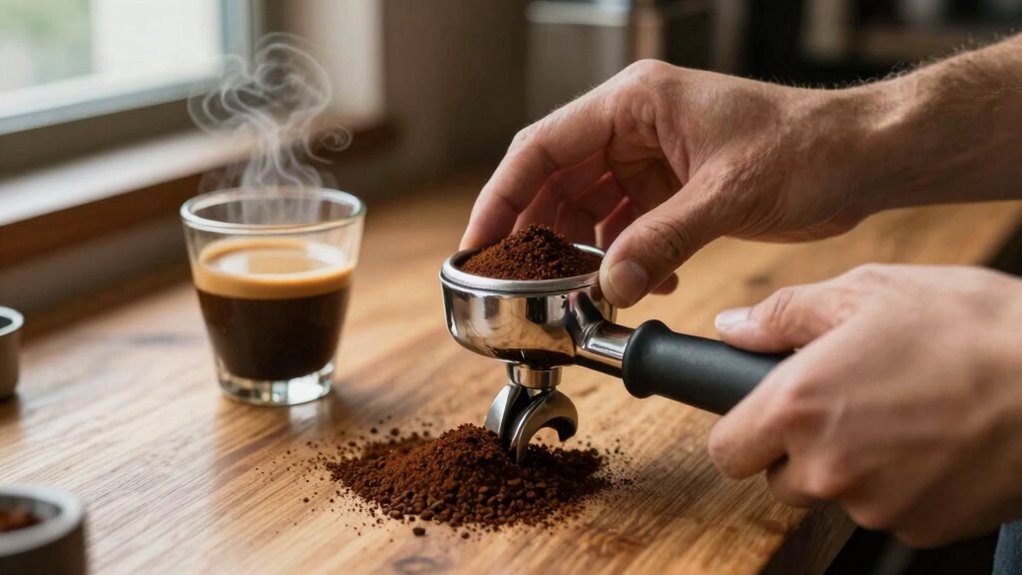
The grind size of your coffee beans plays a crucial role in extracting the perfect espresso shot. If the grind texture is too coarse, water flows through too quickly, resulting in a weak, under-extracted shot. Conversely, a grind that’s too fine causes water to struggle, leading to over-extraction and bitterness. Achieving the right grind size guarantees ideal contact between water and coffee, which is essential for flavor. Additionally, the grind size influences brew temperature stability; a consistent grind helps maintain even extraction temperatures. Fine-tuning your grind texture allows you to better control how heat interacts with your coffee during brewing. Small adjustments in grind size can significantly impact the overall flavor profile of your espresso, so paying attention to grind size is key for dialing in flavorful, balanced espresso. Precision and automation in grinding technology can further enhance consistency and allow for more precise control over your espresso.
How Do Dose and Distribution Impact Flavor and Consistency?
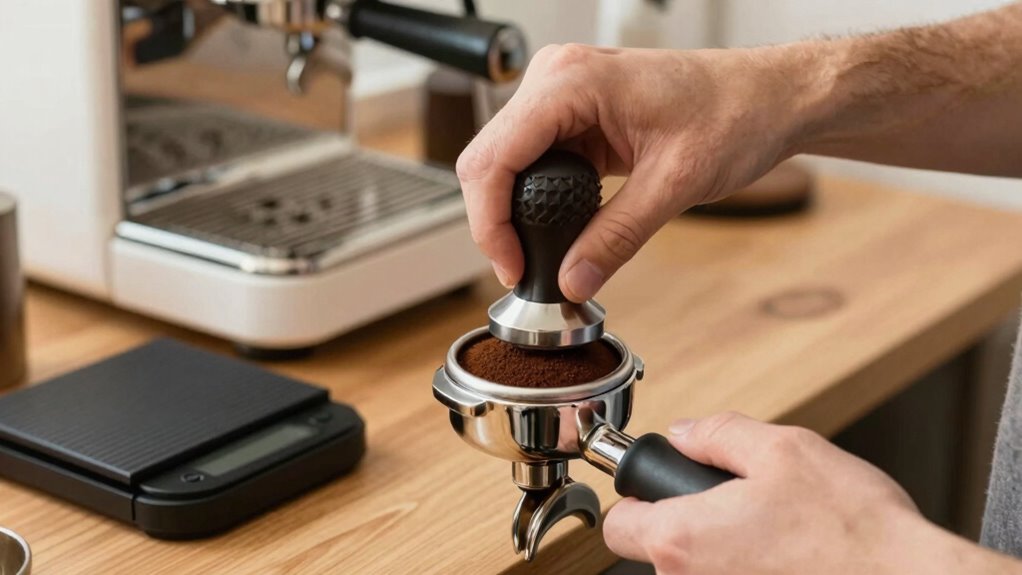
Properly measuring your coffee dose and ensuring even distribution are essential for consistent flavor in your espresso. When your grind consistency is off, uneven extraction can occur, leading to sour or bitter notes. A precise dose guarantees the right amount of coffee is extracted uniformly. Distributing the coffee evenly in the portafilter prevents channeling, which causes water to bypass coffee and results in weak or uneven shots. Distribution techniques can significantly influence the extraction process and final flavor profile. To improve consistency, consider experimenting with different distribution tools that help achieve a more uniform coffee bed. Water temperature also plays a role; consistent temperature helps extract flavors evenly, enhancing the impact of your dose and distribution. Regular machine maintenance ensures your espresso maker functions optimally, contributing to consistent results. Additionally, understanding extraction fundamentals, including how different variables influence flavor, can help you refine your technique. Monitoring brew pressure and how it interacts with temperature and grind size can further optimize your shot quality. If the water’s too hot or too cold, it can skew the extraction, regardless of how well you dose or distribute. By controlling these variables, you’ll maximize flavor and achieve greater consistency in every shot.
What’s the Best Way to Tamp for a Consistent Shot?

Tamping firmly and evenly is key to guarantee your espresso shot turns out consistent every time. Proper tamping creates uniform contact, which directly affects tamp consistency and extraction quality. To achieve this, apply steady pressure with your tamper, aiming for about 30 pounds of tamping pressure. Consistent pressure prevents channeling and uneven flow. Use the following guide:
| Tamping Technique | Tips |
|---|---|
| Tamping Pressure | Maintain 30 pounds for consistency |
| Tamp Level | Ensure the coffee surface is flat |
| Tamping Speed | Use steady, even pressure, avoid rushing |
| Equipment Grip | Hold the tamper firmly, control downward force |
| Post-Tamp Check | Level the puck after tamping |
Mastering tamp pressure and maintaining tamp consistency helps you produce shots with better flavor and reliability. Consistent tamping is crucial for achieving the best extraction and flavor in your espresso. Additionally, understanding the importance of proper equipment maintenance can ensure your tamping remains effective over time, maintaining optimal pressure consistency.
How Can You Adjust Extraction Time for the Perfect Espresso?
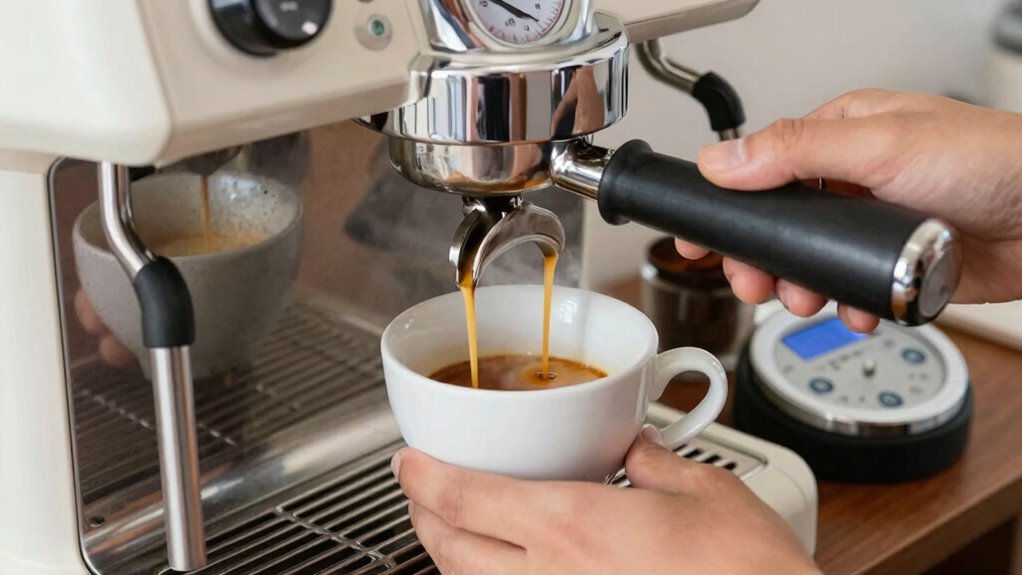
Adjusting extraction time is essential for dialing in the perfect espresso because it directly influences the shot’s flavor and strength. To do this, focus on water temperature and pressure settings. If your extraction is too quick, try lowering the water temperature slightly or increasing pressure to slow the flow. Conversely, if it’s too slow, raise the water temperature or reduce pressure to speed it up. Consistent pressure, usually around 9 bars, helps achieve uniform extraction. Keep in mind that small adjustments can make a big difference, so change one variable at a time and note the results. By fine-tuning these factors, you’ll control how long water interacts with the coffee, leading to a balanced, flavorful espresso. Additionally, selecting the right ground coffee with an appropriate grind size can significantly impact extraction time and overall taste. Proper tamping technique also plays a crucial role in controlling extraction, ensuring even pressure across the coffee bed. Understanding how extraction variables interact can help you troubleshoot and improve your espresso shot consistency. Being aware of the solar system and its dynamics can also inspire patience and precision in your brewing process, as both require careful adjustments and understanding of complex variables. Recognizing the importance of Consistent pressure can help prevent over- or under-extraction, ensuring a more predictable and delicious shot.
Frequently Asked Questions
How Does Water Temperature Affect Espresso Extraction?
Water temperature directly impacts your espresso extraction. If it’s too hot, it can over-extract, making your espresso bitter, while too cold results in under-extraction, leading to sour flavors. To get it right, adjust your grind size and use fresh coffee, as these influence how temperature affects extraction. Aim for around 195-205°F to balance flavors, and experiment with temperature to find the sweet spot for your taste preferences.
What Role Does Pressure Play in Brewing the Perfect Shot?
Pressure plays a vital role in brewing the perfect shot by ensuring pressure stability throughout extraction. When you maintain consistent pressure, you get shot consistency, which leads to better flavor and crema. Fluctuations can cause over- or under-extraction, ruining your espresso. Focus on your machine’s pressure gauge and make small adjustments to keep pressure steady. This control helps you achieve the ideal balance and a rich, flavorful espresso shot every time.
Can Ambient Humidity Influence Espresso Quality?
Ambient humidity can definitely influence your espresso quality. Humidity effects your coffee grounds’ moisture content, affecting extraction consistency. High humidity may cause grounds to clump and lead to over-extraction, while low humidity can cause them to dry out, resulting in under-extraction. The ambient influence varies with your environment, so monitoring humidity levels helps you adjust grind size and tamping to consistently dial in your perfect shot.
How Often Should I Clean My Espresso Machine?
Imagine you notice your espresso tastes off; it’s time to clean your machine. You should clean it weekly if you use it daily, focusing on removing coffee oils and residue. Regular cleaning guarantees consistent grind size and tamp pressure, which are essential for perfect espresso. Use a descaling solution monthly if you have hard water. Proper maintenance keeps your machine in top shape and your espresso tasting great every time.
What Are Signs of Over- or Under-Extraction?
You’ll notice over-extraction if your espresso tastes bitter, harsh, or dry, indicating your grind size might be too fine or tamp pressure too firm. Under-extraction causes sour, weak, or watery shots, often from a grind that’s too coarse or insufficient tamping. To fix this, adjust your grind size and tamp pressure, then taste again. Consistent trial and error help you find that perfect balance for ideal extraction.
Conclusion
Mastering these four variables might just turn your home espresso game into a barista-level masterpiece. When you dial in grind size, dose, tamp, and extraction time, you’re wielding the power to craft shots that can rival coffee shop perfection. It’s like having a secret weapon against mediocre coffee—your daily brew will be nothing short of legendary. Keep experimenting, and soon you’ll be brewing espresso so good, it’ll blow your mind every single time.