
To keep your air fryer working well, regularly clean the basket and interior with warm, soapy water and wipe down the interior and exterior surfaces. Check and clean the heating element and air vents to prevent grease buildup and guarantee proper airflow. Use gentle utensils and avoid harsh cleaners, and troubleshoot any issues promptly while performing routine maintenance. Maintaining these habits can boost your air fryer’s lifespan, and discovering more tips will help you get the best results.
Key Takeaways
- Regularly clean the basket, interior, and air vents to prevent grease buildup and ensure proper airflow.
- Unplug and inspect the heating element, wiping it with a damp cloth to maintain even heating and safety.
- Use non-metallic utensils and gentle cleaning methods to avoid scratching surfaces and damaging the appliance.
- Dry all parts thoroughly after cleaning to prevent rust and mold growth.
- Troubleshoot issues promptly, including uneven cooking or strange noises, and perform routine maintenance for optimal performance.
Regularly Clean the Basket and Interior Components

To keep your air fryer functioning properly, it’s essential to regularly clean the basket and interior components. After each use, remove the basket and wash it with warm, soapy water or place it in the dishwasher if it’s dishwasher safe. Wipe down the interior with a damp cloth or non-abrasive sponge to remove grease and food particles. Pay special attention to corners and crevices where crumbs can accumulate. Avoid using harsh abrasives or metal utensils that could scratch surfaces. Dry all parts thoroughly before reassembling to prevent rust or mold growth. Regular cleaning guarantees your air fryer operates efficiently, prevents unpleasant odors, and extends its lifespan. Making this a routine keeps your appliance safe and ready for the next delicious meal.
Check and Clean the Heating Element
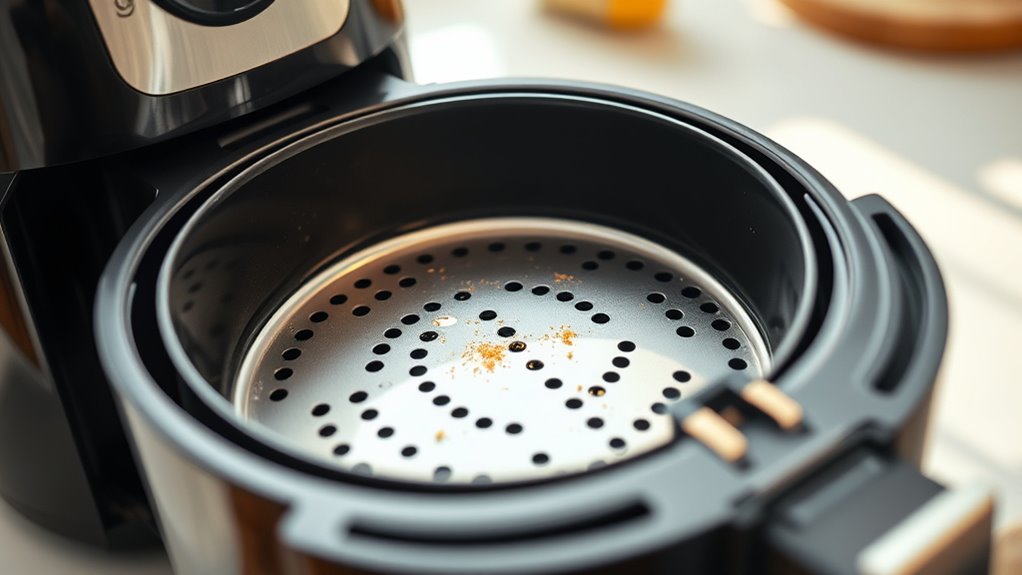
After cleaning the basket and interior components, it’s important to inspect the heating element, as grease and food debris can accumulate there over time. This buildup can affect cooking performance and safety. To clean it, unplug your air fryer and gently wipe the heating element with a soft, damp cloth or brush. Avoid harsh abrasives that could damage it. Regular inspections help prevent issues like uneven heating or potential fires. Use the table below as a quick reference:
| Step | Action | Tips |
|---|---|---|
| 1 | Unplug device | Safety first before cleaning |
| 2 | Wipe with cloth | Use a damp, not soaked cloth |
| 3 | Check for debris | Remove any stubborn spots |
Maintaining a clean heating element can extend the lifespan of your appliance and maintain optimal cooking results. Regularly inspecting the heating element also helps identify early signs of damage or wear, which is crucial for safety and efficiency. Ensuring a clean heating element is particularly important since air purifier features like filters and UV light can also impact overall appliance performance.
Keep the Air Vents Clear and Unobstructed

Ensuring your air fryer’s vents stay clear is essential for ideal performance and safety. Blocked vents can cause overheating, reduce airflow, and lead to uneven cooking. To keep them free, regularly check the vents for dust, grease, or debris buildup. Use a soft brush or a damp cloth to gently clean the vents without pushing debris further inside. Avoid using harsh chemicals or abrasive tools that might damage the vents. When cleaning, make sure the air fryer is unplugged and completely cool. Maintaining clear vents ensures proper airflow, which helps the appliance cook food evenly and prevents overheating. Regular inspection of appliance power requirements is also important to ensure safe operation. Additionally, understanding vacuum maintenance practices can help prolong the lifespan of your appliance. Incorporating proper cleaning techniques into your routine can help prevent buildup and keep the vents unclogged. Proper ventilation is vital for air circulation and overall appliance longevity. This simple step will prolong your air fryer’s lifespan and keep it operating safely and efficiently.
Use Proper Utensils and Avoid Abrasive Cleaners
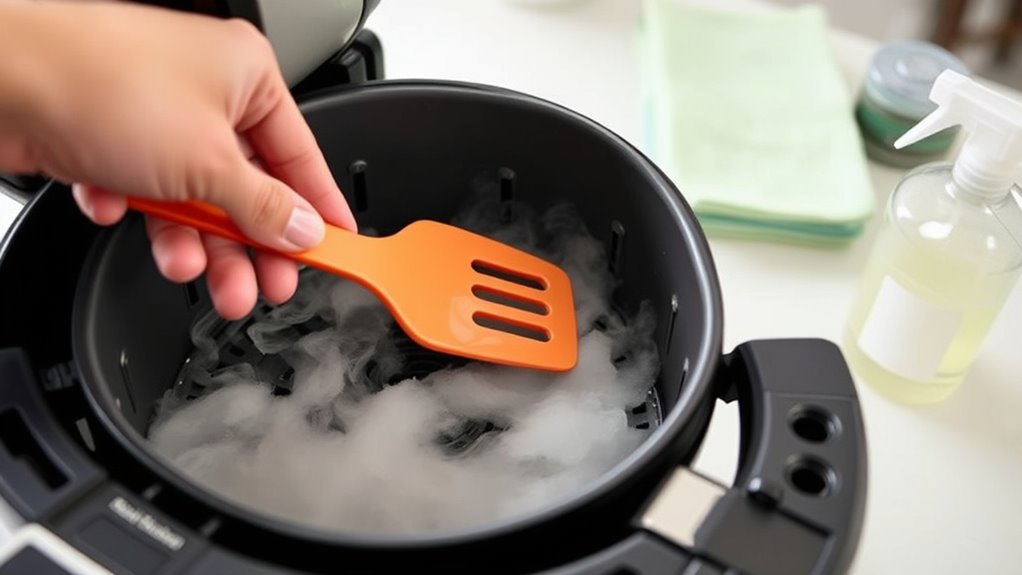
Using the right utensils and cleaning methods helps protect your air fryer’s surfaces and prevents damage. Always choose non-metallic spatulas or tongs to avoid scratching the non-stick coating. When cleaning, skip harsh abrasive cleaners and scrub brushes, as they can scratch or dull the surface. Instead, opt for soft sponges or cloths with mild dish soap. Avoid metal scrubbers or steel wool, which can cause permanent damage. If food sticks, soak the basket in warm, soapy water before gently scrubbing. Proper utensils and gentle cleaning protect the interior and exterior, extending your air fryer’s lifespan and maintaining its efficiency. Being careful with your tools and cleaning approach keeps your appliance in top shape and ready for healthy cooking. Regular maintenance and understanding appliance care can further help preserve your air fryer’s performance over time. Additionally, referring to the manufacturer’s maintenance guidelines ensures you follow specific care instructions for your model. For optimal results, consider preventative maintenance practices to avoid buildup and ensure longevity. Recognizing the importance of proper cleaning techniques can also minimize the risk of damage caused by improper care.
Troubleshoot Common Issues and Perform Routine Maintenance
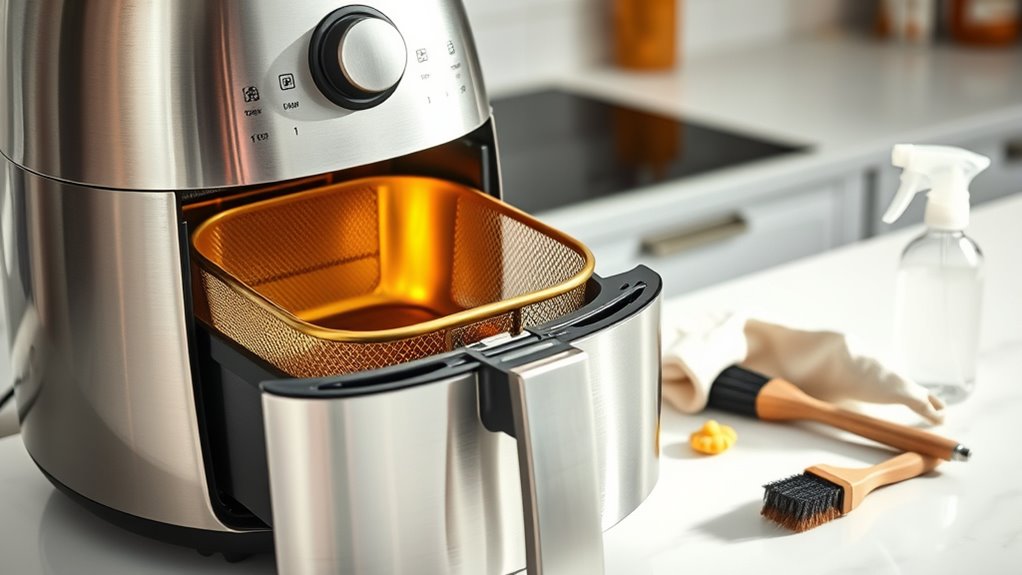
Regularly troubleshooting common issues and performing routine maintenance keeps your air fryer running smoothly and extends its lifespan. When you address problems early, you prevent minor glitches from turning into costly repairs. Keep an eye out for uneven cooking, strange noises, or lingering odors, and clean your fryer regularly. Here’s a quick guide to help you stay proactive:
| Issue | Solution | Prevention |
|---|---|---|
| Uneven cooking | Shake food midway | Keep basket clean and dry |
| Unusual noises | Check for loose parts | Regularly inspect components |
| Odor buildup | Clean thoroughly after use | Use lemon or vinegar cycles |
| Faulty heating element | Contact support or replace | Routine maintenance checks |
| Basket sticking or rust | Use mild cleaner and dry well | Avoid abrasive cleaners |
A thorough cleaning and inspection can also help identify potential components that may need replacement before failure occurs. Regularly inspecting internal parts and ensuring they are in good condition can prevent unexpected breakdowns.
Frequently Asked Questions
How Often Should I Replace My Air Fryer’S Parts?
You should check your air fryer’s parts regularly to guarantee peak performance. Typically, replace the non-stick basket or tray every 6 to 12 months, especially if you notice scratches or peeling. The heating element and fan usually last several years but should be inspected annually. If you notice persistent issues or damage, it’s best to replace those parts sooner. Proper maintenance keeps your air fryer safe and working efficiently.
Can I Use Metal Utensils Inside My Air Fryer?
Did you know that using the wrong utensils can scratch your air fryer’s non-stick surface? You can use metal utensils, but it’s risky—they might damage the coating over time. To keep your air fryer in top shape, opt for silicone or wooden tools instead. This way, you avoid scratches and guarantee your appliance lasts longer, making your cooking safer and more efficient.
What’S the Best Way to Remove Stubborn Stains?
To remove stubborn stains from your air fryer, start by unplugging it and letting it cool. Use a soft sponge or cloth with warm, soapy water to gently scrub the affected areas. For tougher stains, mix baking soda with water to create a paste, apply it to the stain, and let it sit for 10-15 minutes before scrubbing. Avoid abrasive cleaners or steel wool to prevent damage.
Are There Specific Cleaning Products I Should Avoid?
You might think any cleaning product will do, but some can be as harsh as a hurricane on your air fryer. Avoid abrasive scrubbers, bleach, and harsh chemicals that can damage the non-stick coating or leave residues. Stick to mild dish soap, vinegar, or baking soda for cleaning. These gentle options keep your air fryer in top shape without risking long-term damage, ensuring it works perfectly every time.
How Do I Prevent Unpleasant Odors From Developing?
To prevent unpleasant odors from developing in your air fryer, you should regularly clean it after each use, especially if you cook strong-smelling foods. Make sure to remove and wash the basket and tray thoroughly. Air out the appliance by running it empty at a high temperature for a few minutes. Additionally, avoid storing leftover food inside. Using a mixture of vinegar and water for cleaning can also help eliminate lingering smells.
Conclusion
By sticking to these maintenance tips, you’ll keep your air fryer running smoothly and extend its lifespan. Imagine saving money and enjoying perfectly cooked meals every time, just like Sarah did when her air fryer suddenly stopped working—you’ll avoid that stress and costly repairs. Regular cleaning and checks are simple steps that make a big difference. Take care of your air fryer now, so you can enjoy delicious, hassle-free meals for years to come.