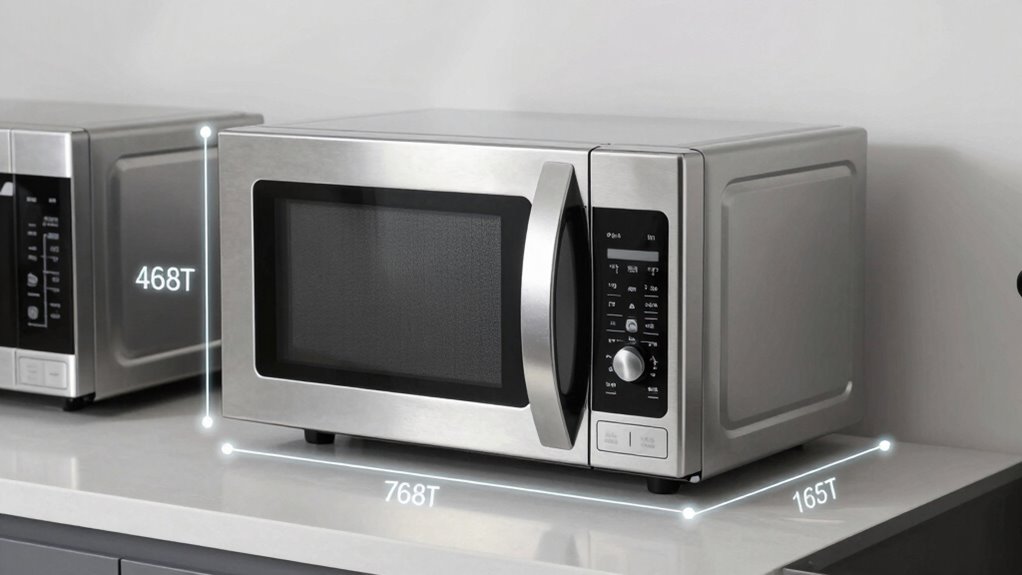

Knowing how to measure the cubic feet of a microwave helps you choose a model that fits perfectly on your counter and meets your cooking needs. By accurately calculating internal volume and considering external dimensions, you prevent overcrowding or space issues. Using a tape measure and precise conversions makes this process simple and reliable. Keep going to discover easy hacks and accurate tips that make selecting the right microwave a breeze.
Key Takeaways
- Convert internal dimensions from inches to cubic feet (divide cubic inches by 1728) to accurately compare microwave capacities.
- Measure the microwave’s internal height, width, and depth carefully for precise volume calculation.
- Use the cubic footage to ensure the microwave fits comfortably in your available space and matches your cooking needs.
- Include ventilation clearance in measurements to avoid overcrowding and maintain safe airflow around the microwave.
- Visualize the space by comparing calculated cubic feet with your counter area, preventing clutter and ensuring proper fit.
Why Knowing Cubic Feet Helps You Pick the Right Microwave
Knowing the cubic feet of a microwave helps you choose a model that fits your needs and your space. When selecting a microwave, size matters, but understanding cubic feet guarantees you get the right fit without sacrificing features. Higher wattage often means quicker cooking times, so consider how much power you need for your routines. Additionally, color options let you match your kitchen decor, making your microwave both functional and stylish. A compact microwave with lower cubic feet may be perfect for small spaces, while larger models provide more room for larger dishes. By knowing the cubic feet, you can balance size, wattage, and color options to find a microwave that complements your kitchen and meets your cooking demands. Energy-efficient design is also an important factor to consider, especially when aiming for sustainable and cost-effective appliances. Understanding home technology can further help you select appliances that integrate seamlessly into your smart kitchen setup. Incorporating smart features can enhance convenience and control in your cooking routines. Additionally, knowing how to accurately measure cubic feet ensures that your chosen microwave fits perfectly in your available space.
How to Measure Your Counter Space for a Microwave
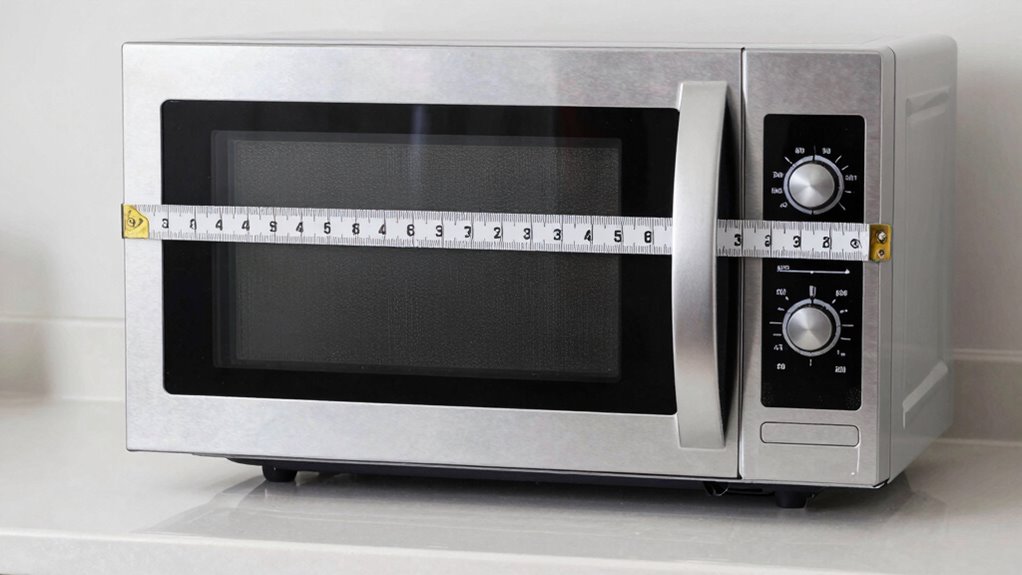
Start by measuring the available space on your counter to know what fits. Then, find the dimensions of the microwave that work for your needs. To ensure a proper fit, consider the standard sizes of microwave ovens when selecting your model. Additionally, be aware that cubic feet measurement helps in understanding the overall capacity of the microwave. Understanding how to convert measurements from cubic feet to inches is essential for accurate comparisons with your space. Keep in mind that antioxidants in cranberry juice may also influence your overall health and should be considered when choosing your kitchen appliances. Knowing the recommended ratios for essential oils can also be useful if you plan to incorporate aromatherapy into your relaxation routines.
Measure Available Counter Space
Before choosing a microwave combo, it’s essential to measure your available counter space accurately. Start by clearing the area to get a clear view of your kitchen layout. Use a tape measure to determine the length, width, and height of the space where you plan to place the microwave. Be sure to account for any nearby appliances, cabinets, or fixtures that could limit placement options. Check for enough clearance around the microwave for ventilation and easy access. Keep in mind that your counter space isn’t just about size—it’s about how well the microwave will fit into your overall kitchen layout. Precise measurements prevent surprises later and help you select a microwave that fits comfortably and functions efficiently. Additionally, understanding counter space measurements can help you choose a reliable appliance that ensures safety and proper ventilation. Recognizing the size requirements of your microwave is also important to maintain optimal airflow and avoid overheating. Conducting a space assessment ensures you select a model that meets both your needs and your kitchen’s spatial limitations. Properly measuring your space and understanding deep-sky imaging concepts can also make your planning process more accurate and effective. Being aware of microwave dimensions can further streamline your shopping process by matching your needs with available models.
Determine Microwave Dimensions
To accurately determine if a microwave will fit your space, you need to measure its dimensions—height, width, and depth. Use a tape measure to record these measurements, making sure to include any handles or protrusions. Keep in mind that higher microwave wattage models might be larger due to additional components, so check the product specifications. Also, consider the space needed for ventilation, often located at the back or sides. When measuring, leave some clearance around the microwave for easy placement and access. Don’t forget to account for the height of your countertop and any nearby cabinets that could affect placement. Accurately measuring ensures your chosen microwave has enough room for safe operation, especially if you plan to use features like multiple cooking presets. Additionally, understanding proper installation practices can help prevent overheating and ensure longevity of your appliance. Moreover, being aware of microwave safety clearances can further help in selecting a model that operates efficiently and safely in your kitchen. For optimal performance, consider the connected home technology options that may be compatible with modern microwave models to enhance your kitchen setup. Knowing how to measure in cubic feet can also help you compare different models and find one that fits perfectly. In addition, utilizing smart home integration features can provide more convenience and control over your kitchen appliances.
Convert Cubic Feet to Inches
Wondering how to guarantee your countertop can accommodate a microwave? You need to convert cubic feet to inches to get precise measurements. Start by understanding that 1 cubic foot equals 1728 cubic inches. To find the dimensions, you’ll perform a unit conversion, which improves measurement accuracy. For example, if your microwave’s volume is 0.5 cubic feet, multiply 0.5 by 1728 to get 864 cubic inches. Then, take the cube root of that number to determine each dimension in inches. This process ensures you’re working with accurate measurements, preventing surprises when fitting your microwave. Converting cubic feet to inches helps you visualize space better and ensures your counter can handle your microwave’s size with confidence. accurate measurements are essential for responsible and confident appliance placement.
Step-by-Step: Calculating Cubic Feet of Your Microwave

To accurately find the cubic feet of your microwave, start by measuring its internal length, width, and height. Be sure to use a ruler or tape measure for precise readings. Then, multiply these measurements to determine the total volume in cubic inches, which you’ll convert to cubic feet. Keep in mind that understanding correct measurement techniques ensures an accurate calculation of your microwave’s capacity.
Measure Internal Dimensions
Before calculating the cubic feet of your microwave, you need to measure its internal dimensions accurately. Start by opening the microwave door and using a tape measure to find the width, height, and depth of the interior. Be sure to measure from wall to wall inside the cavity, not just the exterior. Pay attention to the space needed for proper ventilation, which influences your measurements, especially for countertop clearance and ventilation requirements. Record these measurements precisely, noting any irregularities or rounded edges. These internal dimensions are essential for calculating cubic volume accurately. Remember, the goal is to get exact figures so your microwave fits comfortably without compromising ventilation or countertop space. Proper measurement techniques, including checking for ventilation clearance, are crucial for ensuring your appliance fits well and functions safely. Accurate measurements guarantee you select a model that works perfectly for your kitchen needs, and understanding the internal volume helps optimize its placement and usage. Additionally, considering the flow of air around your microwave can improve safety and performance.
Calculate Volume Accurately
Calculating the cubic feet of your microwave involves converting your internal measurements into a standard volume unit. To do this accurately, focus on precise measurements and proper unit conversion. First, measure the width, height, and depth of the interior space. Next, multiply these dimensions to estimate the volume in cubic inches. Then, convert cubic inches to cubic feet by dividing by 1728 (since 1 cubic foot equals 1728 cubic inches). Finally, round your volume estimation for simplicity. Remember, using accurate measurements and precise conversions guarantees you get the correct cubic feet, making it easier to compare microwave sizes and select the right model for your space. This step helps you avoid overestimating or underestimating your microwave’s capacity. Being aware of measurement accuracy ensures your calculations are reliable and trustworthy, especially when considering appliance capacity for your kitchen.
Key Dimensions Besides Cubic Feet to Check Before Buying
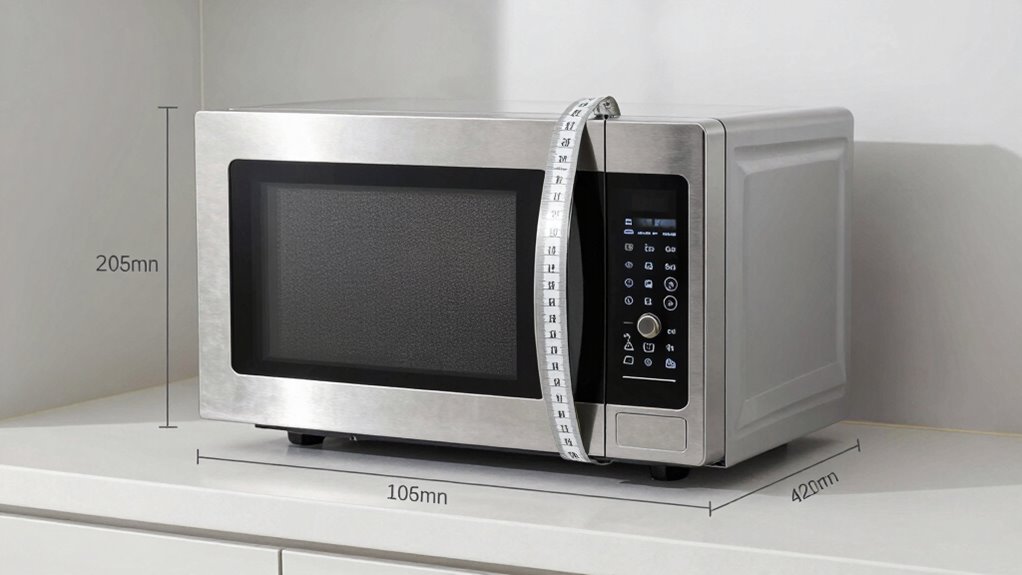
Have you considered the key dimensions beyond cubic feet that can impact how well a microwave combo fits your space? Width, height, and depth are essential. These measurements influence installation tips and aesthetic considerations, guaranteeing your appliance complements your kitchen design. For example, a microwave that’s too tall might clash with cabinets, or a narrow width could restrict accessibility. Here’s a quick overview:
| Dimension | Why it matters |
|---|---|
| Width | Fits between cabinets or counters |
| Height | Ensures clearance for tall containers |
| Depth | Prevents protrusion or overcrowding |
| Ventilation | Promotes proper airflow and safety |
| Handle Placement | Affects ease of use and visual flow |
Pay attention to these key dimensions to make an informed decision that suits both your space and style.
Comparing Microwave Sizes by Cubic Feet for the Perfect Fit
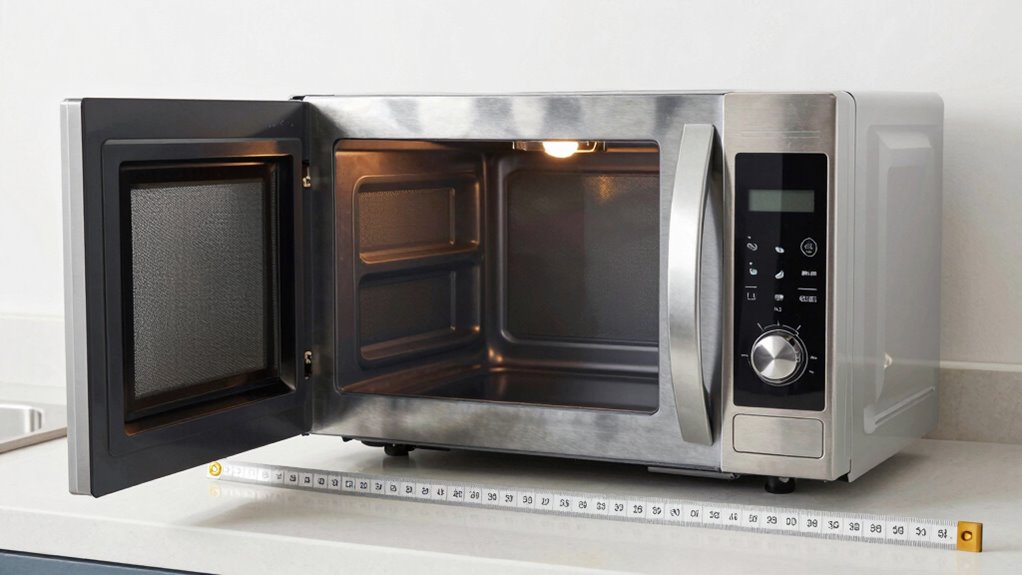
When comparing microwave sizes, understanding cubic feet helps you find the best fit for your space. You’ll want to measure your available area and consider the microwave’s dimensions to make certain it matches your needs. Choosing the right size means balancing capacity with your kitchen’s size and your cooking habits.
Understanding Cubic Feet
To choose the right microwave for your needs, understanding cubic feet is essential because it measures the internal space in a way that helps you compare different models easily. Larger cubic feet mean more room for your dishes, but size impacts oven safety and accessibility. Here’s what to keep in mind:
- Capacity Range – Smaller models (around 0.5-0.7 cu ft) suit basic tasks, while larger ones (1.0+ cu ft) handle bigger plates.
- Cooking Presets – More space allows for advanced presets, making cooking simpler and safer.
- Counter Space – Ensure your counter can accommodate the microwave’s cubic feet without clutter.
- Internal Dimensions – Check cubic feet alongside depth, width, and height for a perfect fit.
Understanding cubic feet helps you pick a microwave that’s safe, functional, and fits your cooking needs.
Measuring Microwave Dimensions
Comparing microwave sizes by cubic feet allows you to find the best fit for your space and cooking needs. To do this, measure the microwave’s width, height, and depth, then multiply these dimensions to get its volume. This helps guarantee smooth microwave installation and ideal placement within your kitchen layout. Keep in mind that the external measurements don’t always match the internal capacity, so check the manufacturer’s specifications. Use the table below to compare different models easily:
| Model | External Dimensions (in) | Cubic Feet |
|---|---|---|
| Compact Microwave | 20 x 12 x 14 | 1.5 |
| Standard Microwave | 24 x 20 x 14 | 2.0 |
| Over-the-Range | 30 x 18 x 16 | 2.5 |
| Countertop | 21 x 17 x 12 | 1.8 |
This approach simplifies choosing the right size for your kitchen layout.
Choosing the Right Size
Choosing the right microwave size guarantees it fits seamlessly into your kitchen and meets your cooking needs. To do this, consider:
- Cubic feet—select a size that accommodates your typical dishes without wasting space.
- Microwave aesthetics—pick a model that complements your kitchen style for a cohesive look.
- Energy efficiency—opt for a compact size that conserves power while still providing enough cooking capacity.
- Counter space—measure your available area carefully to avoid clutter and ensure easy access.
Balancing size with these factors helps you find a microwave that’s both functional and stylish. A well-chosen size improves energy efficiency and enhances your kitchen’s overall aesthetic, making everyday cooking more convenient.
Common Mistakes When Measuring Microwave Space: and How to Avoid Them

One common mistake when measuring microwave space is neglecting to account for the door hinges, handles, or other protrusions that can reduce usable interior space. These features can make your microwave less fitting than measurements suggest. Be sure to measure the microwave height from the interior, not just the exterior, to ensure it suits your countertop. Also, don’t forget that higher wattage models might require more clearance for ventilation, affecting placement. Rushing measurements or relying solely on external dimensions can lead to errors, resulting in a microwave that doesn’t fit properly or compromises safety. Always double-check interior dimensions, including any protrusions, and consider power wattage requirements to avoid these common pitfalls. Accurate measurements save you time and prevent frustration.
Using a Tape Measure to Get Accurate Volume Estimates
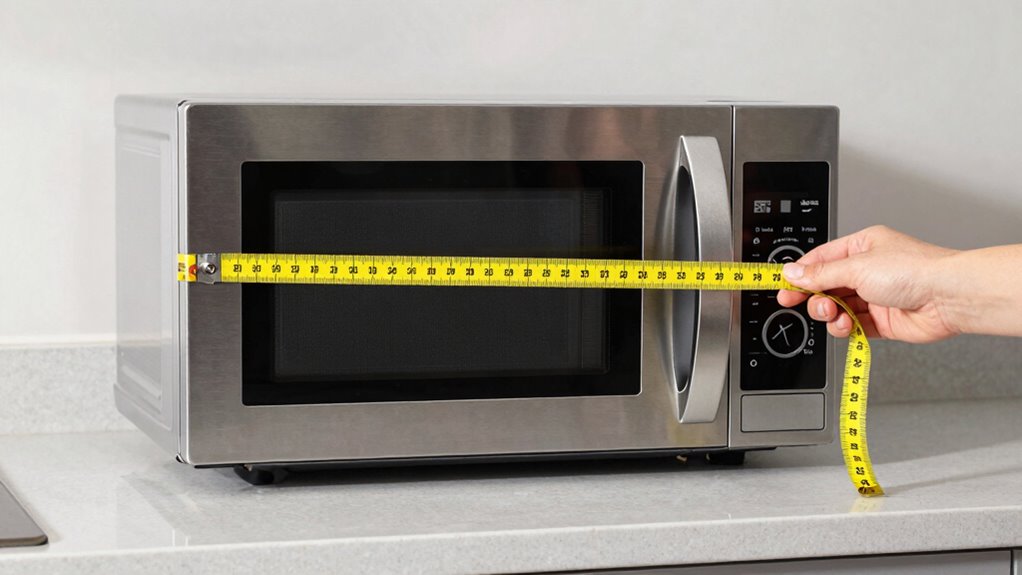
To get an accurate volume estimate of your microwave combo, start by using a tape measure to record its interior dimensions—height, width, and depth. This simple step helps you choose appliances that fit well and maintain your kitchen aesthetics.
Here’s how to do it effectively:
- Measure the interior height from the bottom to the top.
- Record the width across the interior from side to side.
- Measure the depth from the front to the back.
- Multiply these numbers to find the cubic inches, then convert to cubic feet for precise sizing.
Getting precise measurements guarantees your microwave complements your kitchen’s look and promotes appliance energy efficiency by avoiding oversized models.
Visualizing Space and Avoiding Clutter in Your Kitchen

Visualizing space in your kitchen helps you see how different appliances and tools will fit together, making it easier to plan a functional layout. By imagining where each item belongs, you can optimize countertop organization and prevent clutter. When planning your kitchen layout, consider the size of your microwave and other essentials to guarantee they don’t overcrowd your workspace. Clear visualizations help you identify potential congestion points and adjust placements before moving items around physically. This proactive approach makes it easier to maintain an organized, efficient kitchen. Proper space visualization also encourages smarter storage solutions, freeing up valuable countertop space and enhancing overall flow. Ultimately, it leads to a cleaner, more accessible kitchen where everything has its place.
Real-Life Examples: Measuring and Fitting Microwaves
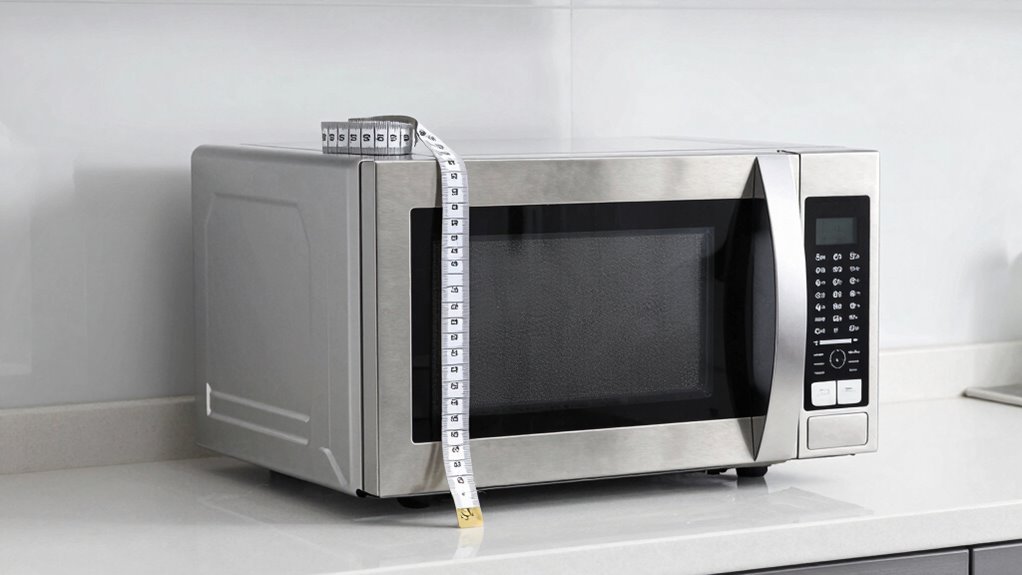
Seeing how your appliances fit into your kitchen space becomes easier when you measure actual models and compare them to your available area. This helps you assess kitchen ergonomics and ensure your microwave blends seamlessly with your appliance aesthetics.
Measuring appliances ensures perfect fit and seamless kitchen aesthetics.
Here’s how to do it:
- Measure the height, width, and depth of the microwave models you’re considering.
- Record their cubic footage to compare capacities accurately.
- Check if the dimensions fit comfortably within your counter space without crowding.
- Visualize how each model aligns with your other appliances for a cohesive look.
Final Checklist: Making Sure Your Microwave Fits Perfectly
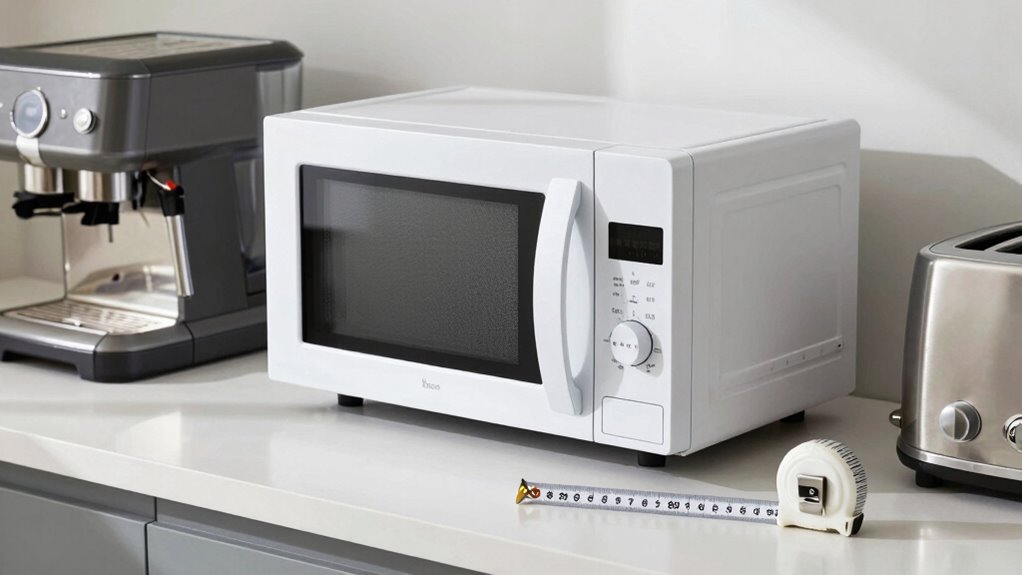
Before finalizing your microwave choice, it’s essential to double-check that it fits perfectly into your available space. Measure both the height, width, and depth, ensuring there’s enough clearance for proper ventilation, which is key for microwave safety. Consider your kitchen design, making sure the microwave complements your existing appliances and layout. Avoid cramming the unit into tight spots, as this can hinder ventilation and compromise safety. Check that the door opens smoothly without hitting counters or cabinets. Also, verify the microwave’s cubic feet measurement aligns with your needs, especially if you plan to cook larger dishes. Taking these steps ensures your microwave fits securely, promotes safety, and enhances your kitchen’s overall design. This final check saves you hassle and guarantees ideal performance.
Frequently Asked Questions
What Is the Standard Range of Cubic Feet for Microwave Combos?
The standard range of cubic feet for microwave combos is typically between 1.0 to 2.0 cubic feet. When choosing one, consider your countertop space and energy efficiency. A larger capacity offers more flexibility for different dishes, but might take up more room and use more energy. Smaller models save space and energy, making them ideal for compact kitchens. Pick the size that best fits your cooking needs and available space.
How Does Microwave Shape Affect Its Cubic Footage Measurement?
Did you know that microwave shape can influence its cubic footage measurement? A rectangular microwave typically offers more measurement accuracy because its shape aligns with standard volume calculations. Conversely, round or irregular shapes can make precise measurement tricky, potentially underestimating capacity. When choosing a microwave, consider how its shape affects measurement accuracy, ensuring you get the right size for your needs without overestimating or underestimating its true cubic footage.
Can Two Microwaves With the Same Cubic Feet Differ in Actual Size?
Yes, two microwaves with the same cubic footage can differ in actual size. You might notice differences due to microwave wattage, which affects cooking power, or countertop material, influencing the overall dimensions. Higher wattage models may have more internal space for efficiency, while different materials can change the external size and weight. Always check actual measurements alongside cubic footage to verify it fits your space and needs.
Are There Industry Standards for Measuring Microwave Cubic Feet?
Think of industry benchmarks as your guiding stars, ensuring measurement consistency across microwave models. Yes, there are standards for measuring microwave cubic feet, set by organizations like the DOE and industry groups. These standards help manufacturers and consumers compare sizes accurately, ensuring your expectations match reality. By following these benchmarks, you can confidently choose a microwave that fits your space without surprises, knowing the measurements are reliable and consistent.
How Do I Convert Cubic Feet to Cubic Inches for Precise Fitting?
To convert cubic feet to cubic inches for precise fitting, use the conversion formula: multiply the cubic feet measurement by 1,728. This guarantees measurement accuracy when planning your space. For example, if your microwave combo is 2 cubic feet, it equals 2 x 1,728 = 3,456 cubic inches. Always double-check your calculations to ensure a perfect fit, especially when space is tight.
Conclusion
Think of your countertop as a blank canvas, and your microwave as the brushstroke that completes your kitchen’s masterpiece. Knowing its size guarantees harmony, avoiding clutter and chaos. By measuring in cubic feet, you’re not just selecting an appliance—you’re crafting a space that flows effortlessly. When everything fits just right, your kitchen becomes a sanctuary where functionality and style dance in perfect balance, transforming your daily routine into a work of art.