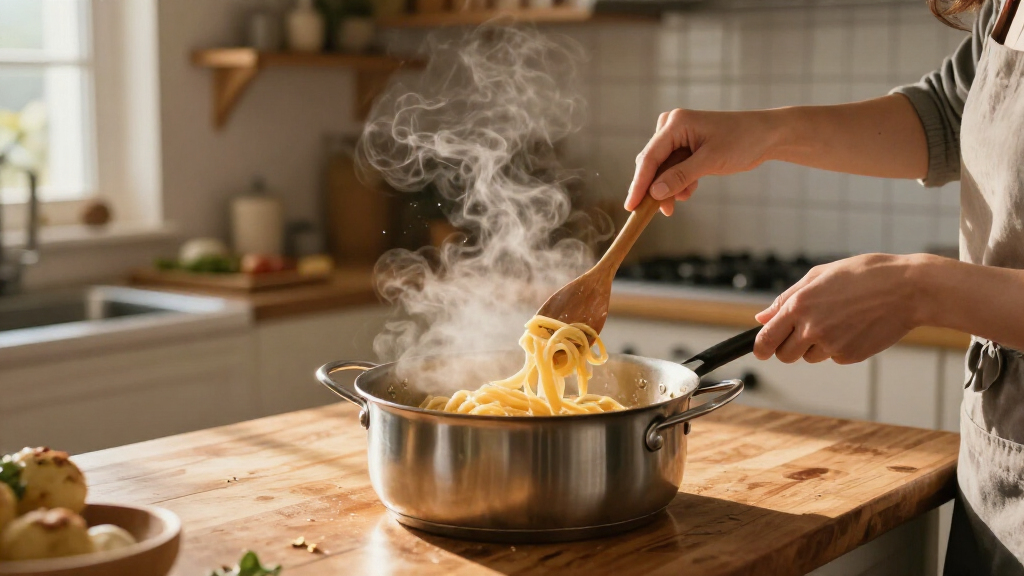
🔍 Read the full analysis: Pasta Water Is An Ingredient: Salting, Saving, And Finishing In The Pan on Mad Tasting

Get kitchen gear delivered free with Prime
- Fast, free delivery on millions of items
- Prime Video, Amazon Music and more included
- Member-only deals all year
TL;DR
Pasta water contains salt and starch released by the noodles, and a small amount can help sauce coat pasta more evenly. Save some before draining, add it gradually while tossing the pasta in the pan, and taste before adding more salt. Its strength varies, so the amount needed depends on the pasta and sauce.
Mad Tasting has published a guide to treating pasta water as an ingredient, recommending that cooks reserve some before draining and add it gradually as they toss noodles with sauce. The method uses the liquid’s salt and starch to help sauce cling, while the guide cautions that its concentration varies and that too much can make a dish watery or overly salty.
The guide describes pasta water as a cooking liquid that carries salt and starch released by the noodles. When a small amount is worked into a sauce with the pasta, the water and fat can combine into a more cohesive coating. The result may be a smoother finish on dishes made with olive oil, butter or tomato sauce, rather than oil or liquid pooling separately in the bowl.
Mad Tasting recommends setting a heat-safe cup or mug beside the stove and saving water near the end of cooking, before draining the pasta. A cup is offered as a practical amount to keep on hand for a few servings, not as a quantity that must all go into the pan. The guide says cooks may need only a few tablespoons.
To finish the dish, transfer pasta that is still slightly firm into a pan with prepared sauce. Toss it over heat and add reserved water in small amounts, allowing the pasta to finish cooking as the sauce coats it. Add more only when the mixture looks too tight or the noodles are not picking up the sauce. The guide advises tasting the finished dish before adding extra salt.
Pasta water is an ingredient Save it. Add it gradually.
Salt and starch in reserved pasta water can help sauce coat noodles. Its strength varies, so let the pan and the finished dish guide how much you use.
Why it helps
A small splash can help water and fat combine into a more cohesive coating.
Help oil spread
Tossing with a little pasta water can help oil distribute across the noodles.
Help sauce cling
The added liquid can help tomato sauce move into pasta ridges.
A practical amount to save
Keep a heat-safe cup beside the stove and reserve water before draining.
Finish pasta in the pan
Transfer pasta while it is still slightly firm, then let it finish cooking in the sauce.
Save some water near the end of cooking.
Add a small splash and toss pasta with the prepared sauce.
Add more only if the sauce is too tight or fails to coat the noodles.
What changes from pot to pot
The water’s starch and salt levels vary with pasta type, water volume and cooking time.
- Adjust sauce texture gradually
- Help sauce coat the noodles
- Bring pasta and sauce together
- A loose sauce may need no extra liquid
- Too much can make the dish watery or overly salty
- Salty cheese, anchovies, olives and cured meat affect seasoning
A Small Adjustment to Sauce Texture
The method gives home cooks a way to adjust the texture and coating of a pasta sauce without treating the reserved liquid as a fixed-recipe ingredient. In an oil-based sauce, it can help the oil distribute across the noodles; in a thick tomato sauce, it can help the sauce move into pasta ridges. The guide frames pasta water as a tool for finishing, not a guarantee that every sauce will turn creamy or balanced.
That distinction matters when a dish already contains salty ingredients. Pecorino Romano, anchovies, olives and cured meat can add substantial salt, while water that reduces in a hot pan can become more concentrated. Adding a large amount without tasting risks changing both the sauce’s seasoning and its consistency. Gradual additions give the cook a chance to stop when the sauce coats the pasta.
The approach is also practical: reserving water before draining avoids losing a liquid that may help bring the dish together. But its usefulness depends on judgment. A sauce that is already loose may need no additional liquid, and pasta water cannot correct an imbalance in the sauce’s ingredients.
Products Worth Considering

Instant Pot Pro Plus 6-Quart 10-in-1 Electric Pressure Cooker

Breville Barista Express Espresso Machine with Built-In Grinder, Brushed Stainless Steel (BES870XL)

Weber Lumin Portable Electric Grill, Black
As an affiliate, we earn on qualifying purchases.
How the Liquid Changes in the Pot
Starch moves from the pasta into the cooking water as the noodles cook. The amount in the reserved liquid is not constant: the guide says it can vary with fresh or dried pasta, water volume and cooking time. That means a splash from one pot may behave differently from a splash from another, and there is no guaranteed concentration or texture.
Mad Tasting connects finishing pasta in a pan with familiar preparations such as garlic and olive oil, butter sauce and Roman-style cacio e pepe. In each case, the final texture depends on more than the water: heat, fat, cheese and tossing also affect how well the sauce coats the noodles. The guide does not prescribe a universal salt ratio, arguing instead that the finished dish should be tasted and adjusted to suit its other ingredients.
“Think of the water as a seasoning and texture tool.”
— Mad Tasting guide
The Right Amount Depends on the Pot
The guide does not give a fixed salt-to-water ratio or a precise amount of reserved water for each recipe. It says the liquid’s starch and salt levels vary with the pasta and cooking conditions, so the amount needed must be judged in the pan. It also does not provide test results comparing different methods or quantify how much starch is required for a particular sauce.
The central outcome is therefore a cooking recommendation, not a guaranteed result: a small splash may help a sauce cling, but extra liquid can dilute a sauce that is already loose. The guide’s advice is to add water gradually, toss and taste, with particular care when the dish includes salty cheese, olives, anchovies or cured meat.
Taste and Adjust in the Pan
For cooks following the method, the next step is to reserve water before draining, then finish the pasta in its sauce over heat. Begin with a small splash and toss until the noodles are coated; add more only if the sauce remains too thick or fails to cling. Taste before adding salt, especially after cheese or other salty ingredients go into the pan.
There is no further announcement or scheduled development identified in the guide. Its practical takeaway is to treat each pot of reserved water as variable and let the finished sauce determine whether more is needed.
Key Questions
Why save pasta water?
It contains salt and starch from the noodles. A small amount can help sauce and fat combine into a coating that clings to the pasta.
How much pasta water should I add?
Start with a small splash and add more gradually while tossing. Mad Tasting suggests saving a cup for a few servings, but says cooks may need only a few tablespoons.
When should I reserve the water?
Save it near the end of cooking and before draining. Keep a heat-safe cup beside the stove so the water is ready when the pasta moves to the sauce.
Should I salt the pasta water heavily?
The guide does not recommend a universal salt ratio. Season the noodles, then taste the finished dish before adding more, particularly if it contains pecorino, anchovies, olives or cured meat.
Can pasta water fix a sauce that is too thin?
No. The guide says reserved water is best used to adjust texture and help sauce coat noodles. If a sauce is already loose, adding more liquid may dilute its flavor.
Source: Mad Tasting