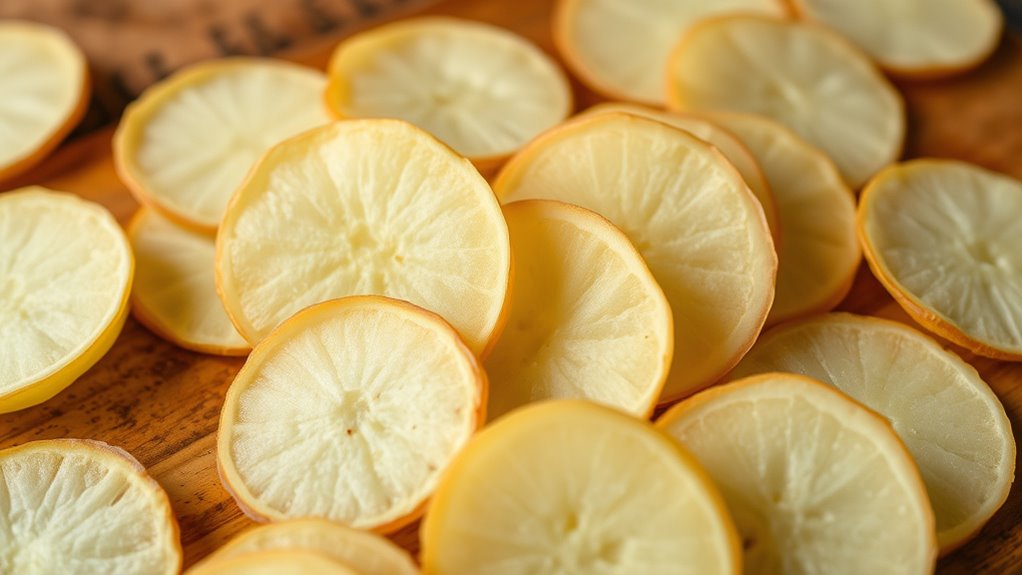

To make thin, even DIY potato chips, choose starchy potatoes like Russets and make certain they’re firm and blemish-free. Use a sharp knife, mandoline, or food processor with a slicing attachment to get consistent thickness. Take your time, work slowly, and keep slices spaced during drying to prevent sticking. Rinsing and thoroughly drying slices will help achieve crispiness. For more tips on perfecting your slices and troubleshooting common issues, keep exploring.
Key Takeaways
- Use a sharp mandoline slicer or adjustable slicer for consistent, ultra-thin potato slices.
- Set the slicer to the desired thickness and work slowly to maintain uniformity.
- Keep fingers clear and use safety guards to prevent accidents during slicing.
- Rinse slices in cold water to remove excess starch for even crispness.
- Air dry slices thoroughly on towels before frying or baking for best results.
Selecting the Perfect Potatoes for Chips

Choosing the right potatoes is essential for making crispy, delicious chips. Not all potato varieties are suitable, so pick those with the right starch content. Waxy potatoes, like red or new potatoes, have high moisture and won’t crisp up well. Instead, go for starchy varieties such as Russets or Idaho potatoes, which have high starch levels and produce the classic chip texture. These potatoes also offer neutral flavor profiles, allowing seasonings to shine. Some varieties, like Yukon Gold, have a slightly buttery flavor that can add a unique twist. When selecting potatoes, look for firm, unblemished tubers without sprouts. This ensures your chips will turn out crispy, evenly cooked, and full of flavor. Additionally, understanding the contrast ratio of your equipment can help you optimize the presentation of your finished chips.
Preparing Your Workspace and Tools

Before you start slicing potatoes, it’s important to prepare your workspace and gather all the necessary tools. Confirm your area is clean, well-lit, and free of clutter to promote kitchen safety. Keep your knives, cutting boards, and mandoline within easy reach. Here’s a quick setup checklist:
| Tool | Purpose | Storage Tips |
|---|---|---|
| Sharp Knife | Slicing potatoes evenly | Store in a knife block or sheath |
| Cutting Board | Stable surface for slicing | Keep clean and dry |
| Mandoline | Thin, uniform slices | Store in a dry place |
| Towels | Drying and cleaning | Fold and store nearby |
| Container | Holding sliced potatoes | Airtight for freshness |
Proper prep enhances safety, prevents accidents, and keeps your tools organized.
Choosing the Right Slicing Equipment

Selecting the appropriate slicing equipment is essential for achieving even, consistent potato chips. The right tool ensures uniform slices, which improves texture and appearance. When choosing equipment, consider slicing safety to prevent injuries, especially with sharp blades. Also, think about storage considerations; compact slicers save space and keep your workspace organized. Here are four options to consider:
- Mandoline slicer – offers adjustable thickness, great for precision.
- Manual handheld slicer – portable and easy to store.
- Food processor with slicing attachment – versatile and efficient.
- Sharp knife – requires skill but offers control and minimal storage needs.
Always prioritize safety by using protective gloves or guards. Proper storage keeps your equipment in good condition and ready for your next batch of homemade chips.
Achieving Uniform Thinness in Slices

How can you guarantee your potato slices are uniformly thin? The key is to use sharp, consistent slicing equipment like a mandoline or adjustable slicer, which ensures even slices while prioritizing slicing safety. Always set the thickness level before slicing and keep your fingers clear of the blade. To maintain uniformity, work slowly and check each slice for consistency. Proper storage tips also help preserve the slices’ integrity; store them in an airtight container with a damp paper towel to prevent drying out. This method keeps slices even and ready for frying or baking. Additionally, understanding the importance of precision in slicing can significantly improve the quality of your homemade chips. By paying attention to slicing safety and using the right tools, you’ll achieve perfectly uniform, thin slices that make your homemade chips irresistible.
Handling and Rinsing the Slices

Handling and rinsing your potato slices properly guarantees they stay fresh and ready for cooking. First, gently rinse the slices using the rinse method to remove excess starch and dirt. This helps prevent sticking and guarantees crispiness. After rinsing, lay the slices out in a single layer on a clean towel or paper towels for air drying. Pat them lightly to remove surface moisture, then let them sit for at least 15 minutes to air dry completely. This step is essential for crispy chips. Here are some tips to follow:
- Use cold water during rinsing for best results.
- Avoid soaking slices too long to prevent sogginess.
- Shake off excess water before air drying.
- Make sure slices are evenly spaced for thorough air drying.
- Being aware of data privacy challenges in technology helps ensure your cooking process remains private and secure.
Tips for Consistent Cutting Techniques
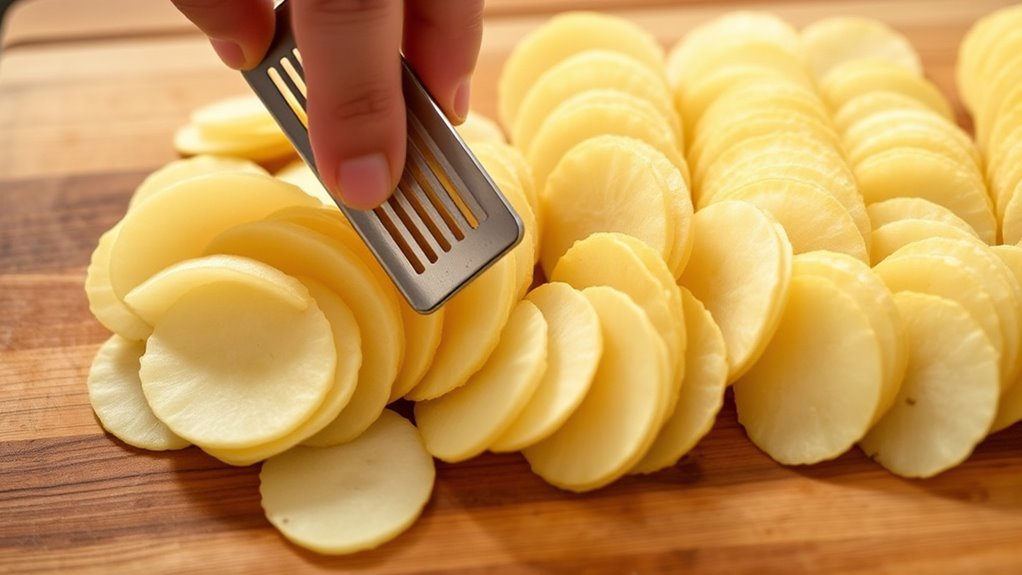
To achieve evenly cooked and crispy potato chips, maintaining consistent cutting techniques is essential. Use a mandoline with safety features to prevent accidents and guarantee uniform slices. Keep your fingers clear of the blade, and lock the guard securely before slicing. Pay attention to your slicing speed; a steady, even pace helps produce uniform thickness. Rushing can lead to uneven slices, resulting in uneven cooking. Practice maintaining a consistent pressure and movement to achieve thin, even slices every time. Take your time to adjust the mandoline for the desired thickness, and always prioritize safety. Consistency in your technique will pay off with perfectly crisp chips that cook evenly and look professional.
Troubleshooting Common Slicing Challenges

Even with careful technique, you might encounter slicing challenges that affect the quality of your potato chips. Uneven slices can lead to inconsistent crispiness or burning. To troubleshoot:
Even with careful technique, uneven slices can impact your chips’ crispiness and evenness.
- Ensure your knife or slicer is sharp for clean, even cuts.
- Use a guide or mandoline for uniform thickness, preventing uneven seasoning options.
- Keep potatoes dry to avoid slipping, which causes irregular slices.
- Store sliced potatoes properly—submerge in water if waiting—to prevent discoloration and preserve freshness. Proper storage methods also help maintain the chips’ texture during frying. If slices are too thick or uneven, adjust your slicing technique or tool. Remember, consistent slices result in evenly seasoned, crispy chips. Addressing these common challenges will improve your DIY process and guarantee your chips turn out perfect every time. Additionally, exploring remote hackathons can provide ideas for innovative kitchen gadgets or techniques to enhance your cooking process.
Frequently Asked Questions
What Are the Best Seasonings to Enhance Homemade Potato Chips?
When it comes to seasoning your homemade potato chips, you want flavors that really pop. Garlic powder adds a savory, aromatic touch, while smoked paprika gives them a smoky, slightly spicy flavor. You can also experiment with salt, pepper, or even a dash of cayenne for heat. These seasonings enhance the natural potato flavor and make each chip more delicious. Just sprinkle your favorites evenly for the perfect snack every time.
How Can I Prevent My Slices From Sticking Together During Frying?
To prevent your slices from sticking during frying, focus on proper slicing techniques to create uniform pieces, which cook evenly and reduce sticking. Make sure to rinse the slices to remove excess starch, minimizing oil absorption and sticking. Dry them thoroughly before frying, and fry in hot oil at the right temperature. Gently stir or shake the basket to prevent slices from clumping together, ensuring crispy, evenly cooked chips.
What’S the Optimal Oil Temperature for Crispy Chips?
Think of frying like a dance, where the oil temperature sets the rhythm for perfect crispy chips. You should aim for an oil temperature of about 350°F to 375°F. This range guarantees your chips fry evenly and develop that satisfying crunch. If the oil isn’t hot enough, they’ll turn out greasy; too hot, and they’ll burn. Maintain this sweet spot for consistently crispy, golden chips every time.
How Should I Store Leftover Potato Chips to Keep Them Fresh?
To keep your leftover potato chips fresh, store them in an airtight container to prevent moisture and air from making them stale. Place the container in a cool, dark place like a pantry or cupboard, away from sunlight and heat. Avoid refrigerating, as it can cause condensation and sogginess. Proper storage helps maintain their crunch and flavor longer, ensuring you enjoy your chips the next time you crave a snack.
Are There Any Health Benefits of Making Homemade Potato Chips?
Did you know making your own potato chips can boost your health? By controlling ingredients, you reduce unhealthy fats and excess salt, making them a better snack option. DIY chips also allow for nutritional improvements, like adding healthy oils or seasoning with natural herbs. This way, you enjoy a tasty treat while managing your intake. So, you get to indulge smarter and healthier, all while satisfying your snack cravings.
Conclusion
Now that you’ve mastered the art of slicing, your homemade potato chips will rival any from a vintage apothecary jar. With patience and practice, you’ll achieve thin, even slices that fry up perfectly crispy. Remember, even the most seasoned chefs faced their first onion—er, potato—cutting. So, don’t fret if your slices aren’t perfect at first. Just keep slicing, and soon you’ll be serving up delightful, crisp chips that everyone will rave about—like a true culinary pioneer!