
🔍 Read the full analysis: The Pasta Machine Weekend: Rolling Tagliatelle, Pappardelle, And Lasagne Sheets on Mad Tasting

Get kitchen gear delivered free with Prime
- Fast, free delivery on millions of items
- Prime Video, Amazon Music and more included
- Member-only deals all year
TL;DR
This weekend, home cooks are making fresh pasta using a simple dough of flour and eggs, rolling it into three shapes: tagliatelle, pappardelle, and lasagne sheets. The process involves dough preparation, rolling, cutting, and cooking, offering a rewarding experience and superior flavor compared to dried pasta.
During this weekend, home cooks are actively making fresh egg pasta, transforming simple ingredients into three classic Italian shapes: tagliatelle, pappardelle, and lasagne sheets. This process involves preparing dough, rolling it through a pasta machine, and cutting into desired shapes, resulting in pasta that surpasses dried store-bought varieties in flavor and texture. The activity is gaining popularity as a rewarding weekend project that combines tradition, skill, and culinary satisfaction.
The core of traditional Italian pasta is a dough made from flour and eggs. The typical ratio for egg pasta in Emilia-Romagna is one medium egg per 100 grams of ’00’ flour. For a standard four-person batch, this is about 400 grams of flour and four eggs, yielding roughly 600 grams of pasta. The dough is kneaded for 8–10 minutes until smooth and then rested for at least 30 minutes to relax gluten fibers, making it easier to roll thin without tearing.
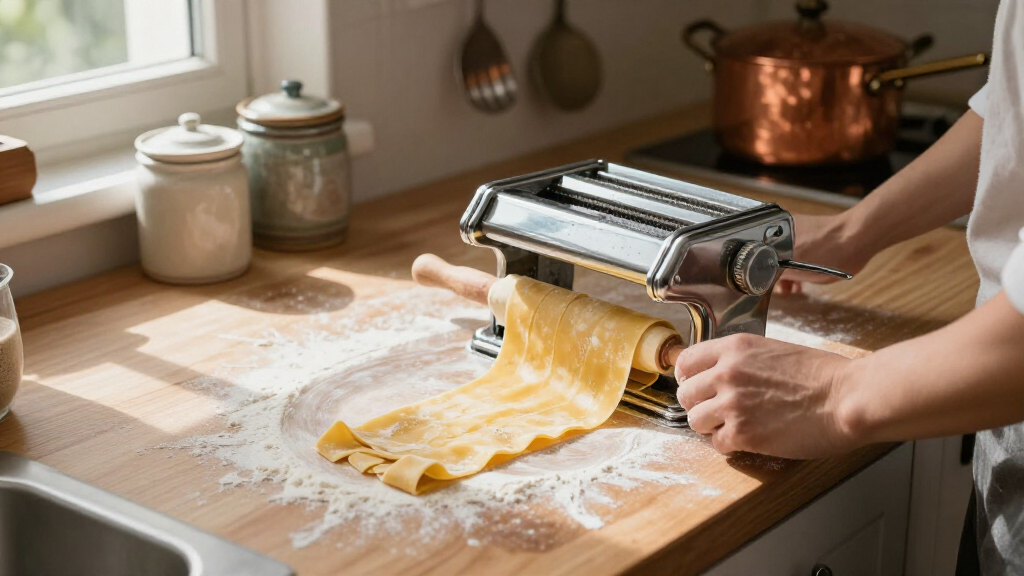
Rolling the dough involves passing it through a pasta machine starting at the widest setting, then gradually narrowing the rollers to achieve a thin, translucent sheet. Folding and passing through the widest setting multiple times creates a smooth, elastic sheet. For tagliatelle and pappardelle, the sheet is rolled to about 1–1.5 mm thickness at settings 6 or 7. Lasagne sheets are slightly thicker, at settings 5 or 6, to withstand baking and layering.
Cutting shapes depends on the pasta type: narrow ribbons (~7 mm wide) for tagliatelle, broad (2–3 cm) for pappardelle, and uncut sheets for lasagne. Proper drying on a floured surface prevents sticking, and cooking fresh pasta takes only 90 seconds to 3 minutes, much faster than dried pasta. Fresh pasta is best cooked in well-salted boiling water, pulled out just before it reaches al dente to finish in the sauce.
The Pasta Machine Weekend: Rolling Tagliatelle, Pappardelle & Lasagne Sheets
Home cooks are transforming two ingredients — flour and eggs — into three classic Italian shapes. A pasta machine, a little patience, and 90 seconds of boiling time deliver flavour and texture dried pasta cannot match.
“Fresh egg pasta is flour and eggs, nothing more — the Bolognese standard is one medium egg per 100 grams of flour.”— Mad Tasting
Why This Weekend Pasta Making Matters
Fresh pasta at home is a significant upgrade in flavour and texture over dried varieties. It lets cooks match shape and thickness to the sauce, deepens an understanding of Italian culinary tradition, and delivers the quiet satisfaction of a meal made entirely from scratch. Historically made with rolling pins and hand-cutting, pasta-making has surged again as an artisanal weekend pursuit, with machines making the craft accessible and consistent.
Centuries of Egg Pasta
Fresh egg pasta is a staple of Emilia-Romagna and Tuscany, with manual techniques passed down through generations of home cooks.
Skill Meets Patience
Kneading, resting, laminating and rolling each build kitchen confidence — a rewarding project that combines tradition with hands-on technique.
The Bologna Rule
In 1974 the Bologna Chamber of Commerce fixed the official tagliatelle width at 8 mm cooked — proof of how seriously shape and identity are taken.
From Dough to Plate in Five Stages
A standard four-person batch uses 400 g of ’00’ flour and four eggs, yielding roughly 600 g of pasta.
Mix & Knead
Combine flour and eggs; knead 8–10 minutes until completely smooth.
Rest
Rest at least 30 minutes so gluten relaxes and rolls thin without tearing.
Laminate & Roll
Fold and pass through the widest setting repeatedly, then narrow to settings 5–7.
Cut the Shape
Tagliatelle ribbons, broad pappardelle, or uncut sheets for lasagne.
Dry & Cook
Dry on a floured surface; boil in salted water just 90 sec – 3 min.
Width, Thickness & Perfect Sauce Pairings
| Shape | Roller Setting | Sheet Thickness | Regional Home | Best Sauce |
|---|---|---|---|---|
| Tagliatelle | Setting 6–7 | 1–1.5 mm | Bologna | Delicate ragùs, Bolognese |
| Pappardelle | Setting 6–7 | 1–1.5 mm | Tuscany | Hearty wild boar or mushroom ragù |
| Lasagne sheets | Setting 5–6 | Slightly thicker | Layered baked tradition | Béchamel, meat or vegetable fillings |
Uncertainties in Home Technique
The core method is settled, but results still vary between kitchens. These open variables reward experimentation.
| Variable | Settled? | Notes |
|---|---|---|
| Dough hydration level | ~ Varies | Depends on egg size, flour brand, and ambient humidity. |
| Number of folds in lamination | ~ Varies | No fixed count; repeat until the sheet is smooth and elastic. |
| Flour type | ~ Varies | Semola or all-purpose change texture; ’00’ rolls thinnest. |
| Drying method | ~ Varies | Floured surfaces prevent sticking; technique affects storage life. |
| Rest & thickness settings | ✓ Baseline | 30 min rest, settings 5–7 — fine-tune to your machine. |
Before You Roll
Can I make pasta without a machine?
Yes — a rolling pin works, but demands more effort and skill for uniform thinness. A machine gives easier, more consistent sheets.
How long can I store fresh pasta?
Refrigerated up to 24 hours, floured and wrapped. Thoroughly dried, it keeps in an airtight container for days or even weeks.
Which sauces suit each shape?
Tagliatelle loves delicate ragùs like Bolognese; pappardelle handles chunky wild boar or mushroom sauces; lasagne layers with béchamel and bakes.
Is resting the dough necessary?
Yes — at least 30 minutes relaxes the gluten so the dough rolls thinly without tearing during shaping.
Can I substitute all-purpose flour?
Yes, though expect more kneading and less delicate sheets. ’00’ flour gives a softer, more elastic dough ideal for thin rolling.
What comes next?
Experiment with hand-cut shapes, flour blends, herb or spinach doughs — and share results to keep the tradition evolving.
Why This Weekend Pasta Making Matters
Making fresh pasta at home offers a significant upgrade in flavor and texture over dried varieties, providing a more authentic Italian experience. It also enables cooks to customize shapes and thicknesses for different sauces, enhancing culinary versatility. Beyond taste, the activity fosters a deeper understanding of Italian culinary traditions and promotes kitchen confidence. As a weekend project, it combines skill development with the satisfaction of creating a meal from scratch, making it a meaningful culinary achievement.
manual pasta machine for fresh pasta
As an affiliate, we earn on qualifying purchases.
As an affiliate, we earn on qualifying purchases.
Historical and Cultural Roots of Homemade Pasta
Fresh egg pasta has been a staple of Italian cuisine for centuries, particularly in regions like Emilia-Romagna and Tuscany. The traditional methods involve simple ingredients and manual techniques passed down through generations. The specific shapes—tagliatelle, pappardelle, and lasagne—each have regional origins and culinary purposes, with tagliatelle associated with Bologna, pappardelle with Tuscany, and lasagne as a layered baked dish. In recent years, home pasta-making has experienced a resurgence, driven by interest in artisanal foods and cooking at home, especially during weekends and holidays.
Historically, pasta was made using rolling pins and hand-cutting, but modern pasta machines have made the process more accessible and consistent. The official measurement standards for tagliatelle, established in 1974 by the Bologna Chamber of Commerce, specify an 8 mm width when cooked, emphasizing the importance of tradition and regional identity in pasta shapes.
“Fresh egg pasta is flour and eggs, nothing more — the Bolognese standard is one medium egg per 100 grams of flour. Resting for 30 minutes makes it easier to roll thin without tearing.”
— Mad Tasting
Uncertainties in Home Pasta-Making Techniques
While the basic process is well-established, some details remain variable, such as the ideal dough hydration level, the exact number of folds needed during lamination, and the best drying methods for preventing sticking. Additionally, the impact of using different types of flour, such as semola or all-purpose, on final texture and flavor can vary depending on the cook’s preferences and equipment. The precise timing for resting dough and optimal thickness settings may also differ based on ambient conditions and machine quality. These variables mean that results can differ between home cooks, and some experimentation may be necessary to perfect techniques.
Next Steps for Aspiring Pasta Makers
After completing this weekend’s pasta project, cooks are encouraged to experiment with different shapes, sauces, and drying techniques. Sharing results on social media or with local communities can foster feedback and improvement. Future steps include trying hand-cutting methods, exploring different flour blends, and incorporating herbs or spinach into the dough for variations. Additionally, many will seek to refine their rolling and cutting skills, perhaps investing in higher-quality pasta machines or accessories. Restaurants and culinary schools may also adopt these techniques for teaching traditional Italian pasta-making, further preserving and evolving the craft.
Key Questions
Can I make pasta without a machine?
Yes, a rolling pin can be used to roll out the dough, but it requires more effort and skill to achieve uniform thinness. A pasta machine makes the process easier and results in more consistent sheets.
How long can I store fresh pasta?
Fresh pasta can be stored in the refrigerator for up to 24 hours, lightly dusted with flour and covered with plastic wrap. For longer storage, drying the pasta thoroughly before storing in an airtight container is recommended, allowing it to keep for several days or even weeks.
What sauces pair best with each pasta shape?
Tagliatelle pairs well with delicate ragùs like Bolognese, while pappardelle is suited for hearty, chunky sauces like wild boar or mushroom ragù. Lasagne sheets are layered with Béchamel, meat, or vegetable fillings and baked.
Is it necessary to rest the dough?
Yes, resting the dough for at least 30 minutes relaxes the gluten, making it easier to roll thinly and preventing tearing during shaping.
Can I use all-purpose flour instead of ’00’ flour?
Yes, all-purpose flour can be used, but the dough may require a bit more kneading and may not roll as thinly without tearing. ’00’ flour offers a softer, more elastic texture ideal for delicate sheets.
Source: Mad Tasting
Halloween Picks
halloween
As an affiliate, we earn on qualifying purchases.