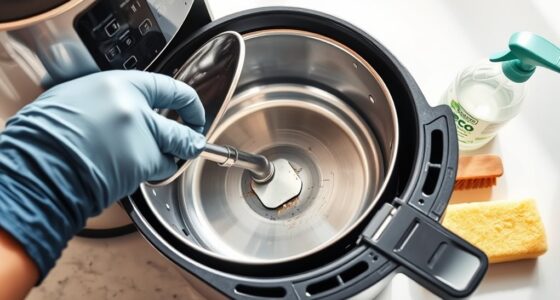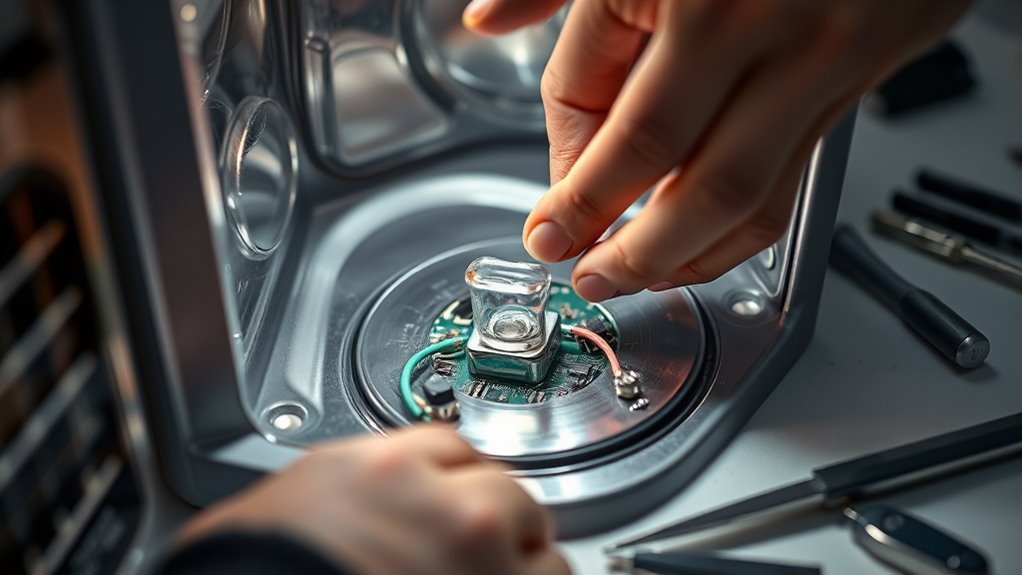

If your thermal fuse has blown after an overheat shutdown, start by unplugging the appliance and allowing it to cool completely. Use a multimeter to check if the fuse is open; replace it if needed. Make sure to address the cause of the overheating before reinstalling the new fuse. Carefully install the fuse, ensuring proper placement, then test the appliance to confirm safe operation. Keep going for detailed steps to reset your fuse correctly.
Key Takeaways
- Turn off and unplug the appliance, allowing it to cool completely before handling the fuse.
- Locate the thermal fuse near heating elements or motors inside the device.
- Test the fuse with a multimeter for continuity; replace if it shows no continuity.
- Reset or replace the fuse following manufacturer instructions, ensuring correct installation.
- Inspect for underlying overheating causes and perform maintenance to prevent future fuse failures.
Understanding the Role of a Thermal Fuse

A thermal fuse acts as a safety device that prevents your appliance from overheating and potentially causing a fire. Its main role is to protect you and your home by shutting off the appliance when temperatures get too high. This small component is designed to cut power when it detects excessive heat, ensuring electrical safety. If the fuse blows, it won’t reset automatically; instead, fuse replacement becomes necessary to restore functionality. Understanding this helps you recognize how vital the thermal fuse is in safeguarding your appliance and household. Proper fuse replacement not only ensures safety but also prevents future overheating issues.
Identifying When the Thermal Fuse Has Blown

Recognizing if the thermal fuse has blown is crucial for troubleshooting appliance issues. To determine this, start with thermal fuse testing using a multimeter set to continuity mode. Remove the fuse and carefully test for continuity; if the meter shows no beep or reading, the fuse has blown. Visual inspection can also help—look for cracks, burns, or breaks in the fuse body. When confirming a blown fuse, fuse replacement techniques involve disconnecting the faulty fuse and installing a new one with the same specifications. Remember, a blown fuse indicates an overheat event, so addressing underlying issues is essential before resetting or replacing the fuse to prevent future failures. Proper testing and replacement ensure your appliance operates safely and efficiently. Checking for overheating causes can help prevent fuse blowouts in the future.
Preparing to Reset the Thermal Fuse Safely

Before resetting the thermal fuse, you need to verify the appliance is safe to work on. Turn off the power supply and unplug the device to guarantee thermal safety. Wear insulated gloves and safety glasses to protect yourself during fuse replacement. Check for any visible damage or burnt wiring that could pose further risks. Confirm the appliance has cooled down completely before handling the fuse. Inspect the fuse and surrounding components carefully, ensuring no debris or corrosion is present. Take your time to prepare your workspace with proper tools and lighting. Proper preparation minimizes risks and ensures a safe environment for resetting the thermal fuse. Additionally, understanding how self watering plant pots operate can help prevent overheating issues in various devices. Remember, safety always comes first to prevent injury or damage during the fuse replacement process.
Step-by-Step Process to Reset the Thermal Fuse

To reset the thermal fuse, start by locating the fuse within the appliance, often near the heating element or motor. Check thermal fuse locations specific to your device, such as dryers, coffee makers, or other appliances. Common thermal fuse issues include blown fuses caused by overheating or dust buildup, which can interrupt operation. Once found, unplug the appliance for safety. Use a multimeter to test the fuse for continuity; if it’s open, it’s needs replacing. If it’s still good, proceed to reset it by disconnecting or resetting the fuse according to your appliance’s instructions. Always ensure you handle the fuse carefully to avoid damage. Remember, resetting a thermal fuse is a temporary fix if the underlying cause of overheating isn’t resolved. Additionally, understanding protective styling benefits can help prevent future overheating issues by reducing strain on the appliance components.
Ensuring Safe Operation After Resetting

After resetting the thermal fuse, you need to guarantee the appliance operates safely to prevent future damage or hazards. Begin by inspecting the fuse for proper installation and ensuring it’s securely in place. Check for signs of overheating or damage that could cause a repeat shutdown. Use effective fuse replacement techniques to verify the new fuse matches the original specifications. Implement overheat prevention measures, such as cleaning vents, removing obstructions, or adjusting settings to reduce heat buildup. Test the appliance carefully before regular use, watching for any signs of excessive heat or abnormal operation. Regular maintenance and monitoring help maintain safe operation, reducing the risk of future fuse blowouts and ensuring your appliance remains reliable and safe. Additionally, understanding thermal fuse ratings can help you select the correct fuse for your device, preventing premature failures and ensuring optimal safety.
Frequently Asked Questions
Can I Reset the Thermal Fuse Multiple Times?
You might wonder if you can reset the thermal fuse multiple times, but it’s risky. Repeatedly resetting isn’t recommended because it can compromise appliance safety. Instead, consider thermal fuse replacement to guarantee your appliance operates safely and effectively. Continually resetting a thermal fuse may mask underlying issues, leading to potential damage or hazards. Always prioritize proper repair to keep your appliance safe and functioning well.
What Are the Risks of Resetting a Blown Thermal Fuse?
Imagine you’re living in a sci-fi movie, but instead of space travel, you’re resetting a thermal fuse. Resetting a blown thermal fuse risks safety issues because it bypasses thermal fuse safety, potentially causing appliance damage or fire hazards. It’s essential to conduct a thorough appliance inspection before resetting, as repeatedly doing so may hide underlying problems. Always consider professional advice to guarantee safety and proper functioning.
How Long Should I Let the Appliance Cool Before Resetting?
When considering the cooling duration before resetting, you should wait until the appliance is completely cool and any internal heat has dissipated. This reset timing guarantees safety and prevents further damage. Typically, waiting at least 30 minutes is recommended, but if the appliance feels warm or hot, extend the cooling duration. Always double-check that it’s cool enough before attempting to reset to avoid risk of burns or electrical issues.
Is It Necessary to Replace the Thermal Fuse After Resetting?
You wonder if you need to replace the thermal fuse after resetting it. Typically, thermal fuse testing reveals if it’s still functional, and if it’s blown, fuse replacement options include installing a new fuse or upgrading to a more reliable one. Remember, resetting alone might not fix underlying issues, so consider testing the fuse thoroughly. If it’s defective, replacement is necessary to guarantee your appliance works safely and efficiently.
What Preventive Measures Can Avoid Future Thermal Fuse Blowouts?
To prevent future thermal fuse blowouts, focus on proper thermal management and regular appliance maintenance. Ensure vents and filters are clean to improve airflow, and avoid overloading the appliance. Keep the environment cool and well-ventilated, and inspect electrical connections regularly. These steps help maintain ideal operating temperatures, reducing the risk of overheating and protecting your appliance from future thermal fuse failures.
Conclusion
Remember, resetting a thermal fuse isn’t a permanent fix—you should always investigate the root cause of the overheat. While some believe that a blown fuse can be simply reset, others argue it’s a sign of underlying issues that need addressing. If you proceed carefully and guarantee proper repairs, you might prevent future shutdowns. However, trusting the fuse’s reset without solving the initial problem could risk appliance damage or safety hazards, so stay vigilant.