
Most people get their outlet setup wrong by improperly wiring hot, neutral, or ground wires, which can cause breaker trips or electrical hazards. Overloading circuits or using mismatched components also play a role. Loose or frayed wiring, along with missed grounding connections, can create shorts that trip breakers. To avoid these issues, guarantee correct wiring, proper grounding, and balanced loads. Keep going to find out how to do it safely and correctly.
Key Takeaways
- Incorrect wiring, such as mixing hot and neutral wires, can cause shorts and frequent breaker trips.
- Overloading circuits with too many devices or high-power appliances leads to breaker trips.
- Faulty or damaged outlets and wiring insulation expose wires, increasing the risk of short circuits and trips.
- Mismatched outlet and circuit ratings can cause overloads and unnecessary breaker trips.
- Lack of proper grounding and bonding creates voltage imbalances, triggering breaker trips for safety.
Why Does Your Breaker Trip When You Plug In an Outlet?

Have you ever noticed your circuit breaker trip the moment you plug in an appliance? This often happens because of ground fault issues, especially with GFCI protection. GFCI outlets are designed to trip when they detect imbalances in electrical current, safeguarding against shocks. If the outlet isn’t properly labeled with circuit information, you might accidentally overload or connect devices to the wrong circuit, causing trips. Incorrect wiring or faulty appliances can also trigger the breaker. Ensuring your circuits are clearly labeled helps you identify which outlets are protected by GFCI and prevent unnecessary trips. Proper labeling also makes troubleshooting easier, so you can quickly pinpoint problems without guesswork, keeping your electrical system safe and functioning smoothly. Additionally, correct wiring practices and a thorough understanding of your wiring and circuit setup can help prevent such issues from recurring. Understanding circuit breaker operation can further help you manage and prevent trips effectively, especially when combined with knowledge of electrical load capacity.
Understanding Proper Outlet Wiring and Grounding

Proper wiring and grounding are key to ensuring your outlets function safely and reliably. Understanding wire color codes helps you identify the hot, neutral, and ground wires correctly—typically black or red for hot, white for neutral, and green or bare copper for ground. Connecting these wires properly to the correct terminals on your outlet prevents electrical issues. Proper wiring techniques are crucial for safe installation and long-term reliability. Different outlet types, such as standard receptacles or GFCIs, have specific wiring requirements, so always check manufacturer instructions. Proper grounding directs stray electricity safely into the earth, reducing shock risks. Avoid mixing up wire connections or skipping the ground wire altogether. Ensuring your wiring setup adheres to electrical standards is essential for safety, preventing shorts, electrical fires, and breaker trips. Correct wiring and grounding aren’t just code; they’re essential for safety, preventing electrical hazards. Always turn off power before working on outlets. Following proper wiring procedures helps ensure your system remains safe and compliant with electrical standards. Additionally, using correct tools and techniques minimizes the risk of damaging components or creating unsafe connections. A thorough understanding of grounding principles further enhances safety and system reliability.
What Are the Most Common Wiring Mistakes That Cause Breaker Trips?
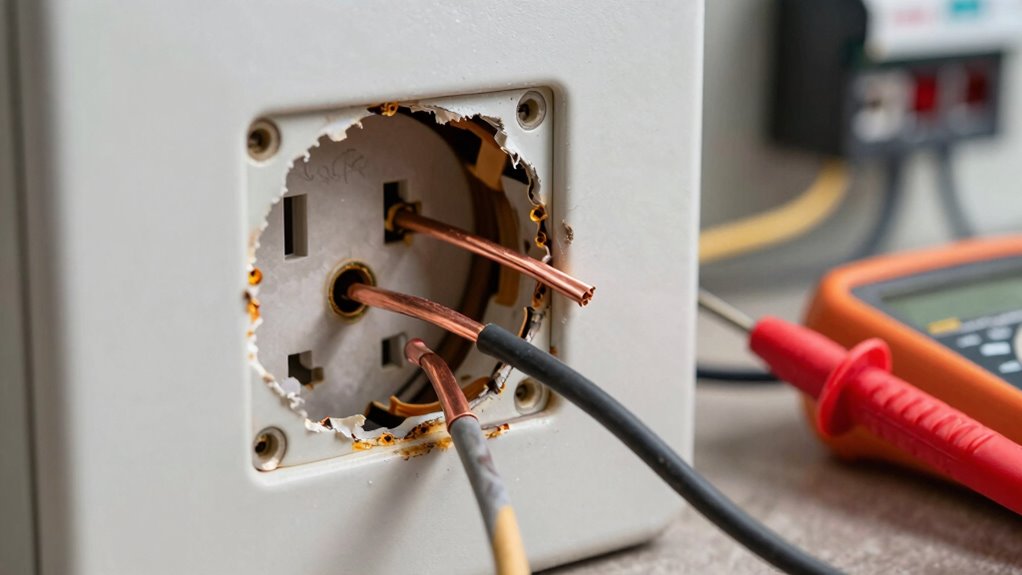
Many breaker trips happen because circuits are overloaded with too many devices. Incorrect wire connections can also cause shorts or faults that trip the breaker. Additionally, faulty or damaged devices often lead to wiring issues that trigger trips and pose safety risks. Ensuring proper home wiring practices helps prevent these issues and promotes safe EV charging. Proper wiring installation is essential for reliable operation and safety, especially when adding high-power devices like EV chargers. Regular inspections and adherence to electrical codes reduce the risk of wiring failures that lead to breaker trips, emphasizing the importance of following electrical safety standards. Proper circuit design also plays a critical role in preventing overloads and faults.
Overloading Circuits Frequently
Overloading circuits is a common wiring mistake that often leads to breaker trips. When you plug in too many devices or high-wattage appliances on one circuit, you exceed its capacity, causing the breaker to shut off to prevent damage. To avoid this, verify circuits are properly rated for your needs. Installing GFCI protection can help prevent shocks and accidental overloads, especially in areas like kitchens and bathrooms. Surge suppression devices are also useful, protecting sensitive electronics from voltage spikes caused by overloads or power surges. Remember, regularly checking your circuit loads and spreading high-demand devices across multiple circuits keeps your system safe and reduces trips. Overloading is a frequent issue, but with proper setup and protective devices, you can minimize breaker trips and maintain a safer electrical system.
Incorrect Wire Connections
Incorrect wire connections are a common cause of breaker trips because even small mistakes can disrupt the flow of electricity and overload the system. For example, mixing up the hot and neutral wires can cause short circuits, leading to trips. If you’re installing GFCI protection, wiring errors can prevent it from functioning properly and compromise safety. Always double-check your connections to guarantee hot, neutral, and ground wires are correctly placed. Proper circuit labeling helps prevent mistakes during future repairs or modifications. Failing to follow wiring diagrams or ignoring manufacturer instructions can also cause overloads or trips. Remember, tight, secure connections reduce resistance and prevent arcing, which might trip the breaker. Paying attention to wiring details ensures a safe, reliable outlet setup and minimizes unnecessary trips.
Faulty or Damaged Devices
Faulty or damaged devices are a common culprit when breaker trips occur unexpectedly. Faulty devices, such as appliances or wiring components, can create short circuits or overloads that cause the breaker to trip. Damaged outlets are especially problematic, often due to wear, corrosion, or physical damage that exposes internal wiring. When you plug in an appliance, a damaged outlet might cause arcing or a short circuit, triggering the breaker. Always inspect outlets for cracks, burn marks, or loose connections, and replace any damaged outlets promptly. Using damaged devices increases the risk of electrical faults, which can trip breakers and damage your system. Regularly check your outlets and devices to guarantee they’re in good condition, preventing unnecessary trips and potential hazards.
How Can You Tell if Your Outlet Is Wired Correctly?
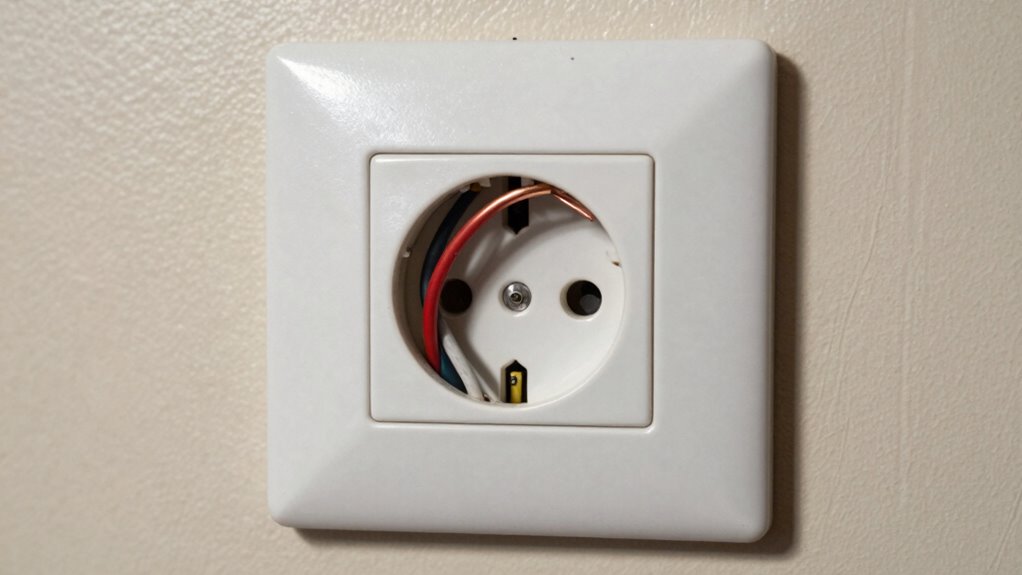
Ever wondered if your outlet is wired properly? Checking your outlet’s wiring is straightforward if you know what to look for. First, verify the wiring color codes: the hot wire is usually black or red, the neutral is white, and the ground is green or bare copper. Next, perform grounding verification by ensuring the outlet’s ground connection is secure and functioning correctly. Finally, use an outlet tester or multimeter to confirm the correct voltage and proper wiring configuration. These steps help identify wiring mistakes early, reducing safety risks. Remember, proper grounding and correct color coding are key indicators of correct wiring. If anything seems off, it’s best to consult an electrician to ensure your outlet’s safety and compliance. Additionally, understanding the thermal behavior of your outlet setup can help prevent overheating and potential electrical hazards, which is essential for maintaining electrical safety in your home. Being aware of proper wiring practices can also contribute to the overall safety and longevity of your electrical system. Recognizing signs of incorrect wiring can alert you to potential issues before they become serious hazards.
Why Grounding and Bonding Are Critical for Safety
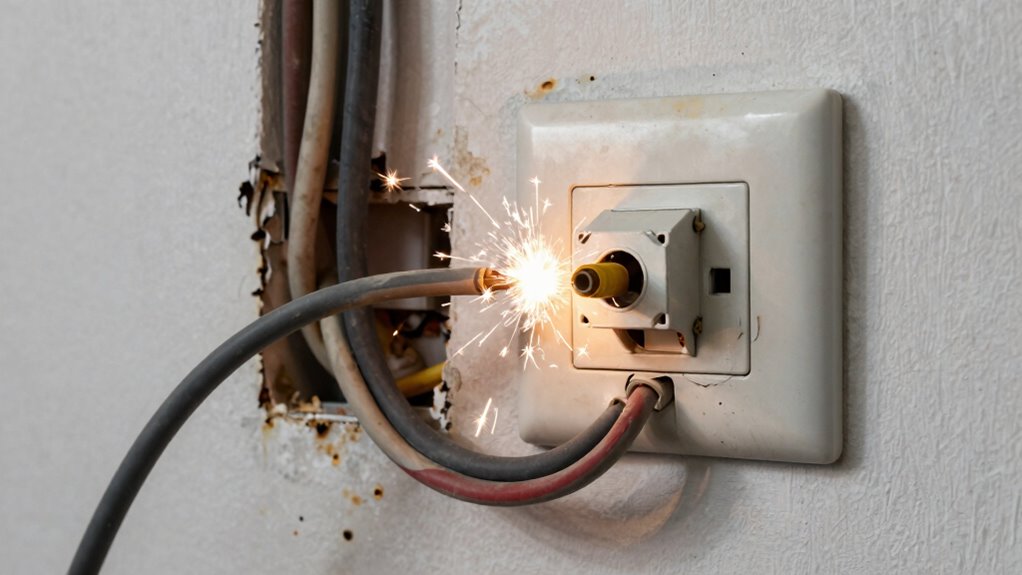
Grounding and bonding are essential for keeping you safe when using electrical outlets. Proper grounding guarantees that excess electricity has a safe path to the ground, reducing shock risks. Bonding helps prevent dangerous voltage differences that can cause electrical hazards. Additionally, improper installation or maintenance of these systems can lead to Rhythm Failure, increasing the risk of electrical accidents. Ensuring your setup follows best‑of‑lists and industry standards can help prevent such issues. Regular inspections and adherence to installation resources are also crucial for maintaining safe electrical systems. Understanding the science of electrical safety can further aid in preventing hazards and ensuring proper system performance. Recognizing the importance of safe wiring practices contributes significantly to overall electrical safety.
Proper Grounding Practices
Proper grounding practices are essential to guarantee electrical safety and protect both people and equipment. Correct grounding techniques ensure that any stray voltage safely disperses into the ground, reducing shock risk. To follow safety protocols effectively, you should:
- Use properly rated grounding conductors connected securely to grounding rods or metal parts of the electrical system.
- Verify that outlets are grounded with a tester before use, ensuring the ground connection is functional.
- Avoid bypassing grounding connections or using improper materials, as this compromises safety and increases hazards.
- Regularly inspect grounding systems for corrosion or damage to maintain a reliable grounding connection.
Importance of Bonding
While grounding helps protect against electrical shock, bonding plays an equally important role in maintaining safety. Bonding ensures that all metal parts in an electrical system are connected, creating a continuous path for fault current. This bonding importance means that if a live wire touches a metal appliance or conduit, the fault current will quickly trip the breaker, preventing shocks or fires. Proper bonding minimizes potential differences between conductive surfaces, reducing the risk of dangerous electrical shocks. Without effective bonding, even well-grounded outlets can pose safety hazards. Remember, grounding safety alone isn’t enough—you must also bond all metal parts correctly. This combination provides a reliable, safe electrical system, protecting you and your loved ones from potential electrical hazards.
Preventing Electrical Hazards
To effectively prevent electrical hazards, you need both grounding and bonding working together. Proper grounding directs excess electricity safely into the earth, reducing shock risks. Bonding ensures all metal parts are connected, preventing dangerous voltage buildup. Understanding electrical systems is essential for installing these safety measures correctly. Proper installation of grounding and bonding also helps in preventing electrical fires and maintaining overall electrical safety. Additionally, proper wiring practices support the effectiveness of grounding and bonding systems, ensuring they function as intended. Here are key steps:
- Install GFCI outlets in areas prone to moisture, like kitchens and bathrooms, to cut power instantly during a ground fault.
- Use surge protectors to shield sensitive electronics from voltage spikes caused by lightning or faulty wiring.
- Confirm all outlets and panels are properly grounded and bonded, reducing the chance of electrical shock or fire hazards.
These measures, combined with correct outlet setup, enhance safety and protect your home from common electrical hazards.
How to Choose the Right Circuit Breaker for Your Outlet
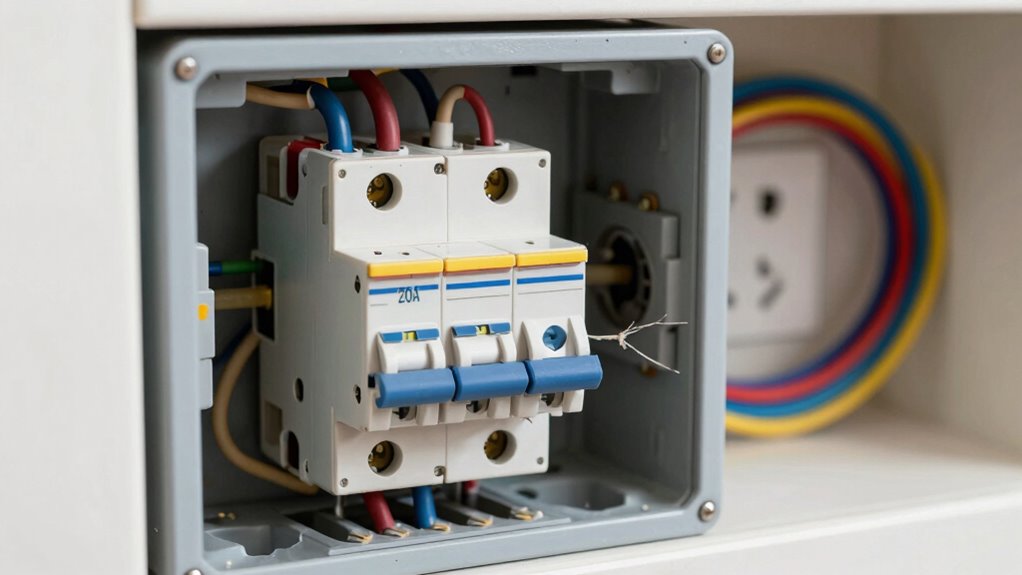
Choosing the right circuit breaker for your outlet is vital to guarantee safety and prevent electrical issues. First, determine the circuit capacity needed for your specific outlet, which depends on the appliances you’ll connect. Overloading a breaker can cause frequent trips or even fires, so selecting a breaker with the appropriate amperage is essential. There are different breaker types, such as single-pole or double-pole, each suited for different circuits and voltage requirements. Ensure you match the breaker type to the outlet and the wiring system in your home. If you’re unsure, consult an electrician to verify your choices. Picking the correct circuit breaker helps protect your wiring, appliances, and family, creating a safer, more reliable electrical setup.
Step-by-Step: How to Install an Outlet Safely
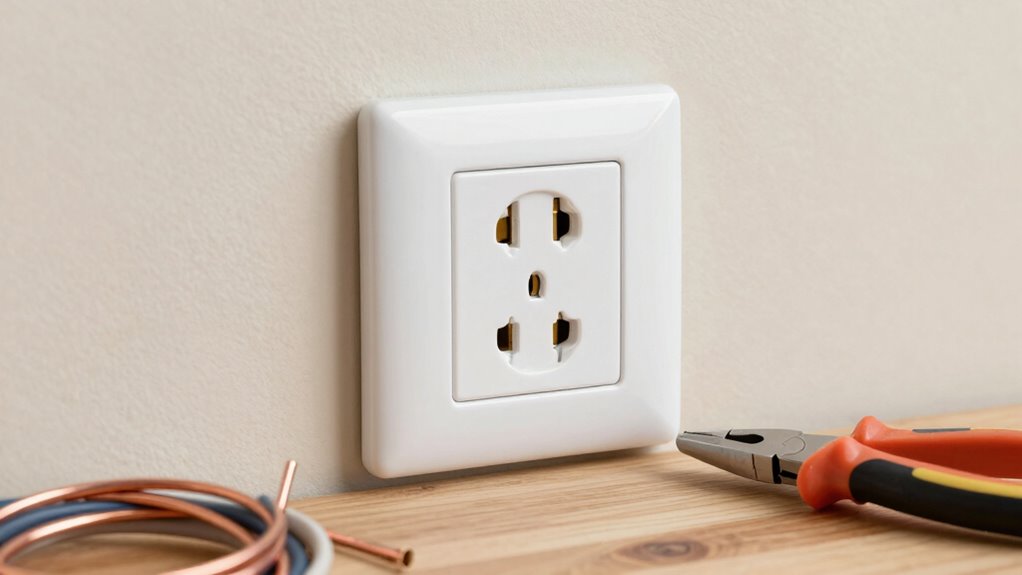
Installing an outlet safely requires careful preparation and attention to detail. You need to understand the circuit design to guarantee proper wiring and prevent overloads. Follow these steps:
Proper outlet installation demands careful planning, understanding circuits, and meticulous wiring for safety and reliability.
- Turn off the power at the breaker and verify your circuit is dead. This prevents electrical shock.
- Remove the old outlet, noting how wires are connected to match the new one. Proper wiring maintains circuit integrity.
- Install the new outlet, ensuring it’s secured tightly and aligned for outlet aesthetics. Proper placement improves both safety and appearance.
Always double-check connections before turning the power back on. A well-installed outlet not only functions safely but also looks neat, reinforcing the importance of precise wiring and thoughtful outlet aesthetics. Safety and proper circuit design are key every step of the way.
Tools and Materials You Need for Wiring Outlets Properly
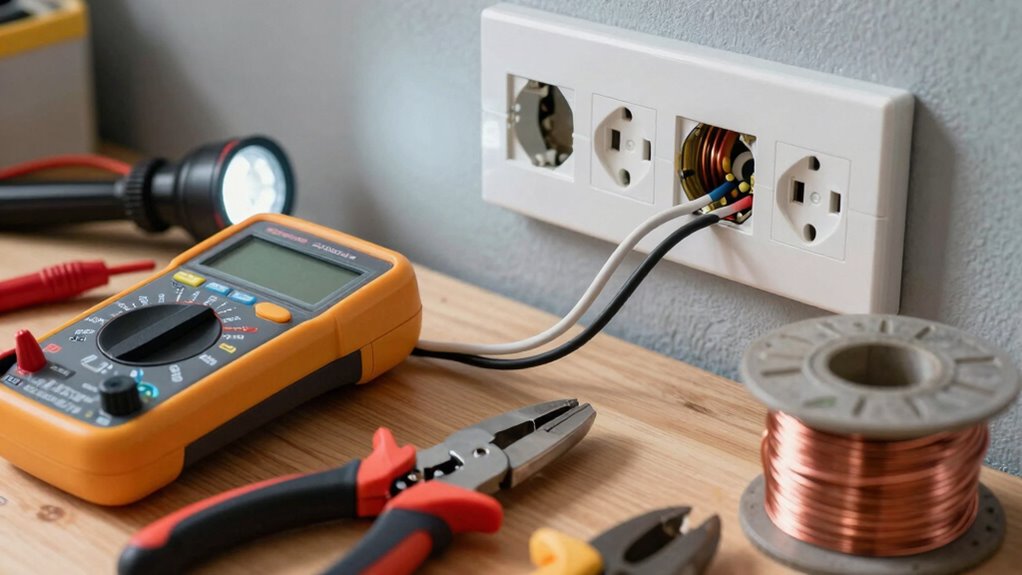
Before you start wiring outlets, make sure you have the right tools, materials, and safety gear. Essential wiring tools like wire strippers and screwdrivers are a must, along with correct outlet components. Don’t forget to wear safety gear such as gloves and goggles to protect yourself throughout the process.
Essential Wiring Tools
To wire outlets correctly, you need the right set of tools and materials. Having the proper tools ensures your work aligns with circuit diagrams and wire color standards, preventing common mistakes. First, a voltage tester is essential to verify power is off before starting. Second, a wire stripper makes removing insulation easy and precise, which is vital for secure connections. Third, a screwdriver set with insulated handles helps tighten terminals safely and accurately. These tools help you interpret circuit diagrams correctly and connect wires of matching color (black, white, green) properly. Using the right tools not only simplifies the process but also reduces the risk of errors that could trip the breaker or cause electrical faults. Proper tools are a necessity for safe, effective outlet wiring.
Correct Outlet Materials
Having the right materials on hand makes wiring outlets straightforward and safe. You’ll need essential outlet materials and wiring components to guarantee a proper setup. Use high-quality outlets compatible with your wiring type, along with durable faceplates. For wiring, gather insulated copper or aluminum cables, wire connectors, and appropriate screws. Double-check that your materials match electrical codes and outlet specifications. Here’s a quick list:
| Outlet Materials | Wiring Components |
|---|---|
| Ground Fault Circuit Interrupter (GFCI) outlets | Insulated copper wire |
| Standard outlets | Wire nuts |
| Faceplates | Electrical tape |
| Outlet screws | Voltage tester |
| Cover plates | Wire strippers |
Having these tools and materials ready guarantees a safe, efficient installation process.
Safety Gear Requirements
Ensuring safety during outlet wiring starts with the right gear. Wearing proper protective equipment minimizes risks and keeps you safe. Before you begin, gather these essential safety gear items:
- Insulated gloves – protect your hands from accidental shocks while handling live wires.
- Safety goggles – shield your eyes from sparks, debris, or electrical sparks.
- Non-conductive footwear – prevent grounding issues and reduce the chance of electrical shock through your feet.
Using the right protective equipment is vital for safe wiring. Always double-check that your safety gear is in good condition and properly fitted. Remember, taking safety precautions isn’t just smart—it’s indispensable to avoid injuries or accidents during outlet installation. Proper safety gear ensures you work confidently and securely.
Troubleshooting Why Your Breaker Trips After Installing an Outlet
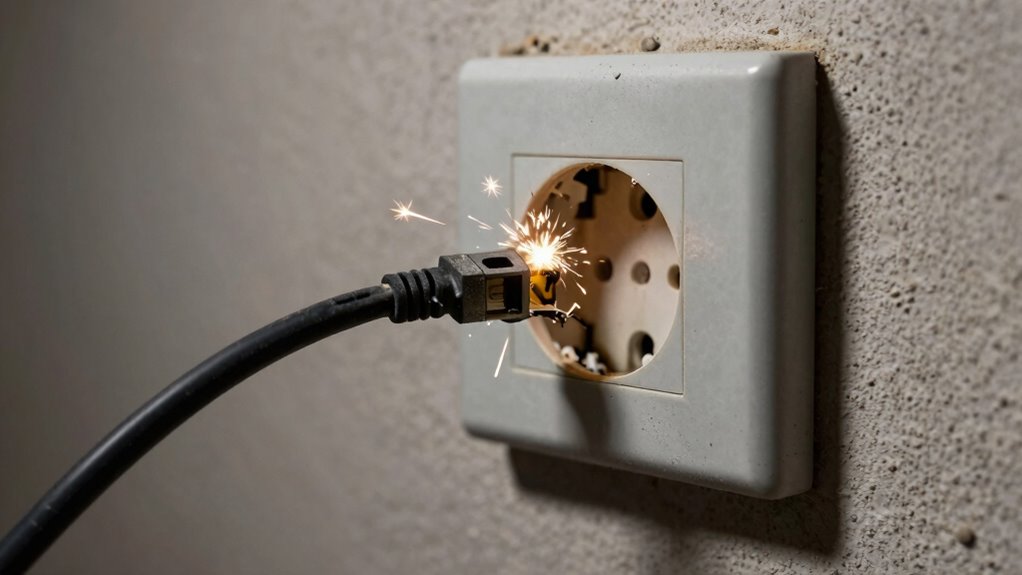
When your breaker trips after installing a new outlet, it’s often a sign of a wiring problem or a short circuit. One common cause is damaged electrical insulation, which exposes wires and creates unintended connections. Check that all wires are properly insulated and secured to prevent contact with other wires or metal parts. Additionally, verify the outlet’s circuit compatibility; mismatched outlets and circuit ratings can overload the breaker. If you’ve used an outlet not rated for the circuit’s amperage, it can trip as a safety measure. Carefully inspect the wiring for loose connections, frayed wires, or incorrect wiring configurations. Addressing these issues helps prevent shorts and ensures your outlet functions safely without repeatedly tripping the breaker.
Tips to Prevent Future Breaker Trips and Keep Your Outlets Safe
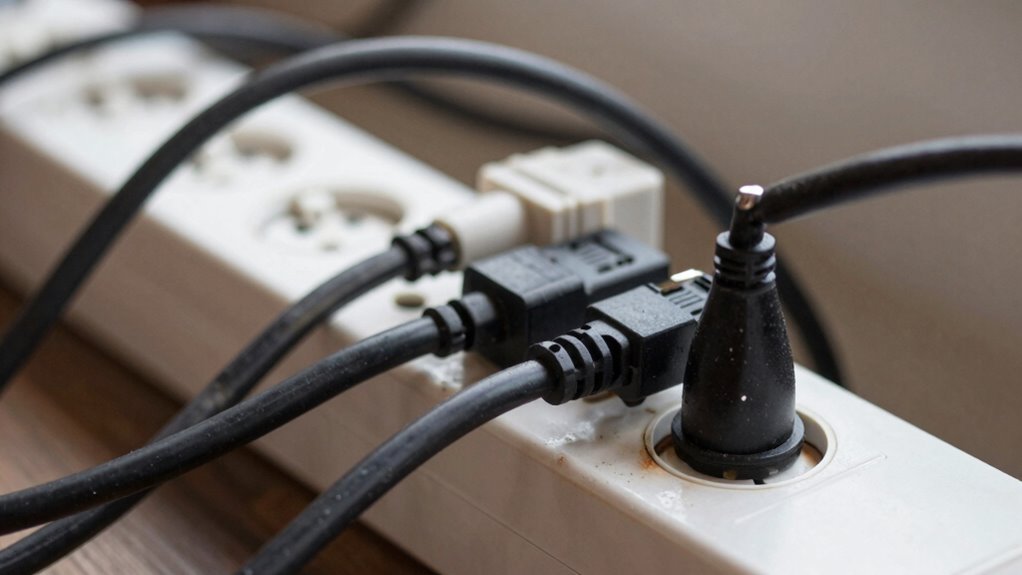
To prevent future breaker trips and keep your outlets safe, it’s essential to follow proper wiring practices and use the right components. Good circuit design minimizes overload risks, ensuring your system handles your daily needs without tripping. Also, consider outlet aesthetics—well-installed outlets reduce wiring stress and improve safety. Here are some tips:
Proper wiring and circuit design prevent trips and enhance outlet safety.
- Use correctly rated circuit breakers matching your outlet load demands.
- Avoid overloading outlets by distributing high-power devices across multiple circuits.
- Regularly inspect wiring connections for tightness and signs of wear, especially if you’ve customized your outlet placement for aesthetics.
Frequently Asked Questions
Can Faulty Appliances Cause Breaker Trips Even if Wiring Is Correct?
Yes, faulty appliances can cause breaker trips even if wiring is correct. When an appliance experiences overloads or has internal electrical issues, it puts extra stress on the circuit, which can trip the breaker. Even with wiring compatibility, these appliance problems disrupt normal flow, forcing the breaker to trip as a safety measure. Always inspect appliances for faults and verify your wiring is suitable for the load to prevent trips.
How Often Should Outlets Be Inspected for Safety and Proper Wiring?
You should inspect your outlets at least once a year to guarantee safety and proper wiring. Studies show that over 20% of electrical failures are caused by overlooked outlet issues. Regular outlet maintenance helps prevent electrical hazards and costly repairs. Make inspection frequency part of your home safety routine, checking for loose connections, discoloration, or damage. Staying proactive keeps your home safe and reduces the risk of tripped breakers.
What Are Signs of a Damaged or Worn-Out Circuit Breaker?
You’ll notice signs of a damaged or worn-out circuit breaker when it trips frequently, indicating breaker fatigue. Watch for signs like persistent buzzing or burning smells. Electrical arcing can cause visible damage or scorching around the breaker. If the breaker feels hot or has a loose handle, it’s a sign it’s failing. Address these issues promptly to prevent electrical hazards and guarantee your system stays safe and reliable.
Is It Safe to Replace a Circuit Breaker Without Professional Help?
Replacing a circuit breaker is like walking a tightrope—you need steady hands and the right tools. It’s not safe to do it yourself unless you have proper DIY safety knowledge and experience, because mistakes can be dangerous. For anything beyond basic replacement, professional installation is the safest route. Always consult an electrician to ensure your home’s electrical system remains secure, reliable, and up to code.
How Does Circuit Breaker Capacity Affect Outlet Wiring Choices?
Your circuit breaker’s capacity directly influences your outlet wiring choices, as higher capacity breakers can handle more amps but require compatible wiring to prevent hazards. Always match wire gauge and type to the circuit capacity—using too thin wire for a high-capacity breaker risks overheating. Check your breaker’s rated capacity and ensure your wiring meets or exceeds those specifications for safe, reliable operation.
Conclusion
Remember, a properly wired outlet is like a calm river—smooth and safe. A faulty setup, however, is like rushing rapids, risking trips and shocks. Taking the time to wire and ground correctly transforms chaos into clarity, keeping your home safe and your circuit breaker steady. Don’t let a simple mistake turn your peaceful space into turbulent waters—pay attention, double-check, and guarantee your outlets are set up right. Safety starts with you.