
To remove burnt-on gunk safely, use gentle options like baking soda paste, vinegar soak, or lemon juice, which break down residues without damaging surfaces. Avoid harsh chemicals like bleach, ammonia, or strong acids, as they can cause discoloration and surface damage. Always test in small areas first. If you keep these tips in mind, you’ll find it easier to tackle stubborn grime while protecting your surfaces—there’s more helpful advice ahead.
Key Takeaways
- Use commercial degreasers, baking soda paste, or vinegar soaking for effective burnt-on gunk removal.
- Never use harsh chemicals like bleach, ammonia, or strong acids, which can damage surfaces.
- Avoid abrasive tools like steel wool on delicate surfaces to prevent scratches and permanent damage.
- Test cleaning products on small areas first to ensure material compatibility and prevent discoloration.
- Steer clear of highly acidic or alkaline cleaners that may etch or corrode cookware and surfaces.
What Is Burnt-On Gunk and Why Is It So Hard to Remove?
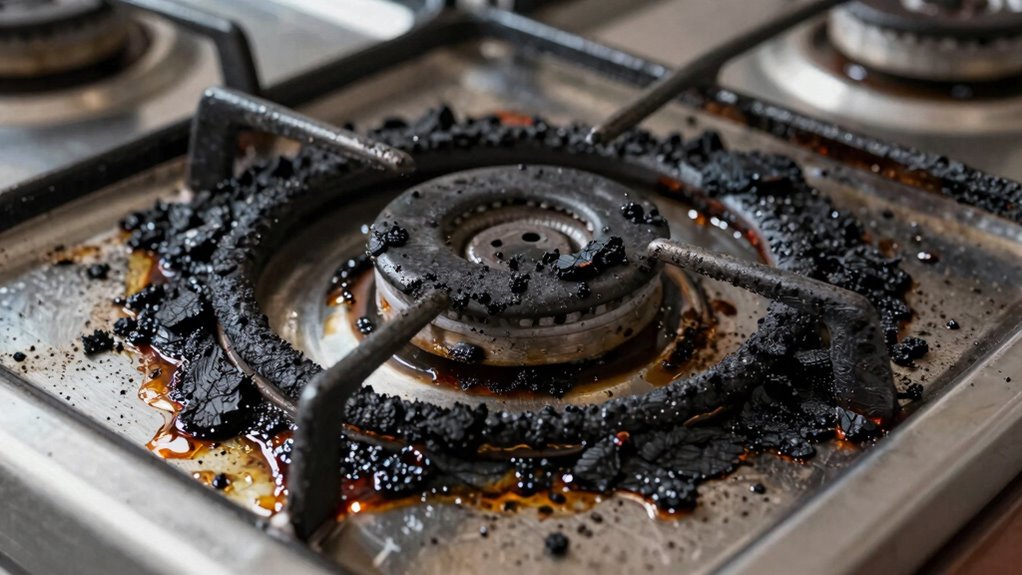
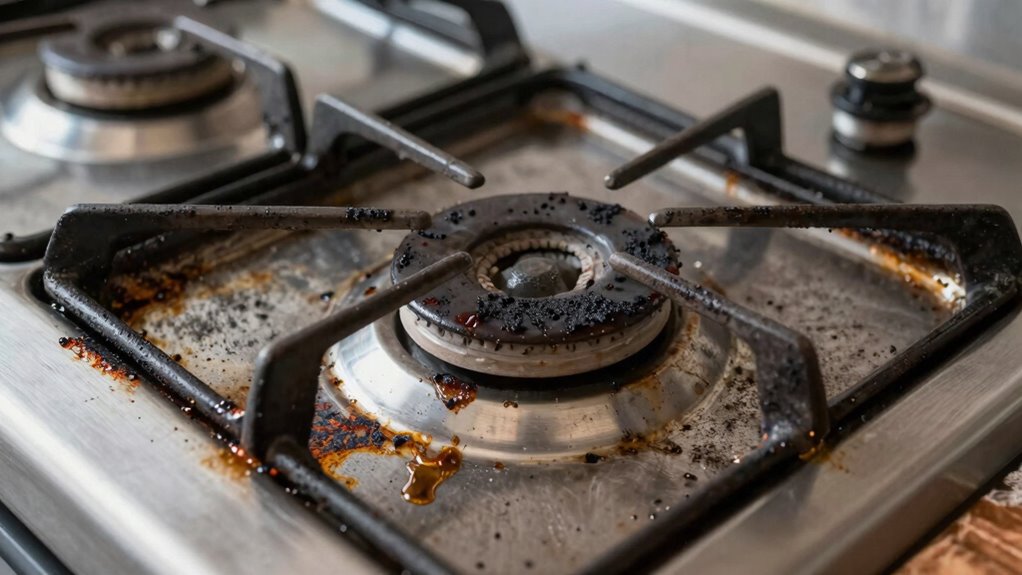
Burnt-on gunk forms when food, grease, or residue bake onto cookware or surfaces, creating a stubborn layer that’s difficult to clean. This buildup is tough because it bonds tightly to the surface, resisting most household tips and cleaning hacks. You might try scrubbing, but often it just spreads the gunk or scratches the surface. The key is understanding why it’s so hard to remove—burnt-on gunk becomes carbonized, making it stick even more. To tackle this, you need effective cleaning hacks that break down this hardened residue. Whether you’re dealing with a pan or stove, knowing what not to do is just as important as knowing the right household tips. Patience and the right approach are your best tools for removing this stubborn layer. Recognizing the chemical bond that causes the gunk to adhere so strongly can help you select the most effective cleaning methods. Additionally, employing appropriate cleaning agents designed to dissolve carbonized deposits can significantly improve your results. Using breakdown techniques that target this bond can make stubborn residue much easier to remove. Being aware of the limitations of common household cleaners can prevent frustration and guide you toward more effective solutions. Understanding how chemical bonds form between residues and surfaces can help you choose targeted cleaning strategies.
How to Effectively Clean Burnt-On Gunk: Products and Methods

Removing stubborn gunk requires more than just elbow grease; it calls for effective products and proven methods. Start with products like commercial degreasers or baking soda paste, which target stubborn stains. For tough spots, let the cleaner sit to loosen the gunk before scrubbing. Use cleaning hacks like a scrub brush or steel wool for stubborn deposits. Here’s a quick comparison:
| Product/Method | Best For |
|---|---|
| Commercial Degreasers | Heavy, burnt-on grime |
| Baking Soda Paste | Mild to moderate stains |
| Steel Wool or Scrub Brush | Stubborn, embedded gunk |
Choose the right tool for the job, and always test in a small area first to avoid damage. Proper cleaning techniques and the right products can significantly reduce the effort needed for removal. Using the correct body jewelry materials ensures that surfaces are not damaged during cleaning. Patience and the right approach make all the difference. Additionally, understanding safe cleaning practices and how to effectively remove burnt-on gunk can help maintain surfaces and prolong their lifespan.
Natural Remedies That Break Down Burnt Residue Safely

You can use simple natural remedies like a baking soda paste to lift burnt-on residue, which is both safe and effective. Soaking the area with vinegar helps dissolve stubborn gunk without harsh chemicals, making the process easier. Additionally, applying lemon juice can cut through grease and residue, leaving your surfaces fresh and clean. Incorporating gentle cleaning methods into your routine can make the task more engaging and memorable. Exploring sound vibrations may also enhance your cleaning experience by promoting relaxation and mindfulness during chores. Understanding the history of pinball machines can inspire creative approaches to cleaning vintage or collectible items, ensuring they’re preserved properly. Being aware of market trends can also help you choose the most effective cleaning products that align with current eco-friendly and innovative practices.
Baking Soda Paste
When tackling stubborn burnt residue, a baking soda paste offers a gentle yet effective solution. Mix baking soda with a small amount of water until you form a thick paste. Apply it directly to the burnt area, focusing on spots that need extra attention. Let it sit for 15-20 minutes to loosen the gunk. This natural remedy is excellent for preserving your cookware and appliances, making it a smart choice for regular appliance maintenance. Plus, it’s a safe alternative to harsh chemicals. When used correctly, baking soda paste helps break down burnt-on residue without damaging surfaces. Incorporating natural remedies like baking soda into your cleaning routine can also be beneficial for maintaining your cookware in top condition. Additionally, understanding cleaning surface types can help you choose the most appropriate method for different materials. A well-informed approach aligns with scientific skepticism and ensures safe, effective cleaning practices.
Vinegar Soaking Method
If baking soda paste isn’t enough to tackle stubborn burnt-on residue, soaking the affected cookware in vinegar can be highly effective. Vinegar’s acidity helps break down burnt gunk without harsh scrubbing, making it a safe choice for kitchen cleaning and appliance maintenance. Fill your pan with enough vinegar to cover the stained area, then let it soak for at least an hour or overnight for tougher spots. The acidity loosens the burnt-on residue, making it easier to wipe away. After soaking, use a non-abrasive scrubber to remove any remaining gunk. This natural method is gentle on your cookware and safe for most surfaces, helping you maintain your appliances without risking damage or chemical exposure. It’s a simple, effective solution for restoring your cookware’s shine.
Lemon Juice Power
Lemon juice’s natural acidity makes it an effective and gentle remedy for breaking down burnt-on residue. Its lemon juice power comes from citric acid, a natural cleaning ingredient that dissolves tough grime without harsh chemicals. To use it, squeeze fresh lemon juice directly onto the affected area or mix it with water for a milder solution. Let it sit for 10-15 minutes to soften the gunk, then scrub gently with a non-abrasive sponge. Lemon juice not only breaks down burnt residue but also leaves a fresh scent. Because it’s a natural cleaning ingredient, it’s safe for most surfaces and eco-friendly. This method is a simple, effective way to tackle burnt-on gunk without resorting to harsh chemicals. Additionally, using natural remedies like lemon juice aligns with wellness-focused home practices that support long-term health and safety. Using safe cleaning methods helps prevent damage to surfaces and promotes a healthier living environment.
Cleaning Products to Avoid (and Why They Could Damage Your Surfaces)

Many commercial cleaning products contain harsh chemicals that can weaken or discolor your surfaces. Using the wrong cleaner might seem effective but can cause lasting damage over time. It’s important to choose products carefully to protect your surfaces and keep them looking their best. Additionally, selecting cleaning methods that avoid surface damage prevention can help maintain the integrity of your sauna and cold plunge surfaces. Being aware of safe cleaning techniques can further ensure you avoid unintended harm. Understanding material compatibility is essential for selecting the right cleaning solutions for each surface type. Consulting appropriate cleaning products that are compatible with your specific materials can also help prevent damage and prolong the life of your surfaces. Recognizing the importance of proper cleaning agents can make a significant difference in maintaining surface quality over time.
Harsh Chemical Risks
Harsh chemical cleaners may seem like effective solutions, but they often pose risks to your surfaces. These harsh chemicals can cause unexpected cleaning hazards, damaging delicate materials or finishes. Strong acids, bleach, and ammonia may remove gunk initially but can also strip away protective coatings or discolor surfaces over time. They might emit fumes that irritate your eyes or respiratory system, especially in poorly ventilated areas. Using these chemicals without proper precautions increases the risk of accidental spills or skin burns. Even if they seem to work quickly, the long-term damage they can cause to your surfaces outweighs the benefits. Always consider safer alternatives to avoid unnecessary risks and protect your surfaces from irreversible damage caused by harsh chemicals. Patchology.ORG offers helpful tips for gentle, effective cleaning solutions that are safer for your surfaces.
Surface Damage Potential
Certain cleaning products, especially those containing abrasive agents or strong solvents, can easily damage your surfaces. Using abrasive cleaners might seem effective, but they can cause surface etching, leaving permanent marks. Strong solvents may strip protective coatings or discolor delicate finishes. To avoid costly damage, steer clear of products that are too harsh.
Be cautious of:
- Abrasive cleaners that scratch surfaces
- Acidic or alkaline solutions that cause etching
- Harsh chemical sprays that weaken finishes
- Bleach or chlorine-based products damaging materials
- Overly abrasive scrubbing tools that gouge surfaces
Choosing the wrong cleaner can lead to irreversible damage, reducing the lifespan of your surfaces. Always opt for gentle, surface-appropriate products to preserve their integrity and appearance.
Step-By-Step: How to Safely Remove Burnt-On Gunk From Your Cookware
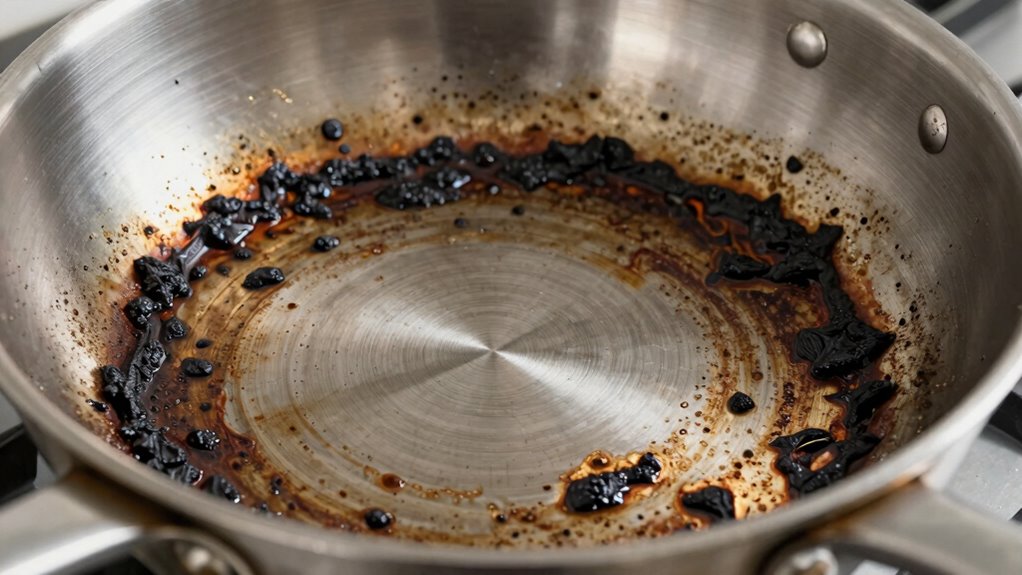
Removing burnt-on gunk from your cookware can seem intimidating, but with the right approach, you can restore your pots and pans safely and effectively. Start by choosing the appropriate cooking techniques based on your cookware materials. For example, use gentle methods like soaking with warm soapy water for non-stick pans or stainless steel, which can withstand more abrasive cleaning. Avoid harsh abrasives on delicate surfaces to prevent damage. Fill the cookware with water and a bit of dish soap, then bring it to a simmer to loosen the gunk. Use a non-abrasive scrubber or a soft sponge to gently scrub away residue. Rinse thoroughly and dry. Following these steps ensures you remove gunk safely without harming your cookware’s surface or integrity. Understanding proper water chemistry and cleaning methods helps maintain your cookware’s longevity and safety.
Tips to Prevent Burnt-On Gunk in the Future
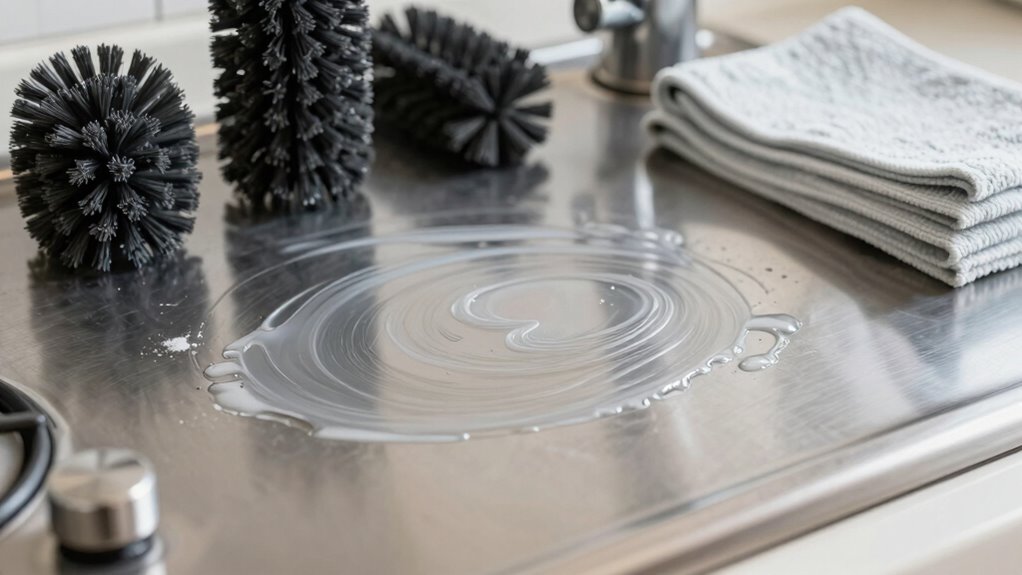
To keep your cookware looking and performing like new, adopting some simple habits can prevent burnt-on gunk from forming in the first place. Consistent maintenance tips, such as cleaning promptly after use and avoiding high heat, make a big difference. Proper storage solutions prevent buildup and accidental damage. Consider these tips:
- Wash cookware immediately after use to prevent residue buildup
- Use gentle scrubbers to avoid scratches that trap gunk
- Avoid cooking on excessively high heat unless necessary
- Store cookware in a clean, dry place to prevent moisture and grime
- Regularly inspect and maintain your cookware for signs of wear
Implementing these habits keeps surfaces smooth and easy to clean, reducing the risk of burnt-on gunk and extending your cookware’s lifespan.
Troubleshooting Persistent Gunk: When to Call a Professional
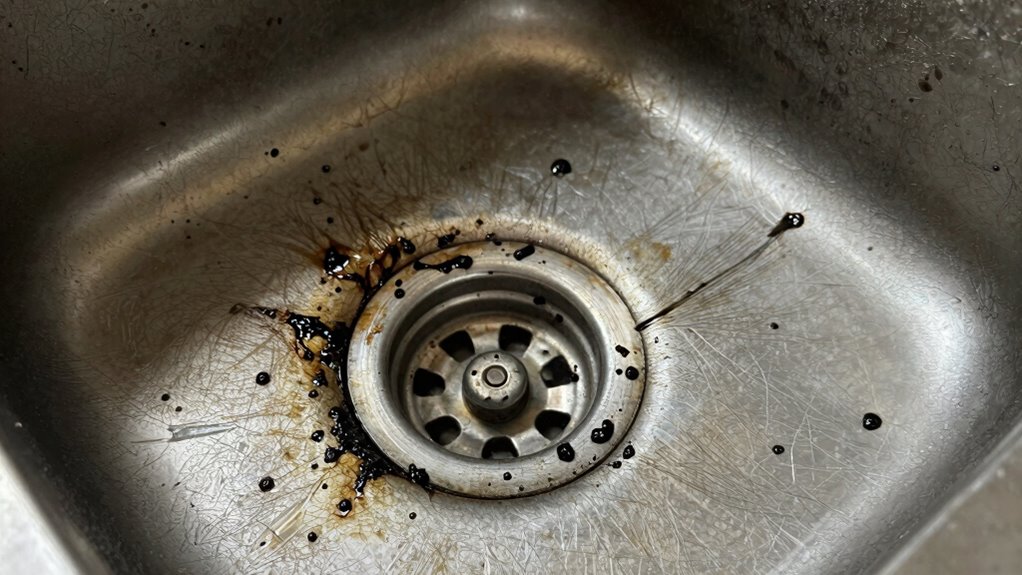
Even with diligent cleaning, some stubborn gunk can refuse to budge, leaving you frustrated and unsure of how to proceed. When you encounter persistent stains that won’t respond to DIY methods, it’s time to contemplate professional assistance. Experts have specialized tools and cleaning agents that can safely tackle the most stubborn gunk without damaging your appliances. Trying to remove particularly tough stains on your own might risk causing more harm than good. If repeated attempts aren’t working, don’t hesitate to call in a professional who can assess the situation and recommend the best course of action. Knowing when to seek help ensures you don’t waste time or damage your appliances, making professional assistance the smart choice for stubborn gunk that resists your best efforts.
Final Tips for Restoring and Maintaining Your Appliances
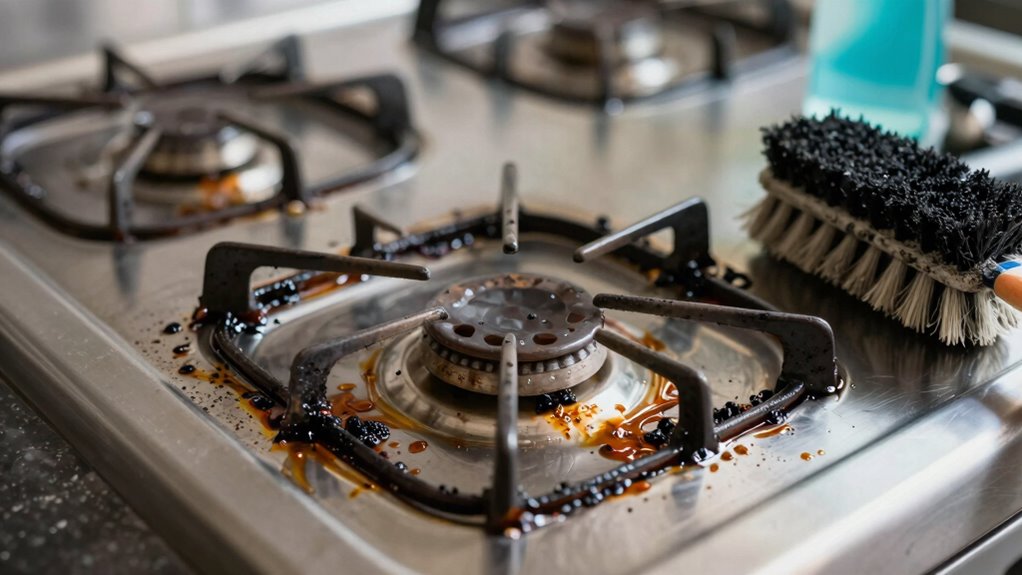
Regular maintenance is key to keeping your appliances functioning efficiently and extending their lifespan. Consistent appliance maintenance not only prevents costly repairs but also promotes better kitchen hygiene. To keep your appliances in top shape, remember these tips:
- Clean spills immediately to avoid buildup and stains
- Use gentle, appropriate cleaning products
- Schedule regular deep cleans for ovens and stovetops
- Check and replace filters as needed
- Keep vents and exhausts clear for proper airflow
Frequently Asked Questions
Can Burnt-On Gunk Be Removed Without Any Scrubbing?
Yes, you can remove burnt-on gunk without scrubbing by using non-abrasive methods. Try applying enzymatic cleaners, which break down the gunk naturally, and let them sit for a while. Sometimes, soaking with warm water and a gentle scraper helps loosen the residue. These methods reduce the need for harsh scrubbing, making cleanup easier and less damaging to surfaces. Just be patient and consistent with your approach.
Are Commercial Chemical Cleaners Safe for All Surfaces?
Think of commercial chemical cleaners as a toolbox—some tools fit every job, but others can cause damage. They aren’t safe for all surfaces; for example, harsh chemicals can strip finishes or discolor delicate materials. Always check the label for chemical safety and surface compatibility. Before using, test a small, hidden area first. This way, you prevent unintended damage and keep your surfaces looking their best.
How Long Does Natural Gunk Removal Typically Take?
The gunk removal timeline varies depending on the severity of the buildup and the method you choose. Typically, natural cleaning duration can range from a few minutes for light gunk to several hours for stubborn stains. If you use natural solutions like vinegar or baking soda, expect to spend some time scrubbing and letting the mixture sit. Patience is key for effective natural gunk removal, so plan accordingly.
What Are the Signs of Surface Damage From Cleaning Products?
You’ll notice surface damage if you see etching or material discoloration after cleaning. Surface etching appears as dull spots or rough patches, indicating the protective layer has been compromised. Material discoloration shows as fading or uneven coloring, signaling that the cleaning product may have reacted poorly with the surface. Always test cleaning agents on a small area first to avoid these damages, and avoid harsh chemicals that cause irreversible etching or discoloration.
Is It Better to Use Heat or Cold to Loosen Burnt Residue?
Using cold is generally better for loosening burnt residue because thermal methods involving heat can trigger unwanted chemical reactions, potentially damaging surfaces. Cold treatments gently contract the gunk, making it easier to remove without risking surface damage. If you need extra power, consider chemical solutions designed for burnt-on gunk, but avoid heat to prevent adverse reactions that could worsen the situation.
Conclusion
Now that you know how to tackle burnt-on gunk, you’re armed with the tools to keep your cookware shining like new. Think of it as giving your appliances a spa day—gentle yet effective. With patience and the right methods, you can banish stubborn residue without turning your kitchen into a battleground. Remember, a little preventive care goes a long way in keeping your surfaces spotless and happy for years to come.