
Moist foods leave more residue in air fryers because their natural juices create steam during cooking, which condenses on interior surfaces and forms sticky buildup. The moisture from these foods traps heat and prevents proper evaporation, especially in enclosed spaces. Proper airflow, ventilation, and drying foods beforehand can help reduce this residue. If you want to learn more about managing moisture and keeping your air fryer cleaner, keep exploring these techniques.
Key Takeaways
- Moist foods produce more steam, which condenses and leaves residues on the air fryer surfaces.
- High moisture content causes increased condensation, leading to sticky buildup over time.
- Excess steam from moist foods can trap oils and fats, forming residues on interior parts.
- Moisture vaporizes during cooking, settling as residues if airflow and ventilation are inadequate.
- Residue buildup is intensified when moisture isn’t properly managed or foods are overly wet.
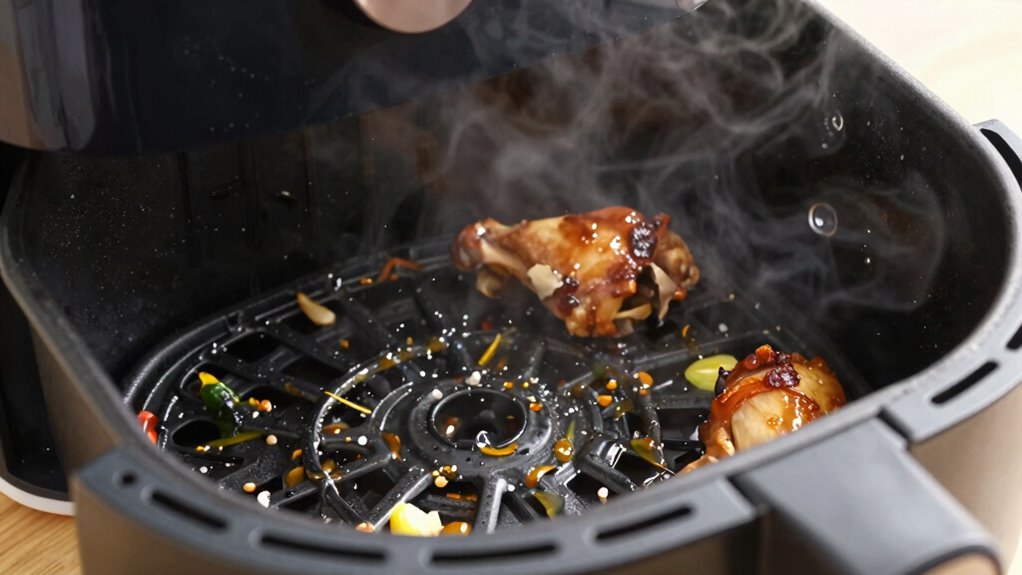
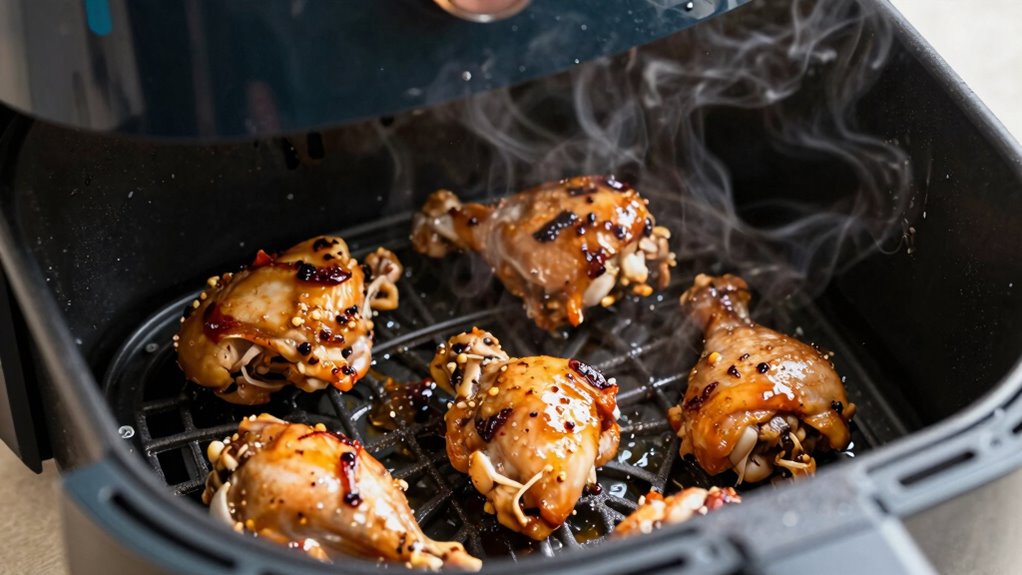
Air fryers are known for producing crispy, flavorful foods with less oil, but they can sometimes struggle to keep moist foods tender. When you’re cooking foods that have high moisture content, like juicy chicken breasts or marinated vegetables, you might notice more residue left behind after cooking. This is primarily due to how frying techniques and moisture control play a role in the process. Moisture from the food turns into steam during cooking, and in an enclosed space like an air fryer, that steam has nowhere to escape easily. As a result, it condenses on the heating element and interior surfaces, leading to more residue buildup.
The key to managing this is understanding frying techniques and how they impact moisture control. When you cook moist foods in an air fryer, you’re essentially trapping steam, which can cause excess residue to form on the basket and walls. To minimize this, it helps to adjust your frying techniques. For instance, patting foods dry before placing them in the air fryer reduces surface moisture, preventing excessive steam. Additionally, using a slightly lower temperature or cooking for a longer time allows moisture to evaporate more gradually, reducing the amount of condensation. Turning or shaking the basket during cooking also promotes even moisture release and prevents pooling, which can contribute to residue buildup. Proper ventilation and avoiding overcrowding are also crucial to facilitate better moisture escape and minimize residue. Ensuring proper airflow can significantly improve moisture management and reduce residue buildup. Furthermore, choosing foods with a lower moisture content can help prevent excessive steam and residue during cooking. Incorporating techniques that promote airflow, like using a rack or spacing items appropriately, can further help in managing moisture and ensuring cleaner results.
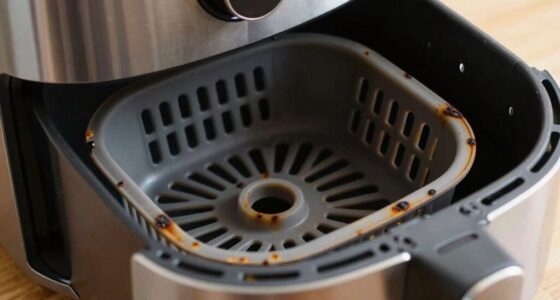
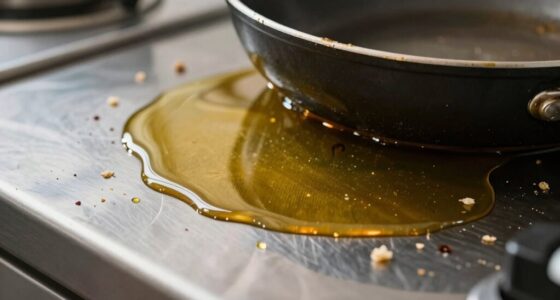
Moisture control is vital in preventing excess residue, but it also affects the overall cleanliness of your air fryer. When juices and fats from moist foods leak out, they stick to the surfaces, creating a sticky film that’s harder to clean. To combat this, you can line the basket with parchment paper or use silicone mats designed for air fryers. These barriers catch drips and prevent them from sticking to the heating element or basket, making cleanup easier. Keep in mind that moisture from foods can also cause some steam to escape, which might condense on the interior, especially if the air fryer isn’t well-ventilated. Properly preheating the appliance and avoiding overcrowding can help maintain better moisture control and reduce residue. Additionally, understanding food moisture content and how it impacts cooking can help you select the best techniques for cleaner results. Being aware of how different foods release moisture can guide you in adjusting cooking times and temperatures for optimal cleanup. Paying attention to cooking environment factors, like humidity and airflow, can also make a noticeable difference in residue management and overall air fryer performance. Proper temperature control and monitoring during cooking are also essential for managing moisture and preventing excessive residue buildup.
air fryer parchment paper liners
As an affiliate, we earn on qualifying purchases.
As an affiliate, we earn on qualifying purchases.
Frequently Asked Questions
Can Moisture Damage the Air Fryer’s Heating Element?
Moisture can cause moisture corrosion, which may lead to heating element damage over time. If you don’t dry your food properly or leave moisture inside the air fryer, it can accumulate and harm the heating element. To prevent this, always clean and dry your air fryer thoroughly after use. Proper maintenance helps protect the heating element from moisture-related issues, ensuring your appliance stays in good working condition longer.
How Does Moisture Affect the Air Fryer’s Fan?
Moisture affects your air fryer’s fan by causing moisture buildup, which can reduce fan efficiency over time. When excess moisture accumulates around the fan, it hampers its ability to circulate air properly, leading to uneven cooking or longer cook times. To prevent this, regularly clean and dry your air fryer, especially after cooking moist foods, ensuring the fan remains unobstructed and functions most effectively.
Are There Specific Moist Foods That Won’T Leave Residue?
Certain moist foods, like fruit juices and saucy dishes, tend to leave more residue in your air fryer. However, if you use a liner or parchment paper, you can reduce this. Foods with moisture content that’s sealed or cooked quickly, such as marinated vegetables or tender meats with minimal sauce, are less likely to leave residue. Proper cleaning after cooking also helps keep your air fryer clean and functioning well.
How Often Should I Clean My Air Fryer After Cooking Moist Foods?
You should clean your air fryer after every use with moist foods to keep it in top shape. Moist foods tend to leave more residue, so regular cleaning is essential for residue prevention. Think of it as hitting two birds with one stone—maintaining your appliance and ensuring your food stays delicious. Use gentle cleaning techniques to avoid damage, and wipe down the basket and interior thoroughly after each cooking session.
Does Using Oil Reduce Residue From Moist Foods?
Using oil can help reduce residue buildup because it creates a barrier that prevents moisture from sticking excessively to the air fryer basket. It also promotes even browning and helps oils absorb into foods, reducing the chances of sticky residue. However, too much oil can cause greasy accumulation and smoke. Use a light coating to balance oil absorption and minimize leftover residue from moist foods.
Conclusion
So, next time you cook moist foods in your air fryer, remember that they leave more residue, much like a gentle whisper of their essence. Don’t let this dampness dampen your enthusiasm—embrace it as a small price for the delicious, tender results you crave. With a little extra cleaning, your air fryer will continue to be your trusty kitchen companion, ready to serve up culinary delights, shining brighter than the stars that guide your culinary adventures.