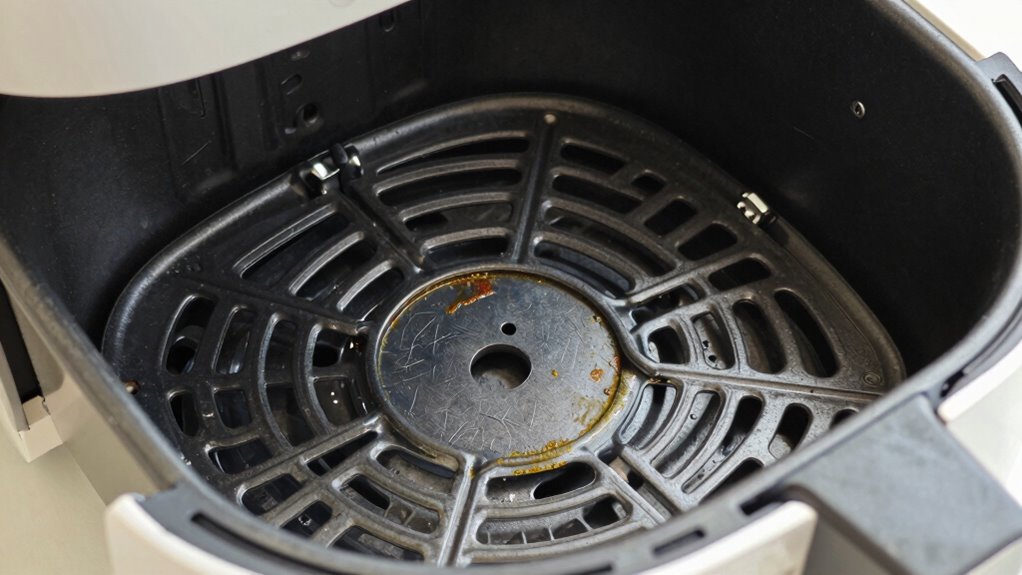

To spot early signs of wear in your air fryer, regularly inspect the basket for scratches or peeling non-stick coatings, and check the handle and latch for cracks or looseness. Examine the heating element for rust or debris buildup, and verify the power cord has no frayed wires or burn marks. Listen for unusual noises during operation. Catching these issues early helps keep your appliance safe and working efficiently. Keep exploring to learn more tips.

Get kitchen gear delivered free with Prime
- Fast, free delivery on millions of items
- Prime Video, Amazon Music and more included
- Member-only deals all year
Key Takeaways
- Check the basket’s non-stick coating for scratches, peeling, or discoloration.
- Inspect the heating element and fan for rust, corrosion, or debris buildup.
- Examine the power cord and plug for frayed wires, burn marks, or loose connections.
- Listen for unusual noises like grinding or rattling during operation.
- Regularly assess for cracks, looseness, or signs of wear on handles, latches, and internal components.
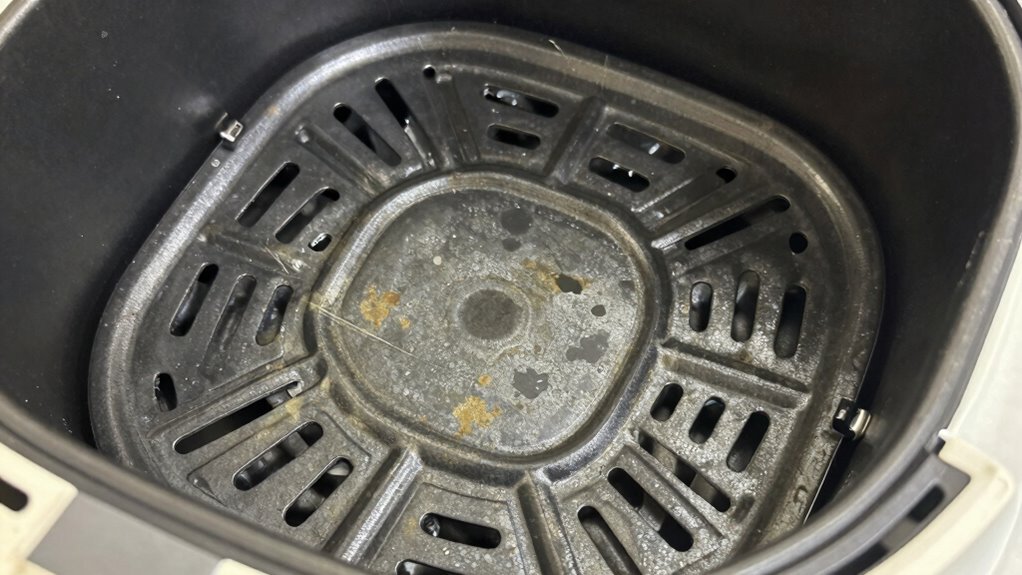
Air fryers offer a convenient way to prepare crispy meals with less oil, but like any appliance, their parts can wear out over time. Recognizing early signs of wear is essential for maintaining cooking safety and guaranteeing your appliance continues to operate efficiently. If you routinely use your air fryer, paying close attention to the condition of its components can prevent potential hazards and costly repairs. Regular inspection is a simple maintenance tip that can save you from unexpected breakdowns and help you identify issues before they escalate.
Start by examining the basket and the non-stick coating. Over time, you may notice scratches or peeling, which can compromise food safety and lead to bits of coating mixing with your food. If you see significant damage, it’s a sign that the part needs replacement. Also, check the basket’s handle and latch mechanism for looseness or cracks. A loose latch might cause uneven cooking or, in worst cases, the basket slipping during operation, which can be dangerous. Address these issues promptly to maintain both safety and peak performance.
Inspect the basket for scratches, peeling, and loose handles to ensure safe, efficient air fryer use.
Pay attention to the heating element and fan. If you observe any rust, corrosion, or buildup of debris, it indicates that your air fryer isn’t functioning at maximum efficiency. A dirty or damaged heating element can result in uneven cooking, and if left unchecked, it could cause overheating or electrical problems. Regularly cleaning these parts with a damp cloth and inspecting for signs of wear ensures your air fryer remains safe to use and operates smoothly. Remember, neglecting maintenance tips can compromise safety, so don’t skip routine checks. Staying informed about electrical safety is also key to preventing hazards. Additionally, understanding wear and tear can help you recognize when repairs might be necessary before a breakdown occurs.
The power cord and plug are often overlooked, but they’re essential for safe operation. Look for frayed wires, burn marks, or loose connections. Damaged cords pose electrical hazards, increasing the risk of shock or fire. If you notice such issues, stop using the appliance immediately and replace the cord or have a professional repair it. Guaranteeing the electrical components are intact helps you avoid potential safety hazards and extends the lifespan of your air fryer. Proper electrical connections are fundamental for safe and efficient operation, so regular inspections are recommended. Additionally, understanding the importance of routine maintenance can significantly prolong your appliance’s lifespan.
Lastly, listen for unusual noises during operation. Grinding, rattling, or buzzing sounds are early signs that parts might be worn or misaligned. Addressing these noises early by inspecting and tightening loose parts can prevent further damage. Regular maintenance and prompt attention to signs of wear not only enhance safety but also keep your air fryer functioning efficiently, giving you consistent, crispy results every time. Staying vigilant about these signals can help you catch issues before they lead to costly repairs or safety risks.
As an affiliate, we earn on qualifying purchases.
Frequently Asked Questions
Can I Repair Worn Air Fryer Parts Myself?
Yes, you can repair worn air fryer parts yourself if you have some DIY repair tips and basic technical skills. Start with thorough air fryer maintenance, like cleaning and inspecting parts regularly. Identify damaged components, like the heating element or fan, and replace them carefully. However, always unplug the appliance before attempting repairs and consult the manufacturer’s instructions to guarantee safety. When in doubt, seek professional help to avoid further damage.
How Often Should I Replace Air Fryer Parts?
You should replace air fryer parts every 6 to 12 months, depending on use. Imagine your appliance as a stubborn old friend—eventually, even the best maintenance can’t prevent a breakdown. Follow a proper air fryer maintenance and replacement schedule to keep it running smoothly. Ignoring signs of wear leads to inefficient cooking and potential safety hazards, so don’t wait until your device becomes a kitchen catastrophe.
Are There Specific Brands With More Durable Components?
Some brands stand out for better brand durability and component longevity. You’ll find that well-known names like Philips, Cuisinart, and Ninja often use higher-quality materials, making their parts more durable over time. These brands invest in better construction, so your air fryer’s essential components last longer. When shopping, check reviews and product specs for mentions of durability, ensuring you choose a model with reliable, long-lasting parts.
What Safety Precautions Should I Take During Inspection?
During inspection safety, you should unplug your air fryer first to prevent electrical hazards. Wear protective measures like gloves and safety glasses to avoid burns or contact with sharp edges. Use a flashlight for better visibility and handle parts carefully. Avoid forcing or damaging components, and make certain the appliance is completely cool before inspecting. Following these precautions keeps you safe while effectively checking for early signs of wear.
Do Wear Signs Affect Cooking Performance Significantly?
Did you know that worn air fryer parts can reduce cooking efficiency by up to 20%? Wear signs, like cracks or discoloration, can considerably impact your appliance’s performance. They hinder heat transfer, making cooking less even and prolonging cook times. Addressing these early signs helps maintain appliance longevity and guarantees your air fryer cooks effectively, saving you time and energy. Regular inspections and timely replacements are key!
Conclusion
Keep a close eye on your air fryer’s parts, because a stitch in time saves nine. Regularly inspecting components like the heating element, basket, and door seals can catch issues early before they turn into costly repairs. When you spot the first signs of wear, don’t delay—address them promptly. After all, an ounce of prevention is worth a pound of cure, helping your appliance last longer and cook your favorite meals perfectly every time.
Halloween Picks
halloween
As an affiliate, we earn on qualifying purchases.