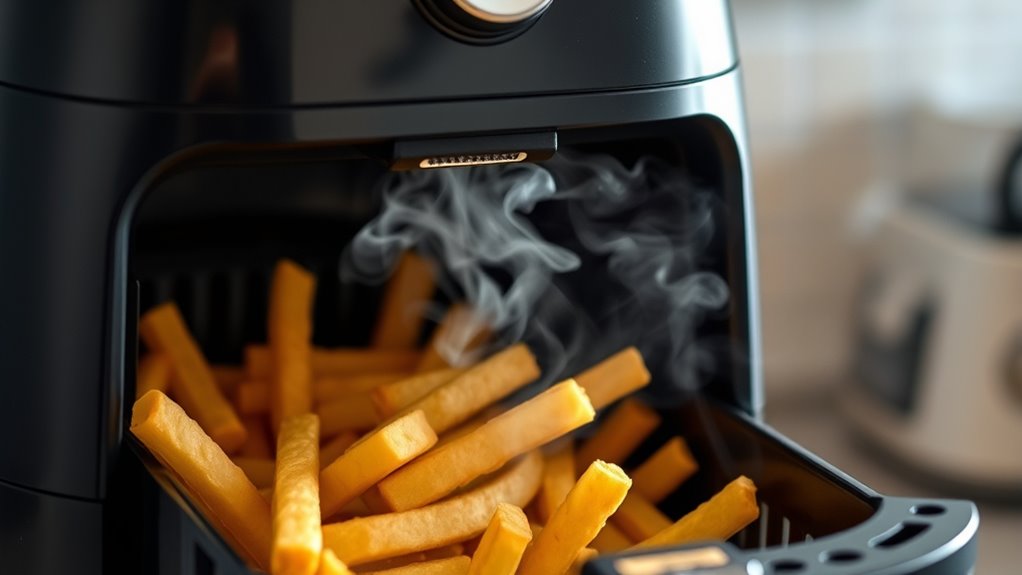

To avoid burnt smells when air frying, it’s vital to choose oils based on their smoke points. For high-temperature cooking, use oils like avocado or grapeseed, which can withstand up to 520°F, and steer clear of extra virgin olive oil, which smoke at around 375°F. Refining oils makes them more heat-stable, reducing the risk of burnt odors and harmful compounds. Want to learn how to pick the best oil for different dishes? Keep going to discover more tips.
Key Takeaways
- Use oils with high smoke points like avocado or grapeseed for high-temperature air frying.
- Avoid extra virgin olive oil at high heat to prevent burning and smoky odors.
- Match oil choice to cooking temperature to prevent exceeding its smoke point.
- Reserve delicate oils for finishing dishes or cold applications to maintain flavor and prevent smoke.
- Monitoring oil temperature during cooking helps prevent burnt smells and ensures food safety.
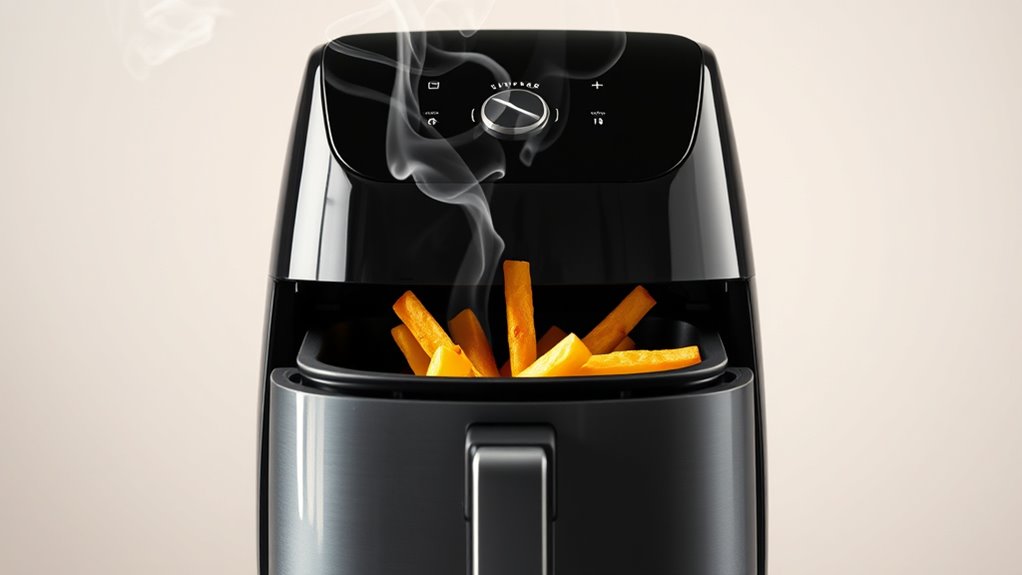
Have you ever wondered why some oils start smoking quickly in your air fryer while others stay stable? It all comes down to their smoke points, but understanding this can help you make smarter choices in the kitchen. When you select an oil, you’re not just choosing based on taste or price—you should also consider its oil flavor profiles and health benefits. These factors influence how well the oil performs at high temperatures and how it impacts your overall health.
Oils have different smoke points, which are the temperatures at which they begin to break down and produce smoke. When an oil reaches its smoke point, it starts to emit a burnt smell, and harmful compounds can form. For instance, extra virgin olive oil has a relatively lower smoke point, around 375°F, and features rich oil flavor profiles that add depth to salads or drizzles but can burn quickly in high-heat environments like air fryers. On the other hand, refined oils such as avocado or grapeseed oil have higher smoke points—up to 520°F—making them more stable during air frying, especially if you’re cooking at higher temperatures.
Choosing the right oil for your air fryer isn’t just about avoiding smoke; it also involves considering health benefits. Extra virgin olive oil offers heart-healthy monounsaturated fats and antioxidants but is more delicate under heat. Refined oils generally have fewer antioxidants but can withstand higher temperatures without breaking down, reducing the risk of producing harmful compounds. If you’re aiming for oils that balance health benefits with high-heat stability, options like avocado or light olive oil are good bets.
Understanding the oil flavor profiles also helps you decide which oil complements your dishes best. For example, coconut oil imparts a subtle sweetness and distinct aroma, perfect for certain recipes, but it has a lower smoke point than some refined oils. Recognize that when oils start to smoke, they not only produce an unpleasant smell but can also alter the flavor of your food. That burnt smell can linger and affect the taste of your entire meal.
Additionally, knowing the smoke point of oils can help prevent accidental burning and ensure your air frying experience remains enjoyable and safe. Ultimately, to avoid burnt smells and ensure your food stays tasty and healthy, match your oil choice with the cooking temperature. Use oils with higher smoke points for high-temperature cooking and reserve delicate oils for finishing touches or cold dishes. By understanding oil flavor profiles and health benefits, you’ll make better choices that keep your air frying both delicious and safe.
Frequently Asked Questions
How Often Should I Replace My Air Fryer’s Oil?
You should replace your air fryer’s oil every 8 to 10 uses or when you notice signs of oil degradation, like off smells or increased smoke. Smoke point factors, such as overheating or repeated use, can lower the oil’s quality and safety. Regularly check for changes in color or smell, and avoid using oil past its prime to prevent burnt smells and maintain healthy cooking.
Can Mixing Different Oils Affect Smoke Points?
Mixing different oils can subtly influence smoke point effects, often creating a blend that’s more forgiving or more prone to burning. The variations in smoke points mean some combinations might lower the overall threshold, risking burnt smells, while others could enhance the cooking experience. By understanding these smoke point variations, you can craft oil blends that balance flavor and safety, making every air fryer session a delight rather than a worry.
Do Flavorings Impact the Smoke Point of Oils?
Flavorings and additives can lower an oil’s smoke point because they introduce compounds that burn more easily. When you add flavor additives or cooking aromas, you risk creating burnt smells and smoke at lower temperatures. To avoid this, use oils with higher smoke points and add flavorings after cooking or at lower temperatures. This helps you maintain fresh aromas and prevent unwanted burnt flavors in your air fryer dishes.
Is There a Safe Temperature Threshold for Prolonged Cooking?
You might think a sizzling, endless fry session is harmless, but prolonged high heat can cause oil degradation and reduce heat stability. Keep your air fryer below 375°F to avoid breaking the oil down and creating burnt smells. Staying within this safe temperature threshold helps maintain oil quality and flavor, preventing unwanted smoke and ensuring your food stays delicious without risking the health hazards of overheated oils.
How Can I Detect When Oil Is at Its Smoke Point?
To detect when oil reaches its smoke point, watch for smoke emerging from the oil’s surface—this is a key smoke point indicator. You can also use oil temperature gauges to precisely monitor the temperature, ensuring it stays below the smoke point. Keep a close eye on your air fryer, and when you see smoke or the gauge hits the critical temperature, turn off the heat to prevent burning or unpleasant smells.
Conclusion
Understanding smoke points helps you avoid burnt smells and smoky kitchens. Think of your air fryer as a well-tuned orchestra—using the right oil at the right temperature keeps everything harmonious. I once tried to cook with butter at high heat, and the smoke billowed like a thundercloud. Now, I choose oils wisely, ensuring my culinary symphony stays smooth and flavorful. Mastering smoke points turns your cooking into art, not chaos.