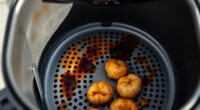
If your air fryer is smoking, it’s likely caused by grease or food debris buildup inside the basket or on the heating element, or overfilling the basket, which restricts airflow. Foods high in fat can also produce excess drippings that burn and cause smoke. To fix this, clean the interior regularly, avoid overfilling, and manage cooking temperatures. Keep these tips in mind, and you’ll find more ways to prevent smoke issues effectively.
Key Takeaways
- Food debris or grease buildup inside the basket or on the heating element can cause smoke; clean thoroughly after each use.
- Overfilling the basket restricts airflow and increases heat, leading to smoke; cook in smaller batches.
- Using foods with high fat content results in excess drippings that can smoke; manage fat levels or use water/bread to absorb drippings.
- Temperatures set too high or cooking times too long can cause burning or smoking; adjust settings according to recipes.
- Dust and grease on vents or exterior surfaces block airflow, causing smoke; regularly clean vents and exterior surfaces.

If you’ve noticed smoke billowing from your air fryer, you’re probably wondering what’s causing it and how to fix the issue. Smoke coming from your appliance can be alarming, but it’s often due to simple reasons that you can address with some basic cleaning tips and smoke prevention techniques. First, check for food debris or grease buildup inside the basket and on the heating element. Over time, oil and crumbs can accumulate, and when heated, they produce smoke. Regularly cleaning your air fryer is the most effective way to prevent this. Use a damp cloth or soft brush to wipe down the interior after each use, making sure to remove any grease or food particles. For stubborn grime, soak the basket in warm soapy water and scrub gently, avoiding abrasive materials that could damage the non-stick coating.
Another common cause of smoking is overfilling the basket. When you pack your air fryer too tightly, hot air cannot circulate properly, causing excess heat and potentially burning food or grease. To prevent this, follow the manufacturer’s recommendations for portion sizes and avoid overcrowding. Proper airflow is essential for both smoke prevention and achieving evenly cooked food. Additionally, if you’re cooking foods with high fat content, like bacon or greasy snacks, be mindful that excess drippings can cause smoking. Place a small amount of water or a piece of bread underneath the basket to absorb drippings and reduce smoke.
Sometimes, the issue stems from using the wrong temperature setting. If you set it too high, it can cause the fats and oils to smoke quickly. Always adhere to the recommended cooking temperatures for your recipes, and if your air fryer has a preheat feature, use it to ensure the appliance reaches the ideal temperature gradually. This not only improves cooking results but also helps with smoke prevention. Maintaining a clean air fryer also involves regular maintenance, which can extend its lifespan and improve safety during use.
Finally, check the vent and exterior of your air fryer for dust or dust buildup, which can contribute to smoking if it gets inside the appliance. Regularly clean the exterior and ensure the vent is unobstructed for proper airflow. By maintaining a clean appliance, avoiding overfilling, managing cooking temperatures, and practicing smoke prevention techniques, you can greatly reduce or eliminate smoke from your air fryer. This way, you’ll enjoy healthier, delicious meals without the smoke cloud and keep your appliance functioning at its best for years to come.
Frequently Asked Questions
Can Using Too Much Oil Cause My Air Fryer to Smoke?
Yes, using too much oil can cause your air fryer to smoke. Excess oil can drip and burn, leading to smoke and residue buildup inside the unit. Food residue and oil buildup can also ignite if not cleaned properly. To prevent this, use only a small amount of oil and clean your air fryer regularly. This keeps it functioning smoothly and avoids smoke caused by excess oil or debris.
Does the Type of Food Affect Smoking Levels?
The type of food you cook can markedly influence smoking levels. Juicy, moisture-rich foods tend to produce less smoke, while dry or fatty ingredients oils can cause more. For example, fresh vegetables release moisture that helps prevent smoking, whereas greasy meats or foods with high oil content release vapors that ignite more easily. Choosing the right foods and managing moisture and oil can help keep your air fryer smoke-free.
Is It Normal for My Air Fryer to Smoke When First Used?
It’s normal for your air fryer to produce some initial smoke when you first use it. This initial smoke results from manufacturing residues or oil on the heating element burning off. While it’s usually safe, keep an eye on it to guarantee there are no prolonged smoke or unusual smells. If smoke persists, turn off the device and check for grease buildup or debris that could pose safety concerns.
How Often Should I Clean the Air Fryer to Prevent Smoking?
You should clean your air fryer at least once a month to prevent smoking and guarantee peak performance. Follow a regular cleaning schedule, especially after cooking greasy or sticky foods. Maintenance tips include wiping down the interior, removing and washing the basket, and checking for grease buildup. Keeping your air fryer clean helps prevent smoke, prolongs its lifespan, and keeps your food tasting fresh and delicious.
Can a Damaged Heating Element Cause Smoking Issues?
Imagine sparks flying as you open your air fryer—your malfunctioning heating element could be the culprit. A damaged or faulty heating element can cause smoking because it overheats or sparks, leading to smoke and potential fire hazards. If you notice irregular heat or strange smells, it’s likely a sign of a damaged heating element. Replace it promptly to prevent further damage and guarantee safe cooking.
Conclusion
So, now you know the common causes behind your air fryer smoking. But what if there’s an underlying issue you haven’t discovered yet? Sometimes, the real problem isn’t just dirt or grease—it’s something more unexpected lurking beneath the surface. Keep an eye on your appliance, stay vigilant, and don’t ignore those mysterious signs. Because in the end, the true answer might be closer than you think—waiting to be uncovered, just like the solution to your smoky dilemma.