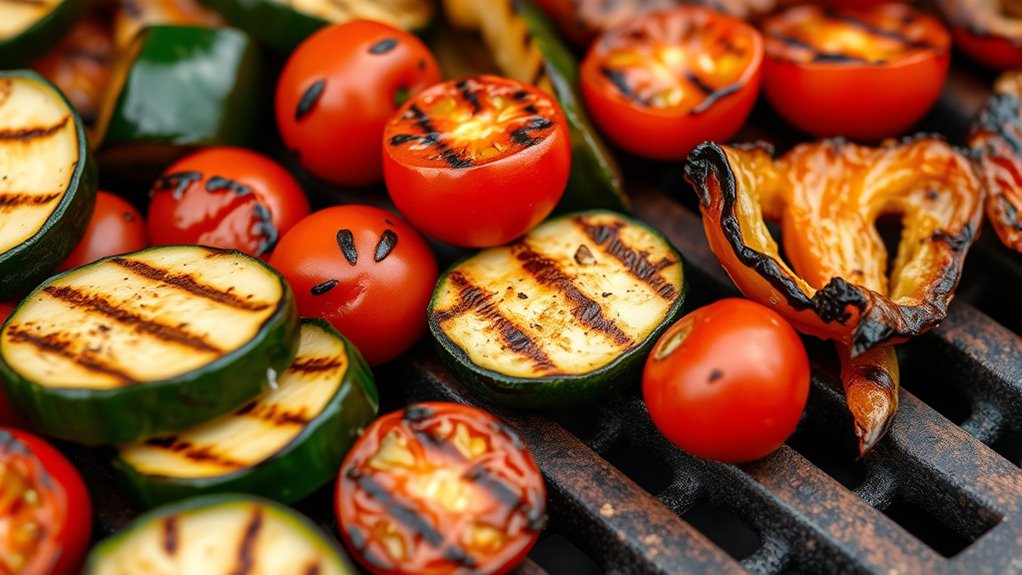

To get better browning without burning, focus on controlling your heat and adjusting it as needed. Use a heavy-bottomed pan and preheat it properly, choosing oils with high smoke points. Cook at medium or medium-high heat, and avoid overcrowding the pan. For even color, flip or stir your food regularly and consider finishing in the oven at 400°F–450°F. Paying attention to surface reactions like the Maillard effect guarantees a golden crust—keep exploring to master perfect browning.
Key Takeaways
- Use a heavy-bottomed skillet and preheat it properly to ensure even heat distribution.
- Maintain medium to medium-high heat and adjust promptly to prevent surface burning.
- Pat food dry before cooking to promote browning without steaming or burning.
- Control cooking time carefully, turning food gently and monitoring color closely.
- Incorporate oven roasting or broiling for controlled, even browning without risking burnt surfaces.

Ever wondered how to achieve perfectly browned dishes every time? Mastering the art of getting that beautiful, even color without burning your food requires understanding some key techniques. Pan frying techniques and oven roasting methods are essential tools in your culinary arsenal, helping you create dishes that look as good as they taste. The secret lies in controlling heat and timing while knowing when to turn or adjust your cooking process. Incorporating knowledge of the Maillard reaction and how heat impacts surface reactions can further improve your results. When you use pan frying techniques, start by choosing the right pan—preferably a heavy-bottomed skillet that distributes heat evenly. Preheat it properly before adding any oil or ingredients. Using a high smoke point oil, like canola or avocado oil, helps prevent burning while allowing you to develop a rich, browned exterior. Keep the heat at medium or medium-high, and avoid rushing the process. Pat your food dry before placing it in the pan; moisture can interfere with browning and cause steaming instead. Place your ingredients carefully in the hot oil, ensuring not to overcrowd the pan, as this lowers the temperature and makes it harder to achieve that perfect sear. Use tongs or a spatula to turn your food gently, avoiding tearing or uneven coloring. Adjust the heat as you go—if you notice smoke or color developing too quickly, dial it back. This patience and attention to detail ensure that you get a golden crust without burning the surface.
Achieve perfect browning with precise heat control and timing techniques.
Oven roasting methods complement pan frying by providing a controlled environment perfect for browning larger cuts or multiple items at once. Preheat your oven to the right temperature—usually between 400°F and 450°F—for excellent browning. Use a wire rack on a baking sheet to promote even heat circulation around your food, which enhances browning without the risk of burning the undersides. For meats and vegetables, tossing them lightly in oil before roasting helps develop a crispy, browned exterior. Keep a close eye on your food during the last few minutes of roasting; sometimes, turning on the broiler for a brief burst can finish the browning process, but it’s imperative to watch carefully so nothing burns. Regularly flipping or stirring your ingredients ensures even color distribution, preventing hotspots that can cause burning. Paying attention to the importance of heat control and proper timing can make all the difference in achieving that perfect golden hue. Understanding how heat impacts surface reactions is essential. The Maillard reaction, responsible for that delicious browning, occurs best at certain temperatures—usually around 300°F to 350°F. If you’re diligent about controlling your heat and timing, you’ll find it easier to get that beautiful, appetizing color without the risk of burning. Combining precise pan frying techniques with thoughtful oven roasting methods gives you a versatile approach to perfect browning every time, elevating your dishes from good to restaurant-quality.
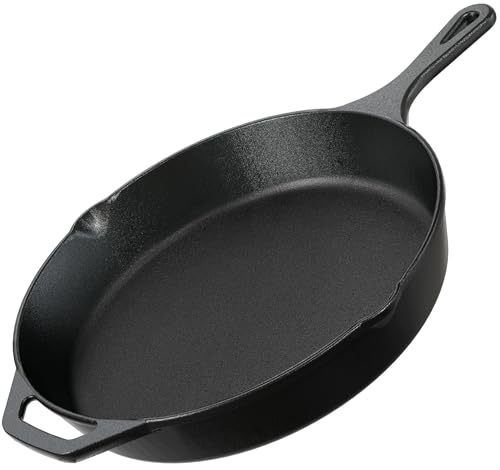
Utopia Kitchen Premium Cast Iron Skillets 12 Inch, Chef's Pan, Pre-Seasoned Frying Pan, Stovetop, Oven, Campfire and Grill Large Skillet, Even Heat Distribution Multipurpose Cast Iron Pan – Black
Exceptional Heat Retention: Enjoy perfectly cooked meals with cast iron skillets that provide even heat distribution, ideal for…
As an affiliate, we earn on qualifying purchases.
As an affiliate, we earn on qualifying purchases.
Frequently Asked Questions
Can I Use Different Types of Oil for Better Browning?
Yes, you can use different oil alternatives for better browning. Oils like avocado, coconut, or grapeseed can enhance flavor and promote even browning without burning. These oils act as flavor enhancers and have higher smoke points, reducing the risk of burning. Experimenting with various oils helps you achieve the perfect golden-brown color while adding unique tastes to your dishes. Just keep an eye on their smoke points for best results.
Does Pan Material Affect the Browning Process?
Yes, pan material affects the browning process. You should consider pan compatibility and heat retention when choosing your pan. Cast iron and stainless steel pans retain heat well, promoting even browning without burning. Non-stick pans may not provide the same heat retention, making it harder to achieve perfect browning. Using a pan suited to your stove and cooking style helps you control heat better, resulting in better browning outcomes.
How Does Humidity Influence Browning Without Burning?
Humidity control plays a vital role in browning without burning. Higher humidity levels can slow down the browning process by maintaining moisture, preventing the surface from scorching. You should manage moisture carefully, especially in dry environments, to guarantee even coloration. By controlling humidity, you help your food develop a rich, golden-brown color without risking burnt spots. Good moisture management keeps your browning just right, resulting in perfectly cooked, flavorful dishes.
Are There Specific Seasonings That Enhance Browning?
Certain seasonings and spice blends can enhance browning by adding extra flavor and promoting caramelization. For example, paprika, cumin, and chili powder bring a rich seasoning flavor that encourages even browning. You might also try adding a touch of sugar or honey to your spice blends, which helps achieve a beautiful, golden crust without burning. Experimenting with these seasonings allows you to boost flavor while improving your browning results.
What’s the Best Way to Control Heat Evenly During Cooking?
You might think controlling heat is simple, but ironically, it’s the secret to perfect browning without burning. To do this, focus on even heat distribution by using a heavy pan or cast iron skillet, and adjust your stove’s temperature for consistent temperature control. Keep an eye on your food, and don’t rush the process. This way, you’ll get that beautifully browned surface without risking burnt edges.

Algae Cooking Club Chef-Grade 100% Algae Cooking Oil – Avocado Oil Alternative – 535°F High Smoke Point – Omega-9 Rich, Neutral Buttery Flavor – Seed Oil-Free – For Searing, Baking, Frying (2, 16 fl oz)
Light Buttery Flavor That Elevates Every Meal: Algae Cooking Club Chef-Grade Algae Oil enhances every dish with subtle…
As an affiliate, we earn on qualifying purchases.
As an affiliate, we earn on qualifying purchases.
Conclusion
To achieve perfect browning without burning, keep a close eye on your heat and adjust as needed. Remember, patience is your best tool—like tending to a delicate flame, too much heat can quickly turn your efforts to ash. With practice, you’ll master the art of golden perfection, turning each dish into a masterpiece. Stay attentive, stay flexible, and soon you’ll find browning becomes a dance where you’re in perfect step with the heat.

ROTTAY Baking Sheet with Rack Set (2 Pans + 2 Racks), Stainless Steel Cookie Sheet with Cooling Rack, Nonstick Baking Pan, Warp Resistant & Heavy Duty & Rust Free, Size 16 x 12 x 1 Inches
【Healthy Material】 The baking sheet with wire rack are made of high quality stainless steel without any chemical…
As an affiliate, we earn on qualifying purchases.
As an affiliate, we earn on qualifying purchases.

Alpha Grillers Meat Thermometer Digital – Instant Read Food Thermometer for Cooking & Grilling – Professional Kitchen Gifts for Men, Dad & Mom
Instant Read Food Thermometer | Our instant read thermometer features a temperature probe and advanced, highly accurate technology…
As an affiliate, we earn on qualifying purchases.
As an affiliate, we earn on qualifying purchases.