To keep breading from falling off, start by thoroughly drying your ingredients with paper towels to remove moisture. Use a proper breading station with seasoned flour, beaten eggs, and your coating, pressing gently to secure each layer. Handle food carefully with tongs and avoid overloading while cooking. Maintaining a consistent temperature and using wire racks also help keep your coating intact. Continue exploring these tips to achieve perfect, crispy results every time.
Key Takeaways
- Pat the ingredients dry to remove excess moisture, ensuring better breading adhesion.
- Use a three-step breading station: flour, egg wash, then breading, pressing lightly for even coverage.
- Rest coated items for a few minutes to let the coating set before cooking.
- Handle food gently with tongs or a fork to prevent knocking off the breading.
- Maintain proper cooking temperature and avoid overcrowding to help the coating stay intact.
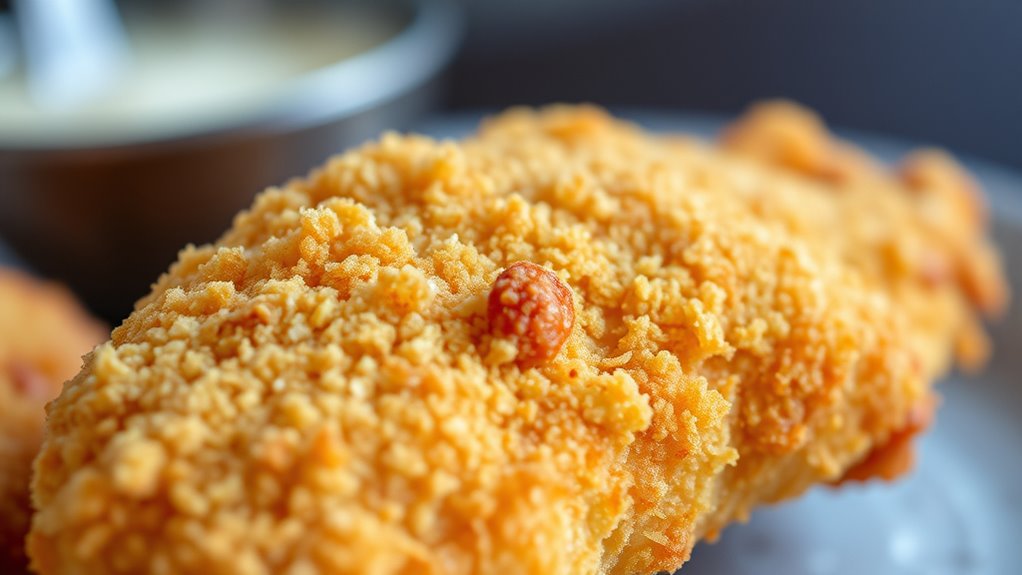
Breading falling off can be frustrating, but with the right techniques, you can guarantee a crispy, well-adhered coating every time. The key lies in mastering certain cooking techniques and using the proper kitchen tools to assure your breading stays put during frying or baking. First, you need to prepare your ingredients thoroughly. Pat the surface of your meat, fish, or vegetables dry with paper towels. Moisture on the surface prevents the breading from sticking properly, so removing excess water helps create a better bond.
Ensure your ingredients are thoroughly dried to help your breading stick firmly and stay crispy during cooking.
Next, set up a proper breading station with three shallow dishes: one with seasoned flour, one with beaten eggs, and a third with your chosen breading mixture, like panko or breadcrumbs. This setup allows for even coating and improves adhesion. When working through each piece, dredge it in the flour first, pressing lightly to confirm an even layer that creates a rough surface for the egg to stick to. The egg acts as a glue, so make sure it’s well beaten and coats the item thoroughly. For the best results, let the coated item rest for a few minutes before proceeding to the next step—this allows the coating to set slightly.
Using the right kitchen tools also makes a significant difference. Tongs or a fork help you handle the food without disturbing the coating, especially during the changeover between breading stages. When applying the final layer, press the breading mixture gently onto the surface to guarantee it adheres well. For extra security, some cooks recommend double-dipping—repeating the egg wash and breading process—to build a thicker, more durable coating. After breading, place the items on a wire rack rather than a plate; this prevents the breading from getting soggy and helps it stay crisp during cooking.
Cooking techniques are equally crucial. Whether frying or baking, maintain a consistent temperature, as sudden heat fluctuations can cause the coating to loosen or fall off. If frying, verify the oil is hot enough—around 350°F (175°C)—so the coating quickly forms a crust that locks in the breading. If baking, lightly spray or brush the coated items with oil to promote browning and help the coating set firmly. Throughout the process, avoid overcrowding the pan, which can cause uneven cooking and make the breading more likely to fall off. Additionally, understanding the importance of food preparation techniques can further improve adherence and result in a perfect crispy coating.
Frequently Asked Questions
Can Using Egg Wash Help Breading Stick Better?
Yes, using egg wash can help breading stick better. Egg wash provides adhesion enhancement, making the breading cling more securely to the surface. The benefits of egg wash include creating a sticky layer that helps crumbs or batter adhere firmly. To maximize its effectiveness, apply a thin, even coat before adding your breading, ensuring it bonds well and stays in place during cooking.
Does the Type of Flour Affect Breading Adhesion?
The type of flour markedly affects breading adhesion. Gluten-rich flours like all-purpose or bread flour create a sticky surface that helps the breading stick better. If you use alternative flours like rice or almond flour, expect less adhesion because they have lower gluten content. To improve sticking, consider combining alternative flours with a bit of cornstarch or using an egg wash, which helps compensate for the lower gluten levels.
How Does Resting the Coated Food Improve Sticking?
Resting the coated food improves adhesion by allowing the coating to set, which enhances its ability to stick during cooking. This pause helps the coating develop better adhesion techniques, creating a more consistent coating. When you let it rest, the moisture in the food helps bond the breading, preventing it from falling off. This step ultimately results in a more even, durable coating that stays put through the cooking process.
Is It Better to Fry Immediately or Let It Sit?
You should definitely let it sit before frying. Sitting for a few minutes creates a superhero-level breading consistency, making it cling like a magnet. When you fry immediately, the breading often falls apart like a fragile house of cards. Giving it that extra moment allows the coating to set, ensuring it sticks better and stays intact. Plus, it helps you control oil temperature, so your food cooks evenly and perfectly crispy every time.
Can Freezer Storage Affect Breading Durability?
Freezer effects can impact breading durability, making it more likely to fall off if stored improperly. To prevent this, follow storage tips like using airtight containers or wrapping tightly to reduce moisture exposure. When you’re ready to cook, let the food thaw slightly, and handle it gently. Proper freezer storage helps maintain the breading’s adhesion, ensuring your fried dishes stay crispy and delicious.
Conclusion
To keep breading from falling off, make sure your food is properly dried and coated in flour before dipping in egg, then bread evenly. Using fresh breadcrumbs and pressing them gently helps the coating stick better. Did you know that 70% of breading failures happen because the coating isn’t pressed firmly enough? So, take your time, press gently, and you’ll get that perfect crispy crust without any shedding. Trust these tips, and your breading will stay put every time.