
To keep coatings crunchy on moist foods, start by thoroughly patting the food dry and using eggs or buttermilk to help the coating stick and create a moisture barrier. Fry at high heat or bake quickly to set the coating and eliminate excess moisture. Serve immediately or keep warm in a low oven, and handle carefully to prevent sogginess. If you’re interested in learning more tips, there’s plenty to explore next.
Key Takeaways
- Pat food dry thoroughly before coating to minimize surface moisture that causes sogginess.
- Use binding agents like eggs or buttermilk to create a moisture-resistant layer around the food.
- Pre-fry or bake briefly to set the coating and remove residual moisture before serving.
- Apply coatings like panko breadcrumbs and a light dusting of cornstarch for better moisture resistance.
- Serve immediately or keep warm in a low oven without covering to preserve the crispiness.

When you add coatings like breadcrumbs or crispy batter to moist foods, they often lose their crunch quickly. This happens because moisture from the food seeps into the coating, softening it and making it less appealing. To keep your coatings crispy, you need to focus on effective texture preservation and moisture barriers. These techniques help prevent moisture from reaching the coating, maintaining that desirable crunch longer.
One of the most important steps is to guarantee your coating forms a strong moisture barrier. Before applying the coating, pat the food dry thoroughly. Excess moisture on the surface will cause the coating to become soggy faster. Using a binding agent like eggs or buttermilk helps the coating adhere better and creates an initial moisture barrier, giving the coating a better chance to stay crispy. When you dip your food into these, the coating forms a protective layer that resists moisture penetration.
Pat food dry and use eggs or buttermilk to create a moisture-resistant coating.
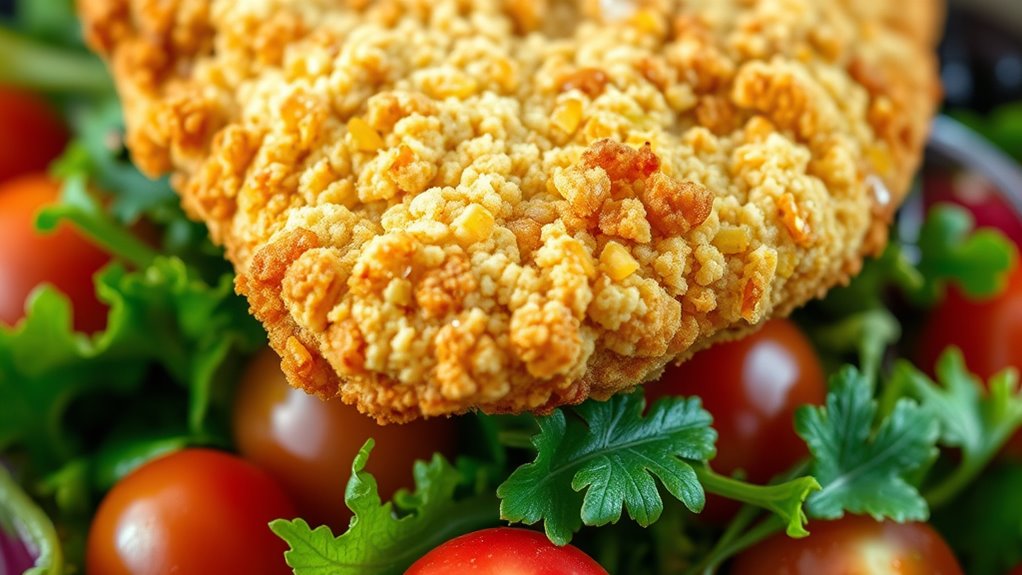
Another effective method is to pre-fry or bake the coated food briefly before serving, which helps set the coating and drive out any residual moisture. This process creates a firm outer shell, making it less vulnerable to sogginess when exposed to humid environments or sauces. Additionally, choosing the right coating ingredients makes a difference: panko breadcrumbs, for example, are known for their larger, airy texture that naturally resists moisture absorption, helping preserve crunchiness.
Using a hot cooking oil or oven temperature is also vital. When you fry, ensure the oil is hot enough—around 350°F (175°C)—so the coating crisps quickly and seals in moisture. If the temperature is too low, the coating absorbs more oil and becomes greasy, losing its crispness faster. Similarly, if baking, use high heat and avoid overcrowding, which causes steam and sogginess, undermining your efforts in texture preservation.
Once cooked, serve your moist foods promptly or keep them warm in a low oven to preserve their crunch. Avoid covering them with foil, as trapped steam will soften the coating. If you need to prepare ahead, consider applying a light dusting of cornstarch or flour before frying or baking. These act as additional moisture barriers, forming a dry surface that resists sogginess.
Frequently Asked Questions
Can Coating Techniques Be Adapted for Vegan or Gluten-Free Foods?
Yes, you can adapt coating techniques for vegan or gluten-free foods by using plant-based alternatives and gluten-free binders. You’ll want to choose plant-based ingredients like chickpea flour or aquafaba for coating, and use gluten-free binders such as xanthan gum or ground flaxseed to help the coating adhere. These options guarantee your coatings stay crispy and flavorful, even on moist, plant-based, or gluten-free foods.
How Does Temperature Affect Coating Crispness Over Time?
Imagine your snack’s crunch as a fragile fortress. Temperature stability influences coating crispness; high heat softens coatings, while cool temps help keep them crisp. Over time, moisture migration causes coatings to lose their crunch, especially if temperature fluctuates. Keep foods at consistent temperatures to preserve that satisfying texture, and avoid sudden changes to prevent moisture from seeping in, ensuring your coatings stay irresistibly crispy longer.
Are There Eco-Friendly Methods to Maintain Crunchiness?
You can keep coatings crunchy on moist foods using eco-friendly methods like biodegradable coatings and natural preservatives. Applying a thin layer of biodegradable film helps lock in moisture and maintain crispness without harming the environment. Additionally, natural preservatives like vinegar or citrus extracts can slow spoilage and preserve texture. These sustainable options guarantee your food stays crisp while reducing ecological impact, making your snacks both delicious and eco-conscious.
What Role Do Preservatives Play in Keeping Coatings Crispy?
Preservatives are like superhero shields for your coatings, dramatically boosting preservative effectiveness and extending shelf life. They act swiftly to prevent moisture from invading, ensuring your coatings stay crispy no matter how long they sit. Without them, your food might turn soggy in minutes. So, preservatives play a vital role in maintaining that perfect crunch, giving your product a longer-lasting, irresistible texture that keeps customers coming back for more.
Can Coating Recipes Be Scaled for Commercial Production Efficiently?
Yes, coating recipes can be scaled for commercial production efficiently. You need to take into account batch size and equipment scalability to ensure consistent quality. Larger batches require specialized equipment that maintains uniform mixing and coating application. By adjusting ingredient ratios and investing in scalable machinery, you can streamline production while preserving the coating’s crunch and texture. Proper planning ensures your recipe remains effective and cost-efficient at any production scale.
Conclusion
To keep coatings crunchy on moist foods, remember that patience is a virtue. Allow fried items to rest briefly before serving, giving moisture time to escape and preserving that satisfying crunch. Using proper techniques like double coating or adding a layer of cornstarch can also help. As the saying goes, “A stitch in time saves nine.” With these tips, you’ll enjoy crispy textures every time, even when moisture tries to spoil the fun.