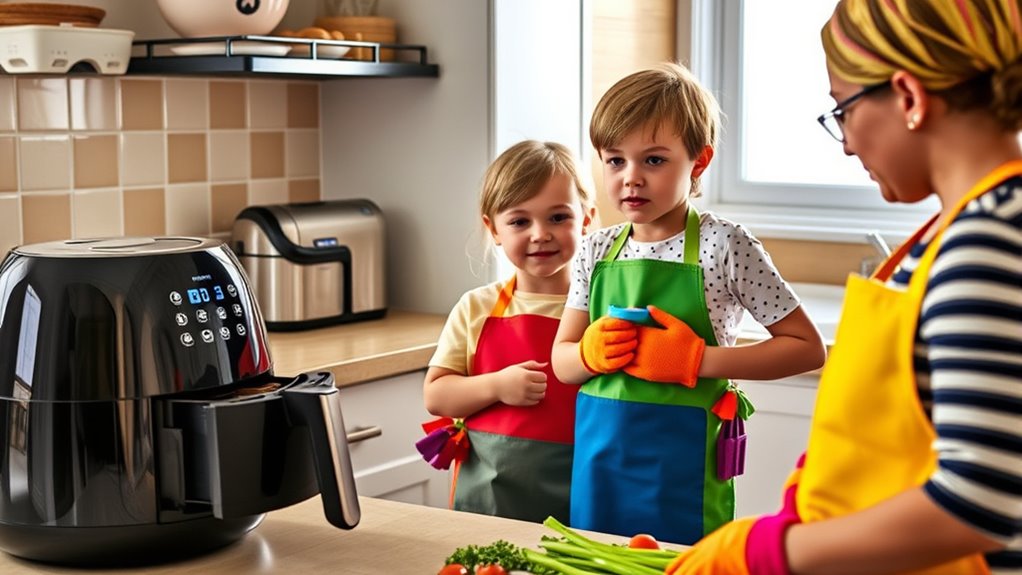

To teach kids kitchen safety with the air fryer, show them how to handle hot surfaces carefully and always supervise during use. Explain the importance of keeping cords away from water and hot spots, and use protective gear like oven mitts. Teach kids proper hygiene, safe food prep, and the rules for cleaning up afterward. Making safety fun through activities keeps kids engaged and helps them develop good habits that will serve them well—if you continue exploring, you’ll discover even more tips.
Key Takeaways
- Teach children to ask for adult permission before handling or operating the air fryer.
- Show proper use of oven mitts and tongs to handle hot food and accessories safely.
- Establish clear boundaries and supervise children during cooking to prevent accidents.
- Educate kids on recognizing hot surfaces and safety signs to avoid burns.
- Incorporate fun activities like role-playing and safety games to reinforce kitchen safety habits.
Understanding the Basics of the Air Fryer

Since air fryers are becoming more popular in kitchens, it’s important to understand how they work and how to use them safely. The basic operation involves circulating hot air around food to cook and crisp it quickly, with little or no oil needed. Familiarize yourself with the appliance features like the adjustable temperature control, timer, and basket. These settings help you customize cooking times and temperatures for different foods. Most air fryers have a simple interface with buttons or dials, making them easy to operate. Before using, always read the user manual to understand specific functions and safety tips. Knowing the basic operation and appliance features allows you to effectively and safely prepare a variety of meals while preventing accidents.
Demonstrating Safe Handling and Usage
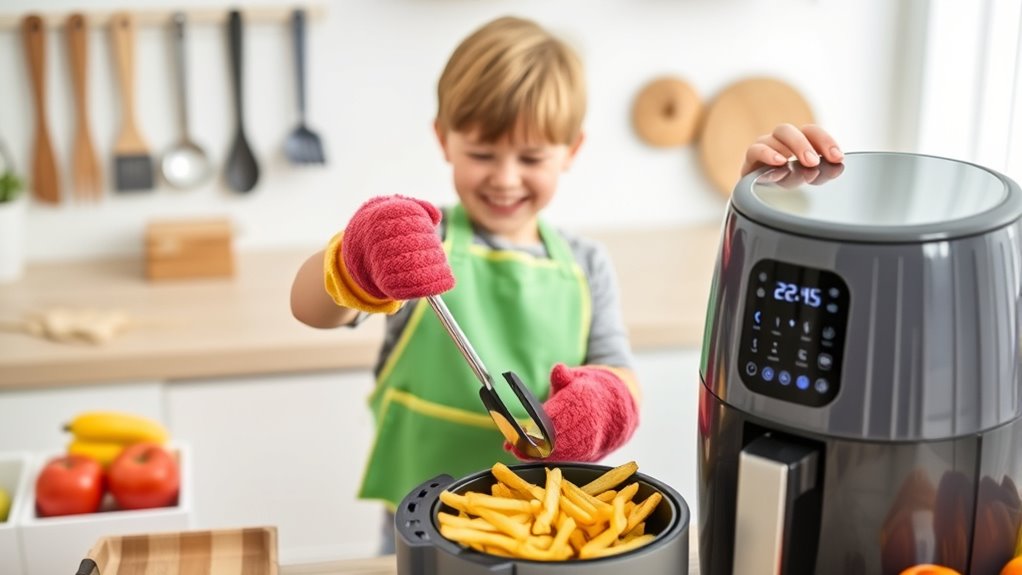
To guarantee safety when using an air fryer, you need to handle it carefully and follow proper procedures at all times. Always supervise kids when they use air fryer accessories like baking pans or racks to prevent accidents. Before cooking, double-check that the basket is properly inserted and that the air fryer is on a stable, heat-resistant surface. Remind kids to follow the recommended cooking time for each recipe, as overcooking can cause smoke or fire hazards. Use tongs or heat-resistant gloves to remove hot accessories and food. Keep the cord away from water and hot surfaces. Additionally, using professional equipment ensures better safety and quality during cooking. By demonstrating these safe handling tips, you help kids develop good habits that keep everyone safe during air fryer use.
Teaching Kids About Hot Surfaces and Preventing Burns

Kids need to learn how to spot hot surfaces like stoves and pots before touching them. Always use protective gear, such as oven mitts, to prevent burns. Teach safe handling practices to keep everyone safe in the kitchen.
Recognize Hot Surfaces
Hot surfaces can cause serious burns if you don’t recognize them first. It’s important to teach kids to identify hot surfaces to prevent accidents. Always remind them that the outside of the air fryer, stovetop, and oven can be very hot.
Here are some tips to help with burn prevention:
- Look for signs like red or shiny surfaces—they indicate heat.
- Never touch the outside of the air fryer or stove without asking an adult.
- Use a timer or oven mitts when handling hot appliances.
- Teach kids to stay at a safe distance until the surface cools down.
- Regularly check for signs of heat on appliances to ensure safety.
Use Protective Gear
Wearing protective gear is essential for preventing burns when working in the kitchen. Safety equipment like oven mitts, heat-resistant gloves, and aprons shield your kids from hot surfaces and accidental splashes. These items help minimize direct contact with hot appliances and prevent serious injuries. Make sure your kids understand the importance of always using protective gear before handling the air fryer or touching hot containers. Proper safety equipment not only reduces the risk of burns but also builds good habits for future cooking. Encourage your kids to check that their protective gear fits well and is in good condition before starting any task. Additionally, teaching children about kitchen safety and how to recognize potential hazards will further promote a safe cooking environment. By emphasizing the use of safety equipment, you help create a safer cooking environment and foster responsible kitchen habits.
Safe Handling Practices
Teaching children how to handle hot surfaces safely is crucial for preventing burns in the kitchen. Always supervise your kids closely when they’re near the air fryer, emphasizing the importance of child supervision. Teach them to keep a safe distance from hot surfaces and avoid touching the heating element. Here are some key practices:
- Use oven mitts or heat-resistant gloves when handling hot trays or baskets.
- Establish clear boundaries around the air fryer to prevent accidental contact.
- Explain the importance of waiting until the appliance cools before cleaning or reaching inside.
- Practice emergency preparedness by showing kids what to do if they get burned, including telling an adult immediately.
- Incorporate wall organization systems to keep cooking tools and safety equipment within easy reach and promote an organized, safe cooking environment.
These steps help build safe habits and ensure your kids understand hot surface dangers.
Explaining the Importance of Supervision During Cooking

Since young children are still learning about kitchen hazards, adult supervision is crucial whenever they’re cooking or handling utensils. Child supervision helps ensure they stay safe and avoid accidents like burns or cuts. When you supervise, you can also teach safety awareness, making kids understand why certain rules matter. For example, explaining that hot surfaces and sharp tools can cause injury encourages caution. Always stay nearby, especially when using appliances like the air fryer, which can get very hot. Your presence reassures kids and allows you to intervene quickly if needed. Proper supervision not only prevents injuries but also builds their confidence and understanding of safe cooking habits. Understanding risk mitigation strategies is essential for creating a safe cooking environment for children. Remember, your guidance is vital in helping kids develop safe cooking routines for the future.
Practicing Proper Food Preparation and Hygiene

Before handling any food, make sure you wash your hands thoroughly with soap and water. Always clean fruits and vegetables properly to remove dirt and bacteria. Practicing good hygiene helps keep everyone safe and healthy while cooking. Additionally, using proper cleaning techniques for kitchen tools and surfaces reduces the risk of cross-contact and contamination.
Hygiene Before Handling Food
Practicing proper hygiene before handling food is essential to keep everyone safe and healthy. Before starting, follow these steps to guarantee good hygiene:
- Wash your hands thoroughly using proper handwashing protocols, scrubbing for at least 20 seconds with soap and water.
- Use sanitizer when soap and water aren’t available, especially after touching raw ingredients or surfaces.
- Keep your nails trimmed and clean to prevent bacteria from hiding underneath.
- Avoid touching your face or other surfaces once your hands are clean, to prevent cross-contamination.
- Ensure proper color accuracy to accurately identify the freshness and quality of ingredients.
Cleaning Ingredients Properly
How you clean your ingredients can make a big difference in preventing foodborne illnesses. Always rinse produce thoroughly and wash hands before handling ingredients. When measuring ingredients, use clean utensils and containers to avoid cross-contamination. Properly storing leftovers is essential—cool leftovers quickly and store them in airtight containers in the fridge. Using essential oils like tea tree oil can be helpful in maintaining antimicrobial properties during cleaning processes to further ensure food safety. Here’s a quick guide:
| Step | What to Do | Why it’s Important |
|---|---|---|
| Rinse produce | Wash fruits and vegetables under cold water | Removes dirt and bacteria |
| Use clean utensils | Measure ingredients with sanitized tools | Prevents cross-contamination |
| Store leftovers properly | Cool quickly and refrigerate in airtight containers | Keeps food safe to eat later |
| Wash hands before handling | Always wash hands after touching raw ingredients | Reduces spread of germs |
Establishing Clear Rules for Using the Air Fryer
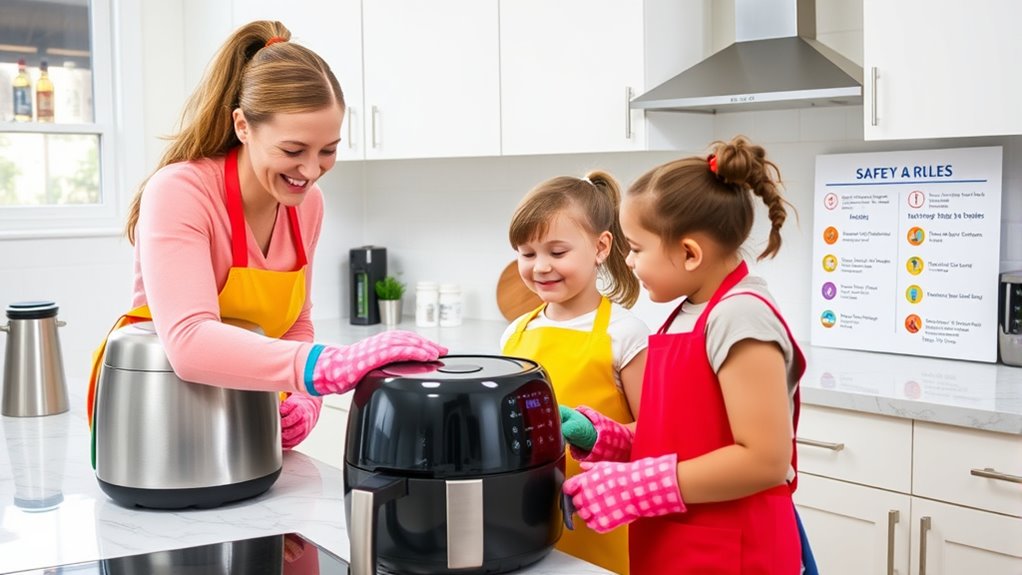
Setting clear rules for using the air fryer helps kids stay safe and develop good habits in the kitchen. Establishing kitchen rules ensures they understand the importance of cooking safety from the start. Here are four essential rules:
Setting clear air fryer rules keeps kids safe and teaches good kitchen habits from the start.
- Always ask an adult before handling the air fryer.
- Keep hands and utensils away from hot surfaces during operation.
- Never touch the cord or plug while the air fryer is in use.
- Wait until it cools down before cleaning or storing.
- Understanding the symbolism in safety signs can help children recognize hazards more effectively.
Identifying and Avoiding Common Kitchen Hazards

Because the kitchen is full of potential hazards, it’s important to stay alert and recognize common dangers that could cause injuries or accidents. Kitchen hazards like hot surfaces, sharp knives, and hot oil can pose serious risks if not handled carefully. Teach kids to understand safety awareness by pointing out these dangers and explaining how to avoid them. For example, remind them never to touch the hot air fryer or stove, and always use oven mitts when handling hot items. Keep cords out of reach to prevent tripping or pulling appliances down. By identifying these hazards early, you help your kids develop good safety habits and reduce the chance of accidents in the kitchen. Staying aware of common dangers keeps everyone safe while cooking together. Additionally, introducing kitchen safety products like oven mitts or child-proof locks can further help prevent accidents.
Encouraging Responsible Cleanup and Maintenance
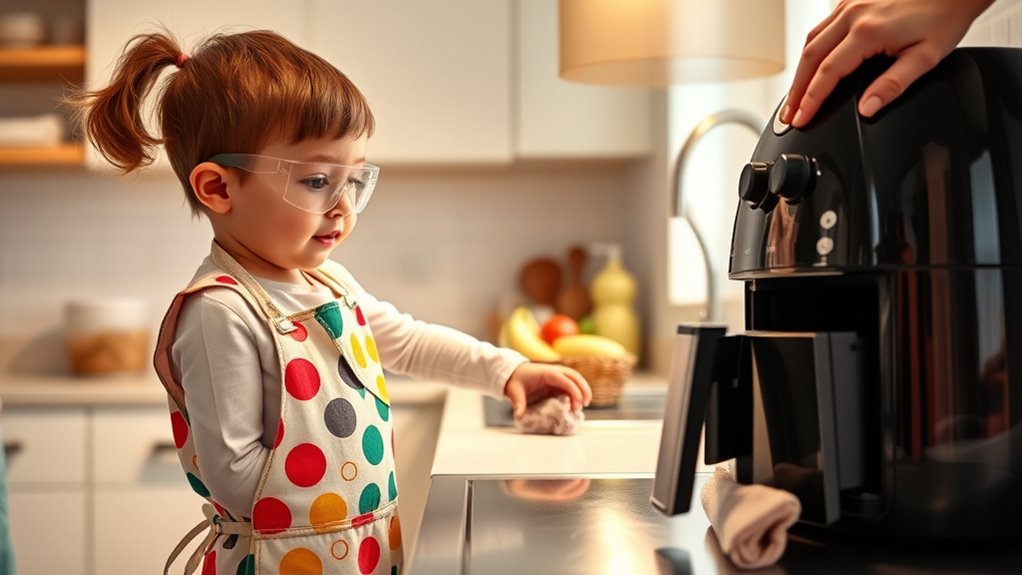
Encouraging responsible cleanup and maintenance is essential for keeping the kitchen safe and organized. By establishing simple cleaning routines and maintenance schedules, you help prevent accidents and prolong your air fryer’s lifespan. Here are some tips to teach your kids:
- Set regular cleaning times—after each use, wipe down the exterior and interior.
- Create a maintenance schedule—check the air fryer’s cords, buttons, and vents weekly.
- Demonstrate proper cleaning techniques—use non-abrasive cleaners to avoid damage.
- Encourage responsibility—assign small tasks to your kids to foster ownership.
Making Safety Education Fun Through Interactive Activities

Making safety education fun through interactive activities keeps kids engaged and enthusiastic to learn. You can turn lessons about kitchen safety into games, like a “hot surface” relay race or a safety scavenger hunt. These activities help children understand cooking skills while reinforcing important safety rules. For example, role-playing how to handle hot items teaches them caution and proper techniques. Using colorful charts or stickers to track safe behaviors makes learning visual and rewarding. Hands-on activities, like practicing how to use oven mitts or measuring ingredients safely, build confidence and muscle memory. When kids actively participate, they’re more likely to remember safety tips and apply them during cooking. Making safety education engaging transforms a chore into a fun, memorable experience that promotes responsible kitchen habits.
Frequently Asked Questions
How Can I Involve Kids in Choosing Safe Recipes for the Air Fryer?
You can involve kids in choosing safe recipes by discussing their flavor preferences and guiding them to select options suitable for the air fryer. Encourage them to browse recipes together, emphasizing safety tips like avoiding overcrowding and proper temperature settings. Letting them participate in the decision-making process helps build confidence, guarantees they feel involved, and teaches them responsibility for kitchen safety during recipe selection.
What Signs Indicate the Air Fryer Is Overheating or Malfunctioning?
In the age of steam-powered gadgets, recognizing overheating warning signs and malfunction indicators is vital. You should watch for excessive smoke, burning smells, or if the air fryer’s temperature seems erratic. If it stops functioning properly or makes unusual noises, these are clear signs of malfunction. Always unplug the device if you notice any of these signs, and never ignore potential overheating to keep everyone safe.
How Do I Teach Kids About Proper Hand Hygiene Before Using the Air Fryer?
You should teach kids about proper hand hygiene before they use the air fryer to make certain food safety. Explain that washing hands thoroughly with soap and water removes germs that could contaminate food. Demonstrate the correct handwashing steps, emphasizing the importance of scrubbing for at least 20 seconds. Remind them to dry hands completely before handling food or the air fryer to keep everyone safe and healthy.
Are There Age-Appropriate Safety Tasks for Children When Operating the Air Fryer?
Think of kitchen safety as a delicate dance, where each step matters. When operating the air fryer, you can assign age-appropriate tasks like setting timers or placing food inside, always under close child supervision. Younger kids might handle simple chores, but older children can learn about safety features and avoid touching hot surfaces. Your vigilant supervision guarantees they’re learning safely while gaining confidence in the kitchen’s rhythm.
How Can I Create a Visual Safety Checklist for Kids to Follow Independently?
To create a visual safety checklist for kids to follow independently, start by using clear visual aids like pictures or icons that represent each safety step. Incorporate safety symbols to highlight hazards, such as hot surfaces or sharp edges. Make the checklist simple, colorful, and easy to understand, so kids can quickly recognize and remember safety procedures. This approach boosts their confidence and encourages responsible use of kitchen appliances like the air fryer.
Conclusion
By teaching kids about kitchen safety with the air fryer, you turn everyday moments into confident adventures. Picture their enthusiastic eyes watching as they grasp hot surfaces and handle food with care, all under your watchful guidance. With clear rules and fun activities, you create a rhythm of responsibility that sticks. Together, you build a safe, joyful kitchen where learning and laughter cook side by side, turning safety into a natural part of their culinary journey.