
To cook with less smoke in your air fryer, choose oils with high smoke points like avocado or refined canola, and avoid unrefined oils. Keep an eye on the oil temperature to prevent it from exceeding its smoke point, and use just a light coat instead of pouring large amounts. Trim excess fat from foods to reduce splattering. Proper setup and preheating also help minimize smoke. Stay with us to discover more tips for cleaner air frying.
Key Takeaways
- Use oils with high smoke points like avocado, grapeseed, or refined canola for safer, low-smoke cooking.
- Monitor and maintain oil temperature below its smoke point to prevent breakdown and fumes.
- Trim excess fat from foods and choose lean cuts to reduce splattering and smoke during air frying.
- Preheat the air fryer properly and ensure correct placement to promote even heat and minimize smoke buildup.
- Apply a light, thin coating of oil on ingredients instead of pouring large amounts to limit smoke and oil fumes.
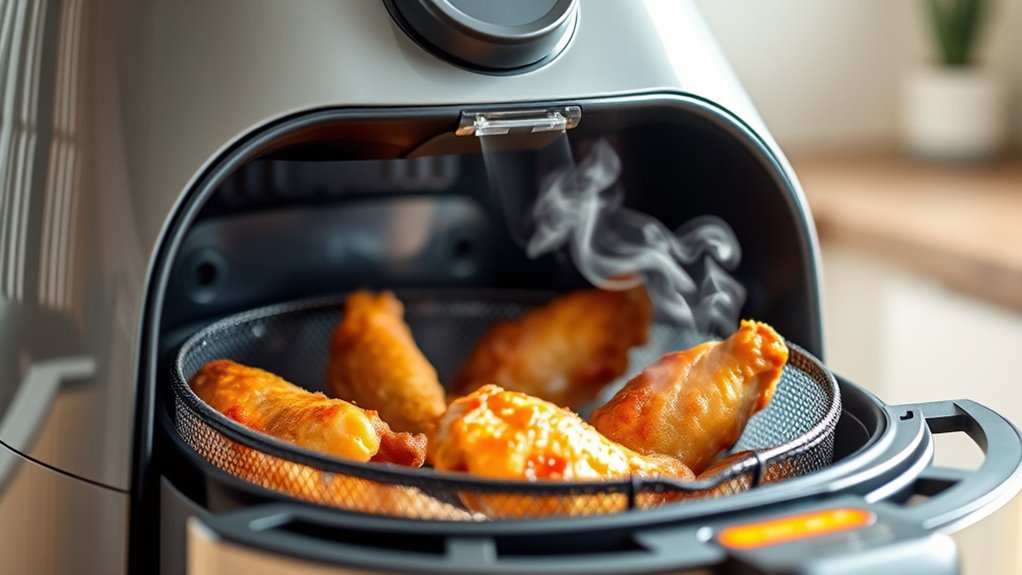
Cooking with an air fryer often produces less smoke than traditional methods, but it can still generate some fumes, especially when cooking greasy or high-fat foods. To keep smoke at bay, it’s essential to pay attention to the oil you use. The key factor here is oil temperature, which directly influences how much smoke your food produces. When you heat oil past its smoke point, it begins to break down, releasing smoke and potentially harmful compounds. That’s why selecting oils with high smoke points for air frying is vital. Oils like avocado, grapeseed, or refined canola have higher smoke points and are less likely to generate smoke when heated properly. Avoid using unrefined or extra-virgin oils for high-heat cooking, as their lower smoke points make them more prone to burning and producing fumes.
Before adding oil to your air fryer basket or food, make certain that the temperature isn’t exceeding the oil’s smoke point. This can be tricky since many air fryers heat quickly and efficiently, but it’s worth monitoring your cooking process. If you notice smoke forming, reduce the temperature or add less oil to prevent breakdown. When you’re cooking foods that naturally contain fats, like bacon or certain cuts of meat, be mindful of how much fat is released during cooking. Excess fat can splatter and generate smoke, especially if it reaches its smoke point. To minimize this, trim excess fat beforehand or use leaner cuts to help keep smoke levels down. Additionally, using proper air fryer placement can help improve airflow and reduce smoke buildup.
Another tip is to preheat your air fryer properly, which helps guarantee even cooking at the right temperature. This reduces the chance of hot spots where oil might exceed its smoke point. If you’re sautéing or roasting with oil, lightly coat your ingredients rather than pouring on large amounts. A thin layer of oil not only helps produce crispy results but also reduces the risk of overheating and smoke production. Keep in mind that different oils have different smoke points—refined oils generally handle higher temperatures better than unrefined varieties.
Frequently Asked Questions
What Types of Oils Produce the Least Smoke in an Air Fryer?
You should choose oils with high smoke points to minimize smoke in your air fryer. Avocado oil, refined safflower, and refined grapeseed oil are great options because they have higher smoke points compared to olive or unrefined oils. These fat types resist breaking down at high temperatures, reducing smoke. Always check the oil’s smoke point and avoid using fats with low smoke points for low-smoke cooking.
How Can I Prevent Smoking During High-Temperature Cooking?
Did you know that maintaining the right oil temperature can reduce smoke by up to 50%? To prevent smoking during high-temperature cooking, keep your oil below its smoke point. Use a thermometer to monitor oil temperature and make sure proper cooking ventilation—like opening a window or turning on a fan—to disperse smoke quickly. This combo helps keep your air fryer smoking-free and your kitchen fresh.
Does Using Spray Oils Increase Smoke Production?
Using spray oils can increase smoke production if they contain additives that promote burning. To guarantee spray oil safety, choose high-quality, pure sprays without propellants or added chemicals. Be aware of oil separation issues, which can cause uneven coating and more smoke. Apply spray oils lightly and evenly, and avoid over-spraying, especially at high temperatures, to minimize smoke and maintain a healthier, low-smoke cooking environment.
Are There Specific Fats That Are Better for Low-Smoke Cooking?
Think of cooking fats like a race—some finish faster, others last longer. Healthy fats with high smoke points, like avocado oil and refined coconut oil, are your best bet, as they resist smoke better. Using these fats helps you avoid the smoke cloud while keeping your food nutritious. So, choose fats that match your cooking needs, and your air fryer session will stay cleaner and healthier.
How Often Should I Clean My Air Fryer to Reduce Smoke?
You should clean your air fryer after every 3-4 uses to effectively reduce smoke residue and prevent buildup. A consistent cleaning schedule keeps grease and food particles from accumulating, which can cause smoke during cooking. Make sure to remove the basket and tray, wash them thoroughly, and wipe down the interior with a damp cloth. Regular cleaning not only minimizes smoke but also extends your air fryer’s lifespan and keeps your food tasting fresh.
Conclusion
Remember, slow and steady wins the race. By choosing the right oils and fats, you can enjoy delicious, low-smoke meals in your air fryer without sacrificing flavor or health. Keep your cooking temperature moderate, and don’t forget to clean your appliance regularly. With these tips, you’ll master low-smoke cooking easily. So, stay patient and persistent—your tasty, healthier dishes are just a few smart choices away!