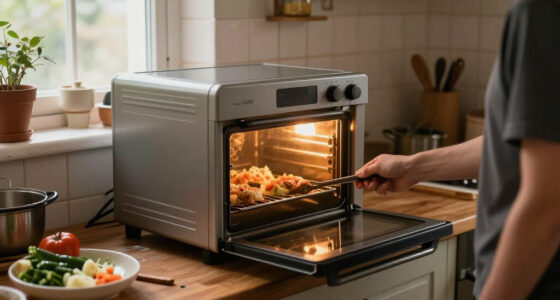
Reheating leftovers in stages helps you warm food evenly, preventing dryness or sogginess. It allows heat to penetrate gradually, preserving moisture and maintaining the original textures and flavors. This gentle process also makes it easier to monitor the temperature, ensuring your food stays safe to eat. Plus, it helps delicate ingredients stay intact and keeps sauces from breaking down. Keep exploring to discover how this simple technique can make your leftovers taste fresher and more delicious.

Get kitchen gear delivered free with Prime
- Fast, free delivery on millions of items
- Prime Video, Amazon Music and more included
- Member-only deals all year
Key Takeaways
- Gradual reheating prevents dryness and maintains original textures like crispness or tenderness.
- Reheating in stages ensures even heat distribution, preserving flavor and preventing overcooking.
- Controlled temperature monitoring keeps leftovers safe and prevents overheating that can degrade taste.
- Step-by-step warming preserves delicate ingredients and sauces, maintaining their fresh flavor.
- Proper ventilation during reheating reduces excess moisture, avoiding sogginess and ensuring better texture.
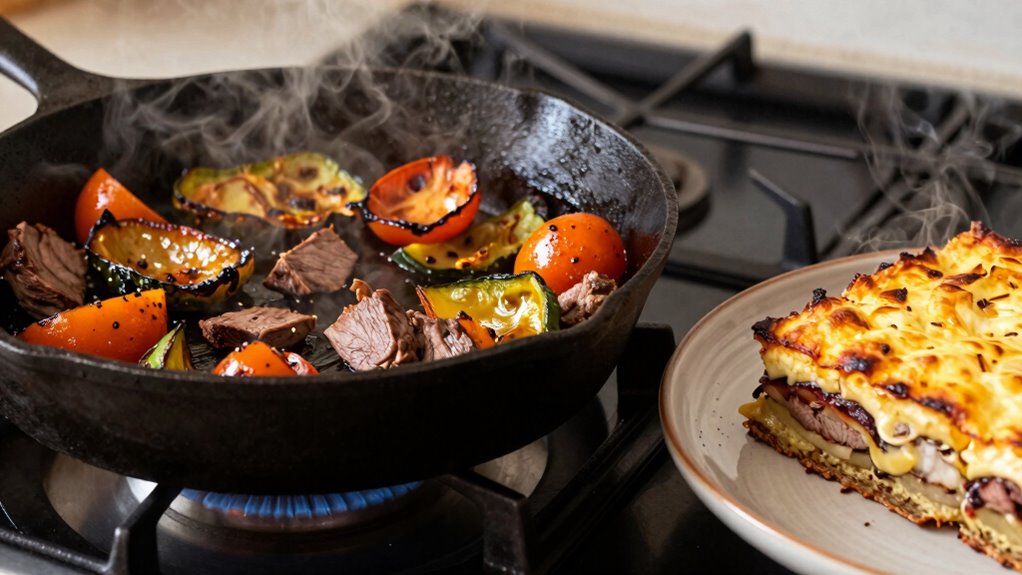
One key reason reheating in stages makes leftovers taste better is that it prevents overcooking. When you try to reheat everything at once, the outside can become hot and dry while the inside remains cold or lukewarm. By gradually warming your leftovers, you allow heat to penetrate evenly, preserving moisture and preventing the food from drying out or becoming rubbery. This method keeps the original textures intact, whether it’s the crispness of roasted vegetables or the tenderness of a stew. Additionally, reheating in stages helps you better monitor the process. You can check the temperature with a food thermometer to make sure your leftovers reach at least 165°F (74°C), which is recommended for food safety. This step-by-step approach gives you a chance to stir or rotate the food between stages, ensuring heat distribution is uniform. It also helps you avoid overheating, which can cause flavors to deteriorate or the food to become bitter or burnt. Using proper ventilation during reheating can also help maintain food quality by dispersing excess moisture and preventing sogginess. Moreover, reheating gradually can help you retain the integrity of delicate ingredients, which are often sensitive to high heat and can quickly lose their texture and flavor. Incorporating temperature control techniques during reheating further ensures that you do not accidentally overheat your leftovers. Maintaining consistent heat distribution is essential for preserving the quality and safety of your food. This method is especially useful for preserving the original flavors, as high heat can cause some ingredients—like sauces or delicate herbs—to break down or lose their freshness. By warming your food slowly, you give flavors a chance to meld and retain their original tastes. This enhances the overall eating experience, making your leftovers taste as close to freshly cooked as possible.
food thermometer for reheating leftovers
As an affiliate, we earn on qualifying purchases.
As an affiliate, we earn on qualifying purchases.
Frequently Asked Questions
Can Reheating in Stages Affect Food Safety?
Reheating in stages can affect food safety if you don’t maintain proper temperature control. When you reheat leftovers, ensure they reach at least 165°F to kill bacteria, especially if stored properly in airtight containers. Food storage is essential; leftovers should be cooled quickly and kept refrigerated. Reheating in stages allows for even heating, reducing cold spots where bacteria might survive, helping keep your food safe to eat.
What Types of Leftovers Benefit Most From Staged Reheating?
You’ll find that leftovers like stews, casseroles, and rice dishes benefit most from staged reheating because it helps preserve flavor retention and texture. By gradually reheating, you prevent moisture loss and uneven heating, keeping dishes moist and flavorful. This method also minimizes texture degradation, ensuring your leftovers taste just as good as when they were first made. So, for the best taste and quality, reheating in stages is your best bet.
How Long Should Each Reheating Stage Take?
You should aim for about 2-3 minutes per stage, depending on your appliance. Start with moderate temperature control, reheating each portion until it’s steaming hot—ideally 165°F (74°C)—to guarantee safety. The reheating duration varies with the amount and type of leftover. Patience in each stage prevents overcooking, preserving flavors and texture, much like the balance between haste and care in life’s bigger moments.
Does Staged Reheating Preserve Original Flavors Better?
Yes, staged reheating helps preserve flavor retention and texture preservation better. By gradually warming your leftovers, you avoid overheating, which can cause flavors to fade and textures to become mushy or rubbery. You maintain the dish’s original taste and consistency more effectively. This method guarantees each component heats evenly, locking in flavors and keeping the texture fresh, so your leftovers taste closer to their original state.
Can Reheating in Stages Be Done Using Different Appliances?
Absolutely, you can reheating in stages using different appliances! It’s like orchestrating a symphony of flavors, with each appliance bringing its unique magic. Just make certain appliance compatibility and follow proper reheating techniques to avoid uneven heating or sogginess. For example, start with a microwave for quick warming, then finish with an oven or skillet to restore crispiness. This method preserves taste and texture, making leftovers taste as good as new!
Conclusion
Reheating in stages transforms leftovers from lackluster to luscious. By patiently pacing the process, you preserve flavors, textures, and freshness. This simple strategy guarantees each bite bursts with brilliance, bringing joy to every meal. So, savor the secret of slow, steady reheating and turn leftovers into luscious, loving lunches. Trust this technique to tame tough textures and tame your taste buds, making every bite beautifully better, one stage at a time.
Fall Picks
fall essentials
As an affiliate, we earn on qualifying purchases.