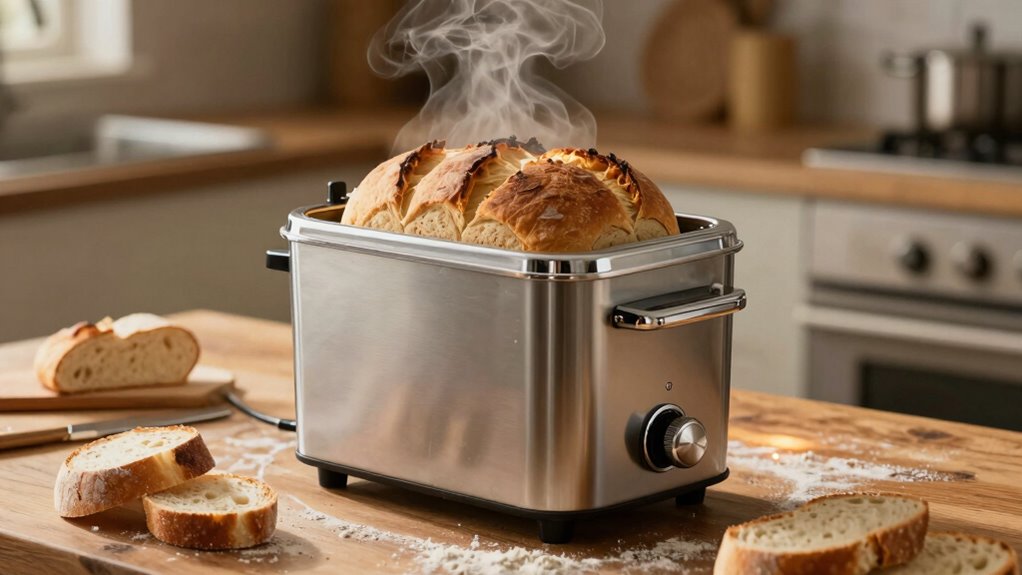
Bread makers still matter because they make it easy to create fresh, artisanal-quality bread with consistent results. They handle kneading, fermentation, and baking automatically, saving you time and effort. Whether you’re experimenting with gluten-free or multi-grain recipes, a bread maker simplifies complex steps. Their user-friendly features let you customize flavors and textures effortlessly. If you want to discover how these machines can elevate your baking game, explore further for all the benefits they offer.
Key Takeaways
- Bread makers are specialized for consistent, artisanal-quality bread with minimal effort, unlike general-purpose countertop ovens.
- They offer tailored settings for gluten-free and multi-grain breads, simplifying complex baking techniques.
- Automation in bread makers ensures uniform results and reduces monitoring, making home baking more accessible.
- They enable experimentation with flavors, textures, and fermentation, providing creative control unattainable with standard ovens.
- Bread makers save time and effort, making fresh, wholesome bread convenient without needing professional skills.
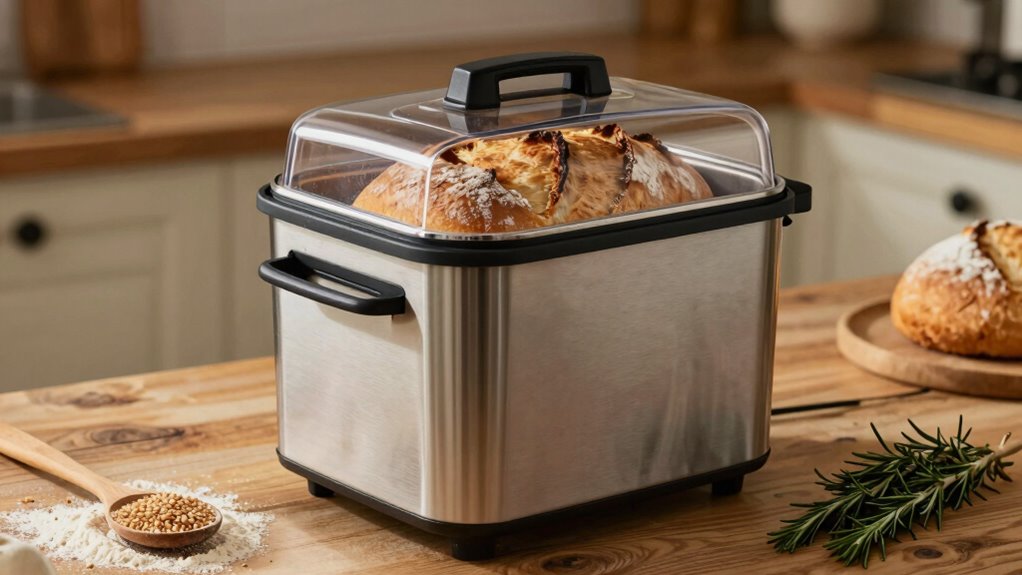
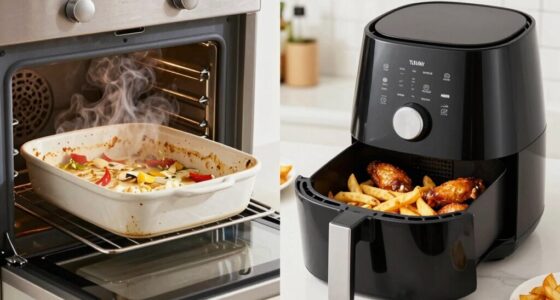
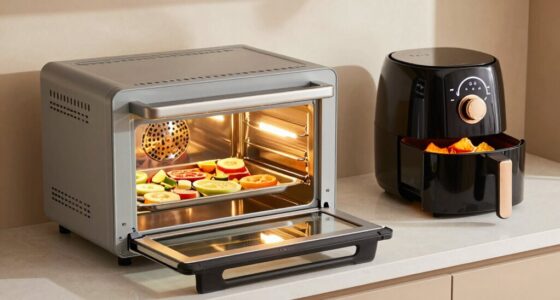
Despite the rise of versatile countertop ovens, bread makers still hold an essential place in many kitchens. They give you the power to craft fresh, homemade bread with minimal effort, which is a huge advantage in today’s busy world. While countertop ovens excel at roasting and baking a variety of dishes, bread makers are specifically designed to handle the delicate process of kneading, rising, and baking bread. This dedicated focus allows you to produce fresh, warm loaves that rival those from artisan bakeries, all from your own home.
One of the key benefits of bread makers is their ability to support artisanal techniques. You don’t need to be a professional baker to achieve complex textures and flavors. With simple controls, you can experiment with different types of flour, hydration levels, and fermentation times to create bread that reflects your personal style. Many models even feature specialized settings for sourdough or multi-grain breads, giving you more control over the baking process. This versatility makes bread makers an invaluable tool for those wanting to explore artisanal baking without the steep learning curve or the need for extensive equipment.
Bread makers enable artisanal baking at home with simple controls and specialized settings for sourdough and multi-grain breads.
Gluten-free baking is another area where bread makers shine. Traditional bread-making can be tricky with gluten-free flours, which often require precise mixing and timing. Many bread machines now include gluten-free cycles that adjust kneading and baking times to accommodate the unique properties of these flours. This means you can enjoy fresh, homemade gluten-free bread without the mess or guesswork that comes with manual preparation. Plus, you can easily customize recipes to include seeds, nuts, or dried fruit—adding nutritional value and flavor that suit your preferences. Understanding the science of fermentation can help you optimize your bread-making process further, ensuring the best possible results. Additionally, the uniformity of baking in bread makers contributes to consistent quality, which is often challenging with traditional oven methods.
Furthermore, the consistency of results from bread makers is one of their most appreciated features, as they help ensure every loaf turns out just right. While countertop ovens are great for quick baking and roasting, bread makers provide a specialized, streamlined process that helps guarantee consistent results. They simplify the complex steps involved in bread making, freeing you from the need to monitor every stage. Incorporating automation technology into bread makers minimizes errors and makes the process even easier, especially for those new to baking. A well-designed machine can also help you save time and effort, making home baking more accessible and enjoyable. With a bread maker, you can set it and forget it, returning later to a perfectly risen, baked loaf. The convenience combined with the ability to tailor recipes for artisanal techniques and gluten-free baking makes bread makers a timeless addition to your kitchen. They empower you to enjoy fresh, wholesome bread whenever you want, all while exploring new baking horizons with ease.
best bread maker for artisanal bread
As an affiliate, we earn on qualifying purchases.
As an affiliate, we earn on qualifying purchases.
Frequently Asked Questions
How Long Does It Take to Make Bread in a Bread Maker?
It typically takes about 3 to 4 hours to make bread in a bread maker, depending on the program you select. If you use automatic settings, the machine handles kneading, rising, and baking, ensuring consistent bread texture. Some cycles are faster, around 1.5 hours, but for traditional crust and texture, plan for the full cycle. You’ll enjoy fresh bread with minimal effort, thanks to the convenience of automatic settings.
Can Bread Makers Prepare Gluten-Free Bread Effectively?
Think of your bread maker as a talented chef capable of mastering any recipe, including gluten-free bread. It can prepare gluten-free dough effectively, ensuring proper mixing and rising. While some adjustments might be needed, like extra kneading or specific ingredients, your bread maker can produce delicious, bakery-quality gluten-free bread. So, trust your machine to handle this delicate task with care and precision.
What Is the Energy Consumption Comparison Between Bread Makers and Ovens?
You’ll find bread makers generally more energy-efficient than traditional ovens since they use less power for shorter periods. When comparing appliances, bread makers focus heat directly on the dough, reducing energy waste, whereas ovens heat a larger space, consuming more energy overall. If energy efficiency is your goal, choosing a bread maker over a conventional oven helps save electricity, making it a smarter, eco-friendly option for home baking.
Are Bread Makers Easy to Clean and Maintain?
You might think bread makers are complicated to clean, but they’re actually pretty manageable. Regular cleaning routines involve wiping the exterior and removing and washing the baking pan and paddle. Maintenance tips include avoiding abrasive cleaners and ensuring parts are dry before reassembling. With a little effort, your bread maker stays in good shape, making it easy to enjoy fresh bread without the hassle of difficult cleaning or upkeep.
Can Bread Makers Knead Dough for Other Baked Goods?
Yes, bread makers can knead dough for other baked goods, offering great dough versatility. You can prepare pizza dough, buns, or even pasta dough with ease. This flexibility allows you to expand your baking variety without extra equipment. Just select the appropriate setting or manually adjust the program, and your bread maker will handle the kneading perfectly, making it a versatile tool for all your baking adventures.
Conclusion
Even in a world filled with shiny countertop ovens, bread makers still hold a special place in your kitchen. They’re like a trusted old friend, consistently delivering fresh, warm bread at your command. Their simplicity and reliability make them more than just appliances—they’re the heartbeat of homemade baking. So, keep your bread maker close; it’s the secret ingredient that turns everyday ingredients into a comforting, mouthwatering masterpiece, a true demonstration of timeless kitchen magic.