Making jerky in an air fryer is one of those kitchen hacks that sounds too good to be true, but the right machine turns strips of marinated beef into chewy, snackable jerky in a few hours without a dedicated dehydrator. The catch is that jerky demands something most air frying doesn’t: low, steady temperatures (usually between 145°F and 170°F) and good airflow across every strip. Not every air fryer handles that job equally well, which is why I put together this comparison.

Get kitchen gear delivered free with Prime
- Fast, free delivery on millions of items
- Prime Video, Amazon Music and more included
- Member-only deals all year
My top pick is the Chefman Multifunctional 10-Liter Air Fryer, because it pairs a true dehydrator mode with three air-flow racks and a viewing window — essentially a jerky machine that also roasts and rotisseries. If counter space is tight or you only make small batches, the Ninja AF101 is the compact value pick, with a 105°F low end and a dedicated Dehydrate program. And if you want to run two flavors or thicknesses at once, the Ninja Foodi DualZone lets you dry two independent batches simultaneously — something no single-basket model can do.
The main tradeoffs throughout this lineup come down to batch size versus counter footprint, temperature precision at the low end, and whether you get multiple drying racks (which matter far more for jerky than presets ever will).
Complete the kit
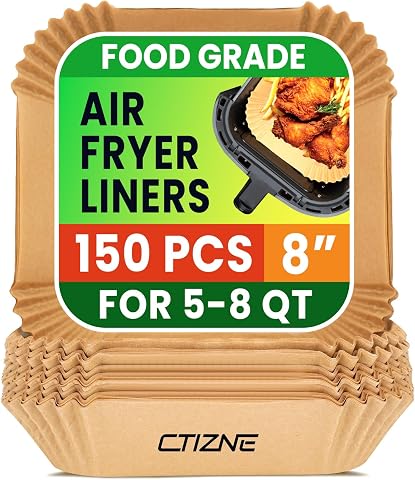

![6.3" Round Air Fryer Paper Liners, 2–4 Qt [125-Pack]](https://m.media-amazon.com/images/I/61NopqfPHBL._AC_SL480_.jpg)
Key Takeaways
- The Chefman 10L is the best pure jerky machine here thanks to three air-flow racks, a 200°F-capable dehydrator mode, and an interior viewing window for monitoring drying progress.
- The Ninja AF101 is the smallest and most affordable option, but its single 4-quart basket means jerky batches top out around a half pound of meat at a time.
- The Ninja Foodi DualZone is the only pick that can dry two different flavors or thicknesses simultaneously, with independent temperature control per basket down to 105°F.
- All four models reach the 145–170°F jerky range, but multi-rack ovens like the Chefman 10L and TurboFry 9-Qt hold low temps more evenly than basket models.
- Counter space is the real cost of capacity: the three larger units each demand a serious footprint, so measure your kitchen before choosing.
- A viewing window or interior light is genuinely useful for jerky, since opening the door mid-cycle drops the temperature and extends drying time.
| Chefman Multifunctional Digital Air Fryer with Rotisserie, Dehydrator, and Convection Oven, 10 L | 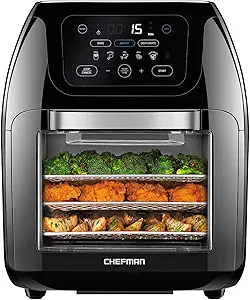 | Best Overall | Capacity: 10 liters (10 quarts) | Power: 1700 watts | Temperature Range: 200°F to 400°F | VIEW ON AMAZON | See Our Full Breakdown |
| Ninja AF101 Air Fryer, 4 Qt, 4-in-1, Grey |  | Best Value | Capacity: 4 quarts | Power: 1550 watts | Temperature Range: 105°F to 400°F | VIEW ON AMAZON | See Our Full Breakdown |
| Ninja Foodi DZ201 8-Quart 6-in-1 DualZone 2-Basket Air Fryer, Grey |  | Best for Two-Flavor Batches | Capacity: 8 quarts (2 × 4-quart zones) | Power: 1690 watts | Temperature Range: 105°F to 450°F | VIEW ON AMAZON | See Our Full Breakdown |
| Chefman TurboFry 9-Quart 7-in-1 Air Fryer with Viewing Window |  | Best Big-Basket Value | Capacity: 9 quarts | Power: 1750 watts | Temperature Range: 90°F to 450°F | VIEW ON AMAZON | See Our Full Breakdown |
| air fryer for jerky | Capacity | Power | Temperature Range | Dimensions |
|---|---|---|---|---|
| Chefman Multifunctional Digita | 10 liters (10 quarts) | 1700 watts | 200°F to 400°F | 12 × 12 × 15 inches |
| Ninja AF101 Air Fryer | 4 quarts | 1550 watts | 105°F to 400°F | — |
| Ninja Foodi DZ201 8-Quart 6-in | 8 quarts (2 × 4-quart zones) | 1690 watts | 105°F to 450°F | 13.86 × 15.63 × 12.4 inches |
| Chefman TurboFry 9-Quart 7-in- | 9 quarts | 1750 watts | 90°F to 450°F | 15.75 × 11.81 × 11.42 inches |
More Details on Our Top Picks
Chefman Multifunctional Digital Air Fryer with Rotisserie, Dehydrator, and Convection Oven, 10 L
This option stands out for one simple reason: it’s the only machine in this lineup built like a mini jerky factory. The three air-flow racks give you horizontal drying surfaces with space between each layer, which is exactly how strips dry best — air moves on both sides of every piece instead of only where the basket allows. Compared with the Ninja AF101, which forces you to arrange strips in a single 4-quart basket with the middle left empty, the Chefman can hold a genuinely usable batch, often two to three times more meat per cycle.
The dedicated dehydrate preset and wide low-temperature range mean you’re not improvising — you set it, walk away, and the interior light and viewing window let you check doneness without cracking the door and dumping heat. That’s a real advantage over basket-style fryers like the TurboFry 9-Quart, where checking progress means pulling the basket out entirely.
The tradeoffs are honest ones. This is the second-largest footprint in the group at roughly a square foot of counter, and the rotisserie spit and drip tray add parts to wash. The 17 presets are also more than a jerky maker needs — you’re paying for rotisserie and convection features you may never use if drying meat is your main goal. But if you want the machine most capable of making serious jerky quantities while still handling family dinners, this pick makes the most sense.
Pros:- Three air-flow racks create layered drying space ideal for jerky strips
- Dedicated dehydrate function with temperatures down to about 200°F on the preset scale
- Interior light and viewing window let you monitor drying without opening the door
- 17 presets cover roasting, baking, and rotisserie beyond jerky duty
Cons:- Large footprint takes up serious counter space
- More accessories to store and clean than simple basket models
- Many presets will go unused if jerky is your only goal
Best for: Home jerky makers who want maximum drying capacity plus a do-everything second oven
Not ideal for: Small kitchens or buyers who only need occasional single-serving jerky batches
- Capacity:10 liters (10 quarts)
- Power:1700 watts
- Temperature Range:200°F to 400°F
- Controls:Touch screen with 17 presets
- Dimensions:12 × 12 × 15 inches
- Included Accessories:3 air-flow racks, rotisserie spit, drip tray
- Material:Stainless steel
- Warranty:1 year
Our verdict“The closest thing to a purpose-built jerky machine in this lineup, and my pick for anyone making jerky in meaningful quantities.”
Ninja AF101 Air Fryer, 4 Qt, 4-in-1, Grey
Sometimes the right jerky machine is the one that’s already doing duty as your everyday air fryer, and that’s where the AF101 earns its spot. It has a true Dehydrate program with a temperature floor of 105°F — lower than anything else in this comparison — which gives you fine control at the exact range jerky requires. This model is better suited to small-batch makers: a pound of marinated beef, trimmed and arranged in the 4-quart nonstick basket, will dry into a respectable stash of jerky in an afternoon.
Compared with the Chefman 10L, you give up the multi-rack layout, so strips need to be flipped partway through and can’t overlap. But you also give up the footprint, the price of a bigger machine, and a chunk of cleanup time — the ceramic-coated basket and crisper plate go straight into the dishwasher with no drip tray or spit to scrub.
The real limitation is capacity, not capability. If you’re drying jerky for a household or gifting batches, you’ll be running cycle after cycle. And there’s no window, so checking doneness means pulling the basket and losing heat each time. For a first jerky experiment or a single snacker, those compromises are easy to accept.
Pros:- Dehydrate function reaches down to 105°F for precise low-temperature drying
- Compact footprint fits small kitchens and cabinets easily
- Ceramic-coated nonstick basket and crisper plate are dishwasher safe
- 4-in-1 versatility covers everyday air frying, roasting, and reheating
Cons:- 4-quart basket limits you to small jerky batches
- No viewing window, so checking progress vents heat
- Single-layer cooking means strips must be flipped manually
Best for: First-time jerky makers and singles or couples who want dehydrating without a big purchase
Not ideal for: Families or anyone wanting to dry more than about a pound of meat per cycle
- Capacity:4 quarts
- Power:1550 watts
- Temperature Range:105°F to 400°F
- Functions:Air Fry, Roast, Reheat, Dehydrate
- Basket Material:Ceramic-coated nonstick aluminum
- Dishwasher Safe:Yes
- Includes:Basket, crisper plate, 20-recipe booklet
Our verdict“The most affordable and space-efficient way to start making jerky at home, as long as you keep your batches small.”
Ninja Foodi DZ201 8-Quart 6-in-1 DualZone 2-Basket Air Fryer, Grey
Here’s the pick that solves a problem the others can’t: jerky recipes vary. A thin sweet-teriyaki strip dries faster than a thick cracked-pepper cut, and with a single machine you’re stuck compromising on time and temperature. The DualZone’s two independent 4-quart baskets each get their own settings, so you can run a fast-drying batch alongside a slower one — or dry two completely different marinades without flavor crossover. That’s a genuine edge over the Chefman 10L, where everything inside shares one cavity and one temperature.
Match Cook mode is the other side of the coin: it copies settings to both zones, effectively giving you a full 8-quart jerky dryer. And Smart Finish syncs differing cook times so both batches land together — handy when one zone is finishing jerky while the other reheats dinner. The 105°F low end matches the AF101, so temperature control at jerky range is just as precise.
The compromises mirror its strengths. At nearly 18 pounds and over 15 inches wide, it’s the bulkiest item in this lineup, and you still get basket-style single-layer drying per zone rather than the Chefman’s stacked racks. For pure jerky output per cycle, the 10L wins; for flexibility and simultaneous batches, this model is better suited.
Pros:- Two independent baskets with separate temperature and time controls
- Smart Finish synchronizes different dry times so batches finish together
- Match Cook doubles effective capacity to 8 quarts
- Dehydrate program reaches 105°F with a 450°F maximum for other cooking
Cons:- Widest footprint in the lineup at over 15 inches
- Heavier than single-basket models at 17.9 pounds
- Each zone still limits strips to a single layer
Best for: Jerky experimenters who run multiple flavors or thicknesses and want them done at the same time
Not ideal for: Counters short on width, or buyers who mainly want maximum drying surface in one unit
- Capacity:8 quarts (2 × 4-quart zones)
- Power:1690 watts
- Temperature Range:105°F to 450°F
- Cooking Programs:6 (Air Fry, Air Broil, Roast, Bake, Reheat, Dehydrate)
- Dimensions:13.86 × 15.63 × 12.4 inches
- Weight:17.9 pounds
- Included:2 baskets, 2 crisper plates, recipes, cooking charts
Our verdict“The only air fryer here that dries two different jerky recipes at once — pick it for flexibility over raw capacity.”
Chefman TurboFry 9-Quart 7-in-1 Air Fryer with Viewing Window
This pick makes the most sense for the buyer caught between the AF101’s tiny basket and the Chefman 10L’s full-size footprint. You get a 9-quart square basket — noticeably more drying surface than the 4-quart Ninja — plus the lowest temperature floor in the group at 90°F, which gives you the gentlest possible drying environment for delicate strips or thin-sliced turkey jerky. Compared with the DualZone, you lose the two-zone flexibility but gain a lighter machine (11.3 pounds versus nearly 18) and a slightly narrower profile.
The standout convenience features are well-chosen for jerky specifically. The viewing window means you can watch color and texture change without interrupting the cycle, and the shake reminder doubles as a nudge to rearrange strips partway through drying — the manual flipping a basket design demands. Seven functions, including keep-warm and dehydrate, cover the jerky workflow end to end.
Where it falls short of my top pick is rack space: it’s still one basket, so strips dry in a single layer and total yield per cycle trails the Chefman 10L’s three stacked racks. The square shape helps, but geometry only goes so far. Still, for a household that wants big-batch jerky occasionally and everyday air frying constantly, the balance here is hard to beat.
Pros:- Large 9-quart square basket fits more strips than standard round designs
- Temperature range down to 90°F — the lowest in this comparison
- Viewing window and shake reminder support monitoring mid-dry
- Lightest of the large-capacity picks at 11.3 pounds
Cons:- Single-layer basket drying limits total yield per cycle
- Still requires a large countertop footprint
- Fewer dedicated accessories than rack-based dehydrator combos
Best for: Buyers who want large single-basket capacity and low-temp control without an oven-style footprint
Not ideal for: Maximum-yield jerky makers who need stacked multi-rack drying
- Capacity:9 quarts
- Power:1750 watts
- Temperature Range:90°F to 450°F
- Functions:7 (air fry, broil, dehydrate, bake, reheat, keep warm, frozen)
- Dimensions:15.75 × 11.81 × 11.42 inches
- Weight:11.3 pounds
- Warranty:1 year
Our verdict“A smart middle path: near-oven capacity and the gentlest low temps here, in a lighter, simpler basket design.”

How We Picked
Because jerky is a low-and-slow drying task rather than a high-heat cooking one, I judged these air fryers on a different set of priorities than a typical air fryer roundup. My criteria, in order of importance:
- Low-end temperature reach and stability. Jerky needs roughly 145–170°F for several hours. Every pick here has a dedicated dehydrate function that reaches at least 105°F, which gives you headroom to fine-tune drying.
- Drying surface area. Strips need airflow on all sides and can’t be stacked. Models with multiple racks beat single baskets for usable jerky real estate.
- Visibility and monitoring. A window or interior light lets you check progress without venting heat — a small feature that matters a lot over a 4-hour dry.
- Capacity versus footprint. I weighed how much jerky each machine can realistically produce against how much counter it eats.
- Ease of cleanup. Marinades drip and splatter, so dishwasher-safe racks and drip trays earned real credit.
I deliberately excluded machines that can’t hold temperatures below 200°F, since those simply can’t make jerky safely and well, no matter how good they are at frying chicken.
Factors to Consider When Choosing Air Fryer For Jerky
Choosing an air fryer for jerky comes down to a handful of factors that matter more than they would for ordinary frying. Here’s what I weigh when comparing machines for this specific job.Temperature Range at the Low End
Jerky dries at roughly 145°F to 170°F, well below typical air frying temps. Any machine you buy needs a dehydrate function or manual settings that hold steady in that band. All four picks here qualify — the TurboFry reaches 90°F and both Ninjas hit 105°F — but machines that bottom out at 200°F or higher force you to dry too hot, which cooks the outside before the inside is ready.
Drying Surface and Airflow
Strips can’t overlap, or you’ll get unevenly dried, chewy-in-the-wrong-way results. Multiple racks (like the Chefman 10L’s three air-flow racks) multiply your yield per cycle, while single baskets — even large ones like the TurboFry’s 9-quart — cap you at one layer. If you plan to make jerky regularly in quantity, rack count matters more than raw quartage.
Capacity and Counter Footprint
Capacity claims can mislead. The DualZone’s 8 quarts are split across two 4-quart zones, so each batch is small even though the total is big. Meanwhile, oven-style units deliver more usable drying space per square inch of counter but sit permanently on your kitchen surface. I’d measure your counter before buying anything over 6 quarts.
Visibility and Monitoring
Jerky takes hours, and doneness is judged by look and bend rather than a timer. A viewing window or interior light — present on both Chefman models here — lets you monitor without opening the door, which preserves temperature and shortens total drying time. Basket-only units like the Ninjas require you to pull the drawer to check, venting heat each time.
Cleanup
Marinades are sticky, sugary, and stubborn. Dishwasher-safe racks, baskets, and drip trays are non-negotiable for jerky duty, and every pick in this roundup has them. Oven-style models with drip trays actually edge out baskets here, since drips collect below the racks instead of baking onto a basket floor.
Frequently Asked Questions
Can you really make jerky in an air fryer?
Yes, as long as the machine can hold low temperatures — ideally between 145°F and 170°F — for several hours. That’s what a dedicated dehydrate function provides, and all four models in this roundup include one. The process is the same as a traditional dehydrator: thin strips of trimmed meat, marinated and patted dry, arranged with space between them and dried until they bend and crack without snapping. The main difference from a standalone dehydrator is capacity, since air fryer baskets and racks hold less than a multi-tray dehydrator tower.
How long does jerky take in an air fryer?
Expect roughly 3 to 5 hours at 145–170°F, depending on strip thickness, meat type, and how full the machine is. Thin-sliced beef (around 1/8 inch) can finish closer to three hours, while thicker cuts or poultry take the long end. Batch size matters too: a crowded basket traps moisture and slows everything down, which is one reason I favor multi-rack machines like the Chefman 10L for bigger batches. Resist the urge to raise the temperature to speed things up — that cooks the meat instead of drying it.
Is a dual-basket air fryer better for jerky than a single large one?
It depends on your goal. The Ninja Foodi DualZone’s strength is running two different recipes or thicknesses simultaneously at independent temperatures — great for variety. But for pure output, a single large cavity like the Chefman 10L’s, with three stacked racks, dries more meat per cycle because every rack gets full airflow. If you make one flavor at a time in volume, go single-cavity; if you like experimenting, the dual-basket setup wins.
Do I need to flip jerky strips while drying in an air fryer?
In basket-style air fryers like the Ninja AF101 or TurboFry, yes — flipping or rearranging strips about halfway through promotes even drying, since air circulation is strongest around the basket’s edges. Features like the TurboFry’s shake reminder help you remember. Rack-based oven models like the Chefman 10L circulate air horizontally across all sides of each strip, so flipping is usually unnecessary, though rotating racks occasionally doesn’t hurt.
Is air fryer jerky safe to eat?
It can be, provided you follow standard jerky safety practices. The USDA recommends heating meat to 160°F (poultry to 165°F) before or during drying to kill bacteria — many jerky recipes handle this by briefly poaching or oven-heating marinated strips before they go into the dryer, or by drying at 160°F+. Use lean cuts trimmed of fat, keep strips thin and uniform, pat off marinade before drying, and store the finished jerky in an airtight container. Properly dried jerky keeps about a week at room temperature or several months refrigerated.
Conclusion
After comparing these four machines, the right choice maps cleanly onto how you plan to make jerky. If you’re serious about output and want a machine purpose-shaped for drying, the Chefman Multifunctional 10-Liter is my Best Overall — its three air-flow racks, dehydrator mode, and viewing window make it the closest thing here to a dedicated jerky dryer that also cooks dinner.
If you’re trying jerky for the first time or feeding one or two people, the Ninja AF101 is the value pick: precise low temps, easy cleanup, and a small footprint, with small batches as the tradeoff. Experimenters who run multiple flavors should choose the Ninja Foodi DualZone, the only model that dries two recipes simultaneously with independent controls. And everyday air fryer users who want big-batch jerky capability without an oven-style unit get the best of both worlds in the Chefman TurboFry 9-Quart, with the lowest temperature floor in the group and a viewing window at a lighter weight.
Whichever route you take, prioritize low-temperature control and drying surface over presets — those two factors determine your jerky quality far more than anything else on the box.
Fall Picks
fall essentials
As an affiliate, we earn on qualifying purchases.