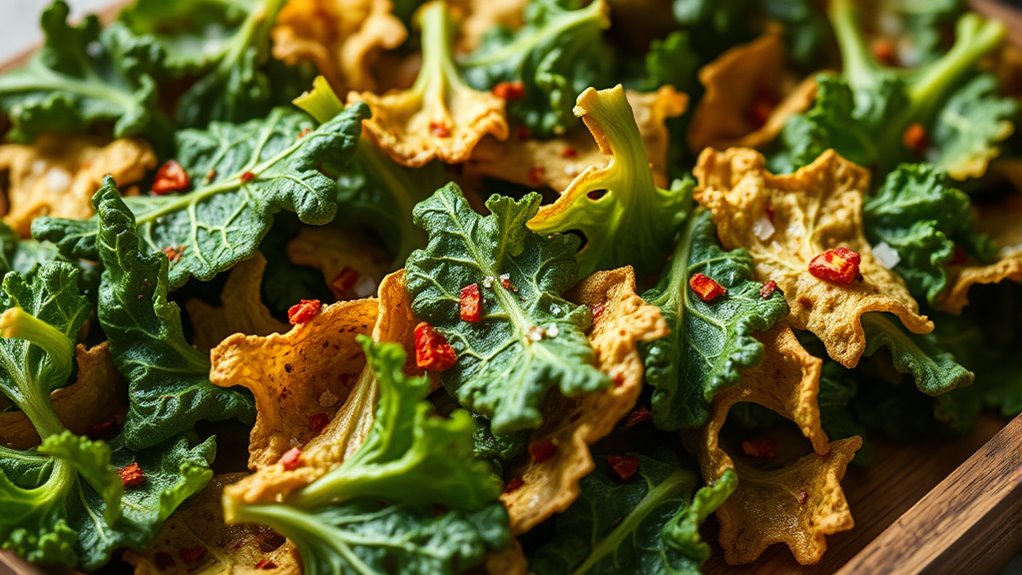

To make tasty DIY kale chips, start with fresh, dry kale and toss it with a bit of oil. Season with simple options like salt and olive oil or get creative with spicy blends using paprika, cayenne, or garlic powder. For a sweeter touch, add honey or citrus. Bake at 275°F to 300°F until crispy, checking frequently. Keep exploring for even more flavor ideas and perfect cook times to get that ideal crunch.

Get kitchen gear delivered free — and shop member deals
- Fast, free delivery on millions of items
- Access to Prime Big Deal Days deals on October 6–7
- Prime Video, Amazon Music and more included
Key Takeaways
- Use fresh kale, dry thoroughly, and toss with a small amount of oil before adding seasonings for crispier chips.
- Experiment with flavorings like smoked paprika, garlic powder, nutritional yeast, honey, or citrus for variety.
- Bake at 275°F to 300°F, checking regularly for crispness; chips are ready when they break easily and are dry.
- Avoid over-oiling; lightly coat kale for even seasoning and better crunch.
- Store cooled chips in an airtight container with a paper towel, and reheat in a low-temperature oven for best results.
As an affiliate, we earn on qualifying purchases.
Selecting the Perfect Kale for Chips
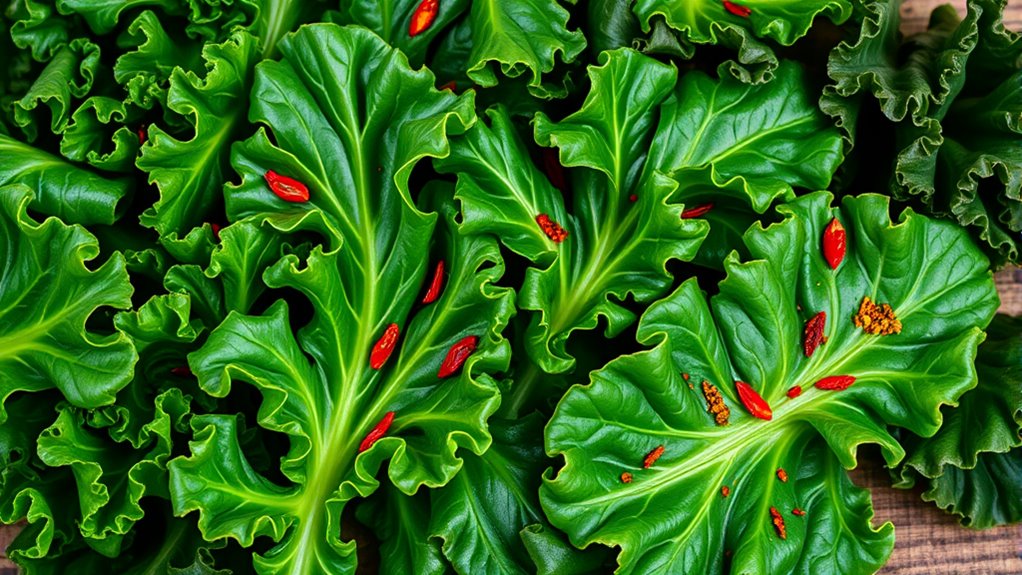
To make the best kale chips, you want to start with fresh, sturdy kale leaves. When choosing kale varieties, opt for curly or lacinato (dinosaur) kale, as they crisp up nicely. These types have thick, resilient leaves that turn crispy without becoming soggy. Look for vibrant green leaves without yellowing or brown spots, which indicate freshness. When harvesting, use sharp scissors to cut leaves at the stem, avoiding damaged or wilted parts. Harvest in the morning after dew has dried for the best flavor and texture. Selecting healthy, robust leaves ensures your kale chips will be flavorful and crispy. Proper kale preparation techniques can also enhance the overall crispiness and flavor of your chips. Additionally, choosing kale with strong, fresh leaves helps ensure your chips will be evenly crispy and flavorful.
Preparing Kale: Washing and Drying Tips
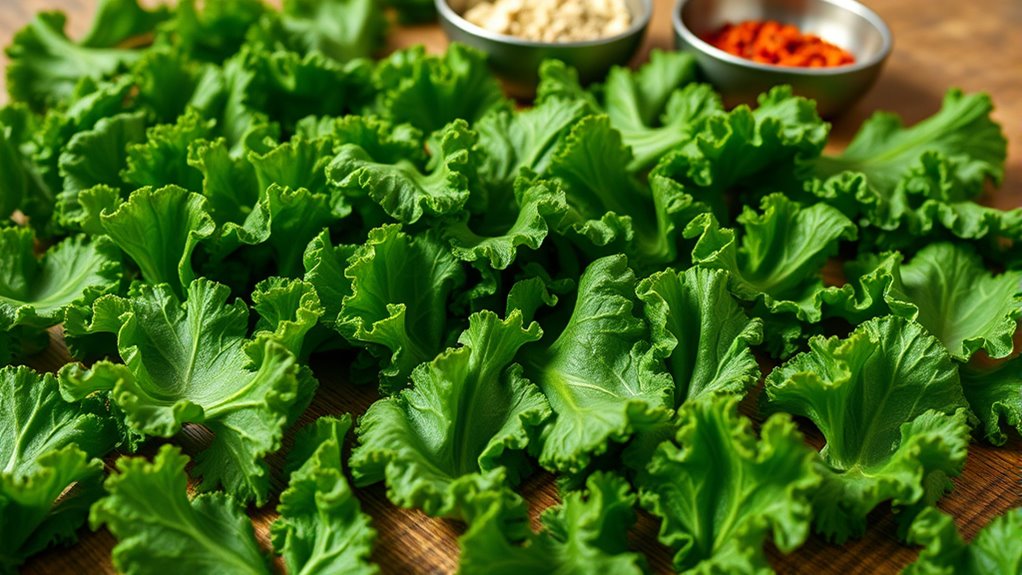
Before you start seasoning your kale, washing and drying the leaves thoroughly is vital. Proper cleaning enhances kale texture and guarantees no dirt or pesticides remain. Use these washing methods:
- Fill a large basin with cool water and gently swish the leaves to loosen dirt.
- Rinse each leaf under a slow, steady stream of water to remove debris.
- Pat the kale dry with a clean towel or use a salad spinner for maximum moisture removal.
- Ensuring the leaves are completely dry is essential for optimal home cleaning and crispiness during baking.
Basic Seasoning Techniques for Kale Chips

Seasoning your kale chips is a simple step that packs a big flavor punch. With different kale varieties like Curly, Lacinato, or Red Russian, you can tailor your seasoning techniques to enhance their unique textures and tastes. For a basic approach, toss the kale with a small amount of oil first, which helps the seasonings stick evenly. Then, sprinkle your choice of spices—paprika, garlic powder, or nutritional yeast work well—ensuring each piece is coated. Use your hands to massage the seasonings into the leaves for better flavor absorption. Keep in mind, lighter coatings prevent sogginess and promote crispness. Experiment with different seasoning combinations to find your favorite, and remember, the key is to distribute flavors evenly across all kale varieties.
Classic Salt and Olive Oil Blend
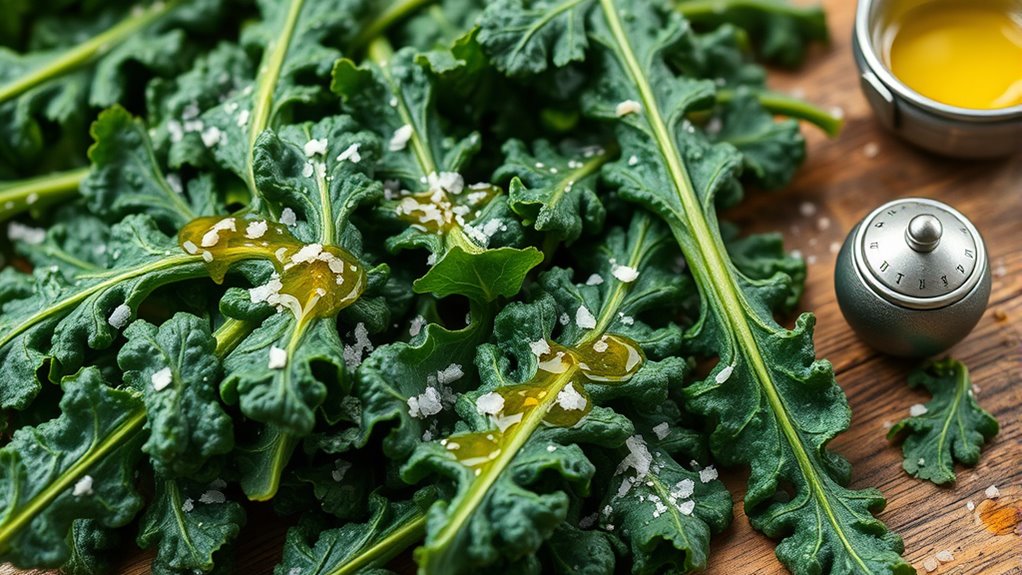
A simple and delicious way to flavor your kale chips is by using a classic salt and olive oil blend. This combo enhances flavor without overpowering the greens. To prepare, first drizzle your kale with olive oil, making sure each leaf is coated evenly. Next, sprinkle salt generously across the surface, ensuring every bite is seasoned perfectly. Finally, toss the kale to distribute the salt and oil, creating a shimmering, flavorful layer. This simple blend pairs well as a snack on its own or alongside dips and cheeses, making it versatile for snack pairing. Plus, it offers nutritional benefits like healthy fats from olive oil and electrolytes from salt, supporting your health while satisfying your crunch cravings. Incorporating traditional cultural practices can also enrich your culinary experience and connect you to indigenous heritage. Additionally, using mindful seasoning can help you customize flavors to suit your taste preferences. Practicing sustainable harvesting methods can further ensure your kale remains abundant and healthy for future enjoyment. Being aware of cheating strategies in cooking, such as overly salty or oil-heavy preparations, can help you maintain balanced and health-conscious recipes. Moreover, experimenting with different seasoning ideas can elevate your kale chips and keep your snack time exciting.
Spicy and Savory Flavor Combinations
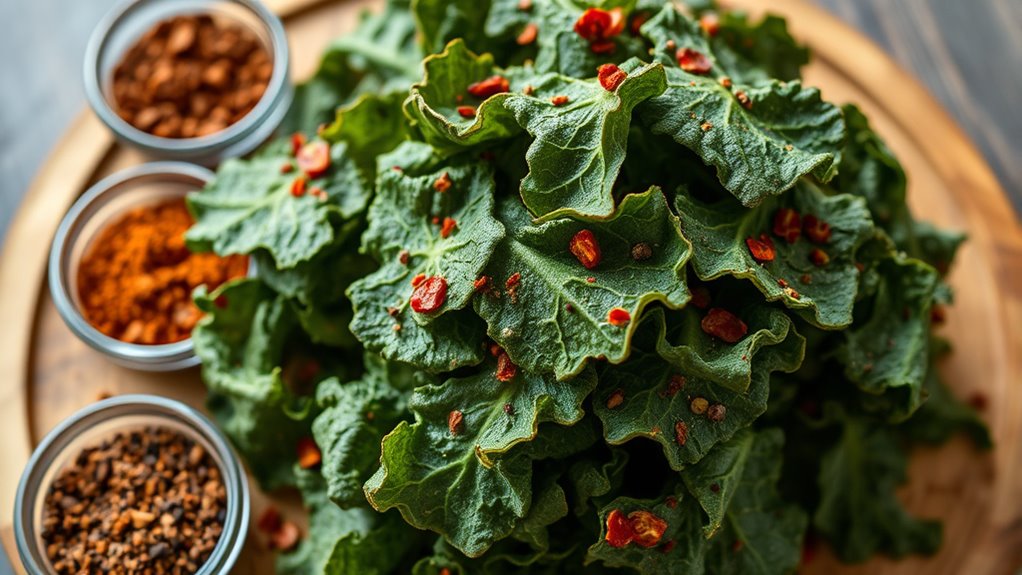
Adding bold, spicy, and savory flavors to your kale chips takes them to a whole new level of snackability. To boost their nutritional benefits, consider seasoning with ingredients like smoked paprika, cayenne pepper, garlic powder, or nutritional yeast. These add depth and heat without extra calories. Different kale varieties, such as Lacinato or curly kale, can influence flavor absorption and texture, making them ideal for savory blends. Spicy seasonings enhance the natural nutrients of kale, like vitamins A, C, and K, supporting your health while satisfying your taste buds. Incorporating vibrational energy into your seasoning choices can also elevate the overall experience and benefits of your snack. Experiment with combinations like chili lime or Sriracha and onion powder to find your favorite savory kick. Incorporating healthful ingredients can further maximize the benefits of your snack while keeping it delicious. Additionally, understanding AI security and its ongoing developments can inspire innovative ways to enhance your culinary creations with creative and safe flavor combinations. Exploring natural flavor enhancers can help you craft more complex and satisfying seasoning profiles that boost both flavor and nutritional value. For example, using dog-inspired names as a creative theme for your seasonings can add a playful touch to your snacks, making them more memorable. These flavor profiles keep your kale chips exciting and packed with health benefits.
Sweet and Tangy Seasoning Ideas
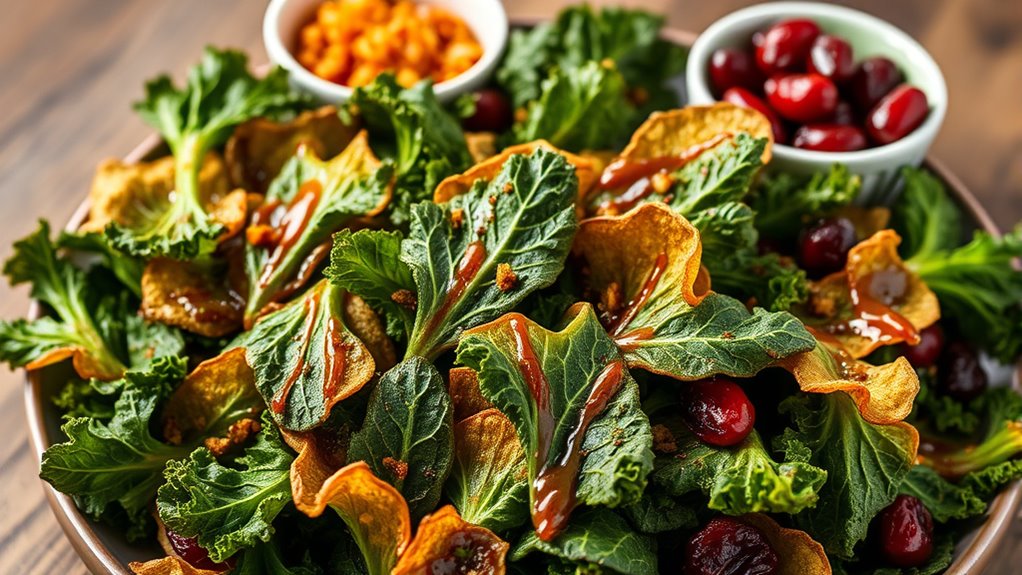
Sweet and tangy seasonings add an invigorating twist to your kale chips. Combining ingredients like honey, balsamic vinegar, or citrus can create vibrant flavors. Just be sure to balance the sweetness with a splash of citrus for a bright, zesty finish. Incorporating active listening during preparation can enhance your appreciation for flavor combinations and improve your cooking skills. Additionally, practicing space management in your kitchen can help keep your ingredients organized and easily accessible for more efficient seasoning. Embracing creative practice even in simple cooking tasks can lead to more innovative and enjoyable results. Paying attention to macronutrient ratios can also help tailor your seasonings to fit specific dietary goals or preferences. Understanding projector technology can inspire creative presentation ideas for your snacks, especially when sharing with friends or family.
Sweet and Tangy Flavor Combinations
When aiming for an irresistible sweet and tangy flavor in your kale chips, combining vibrant ingredients can make a big difference. Think about blending natural sweetness with bold tang, like:
- Drizzling honey or maple syrup for a smooth sweetness.
- Adding apple cider vinegar or balsamic glaze for a sharp kick.
- Sprinkling a touch of dried cranberries or pineapple bits for extra tartness.
- Incorporating farmhouse-inspired rustic decor elements into your kitchen setup can enhance the overall aesthetic while preparing your snacks.
- Exploring remote hackathons can inspire creative ways to experiment with flavor pairings and presentation styles, elevating your snack experience.
These flavor combinations highlight the diverse kale cultivation methods and enhance its nutritional benefits. The natural sugars complement the greens, making your chips both delicious and nutritious. The AI in mobile devices and tangy elements cut through the richness, balancing flavors perfectly. By choosing these ingredients, you’ll enjoy crispy kale chips that are as wholesome as they are flavorful, encouraging you to incorporate more kale into your diet. Additionally, understanding the influence of AI on music creation can inspire creative ways to experiment with flavor pairings and presentation styles, elevating your snack experience. Incorporating proper food handling techniques ensures safety and preserves the freshness of your ingredients.
Balancing Flavors With Citrus
Citrus is a fantastic way to create a bright, balanced flavor in your kale chips, as it naturally combines sweetness with a tangy punch. Using citrus zest adds a burst of aromatic oils, elevating the overall flavor without overpowering the kale. A squeeze of lemon juice provides the perfect tang to contrast the natural bitterness of the greens. When seasoning, combine lemon juice with a touch of honey or maple syrup for a harmonious sweet-tangy profile. Be sure to evenly coat your kale with citrus zest and juice before baking, so the flavors are well-distributed. This balance of bright citrus notes enhances the kale’s crunch and makes each bite revitalizing flavorful. Experiment with different citrus fruits to find your ideal sweet and tangy kale chip.
Optimal Cook Times for Crispy Kale Chips

To get perfectly crispy kale chips, pay attention to your baking temperature and don’t set it too high or too low. Keep an eye on them as they bake, since oven times can vary. Check for crispiness regularly to prevent burning and guarantee they’re just right.
Baking Temperature Tips
Achieving perfectly crispy kale chips hinges on setting the right baking temperature. To avoid burning delicate kale varieties or compromising seasonings compatibility, keep your oven between 275°F and 300°F. This range ensures even dehydration and crispiness without overcooking. Imagine:
- A gentle heat that transforms fresh leaves into brittle, snack-worthy chips.
- The warmth that allows seasonings like sea salt or garlic powder to meld seamlessly.
- A steady temperature that prevents burnt edges while preserving vibrant green color.
Adjusting within this range depends on your kale type and desired crunch. Looser leaves or more delicate varieties may need slightly lower temps, while sturdier kale can handle the higher end. Proper temperature control guarantees crispy, flavorful results every time.
Checking for Crispiness
How can you tell when your kale chips are perfectly crispy? The key is texture testing—gently lifting a chip to see if it’s crunchy and dry, not limp or greasy. Watch for minimal oil absorption; if your chips look shiny and feel greasy, they need more baking time. To gauge crispiness, observe their color and sound when you bite into them.
| Texture Test | Oil Absorption | Final Step |
|---|---|---|
| Breaks easily | Slight sheen | Fully crisp |
| No bend or flex | No greasy feel | Ready to cool |
| Crunchy sound | No moisture on surface | Perfectly crispy |
| Firm but brittle | Light residue | Remove from oven |
| Consistent texture | No oily patches | Enjoy! |
Oven vs. Dehydrator: Which Method Works Best?
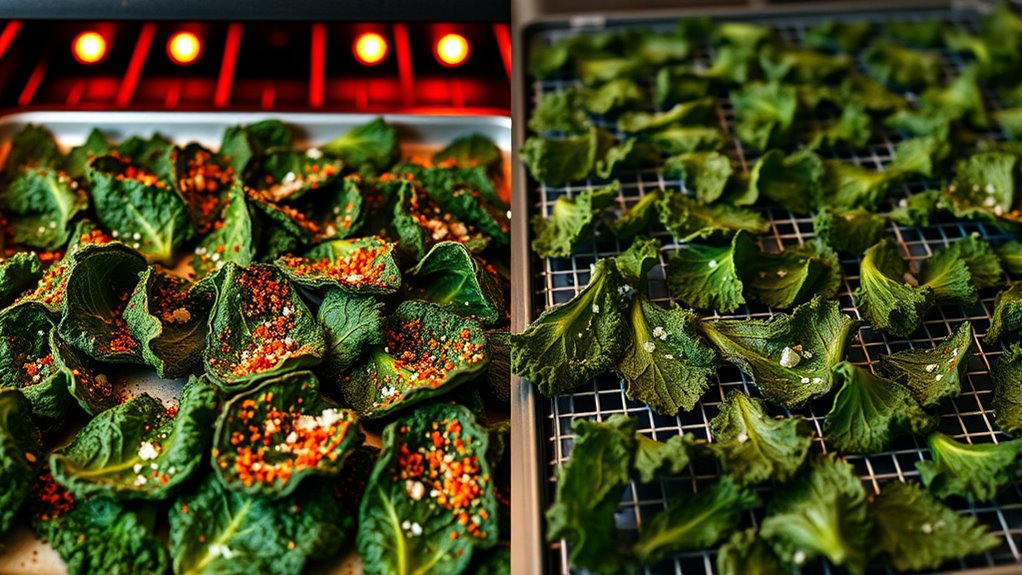
When choosing between an oven and a dehydrator for making kale chips, each method offers distinct advantages and challenges. A dehydrator gently dries the kale, preserving delicate flavors and nutrients, and works well with various kale varieties. An oven, on the other hand, provides quicker results and more control over temperature. Imagine:
- The dehydrator’s steady, low heat slowly turning fresh kale into crispy chips without burning.
- The oven’s high heat quickly crisping kale, perfect for last-minute snacks.
- Seasoning techniques that stick better when applied before dehydration or oven baking, enhancing flavor.
Both methods require mindful temperature control to prevent burning or sogginess. Your choice depends on your time, texture preference, and desired seasoning impact.
Storing and Reheating Your Kale Chips

Proper storage is essential to keep your kale chips crispy and flavorful after you’ve made them. To maintain their crunch, store them in an airtight container or resealable bag, preferably with a paper towel to absorb excess moisture. Avoid storing them in humid environments, which can make them soggy. For reheating, the best methods are using a low-temperature oven or a toaster oven, which helps restore crispiness without burning. You can also briefly reheat in a dehydrator set to a low setting or re-crisp them at 350°F for a few minutes. Avoid microwaving, as it tends to make kale chips soggy and chewy. Following these storage tips and reheating methods will help keep your kale chips fresh and delicious longer.
Frequently Asked Questions
Can I Use Frozen Kale for Making Chips?
You can use frozen kale for making chips, but keep in mind that frozen kale tends to have a softer texture than fresh. When you thaw it, the kale becomes more delicate and may release excess moisture, which can affect the crunchiness. To get the best kale texture, gently pat the thawed kale dry before seasoning and baking. This way, your kale chips will come out crispy and delicious.
How Do I Prevent Kale From Burning During Baking?
An ounce of prevention is worth a pound of cure. To stop kale from burning, keep an eye on your oven temperature, setting it around 350°F for even baking. Store your kale properly to keep it fresh, and avoid overcrowding the baking sheet, which can cause uneven cooking. Check your chips frequently and remove them once they turn crispy, ensuring they don’t burn and stay delicious.
Are There Vegan Seasoning Options for Kale Chips?
You’re wondering if vegan seasoning options exist for kale chips. Absolutely, you can use vegan-friendly seasonings like nutritional yeast for cheesy flavor, smoked paprika for a smoky touch, or garlic and onion powders for savory notes. Plant-based flavorings like tamari or liquid smoke add depth without animal products. Experiment with these vegan seasonings to enhance your kale chips while keeping them plant-based and delicious.
How Long Do Kale Chips Stay Fresh After Baking?
Oh, the fleeting joy of freshly baked kale chips—if only they could last forever! Typically, you can enjoy their crispness for about 2 to 3 days. For ideal storage duration, keep them in an airtight container at room temperature. If you must extend their life, refrigeration tips suggest storing them in a sealed bag but beware—they may lose crunch. So, eat them quickly and savor every crispy bite!
Can I Bake Kale Chips at Higher Temperatures for Quicker Results?
You might wonder if increasing the oven temperature can speed up baking kale chips. While cranking up the oven temperature can reduce baking time, it risks burning the delicate leaves and uneven drying. For best results, stick to a moderate oven temperature, typically around 350°F (175°C), and adjust baking time accordingly. This approach guarantees crispy, well-dried kale chips without burning or uneven cooking.
Conclusion
Now that you know how to select, prepare, season, and cook your kale, it’s time to get creative and enjoy your homemade chips. Experiment with flavors, perfect your technique, and find your ideal crunch. Whether you prefer spicy, sweet, or classic, make every batch a reflection of your taste. Keep practicing, keep tasting, and keep snacking guilt-free—because your perfect kale chips are just a few steps away.
Fall Picks
fall essentials
As an affiliate, we earn on qualifying purchases.