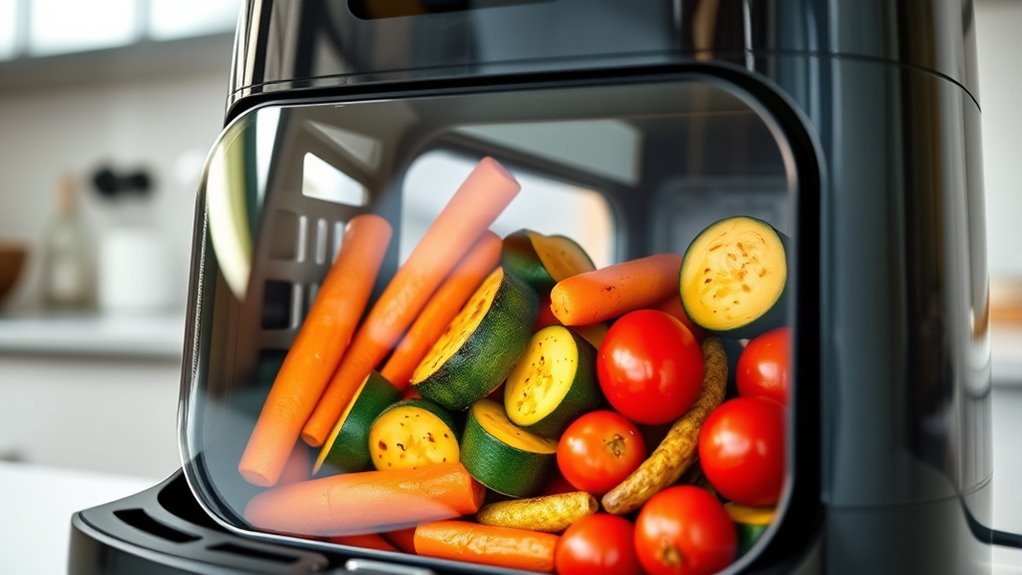

Yes, air-frying vegetables generally retains more nutrients than boiling or steaming because of less water exposure and shorter cooking times. This method helps preserve water-soluble vitamins like vitamin C and minerals, which can leach out when vegetables are boiled or steamed for longer periods. Proper temperature and cooking duration are essential to prevent nutrient loss. To discover more about how air-frying benefits nutrition and flavor, keep exploring the details below.
Listen free for 30 days with Audible
Thousands of audiobooks and originals — cancel anytime.
As an affiliate, we earn on qualifying purchases.
Key Takeaways
- Air-frying preserves more nutrients than boiling and steaming due to less water exposure and shorter cooking times.
- Proper temperature control during air-frying prevents nutrient loss, especially of water-soluble vitamins like vitamin C.
- Scientific studies show higher retention of vitamins and antioxidants in air-fried vegetables compared to roasting or boiling.
- Overcooking in any method depletes nutrients; air-frying’s shorter cook times help maintain vitamin and mineral content.
- Choosing fresh, nutrient-dense vegetables and minimal oil enhances nutrient preservation during air-frying.
air fryer vegetable cooking basket
As an affiliate, we earn on qualifying purchases.
As an affiliate, we earn on qualifying purchases.
Understanding Nutrients in Vegetables

Have you ever wondered what makes vegetables so nutritious? It’s not just their vitamins and minerals, but how you prepare them that impacts their benefits. When you air-fry vegetables, you often experience flavor enhancement, making each bite more appealing without adding extra fat. This method also improves texture, turning vegetables crispy and tender, which can encourage you to eat more of them. By preserving nutrients during air-frying, you get a tasty, nutritious snack or side dish. Unlike overcooking, air-frying quickly locks in essential nutrients, ensuring you receive maximum health benefits. Additionally, proper cooking methods like air-frying help maintain a higher nutrient content compared to traditional cooking. So, preparing vegetables this way not only boosts their flavor and texture but also helps you enjoy their true nutritional value.
How Air-Frying Works Compared to Traditional Methods
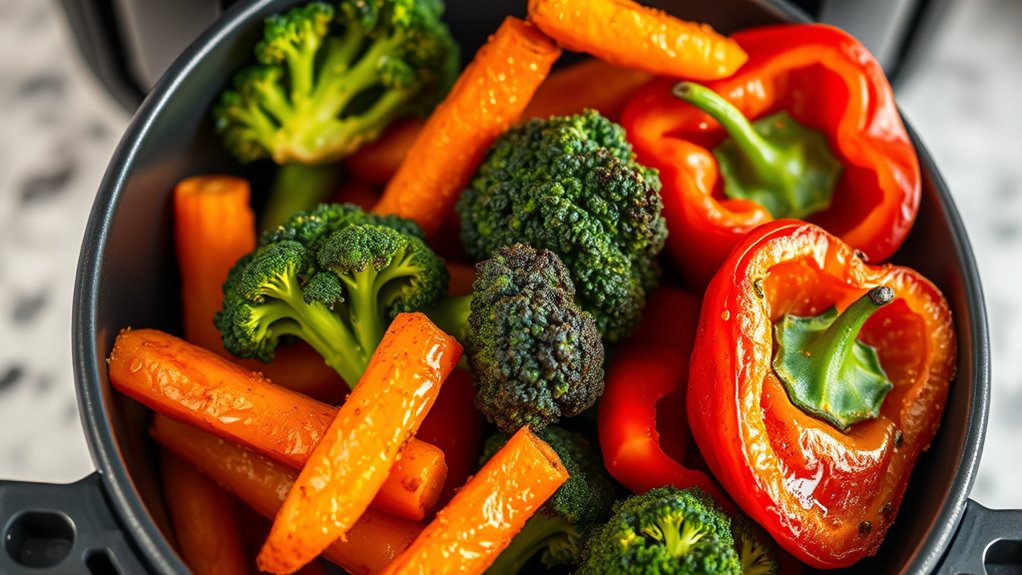
While understanding the nutrients in vegetables helps you appreciate their health benefits, how you cook them can make a big difference in preserving those nutrients. Air frying works differently from traditional methods by circulating hot air rapidly around the food, creating a crispy exterior without excess oil. This quick, dry heat limits nutrient loss compared to boiling or frying in oil. Proper air fryer maintenance ensures it heats evenly, so your vegetables cook consistently, preserving texture and nutrients. Additionally, sourcing fresh, high-quality vegetables ensures you start with the best ingredients, which impacts nutrient retention. Unlike traditional methods that often involve longer cooking times or added fats, air frying offers a faster, cleaner way to cook vegetables while maintaining their nutritional value. Cooking techniques also influence how well nutrients are preserved during preparation.
The Impact of Heat and Oil on Nutrient Retention
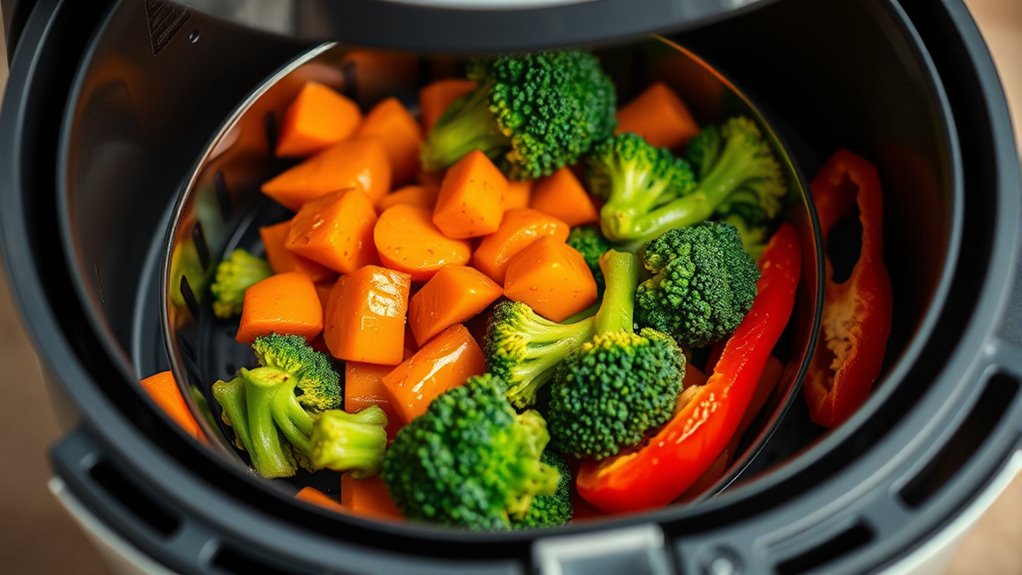
Heat and oil play essential roles in determining how well nutrients are preserved during vegetable cooking. Proper heat levels help break down cell walls, making nutrients more accessible, but excessive heat can degrade sensitive vitamins. Oil acts as a heat conductor and enables flavor enhancement, making vegetables more appealing. It also improves texture, giving vegetables a crisp exterior and tender interior. Using a small amount of oil during air-frying helps retain nutrients better than deep-frying, as it requires less oil and heat exposure. However, too much heat or oil can lead to nutrient loss, especially of water-soluble vitamins like vitamin C. Striking the right balance ensures you maximize flavor and texture while minimizing nutrient degradation. Temperature control is crucial in optimizing nutrient retention during cooking. This balance is key to healthier, tastier vegetables.
Scientific Studies on Nutrient Preservation During Air-Frying
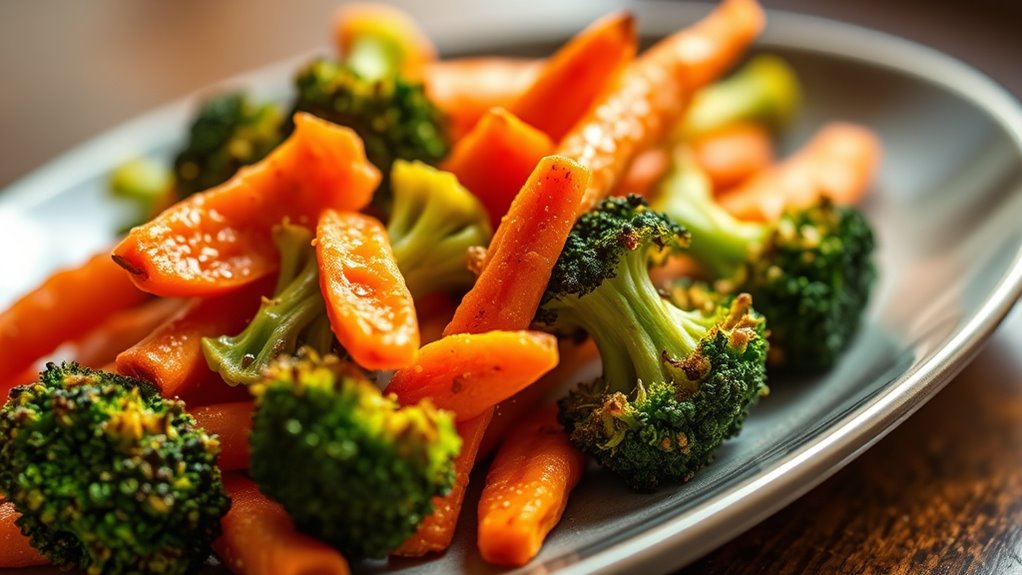
Recent scientific studies demonstrate that air-frying can effectively preserve key nutrients in vegetables compared to traditional methods. This process often results in better flavor enhancement and texture improvement, making vegetables more appealing. Researchers found that air-fried vegetables retain higher levels of vitamins like vitamin C and antioxidants. The rapid, even heat minimizes nutrient loss while enhancing taste and crispness. To illustrate, here’s a comparison of nutrient retention and sensory benefits:
| Method | Nutrient Retention | Flavor & Texture |
|---|---|---|
| Air-Frying | High | Improved flavor, crisp |
| Roasting | Moderate | Slight flavor enhancement |
| Boiling | Low | Loss of texture, nutrients |
This evidence supports air-frying as a nutrient-preserving cooking method that elevates overall vegetable quality. Additionally, understanding the nutrient stability during cooking can help optimize preparation techniques for maximum health benefits.
Comparing Nutrient Levels in Air-Fried Versus Boiled and Steamed Vegetables

You want to know how air-frying compares to boiling and steaming in preserving nutrients. Different cooking methods impact nutrient retention based on factors like cooking time and vegetable type. Understanding these differences helps you choose the best method to keep your vegetables nutritious. Additionally, research indicates that AI-powered kitchen devices are beginning to assist in optimizing cooking processes for maximum nutritional retention.
Nutrient Preservation Efficiency
When it comes to preserving nutrients, air-frying often outperforms boiling and steaming because it exposes vegetables to less water and shorter cooking times. This method helps retain more vitamins and minerals that can leach out in water-based cooking. Plus, air-frying enhances flavor and improves texture, making vegetables more appealing without sacrificing nutrients. Since it uses dry heat, nutrient degradation is minimized, especially for heat-sensitive compounds like vitamin C. Compared to boiling, which can cause significant nutrient loss, air-frying maintains higher nutrient levels. Steaming preserves nutrients well but may not provide the same flavor enhancement and crisp texture that air-frying delivers. Additionally, understanding the ancient nutritional uses of seeds like chia demonstrates how modern techniques can optimize nutrient retention. Overall, air-frying proves to be a more efficient way to keep vegetables both nutritious and delicious.
Impact of Cooking Time
Cooking time substantially influences nutrient retention in vegetables, especially when comparing air-frying to boiling and steaming. Longer cooking times can break down sensitive nutrients, but shorter, well-controlled cooking preserves more vitamins and minerals. In air-frying, you can often cook vegetables quickly at higher temperatures, reducing nutrient loss. Conversely, boiling and steaming may require longer times, which can lead to nutrient leaching or degradation. Cooking temperature plays a key role; higher temperatures in air-frying can cook vegetables efficiently while maintaining their nutrients if time is controlled. Oil quality also matters—using good-quality oil during air-frying can help lock in nutrients and improve heat transfer, minimizing nutrient loss. Additionally, cooking methods influence nutrient stability, with dry-heat techniques like air-frying often better at preserving nutrients than moist-heat methods. Ultimately, balancing cooking time and temperature helps maximize nutrient retention across different methods.
Vegetable Type Variations
Different vegetables respond uniquely to air-frying, boiling, and steaming, resulting in varying nutrient retention profiles. The cooking temperature and vegetable moisture considerably influence these outcomes. For instance, leafy greens like spinach contain high moisture, which can lead to nutrient loss when exposed to high heat during air-frying if not carefully monitored. Root vegetables, such as carrots and potatoes, tolerate higher temperatures better and retain nutrients more effectively in air fryers. Conversely, steaming often preserves water-soluble vitamins in vegetables with lower moisture content. The key is understanding each vegetable’s moisture level and adjusting the cooking temperature accordingly. By tailoring your method to the vegetable type, you can maximize nutrient retention whether you choose air-frying, boiling, or steaming.
Tips for Maximizing Nutritional Benefits When Using an Air Fryer
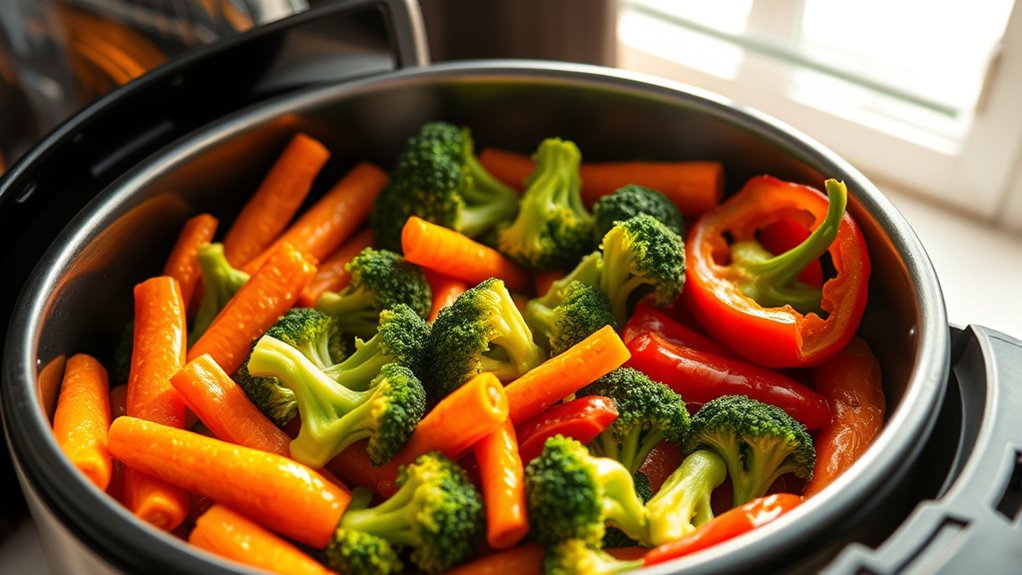
To get the most nutrition from your air-fried vegetables, start by choosing nutrient-dense options like broccoli or carrots. Use minimal oil to retain vitamins and minerals without adding excess fat, and keep an eye on cooking times to prevent overcooking. These simple tips help you maximize flavor and health benefits in every meal. Additionally, selecting fresh produce can further enhance the nutritional value of your vegetables.
Choose Nutrient-Rich Vegetables
Choosing the right vegetables is key to maximizing the nutritional benefits of air frying. To get the best flavor enhancement and texture improvement, select nutrient-rich options. Here are four tips:
- Opt for colorful vegetables like bell peppers, carrots, and spinach—these pack more vitamins and antioxidants.
- Choose firm, fresh produce to prevent sogginess and preserve nutrients.
- Look for vegetables with high water content, such as zucchini or broccoli, which cook quickly and retain nutrients.
- Avoid overly processed or pre-cooked vegetables, as they may lose nutrients during storage and preparation. Incorporating fresh, nutrient-dense vegetables can further support your health goals and ensure you get the most nutritional value from your air-fried dishes.
Use Minimal Oil Carefully
Using minimal oil when air frying vegetables helps preserve their natural nutrients and flavors. Using just a small amount of oil ensures you don’t add unnecessary calories while still achieving crispy results. Be mindful of the oil quantity—usually a teaspoon or less is enough. Adjust the cooking temperature to prevent burning or drying out the vegetables. Here’s a quick guide:
| Oil Quantity | Cooking Temperature |
|---|---|
| 1 teaspoon or less | 375°F (190°C) |
| Light spray | 350°F–375°F (175°C–190°C) |
| No oil (dry air fry) | 400°F (200°C) |
Keeping the oil minimal and controlling temperature helps maximize nutrients, flavor, and texture without excess fat. Additionally, choosing dark glass bottles for storing your oils can help maintain their potency and extend shelf life.
Avoid Overcooking Time
Even though air fryers cook quickly and efficiently, leaving vegetables in for too long can deplete their nutrients and result in a less desirable texture. To maximize nutritional benefits and enjoy seasonal variety, avoid overcooking by monitoring cooking times carefully. Here are some tips:
- Check vegetables early to prevent nutrient loss and preserve their vibrant flavor.
- Use a timer to ensure you don’t exceed the recommended cooking time.
- Toss vegetables halfway through to promote even cooking and flavor enhancement.
- Adjust time based on the vegetable’s thickness and freshness for ideal results.
Making Informed Choices for Healthy Vegetable Preparation
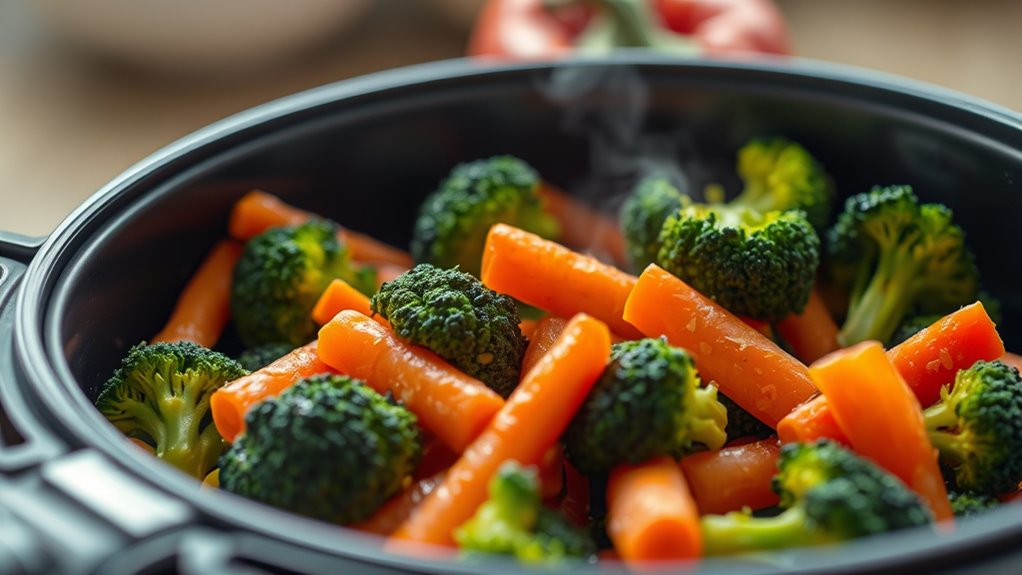
To prepare vegetables in a healthy way, it’s important to contemplate the cooking methods that preserve nutrients and minimize added fats. Choosing the right method can also enhance flavor and preserve texture. For example, air frying offers a crispy exterior while maintaining tenderness, boosting flavor without extra oil. Consider these options:
| Method | Benefits | Drawbacks |
|---|---|---|
| Steaming | Preserves nutrients, soft texture | Less flavor enhancement |
| Roasting | Enhances flavor, retains texture | Uses more oil |
| Air-Frying | Combines flavor boost and texture preservation | Shorter cook time required |
Making informed choices means balancing nutrient retention with flavor and texture, ensuring your vegetables are both healthy and delicious.
Frequently Asked Questions
Does Air-Frying Vegetables Increase Their Antioxidant Levels?
You might wonder if air-frying vegetables boosts their antioxidant levels. While air-frying exposes vegetables to heat, it can cause some oxidation effects, which may reduce antioxidants. However, it also enhances flavor, making vegetables more appealing and encouraging healthier eating. Although it doesn’t necessarily increase antioxidants, the improved taste could lead you to consume more vegetables overall, indirectly supporting better nutrient intake.
Are Some Vegetables Better Preserved Nutritionally When Air-Fried?
When considering cooking methods and nutrient stability, you might wonder if some vegetables retain nutrients better when air-fried. Generally, vegetables with delicate nutrients, like leafy greens, may lose more during air-frying due to heat exposure. However, harder vegetables like carrots or potatoes often preserve more nutrients because of shorter cooking times and less water contact. So, yes, certain vegetables are better preserved nutritionally depending on the cooking method you choose.
How Does Air-Frying Affect Vitamin C Retention?
Think of your vegetables as fragile treasure chests. When you air-fry, you’re gently protecting the vitamin C inside, but some nutrient loss still happens due to heat. While air-frying helps retain more vitamin C than boiling, it’s not perfect—heat can still cause some degradation. To maximize nutrient retention, cook quickly and at moderate temperatures. You’re safeguarding your veggie treasures, but a little loss is inevitable with any cooking method.
Is There a Difference in Mineral Content After Air-Frying?
You might wonder if air-frying affects mineral content. While minerals are generally stable during cooking, the method can influence their retention slightly. Air-frying’s quick cooking impacts mineral stability less than boiling or steaming, which can cause leaching. Overall, air-frying preserves most minerals well, so you get more nutrients intact. This makes it a good choice if you’re aiming to retain the nutritional value of your vegetables.
Can Air-Frying Reduce the Formation of Harmful Compounds?
To reduce harmful compound formation, air-frying can help you by minimizing oil absorption and texture alteration. Unlike traditional frying, it uses hot air, which lessens the chances of creating harmful substances like acrylamide. This method allows you to enjoy crispy vegetables with fewer risks, as it keeps harmful compounds at bay while preserving nutrients and flavor. So, yes, air-frying can effectively reduce the formation of harmful compounds.
Conclusion
Choosing to air-fry your vegetables can help retain more nutrients compared to boiling or steaming, thanks to lower heat and less water loss. Studies show that air-fried vegetables can hold up to 20% more vitamin C than their boiled counterparts. By using an air fryer, you’re making a tasty, healthier choice that preserves essential nutrients. So, next time you prepare vegetables, consider air-frying—you might just enjoy more vibrant, nutrient-packed bites!
Evergreen bestsellers Picks
bestsellers
As an affiliate, we earn on qualifying purchases.