
Reducing your oil by just one tablespoon can save you around 120 calories per meal, since that’s the typical amount in a tablespoon. Cutting back from two tablespoons to one saves a significant amount, and halving even a small amount offers noticeable calorie reductions. Using less oil or switching to healthier cooking methods like baking or steaming can make a big difference. Keep exploring how small changes add up for healthier habits and better calorie management.

Get kitchen gear delivered free — and shop member deals
- Fast, free delivery on millions of items
- Access to Prime Big Deal Days deals on October 6–7
- Prime Video, Amazon Music and more included
Key Takeaways
- Reducing oil by one tablespoon saves approximately 120 calories per use.
- Halving a tablespoon yields about 60 calories saved, helping control daily intake.
- Using cooking spray instead of pouring oil can cut calories significantly, often to just a few per serving.
- Substituting oil with broth, applesauce, or mashed bananas can eliminate hundreds of calories in recipes.
- Choosing cooking methods like baking or grilling minimizes oil use and maximizes calorie savings.
As an affiliate, we earn on qualifying purchases.
Understanding Calorie Content in Different Types of Oil
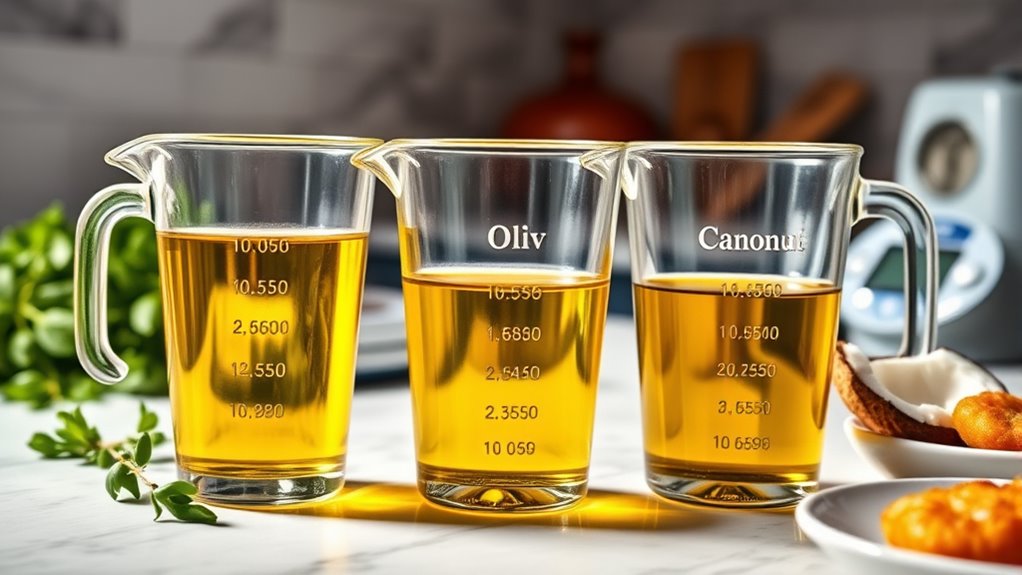
Have you ever wondered how different oils compare in calorie content? When choosing between olive oil and coconut oil, you’ll notice they have similar calorie counts, but subtle differences matter. Olive oil, especially extra virgin, has about 120 calories per tablespoon, mainly from healthy monounsaturated fats. Coconut oil, on the other hand, also contains roughly 120 calories per tablespoon but is composed mostly of saturated fats. While both oils provide similar calorie levels, their health impacts and flavor profiles differ. Olive oil offers heart-healthy benefits, whereas coconut oil’s saturated fats may impact your cholesterol differently. Understanding these nuances helps you make smarter choices when cooking or dressing salads, ensuring you manage calorie intake without sacrificing flavor or nutrition. Additionally, nutritional composition varies between oils, influencing their effects on health.
Calculating Calories Saved by Reducing Oil Quantity
Reducing the amount of oil you use in cooking can substantially decrease your calorie intake, helping you manage your overall diet more effectively. To calculate the calories saved, start by knowing the calorie content of olive oil and coconut oil—about 120 calories per tablespoon. If you typically use two tablespoons, cutting back to one saves approximately 120 calories. For smaller reductions, such as half a tablespoon, save about 60 calories. Keep in mind that even minor decreases add up over time. Tracking your oil usage helps you see exactly how many calories you eliminate with each meal. Whether you’re using olive oil or coconut oil, reducing quantity directly lowers your calorie intake, making it easier to stick to your nutritional goals.
Comparing Cooking Methods and Oil Usage
Different cooking methods considerably impact the amount of oil you need and the overall calorie content of your meals. For example, sautéing with a tablespoon of olive oil adds around 120 calories, while using a non-stick pan with cooking spray can reduce that to just a few calories. Grilling or baking often require little to no oil, making them healthier options. Cooking spray is an efficient way to evenly coat pans without excess calories, unlike pouring olive oil directly. Stir-frying may need a small amount of oil, but you can control portions better with spray. Choosing low-oil methods or substitutes like cooking spray markedly lowers calorie intake, helping you reduce overall fat consumption without sacrificing flavor. The method you select directly influences your calorie savings. Additionally, Honda Tuning techniques such as suspension upgrades can improve handling, making healthier cooking practices more enjoyable by reducing the need for stressful multitasking that can lead to overeating.
Impact of Oil Substitutes on Calorie Intake
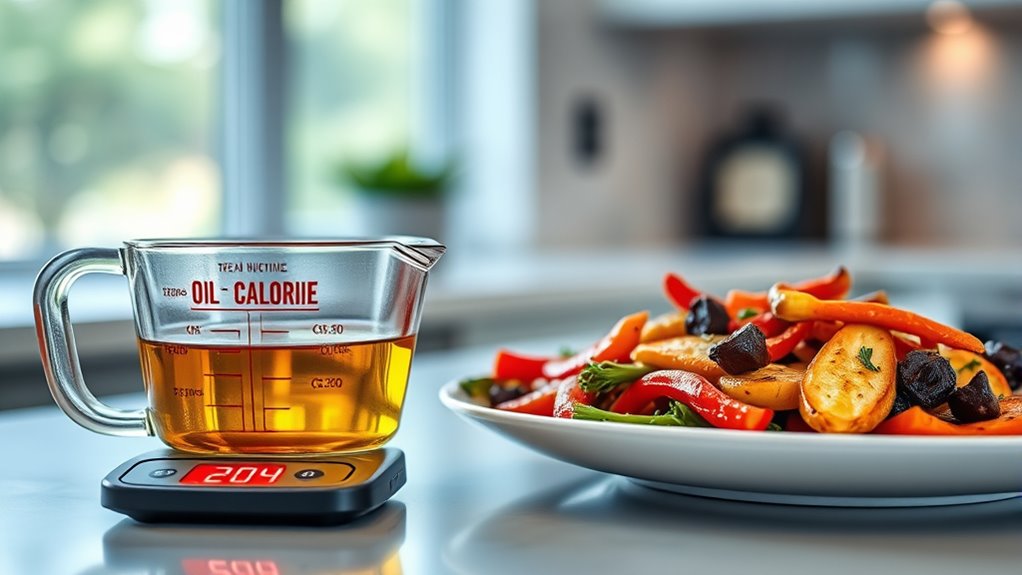
Ever wondered how oil substitutes can considerably cut your calorie intake? Replacing oil with alternatives like vegetable broth, applesauce, or mashed bananas can significantly reduce calories without sacrificing flavor. While oil adds richness and enhances oil flavor, these substitutes can still keep your dishes moist and tasty. Using different cooking techniques, such as steaming, baking, or grilling, further minimizes the need for added fats. These methods help you retain the natural flavors of ingredients and avoid unnecessary calories from excess oil. Substitutes not only lower calorie content but also promote healthier eating habits. By being mindful of your choices and adjusting your cooking techniques, you can enjoy flavorful meals without the calorie overload that comes with traditional oil-heavy recipes. Incorporating organic and natural juices into your diet can also support your health goals and make your meals more nutritious.
Practical Tips for Mindful Oil Consumption
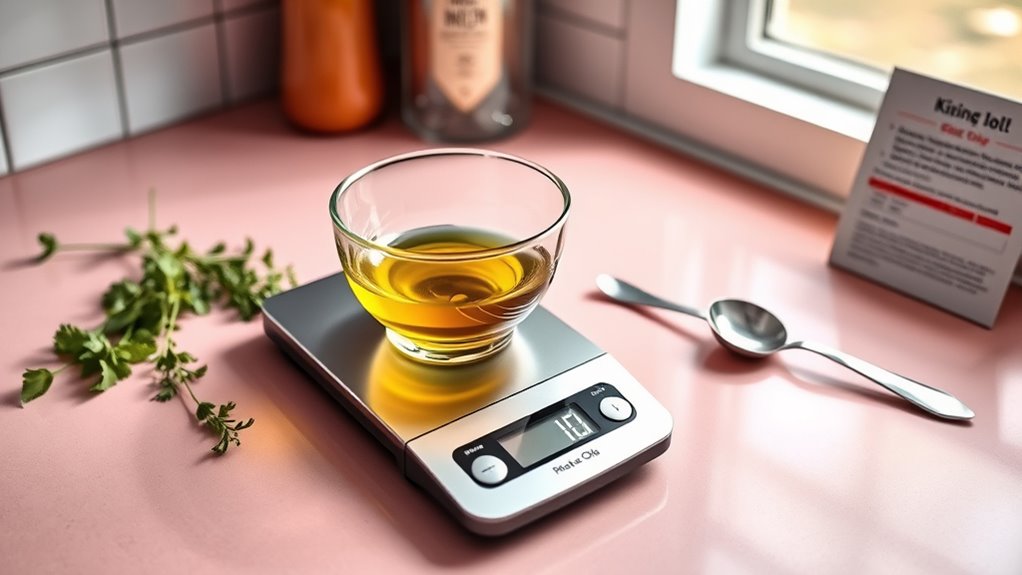
To practice mindful oil consumption, start by paying close attention to the types and amounts of oil you use in your cooking. Understanding how oil absorption affects your dishes can help you reduce unnecessary calories without sacrificing culinary flavor. Use non-stick pans or cooking sprays to minimize oil needed, and measure oils carefully rather than pouring freely. Incorporate flavor-enhancing techniques like herbs, spices, and citrus to boost taste without extra oil. Opt for cooking methods like baking, steaming, or grilling, which require less oil while maintaining the dish’s richness. Being mindful of how much oil you add allows you to enjoy flavorful meals while cutting calories, making your efforts both effective and sustainable. Additionally, being aware of how cooking techniques influence oil absorption can further optimize your calorie savings.
Frequently Asked Questions
How Does Oil Temperature Affect Calorie Absorption During Cooking?
You might wonder how oil temperature impacts calorie absorption during cooking. When you cook with higher oil temperatures, the food absorbs less oil because the surface browns quicker, creating a barrier. Conversely, lower temperatures allow more oil to penetrate, increasing calorie absorption. So, adjusting oil temperature helps control how many calories you take in, making your cooking healthier and more aligned with your dietary goals.
Are There Health Benefits to Reducing Oil Beyond Calorie Savings?
Imagine your body as a garden, thriving with healthy choices. When you reduce oil, you not only save calories but also nurture your heart health and lower cholesterol levels. Cutting back on oil minimizes saturated fats that clog your arteries, helping your heart stay strong. So, beyond calorie savings, this simple change promotes better cardiovascular health, allowing your body’s garden to flourish with vibrancy and well-being.
How Accurate Are Calorie Estimates When Cooking With Mixed Oils?
When estimating calories with mixed oils, keep in mind that oil flavor and cooking duration impact accuracy. You might not get exact numbers because different oils have varying calorie densities, and longer cooking can cause some oil to evaporate or absorb differently. While rough estimates help, consider these factors to better gauge your calorie intake, especially if you’re tracking closely or aiming for specific health goals.
Can Using Non-Stick Cookware Influence Oil Calorie Content?
Using non-stick cookware can help reduce oil residue, which means you use less oil overall. The non-stick benefits allow you to cook with minimal oil, cutting down the calorie content in your meals. You don’t need to worry about excess oil clinging to the surface, so you save calories without sacrificing flavor. This simple switch makes a noticeable difference in your overall calorie intake and promotes healthier cooking habits.
How Do Individual Cooking Styles Impact Overall Calorie Reduction?
Your cooking choices, including clever cooking techniques and thoughtful ingredient substitutions, can considerably shape calorie savings. By switching to steaming or grilling, you cut calories while maintaining flavor. Your specific cooking style, whether sautéing with minimal oil or baking instead of frying, directly influences calorie reduction. Small, strategic steps in your cooking approach can make a big difference in trimming calories and boosting health.
Conclusion
By trimming your oil intake, you’re steering your health ship through calmer waters, cutting through the fog of excess calories. Every teaspoon saved is a lighthouse guiding you toward lighter, brighter days. Remember, small changes in oil use ripple outward, transforming your meals into a symphony of mindful choices. Embrace these tweaks as your compass, and watch your wellness journey unfold like a vibrant sunrise—full of promise and new beginnings.
Fall Picks
fall essentials
As an affiliate, we earn on qualifying purchases.