To thaw and cook frozen chicken breasts in under 20 minutes, use your microwave’s defrost setting on a food-safe dish, flipping the chicken often to guarantee even thawing. Once partially thawed, sear the breasts in a hot skillet for a flavorful crust, then finish cooking in a preheated oven at 375°F for about 10-15 minutes. Keep an eye on internal temperature for safety. Continue to discover tips to perfect your speedy chicken method.
Key Takeaways
- Use the microwave’s defrost setting, flipping chicken periodically for even thawing, and cook immediately afterward.
- Rapidly thaw chicken in cold water, changing water every 30 minutes to maintain safety and speed.
- Sear frozen chicken breasts in a hot skillet to create a crust, then finish in the oven at 375°F for moist, fully cooked meat.
- Flatten chicken breasts for even cooking and reduce overall cooking time, ensuring they reach 165°F safely.
- Keep proper handling and quick cooking techniques to minimize bacteria growth and ensure safe, flavorful results within 20 minutes.
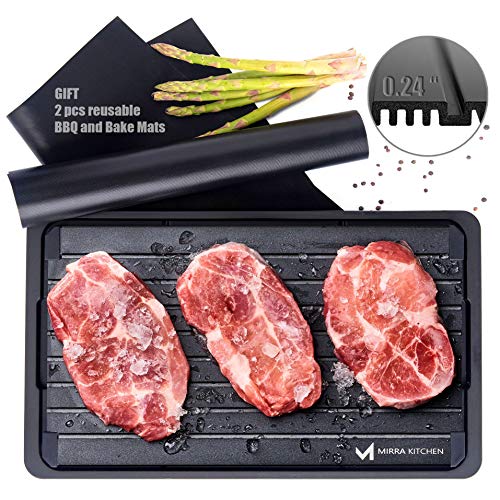
Extra Thick Fast Defrosting Tray – Dishwasher Safe Large Thawing Plate with Drip Tray Set – Non-Stick Coated Thawing Board for Frozen Meat and Food – No Plug Natural Defrost Miracle Thaw Master Mat
- Extra Thick Thawing Plate: 0.24 inch thick for faster thawing
- Large Surface Area: 14×8 inch for family use
- Includes Drip Tray: Catch drips for mess-free thawing
As an affiliate, we earn on qualifying purchases.
As an affiliate, we earn on qualifying purchases.
Safe and Effective Thawing Methods

While thawing frozen chicken breasts quickly might seem tempting, it’s crucial to do so safely to prevent bacterial growth. Many people fall for thawing misconceptions, like leaving chicken out at room temperature, which increases the risk of bacteria multiplying. Safe handling involves choosing proper methods, such as thawing in the refrigerator, in cold water, or using a microwave. These techniques ensure the chicken stays at safe temperatures and reduces contamination risks. Avoid rushing the process by neglecting proper procedures; instead, prioritize safe handling practices to maintain food safety. By understanding and applying correct thawing methods, you can prepare chicken efficiently without compromising safety. Remember, quick doesn’t mean careless—always follow recommended guidelines for safe, effective thawing. Incorporating proper thawing techniques is essential to ensure food safety and quality when preparing chicken.
Using the Microwave for Rapid Thawing
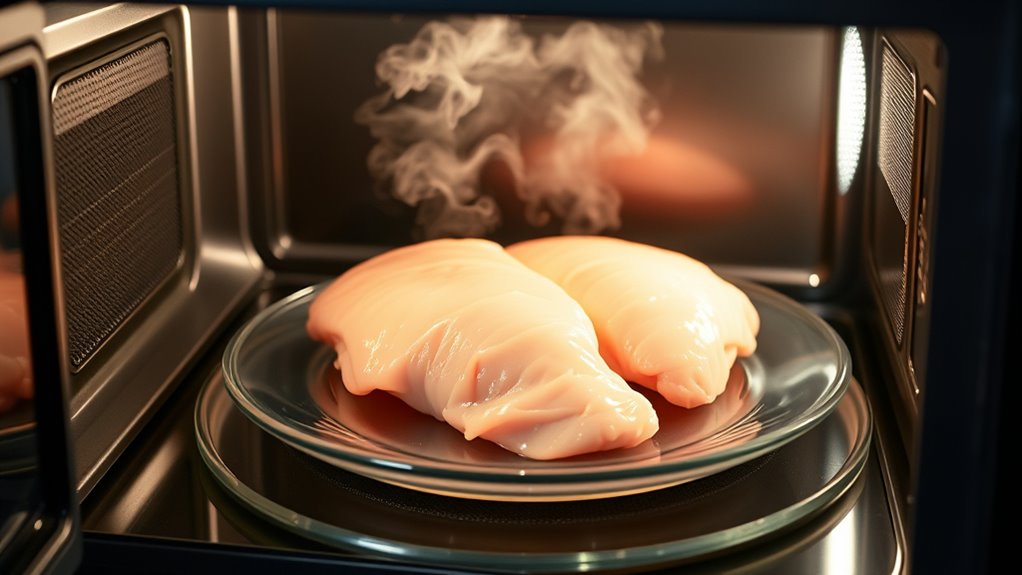
Using the microwave for rapid thawing is one of the quickest and most convenient methods to prepare frozen chicken breasts when you’re short on time. To guarantee microwave safety, use the defrost setting and avoid high power, which can cook parts of the chicken. Place the chicken on a microwave-safe dish and turn or flip it periodically to promote even thawing. Always use proper thawing equipment, like microwave-safe containers, to prevent cross-contamination. Keep an eye on the process to avoid partially cooking the meat, which can create bacteria. Once thawed, cook the chicken immediately to maintain food safety. This method is ideal for quick preparation, but it requires attention to detail to ensure even thawing without compromising safety. Using a food-safe microwave can further enhance safety and efficiency during thawing.
Quick Cooking Techniques for Frozen Chicken Breasts
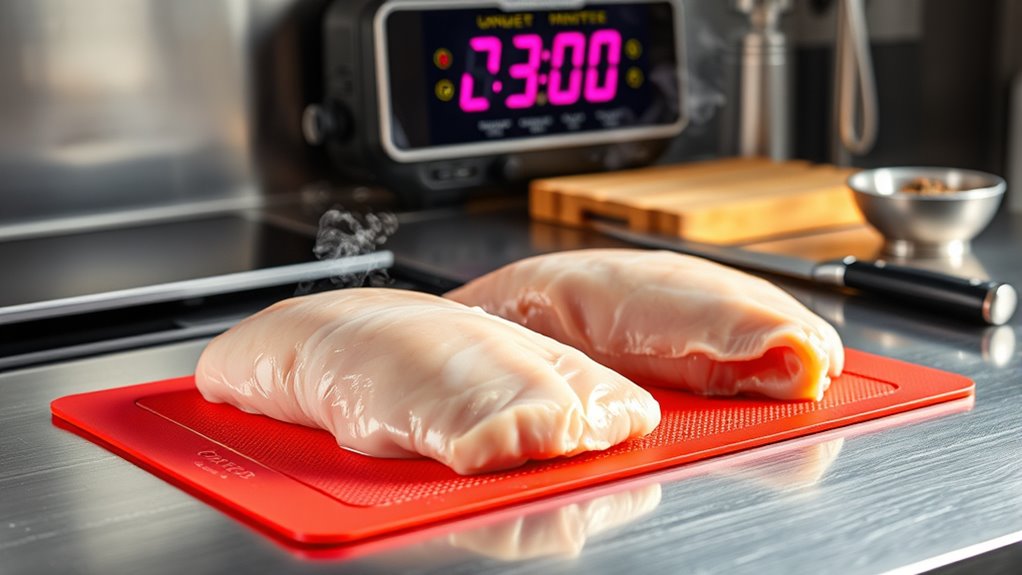
You can quickly brown your frozen chicken breasts by searing them in a hot skillet, giving them a flavorful crust. After searing, finishing them in the oven helps secure in juiciness and ensures they’re cooked through. This combo lets you get perfectly cooked chicken in under 20 minutes without sacrificing taste. Using proper technique during searing and baking will help you achieve the best results.
Searing for Quick Browning
Searing frozen chicken breasts quickly browns the outside, creating a flavorful crust without thawing. To achieve this, choose a heavy-bottomed pan, like cast iron, for even heat distribution. Proper pan selection ensures the chicken doesn’t stick and cooks uniformly. Before searing, consider your seasoning options—simple salt and pepper work well, or add spices for extra flavor. Keep the heat high enough to sear quickly but not burn the exterior.
- Use a hot pan to lock in juices and develop a crust
- Avoid overcrowding the pan to ensure even browning
- Season immediately after placing the chicken in the pan for maximum flavor
- Ensuring proper pan selection helps achieve the best searing results.
This technique gives you a beautifully browned exterior while keeping the inside moist and tender.
Oven Finish for Juiciness
To guarantee the chicken remains juicy and tender, finishing it in the oven is an effective technique. After searing or boiling, transfer the chicken to a preheated oven at 375°F. This gentle heat helps retain moisture while completing the cook. For added flavor, consider marinade options like lemon herb or garlic yogurt before oven finishing. Remember, proper storage tips are essential—store chicken in airtight containers to prevent dryness and contamination. To visualize, here’s a quick guide:
| Technique | Marinade Options | Storage Tips |
|---|---|---|
| Oven finish | Lemon herb, garlic yogurt | Keep frozen until ready to cook |
| Temperature | 375°F for 10-15 mins | Thaw partially for even cooking |
| Juiciness | Cover loosely with foil | Use within 1-2 days if refrigerated |
Additionally, using home organization solutions like wall hooks can help keep your kitchen tidy and efficient, making the cooking process smoother. This approach ensures moist, flavorful results with minimal effort.
Preparing the Chicken for Cooking

Before cooking frozen chicken breasts, it’s important to prepare them properly to guarantee even cooking and safety. Start by removing any excess moisture with a paper towel to promote better searing and seasoning adherence. Consider using marinating techniques if time allows—brief marination enhances flavor and tenderness. For seasoning options, keep it simple with salt, pepper, or spice blends to boost taste without overpowering the meat. To ensure even cooking, flatten the chicken breasts to an even thickness, which helps prevent dry edges or undercooked centers. Remember, proper preparation not only improves flavor but also minimizes food safety risks. Incorporating color accuracy in the preparation process ensures that the seasoning and marinating are visually appealing and evenly distributed.
Cooking Tips to Ensure Juicy and Safe Results

Ensuring your chicken breasts stay juicy and safe to eat depends on proper cooking techniques. Start by marinating the chicken with simple, flavorful marinades to boost moisture and infuse flavor. Use ingredients like lemon juice, yogurt, or olive oil, which help tenderize the meat while adding taste. When cooking, avoid overcooking by checking internal temperature; aim for 165°F (74°C). Rest the chicken for a few minutes after cooking to allow juices to redistribute. Keep a close eye on cooking time, especially since you’re working with frozen chicken, to prevent drying out. Incorporating flavor infusions during the marinade or cooking process can enhance moisture retention and overall juiciness. Proper techniques ensure your chicken remains tender, flavorful, and safe to enjoy. Understanding IRA investing and related tax considerations can also help optimize your overall financial planning.
Serving Suggestions and Final Tips

Once you’ve cooked your chicken breasts, presenting them with appealing serving options can elevate your meal. Consider pairing your chicken with versatile marinade pairings like lemon herb, honey mustard, or spicy buffalo to enhance flavor. For presentation ideas, slice the chicken and arrange it on a platter, drizzle with a complementary sauce, or serve atop a colorful salad. To make your dish stand out, think about adding fresh herbs or vibrant vegetables as garnish. Remember, good presentation not only boosts visual appeal but also enhances the overall dining experience. Keep in mind these key points:
- Use marinade pairings that complement your chosen side dishes
- Arrange slices neatly for an inviting look
- Garnish with fresh herbs or colorful vegetables for added appeal
- Active communication during plating can also help ensure your presentation looks as inviting as it tastes.
Frequently Asked Questions
Can I Thaw Chicken Breasts at Room Temperature Safely?
You might wonder if thawing chicken breasts at room temperature is safe, but it’s not advised. Room temperature safety is a concern because bacteria can grow quickly on raw poultry. Thawing methods like using the refrigerator or microwave are much safer and more effective. If you’re in a hurry, opt for quick thawing in cold water or microwave, then cook immediately to ensure your chicken stays safe to eat.
How Do I Prevent Overcooking When Using Rapid Methods?
Imagine a delicate balance on a tightrope, where cooking temperature and timing precision keep your chicken juicy and tender. To prevent overcooking, monitor the internal temperature with a meat thermometer, aiming for 165°F. Keep a close eye on the clock, adjusting cooking time based on thickness. By controlling heat and timing carefully, you guarantee your chicken stays moist and flavorful, even with rapid cooking methods.
Is It Necessary to Rinse Chicken Before Cooking From Frozen?
You don’t need to rinse chicken before cooking from frozen, as doing so can spread bacteria and compromise food safety and kitchen hygiene. Rinsing isn’t necessary because cooking thoroughly will eliminate harmful pathogens. Focus on keeping your workspace clean and handling chicken properly to prevent cross-contamination. Proper cooking to the right internal temperature ensures safety, so skip the rinse and rely on safe cooking practices to maintain hygiene.
Can Frozen Chicken Breasts Be Cooked Directly on the Grill?
You can cook frozen chicken breasts directly on the grill, but you need to prioritize grill safety. Frozen grilling can be tricky because uneven cooking might leave parts undercooked, so always use a meat thermometer to guarantee the chicken reaches 165°F. Keep the heat moderate to avoid flare-ups, and turn the breasts frequently. This method saves time but requires careful attention to ensure safe, delicious results.
What Are the Signs That Chicken Is Fully Cooked and Safe to Eat?
Imagine a juicy, perfectly cooked chicken breast—your sign it’s ready. You check the internal temperature; it should reach 165°F, indicating safety. Look for a color change from pink to white or tan, with clear juices running out. These signs tell you your chicken is fully cooked and safe to eat. Always use a meat thermometer for accuracy and enjoy your meal with confidence.
Conclusion
Now you’re ready to enjoy perfectly cooked chicken breasts in under 20 minutes. Did you know that using the microwave for thawing can save you up to 50% of your usual prep time? Just remember to cook the chicken immediately afterward to guarantee safety. With these quick methods, you can have a juicy, flavorful meal on the table fast—no more waiting around for thawing or lengthy cooking!