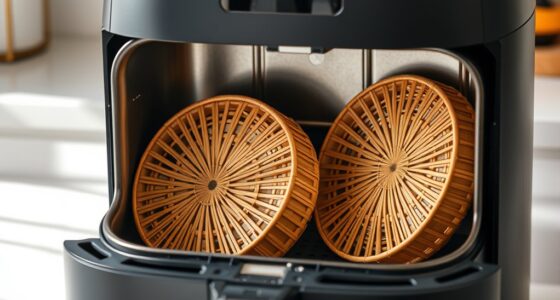
Choosing the right oil sprayer for air frying depends on your needs; pump sprayers offer control and eco-friendliness, while aerosol cans provide a fine, consistent mist. Regular cleaning is key to maintenance—disassemble parts, rinse with warm water, and remove any residue with soft tools. Proper upkeep prevents clogs and ensures even spray performance. If you’re interested in learning more about maintaining your sprayer and getting the best results, continue exploring these helpful tips.
Key Takeaways
- Choose between pump, adjustable nozzle, or aerosol sprayers based on control, convenience, and environmental preferences.
- Regularly disassemble and clean sprayer parts with warm water and mild soap to prevent clogging and ensure optimal performance.
- Use soft brushes or toothpicks to clear residue from nozzles, and deep clean periodically with vinegar or soapy water.
- Check spray patterns regularly for blockages, and clear nozzles to maintain even oil distribution during air frying.
- Proper maintenance extends sprayer lifespan, improves oil application precision, and ensures healthier, crispy results.

Are oil sprayers worth adding to your air frying arsenal? Absolutely, especially if you want to control how much oil you use and guarantee your food gets that perfect crispy finish. One key benefit of using an oil sprayer is achieving consistent application, which directly affects the oil spray consistency. When you spray, you want an even, fine mist that coats your food lightly without drowning it in oil. This consistency helps you avoid excess calories and keeps your dishes healthier, all while maintaining that satisfying crunch. However, to keep your oil sprayer working smoothly, proper cleaning is vital. If you neglect cleaning oil sprayers, residue can clog the nozzle or cause uneven spray patterns, diminishing performance and making your cooking less predictable. Regularly cleaning your sprayer after each use prevents buildup and ensures you always get a fine, even spray.
In addition, understanding the different mechanisms of spray delivery can improve your experience, as some models may require different cleaning techniques based on their design. There are different types of oil sprayers to contemplate, from simple pump bottles to aerosol-style cans. Pump sprayers tend to give you more control, allowing you to pump until you get the spray you want. Some models even let you adjust the spray nozzle for finer mist or more targeted application. Aerosol cans, on the other hand, often provide a very fine and consistent spray right out of the box, but they can be more expensive and less eco-friendly. No matter which type you choose, it’s important to understand that maintaining them properly will prolong their lifespan and keep your cooking experience consistent. When cleaning oil sprayers, disassemble the parts if possible and rinse them with warm water. Use mild soap if needed, and make sure to clear out any oil residue from the nozzle to avoid clogging. Periodic deep cleaning with vinegar or warm soapy water can also help dissolve stubborn buildup.
Another tip is to check the nozzle regularly for blockages. A blocked nozzle can ruin your spray pattern and disrupt the oil spray consistency, leading to uneven cooking. When cleaning, avoid using harsh abrasives or metal tools that could damage the nozzle or internal parts. Instead, opt for soft brushes or toothpicks to clear out any debris. Proper maintenance not only ensures your oil sprayer functions properly but also keeps your kitchen cleaner by preventing oil leaks or spray malfunctions. Being aware of the importance of regular cleaning** can significantly extend the life of your equipment and ensure optimal performance. By choosing the right type of sprayer and committing to regular cleaning, you’ll find that oil application becomes easier, more precise, and more efficient, making your air frying experience** all the more enjoyable.

YARRAMATE 16 oz 2-in-1 Glass Olive Oil Sprayer for Cooking, Black
- Dual-Function Design: Sprays and pours oil for versatility
- Multi-Purpose Use: Ideal for salads, grilling, roasting
- Premium Materials: BPA-free, food-grade, unbreakable glass
As an affiliate, we earn on qualifying purchases.
As an affiliate, we earn on qualifying purchases.
Frequently Asked Questions
Can Oil Sprayers Be Used With All Types of Oils?
Yes, you can use most types of oils with oil sprayers, but some work better than others. For example, alternative oils like olive, coconut, or avocado may require different spray consistency, so choose a sprayer that handles thinner or thicker oils well. Always clean your sprayer regularly to prevent clogging and guarantee even distribution, especially if you’re switching oils. This keeps your air frying experience smooth and flavorful.
Are Oil Sprayers Suitable for High-Temperature Cooking?
Yes, oil sprayers are suitable for high-temperature cooking if they have good heat resistance. You should check that your sprayer can withstand the temperatures involved to avoid damage. Maintaining spray consistency is vital, so make certain the nozzle isn’t clogged and the oil is properly filtered. When used correctly, oil sprayers help you achieve even coverage and safe, effective high-temperature cooking.
How Often Should I Clean My Oil Sprayer?
Did you know that regular cleaning prolongs your oil sprayer’s life by up to 30%? You should clean your oil sprayer after every 5 to 7 uses or weekly, depending on how often you cook. Follow a consistent cleaning schedule and maintenance tips like disassembling parts and avoiding harsh cleaners. This prevents clogging and keeps your sprayer functioning smoothly, ensuring healthier, tastier air-fried meals.
Do Oil Sprayers Affect the Flavor of the Food?
Oil sprayers can subtly influence the flavor of your food by enhancing its taste and texture. When you use an oil sprayer, it helps with oil absorption evenly, creating a crisp exterior and richer flavor. Proper maintenance guarantees no stale or off flavors develop. Ultimately, a quality oil sprayer allows you to control flavor enhancement and oil distribution, making your dishes more delicious without overpowering their natural taste.
Can Oil Sprayers Be Used for Other Liquids Besides Oil?
Yes, you can use oil sprayers for alternative liquids, making them versatile for oil substitution. However, not all liquids work well, especially thicker or viscous ones, which can clog the sprayer. For best results, choose light liquids like vinegar, lemon juice, or cooking spray. Always clean the sprayer thoroughly after use to prevent residue buildup and guarantee it functions properly with different liquids.
Conclusion
With the right oil sprayer, you can easily control your oil usage, guarantee even coverage, and enjoy healthier, crispy dishes. Whether you choose a pump, aerosol, or refillable sprayer, each type offers convenience and precision. Maintain your sprayer regularly to keep it functioning smoothly, and you’ll continue to elevate your air frying experience. Embrace these tools, master their care, and transform your cooking routine into a healthier, more flavorful adventure.