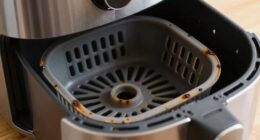

When you air fry, fumes containing oils, food particles, and volatile compounds are released into your indoor air, forming ultrafine aerosols that can linger or settle on surfaces. Proper ventilation, like using range hoods or opening windows, helps reduce these smoke and aerosol particles, improving air quality. Lowering cooking temperatures and cleaning your air fryer regularly also limit emissions. If you want to discover more ways to keep your home air fresh, keep exploring these effective tips.
Key Takeaways
- Air frying produces fumes containing oils, food particles, and ultrafine aerosols that can impact indoor air quality.
- Proper ventilation, such as range hoods and open windows, effectively disperses airborne particles and odors.
- Lowering cooking temperature and duration reduces smoke and aerosol emissions during air frying.
- Regular cleaning of the air fryer minimizes grease buildup, decreasing the risk of smoke and particle release.
- Combining ventilation with proper cooking practices enhances indoor air safety and reduces exposure to harmful fumes.
Have you ever wondered how air frying impacts the air inside your home? When you use an air fryer, you’re creating more than just crispy snacks; you’re also releasing cooking fumes into your indoor environment. These fumes consist of tiny particles and aerosols that can linger in the air, especially if your space isn’t properly ventilated. While air frying is generally healthier than traditional frying, it still produces some smoke and airborne particles that can affect your indoor air quality. Recognizing how these emissions behave and implementing effective ventilation strategies can help keep your home safer and fresher.
Cooking fumes from air frying typically contain oils, food particles, and volatile compounds released at high temperatures. These fumes aren’t just odor; they can include ultrafine aerosols that penetrate deep into your respiratory system. Without proper ventilation, these particles can settle on surfaces or remain suspended in the air, contributing to poor indoor air quality over time. This is particularly problematic in small or poorly ventilated spaces, where fumes can accumulate quickly and become more noticeable. You might notice lingering odors or even experience irritation or allergic reactions if fumes are left unchecked.
To combat this, ventilation strategies are key. Using an exhaust fan or range hood designed for air fryers can considerably reduce the concentration of airborne particles. If you don’t have a range hood, opening a window or creating cross-ventilation by turning on a ceiling fan can also help disperse fumes. It’s essential to turn on your ventilation system before you start cooking and keep it running until the fumes clear. Some air fryers come with built-in exhaust systems, but even then, supplementing with additional ventilation can be advantageous, especially if you’re frying multiple batches or cooking items that release more smoke.
Another effective strategy involves controlling the cooking temperature and duration. Lowering the heat slightly can minimize the amount of fumes produced, while monitoring cooking time prevents excessive smoke. Regularly cleaning your air fryer to remove accumulated grease and food particles also reduces the likelihood of smoke and aerosol production during subsequent uses. These small adjustments can make a noticeable difference in maintaining fresh indoor air.

AMZCHEF Portable Range Hood, 3-Speed Desktop Exhaust Vent Fan,Black
- Filtration System: 3-layer oil and odor filter
- Compact & Portable: Space-saving for various locations
- Adjustable Fan Speeds: 3-speed settings for different needs
As an affiliate, we earn on qualifying purchases.
As an affiliate, we earn on qualifying purchases.
Frequently Asked Questions
Does Air Frying Produce More or Less Indoor Air Pollution Than Traditional Frying?
Air frying produces less indoor air pollution than traditional frying because it uses less oil, reducing oil fumes. You also avoid grease splatters that can release particles into the air. Unlike traditional frying, which can generate smoke and aerosols from high-temperature oil, air frying contains these emissions, making your indoor air cleaner. So, if you’re concerned about air quality, air frying is a healthier choice.
What Are the Best Ventilation Practices When Air Frying Indoors?
Ever wondered how to keep your indoor air fresh while air frying? To do that, you should use your kitchen exhaust fan actively and open a window for air circulation. Position the fan near your stove or over your range to effectively vent smoke and aerosols. This way, you minimize indoor pollution and maintain good air quality, making your air frying experience safer and more enjoyable.
Can Air Fryers Help Reduce Aerosolized Particles in the Kitchen?
Air fryers can help reduce aerosolized particles in your kitchen if they have effective filters, like Air fryer filters designed for smoke reduction. These filters trap grease and tiny particles, minimizing airborne contaminants. To maximize their effectiveness, make certain your air fryer is well-ventilated and use it with good kitchen ventilation practices. This combination helps keep indoor air cleaner by capturing more aerosols and reducing smoke.
How Often Should I Clean My Air Fryer to Maintain Air Quality?
To keep your air fryer performing its best and guarantee fresh indoor air, you should clean it regularly—ideally after every few uses. Proper air fryer maintenance involves wiping down the basket and interior, and checking for grease buildup. The cleaning frequency helps prevent lingering odors and airborne particles, maintaining a clean cooking environment. Consistent upkeep makes your air fryer more efficient and keeps your indoor air quality high.
Are There Specific Air Fryer Models Designed to Minimize Smoke Emissions?
Yes, some air fryer models are designed to minimize smoke emissions through advanced smoke reduction features. Look for models with built-in filters or vents that trap grease and particles, reducing air fryer emissions. These features help keep your indoor air quality better and decrease smoke during cooking. Choosing an air fryer with effective smoke reduction technology can make a significant difference, especially if you often cook foods prone to splattering or producing smoke.
Conclusion
In your pursuit of healthier home cooking, heed the hazards of air frying. While it offers convenience and crispiness, it can also create clouds of smoke and aerosols that compromise your indoor air quality. To keep your kitchen safe and spotless, stay vigilant, ventilate vigorously, and avoid aerosol accumulation. Remember, mindful moderation and proper maintenance make a meaningful difference—minimizing messes and maximizing your indoor air’s purity. Protect your space, prioritize your health, and enjoy your culinary creations with confidence.